

Some links on our site may earn us a commission at no extra cost to you. Learn more.
Planning a great Smoky Mountains trip comes down to four decisions: how many days, which side to stay on, when to go, and what earns a spot on the itinerary. Two days covers the highlights. Four days gives you room for the full Cades Cove loop, the drive up to Kuwohi, and a waterfall hike without rushing. There’s no entrance fee, but a parking tag is required, per the National Park Service.
I’ve built more Smoky Mountains itineraries than I can count, for my own trips and for family who ask before theirs. The park never gets easier to plan around. The roads are two-lane, the lots fill by mid-morning, and the busiest week of the year is also the prettiest one. None of that means skip it. It means build the day around when other people aren’t there. For a longer trip that links the whole region together, our Great Smoky Mountains road trip guide lays out the full five-leg loop. If you’d rather split the trip by state, our East Tennessee road trip and Western North Carolina road trip guides break the same region into two state-by-state itineraries.
How Many Days Do You Need in the Smoky Mountains?
Two full days is the floor. Day one covers the Tennessee side: Cades Cove in the morning, Laurel Falls or Gatlinburg in the afternoon. Day two covers Newfound Gap Road up to Kuwohi, then down into Cherokee on the North Carolina side.
Three or four days is more realistic if you’re driving in from any distance. That extra time buys a second pass through Cades Cove at a different hour, a longer waterfall hike, and a cushion for summer thunderstorms. I wouldn’t plan a Smokies trip shorter than two days. Drive time alone between trailheads eats a single day fast.
Pairing the park with Asheville or the Blue Ridge Parkway? Add at least one more day for the drive itself. Newfound Gap Road is scenic but slow. The Parkway is slower still, and it’s not a road you want to rush after a full day of hiking.
Do You Need a Parking Pass for the Smoky Mountains?
Yes. Great Smoky Mountains National Park charges no traditional entrance fee, but any vehicle parked longer than 15 minutes needs a parking tag, according to the National Park Service. Tags are sold at visitor centers, campground kiosks, and online. They cover the whole park, not just one lot.
| Parking Tag | Price |
|---|---|
| Daily | $5 |
| Weekly | $15 |
| Annual | $40 |
Prices are set by the National Park Service. The park also runs eight fee-free days a year, including Independence Day weekend and Veterans Day, when the tag isn’t required. Skip a tag entirely and you’re risking a ticket, not an awkward conversation with a ranger.
Buy the annual tag if you’re coming back within twelve months. It also makes sense if you’re splitting a trip across both sides of the park on different days. The weekly tag covers most standard trips, and it’s the one I buy for anything longer than a single day.
Where to Stay in the Smoky Mountains
Gatlinburg and Pigeon Forge sit on the Tennessee side, closest to Cades Cove and the busiest trailheads. This is the base with the most hotel and cabin inventory. It also has Dollywood, mini-golf, and a strip of restaurants that make it easy to feed a group without a reservation.
Cherokee, North Carolina sits on the quieter side, closer to Kuwohi and Newfound Gap, with Asheville about an hour beyond it. I’d pick this side for a trip built around the Blue Ridge Parkway. I’d pick Tennessee for a trip that’s mostly the park itself. Either base works for a two-day visit; the drive between them over Newfound Gap Road takes about 45 minutes without stops.
Pigeon Forge is worth a separate mention if you’re traveling with kids. It has more of the mini-golf-and-go-kart clutter than Gatlinburg proper. Some families want that. Others actively avoid it. Cherokee has less of that entirely, and more room to actually park downtown.
Must See Places in the Smoky Mountains
Four stops carry most first-time itineraries: Cades Cove, Kuwohi, Newfound Gap, and Laurel Falls. Build the day around whichever two fit your base. Don’t try to cram all four into one morning; the drive alone connects them at a crawl in season. Newfound Gap is worth a stop even without hiking anywhere. The parking area sits directly on the Tennessee–North Carolina state line, with a straight-on view down both sides of the ridge and easy access to the Appalachian Trail if you want to walk a short stretch of it. Once you’ve covered those four, our newest guides go deeper on Newfound Gap Road, Mount LeConte, Cataloochee Valley, Foothills Parkway, and Deep Creek.
Is Cades Cove Worth Visiting?
Yes, and it’s usually the first stop people mention when they talk about the Smokies. The loop is an 11-mile, one-way road through an open valley. Along the way are three historic churches, a working gristmill, and log cabins that predate the park itself. Deer and the occasional black bear show up along the tree line most mornings.
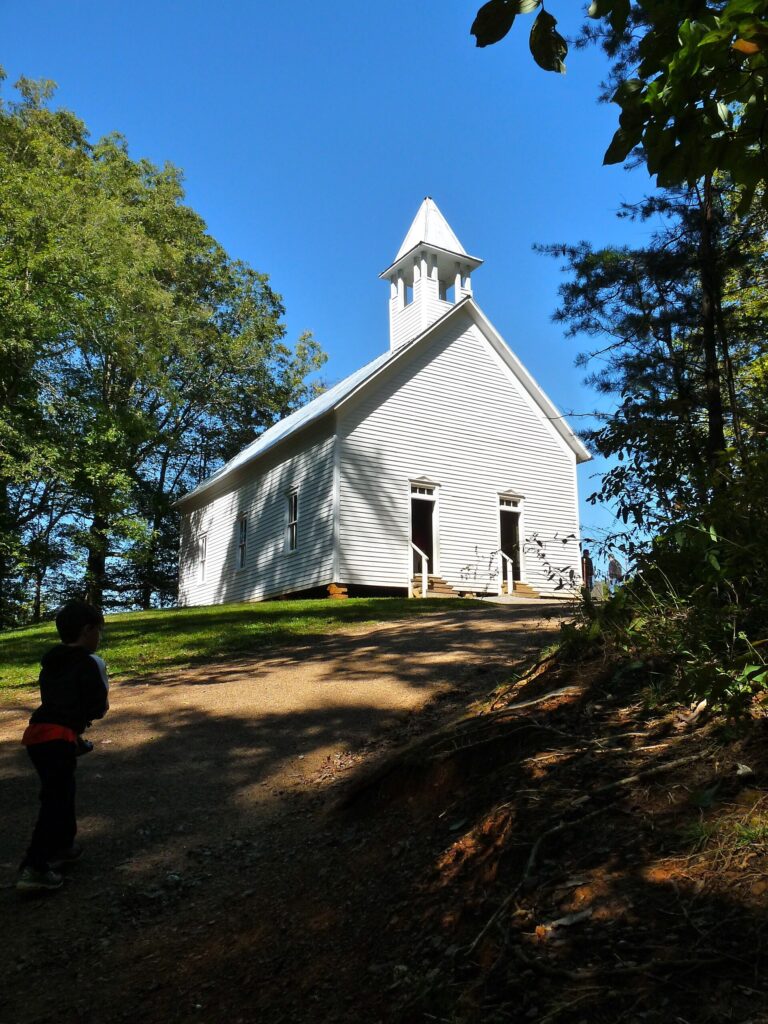
Go before 9 a.m. or after 5 p.m. The loop closes to vehicles on Wednesdays from May through September, the Park Service says. That’s the best time to bike or walk it; the same 11 miles feel like a different place with no cars.
Kuwohi Formerly Clingmans Dome
Kuwohi is the tallest point in Tennessee and the third-highest summit east of the Mississippi. It was called Clingmans Dome, from an 1859 survey, until September 2024. That’s when the U.S. Board on Geographic Names restored its Cherokee name at the request of the Eastern Band of Cherokee Indians, for whom it has always been a sacred site.
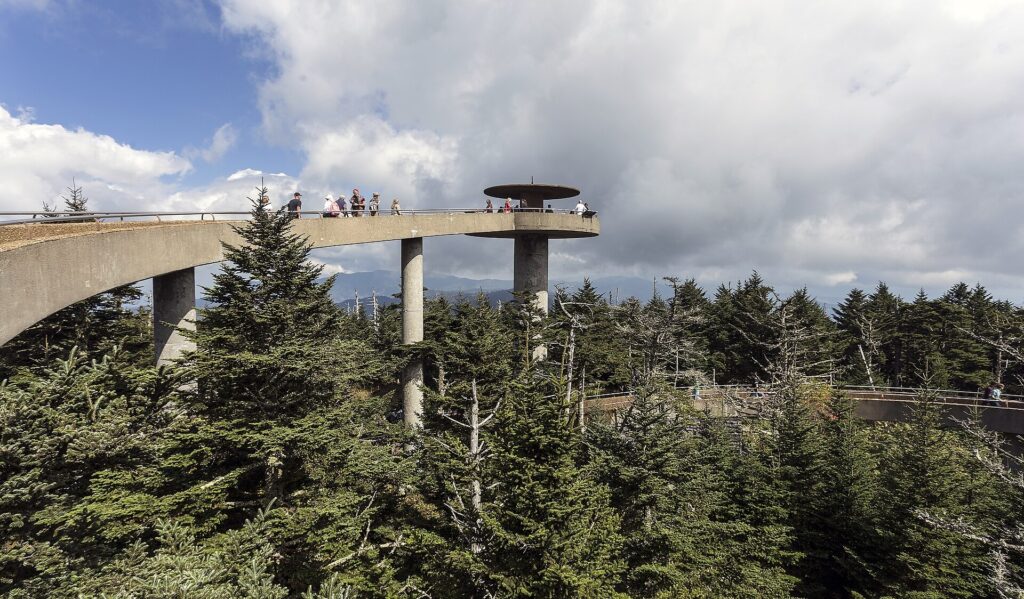
Kuwohi Road branches off Newfound Gap Road, the high pass that connects the Tennessee and North Carolina sides along US 441. Demand for parking at Kuwohi often exceeds the lot’s capacity by late morning. Hit it early, or plan around a shuttle if the park runs one that season.
How Long is the Hike to Laurel Falls?
One caveat first: the Laurel Falls Trail is closed for a rehabilitation project, and the park expects to reopen it in 2027. Check the current alerts before you build a morning around it. When it is open, the round trip is 2.6 miles on a paved trail rated moderate, starting 3.5 miles from Sugarlands Visitor Center. Parking there is limited, so arrive early or plan to circle back.
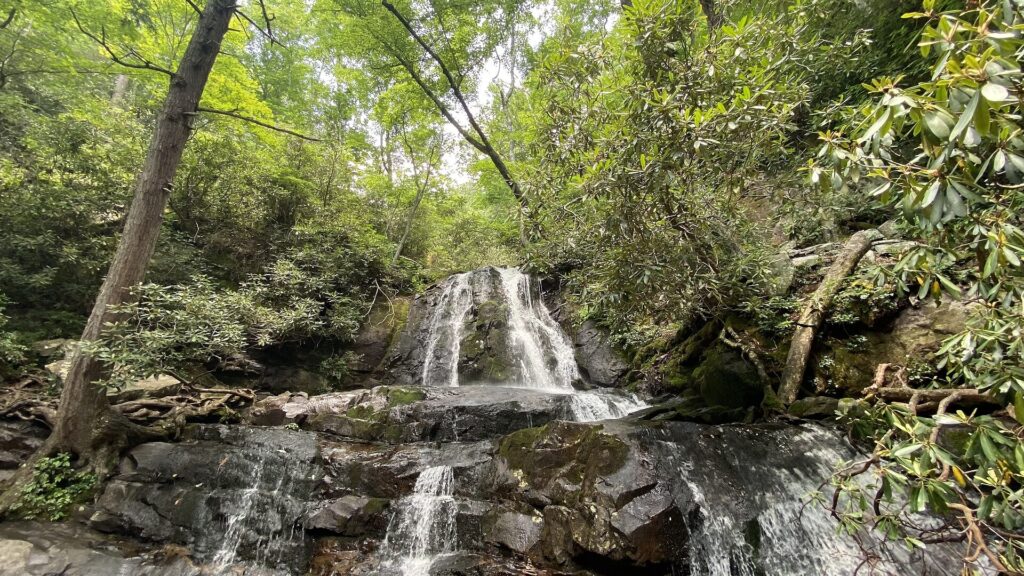
Laurel Falls is one of four trails in the park — along with Abrams, Grotto, and Rainbow Falls — that draw more than 200,000 hikers a year, per the National Park Service. The pavement makes it manageable for kids. It’s still a real climb with drop-offs near the falls, so keep a hand on anyone small.
When is the Best Time to Visit the Smoky Mountains?
Mid-October is the single best window for color. It’s also the most crowded two weeks of the year, so book lodging months ahead if that’s your target. Late April through May brings wildflowers and thinner crowds along the same trails.
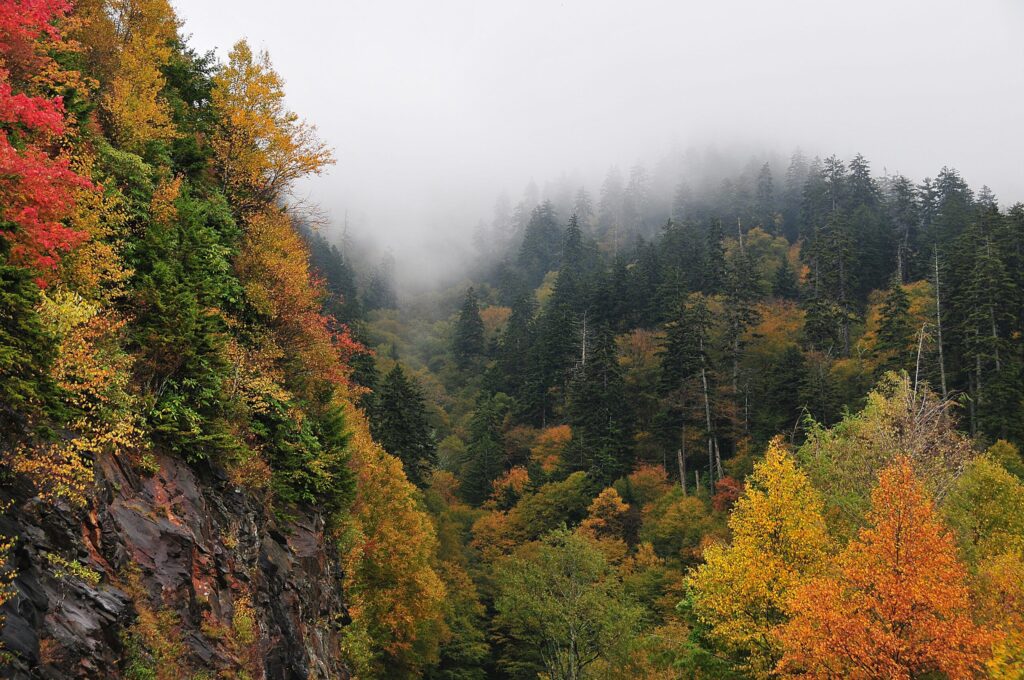
Summer is the busiest season overall, and the most reliably rainy. Plan an early start and a backup indoor stop for afternoon storms. Winter is the quiet season. Cades Cove and the lower trails stay open, but Kuwohi Road closes seasonally to vehicles, so check conditions before you drive up.
I lean toward late spring myself. The waterfalls run fuller after snowmelt. Wildflowers are out along the lower trails, and the lots aren’t full by 8 a.m. the way they are in October. Fall still wins on color. Spring wins on actually being able to park where you want to hike.
Is the Smoky Mountains Worth Visiting?
I think it’s worth the traffic, and I’ve driven Cades Cove enough times to say that with a straight face. The park doesn’t have a single postcard landmark the way some western parks do. What it has is scale: ridge after ridge of it, plus a working farm valley and a genuinely useful pass most visitors just drive straight through.
The honest downside is congestion. Cades Cove and Kuwohi both bottleneck by mid-morning most of the year. The two-lane roads mean one slow RV sets the pace for everyone behind it. Time the big stops for early morning or late afternoon, and the same park feels completely different.
Skip it only if a crowded two-lane road with frequent stopped traffic for bear sightings will ruin the day for you. That happens, and it happens on the busiest stretches most often. Everyone else gets a genuinely good trip out of two or three well-timed days here.
Great Smoky Mountains National Park Facts
Do you need a reservation for the Great Smoky Mountains? No timed-entry system covers the park. A parking tag is required for any vehicle parked over 15 minutes.
How many visitors does the Great Smoky Mountains National Park get a year? Between 8 and 10 million people visit annually, according to the National Park Service.
When does the Cades Cove loop road close to vehicles? Wednesdays from May through September, for walking and biking only.
Why was Clingmans Dome renamed Kuwohi? The U.S. Board on Geographic Names restored the Cherokee name in September 2024 at the request of the Eastern Band of Cherokee Indians, NPS confirms.
For the day-by-day version of this trip, see our 3-day Great Smoky Mountains itinerary. On the North Carolina side, pair the park with horseback riding in Cherokee National Forest or a stop at the waterfalls near Asheville before you head into town.
Prices are approximate, current as of publication, and change frequently — confirm the latest price with the retailer before buying.
Published September 25, 2026.
Photo credits: (1) featured, A park road curving through a hillside of… — Sumitg2ia, CC BY-SA 4.0, via Wikimedia Commons; (2) Historic white wooden church in Cades Cove… — BarbarianCoder, CC BY 2.0, via Wikimedia Commons; (3) Spiral concrete ramp of the Kuwohi… — Acroterion, CC BY-SA 4.0, via Wikimedia Commons; (4) Laurel Falls spilling over layered rock… — Patrick Huber, CC BY-SA 4.0, via Wikimedia Commons; (5) Fall foliage colors covering the… — NPS Photo, U.S. Government work, public domain, via National Park Service.