

Some links on our site may earn us a commission at no extra cost to you. Learn more.
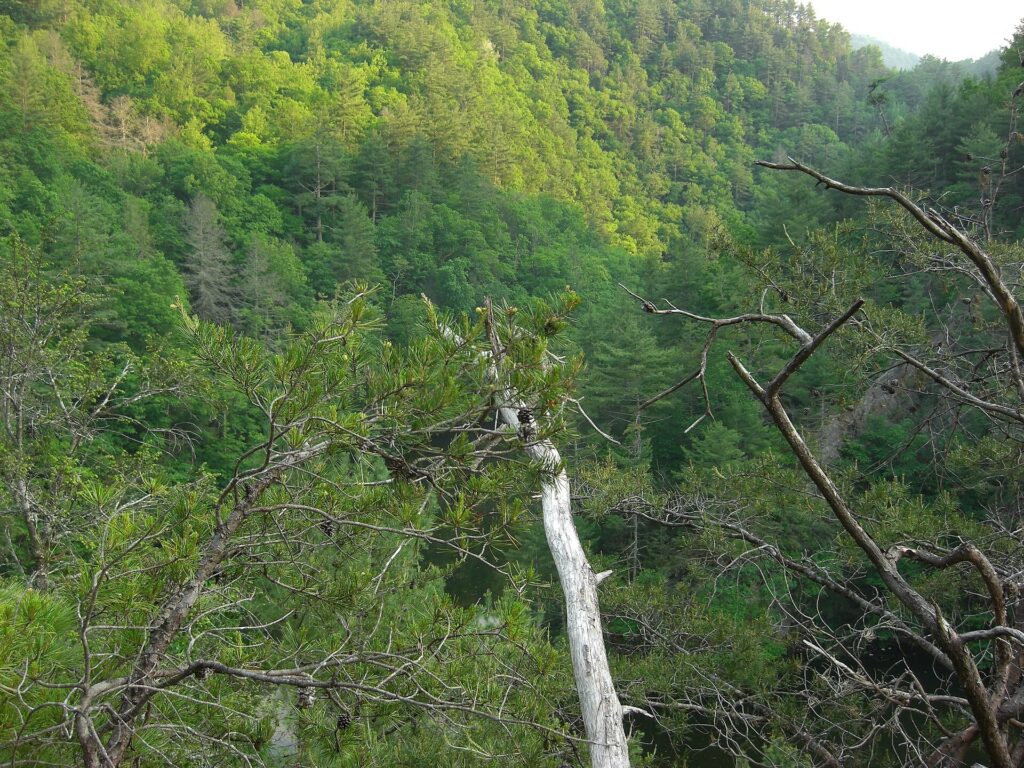
Cataloochee Valley is the quiet side of the Smokies. It’s a remote mountain valley in the North Carolina section of Great Smoky Mountains National Park. You get there on an eleven-mile gravel road, and the payoff is the park’s largest elk herd plus a handful of century-old homesteads that never got torn down. There’s no cell service and no traffic like Cades Cove. There’s not even a paved way in. That’s exactly why it stays this quiet.
I’ve driven into Cataloochee more than once on my way through the Smokies and Asheville, usually with a dog in the back seat and a packing list that got a little out of hand. The gravel road in makes you slow down, literally and otherwise. There’s no signal to check and no drive-through coffee — just a valley that still looks like it did before any of this region got paved. It rewards patience over speed, which is not always my first instinct on a road trip.
Where Is Cataloochee Valley?
Cataloochee Valley sits in the far southeastern corner of Great Smoky Mountains National Park. It’s tucked against the North Carolina line, separated from the park’s main hub by miles of ridge. It doesn’t connect to Newfound Gap Road or the Cades Cove Loop at all. Per the park’s Cataloochee and Balsam Mountain area page, the only way in is off I-40 at exit 20, through the small community of Cove Creek. That isolation is the whole point. Most visitors to the park never make it out here, and that’s a big part of why the elk herd stuck around and the historic buildings survived untouched. If you’re still mapping out the rest of a Smokies trip, our guide to planning a Great Smoky Mountains trip covers where Cataloochee fits against everything else.
Cove Creek Road
The drive in is the first thing anyone tells you about this place. Cove Creek Road runs about eleven miles from the park boundary down to the valley floor. Most of that stretch is gravel. It’s narrow, and it winds hard through the mountains. Some sections have steep drop-offs with no guardrail. Budget around fifteen minutes to cover the eleven miles, not because it’s far, but because you shouldn’t be going fast. If you meet another car on a blind curve, one of you backs up to a wide spot. That’s just how it works out here, and it’s not a big deal once you’ve done it once.
Elk Viewing in the Smoky Mountains
Cataloochee is where the park’s elk actually live. The National Park Service reintroduced the first 25 animals to the valley in 2001. Another 27 followed the next year, and the herd has grown from there. Early morning and evening are the best windows to see them. They’re also known to come out on overcast days, when the light is flat and they feel less exposed. Fall brings the rut, when bulls bugle across the fields and spar over the herd. It’s loud, and it’s the single best reason to time a trip for September or October.
NPS guidance puts the safe viewing distance at 25 yards. The rule of thumb is simple: if an elk changes what it’s doing because you’re there, you’re already too close. Approaching close enough to disturb one is a federal violation, not just a suggestion, and it carries real fines. Stay by the road. Use binoculars or a zoom lens, and skip walking out into the fields entirely — that’s ground the elk need, not a photo backdrop. Traveling with kids who want a good look? Our Smoky Mountains with kids guide covers elk-watching from the Oconaluftee side too.

Best Time to See Elk in Cataloochee Valley
Dawn and dusk aren’t optional if elk are the main reason for the trip. At midday, most of the herd beds down in the tree line and gets hard to spot. Plan to be parked along the valley road by first light, or back again in the hour before sunset. Parking is limited to roadside pull-offs near the fields. A truck already stopped there is a signal to slow down and look, not an invitation to crowd in next to it. Bring a jacket even in summer. The valley floor holds fog and cold air long after the ridges above it have warmed up.
Cataloochee Valley History
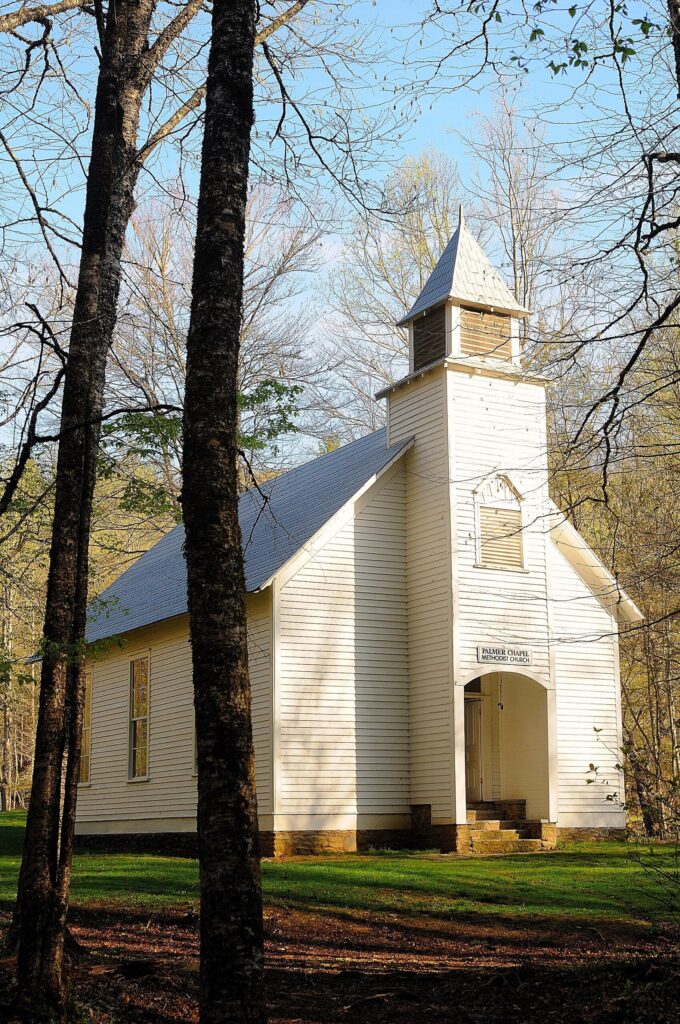
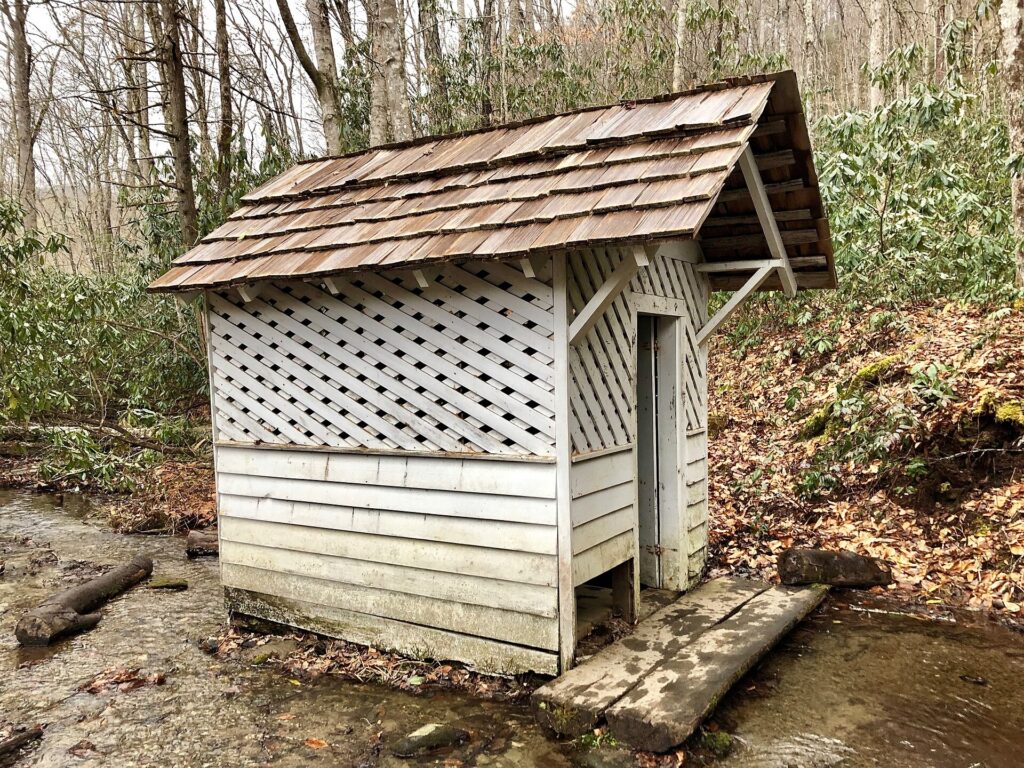
Before it was parkland, Cataloochee was a working valley of close to 1,200 people. Churches, a school, and farms were strung along the creek. Several of those buildings are still standing and open to walk through. Palmer Chapel is a white frame Methodist church built in 1898, small enough to take in with one glance from the road. Beech Grove School is the valley’s one-room schoolhouse, where local kids studied until the community emptied out. Down toward the creek, the Caldwell family’s spring house still sits over the water, built to keep food cold before refrigerators existed. Palmer House remains too, one of several homesteads left in place when families moved out in the 1930s so the valley could become parkland.

Cataloochee Campground
Cataloochee Campground has 27 sites for tents and RVs. None of them have electric, water, or sewer hookups — this is a valley without shortcuts. There are flush toilets and drinking water on site, but no showers. Reservations are required well ahead of time, since there’s no cell service here to check availability once you’ve arrived. Book through Recreation.gov, or by phone in advance. Motorhomes over 29 feet and trailers over 25 feet aren’t recommended, simply because Cove Creek Road wasn’t built for them. Traveling with a dog? Leashed pets are welcome at the campground and along the road, but Cataloochee’s hiking trails are off-limits to them. The road is the dog walk here, not the loop trails.
A separate picnic area near the historic district works for a day-trip lunch even if you’re not staying overnight. For campgrounds elsewhere in the park, see our roundup of the best Smokies campgrounds.
Boogerman Loop Trail
Boogerman Loop is the valley’s signature hike. It climbs out of the historic district and back down through old-growth forest that was never logged. A reclusive farmer named Robert “Boogerman” Palmer held onto his timber rights and refused to sell, so the big trees are still there. Little Cataloochee Trail heads the other direction, following an old wagon road to the scattered remains of the Little Cataloochee community. A second small church still stands at the far end. Neither trail is short, and both climb steadily. Plan on most of a day for either one at a relaxed pace, with stops to look around. Both trailheads start from the same gravel road through the historic district. That makes it easy to pair a short walk to the chapel and school with a longer hike, without doubling back to the car.
Cades Cove vs Cataloochee Valley
Cades Cove gets the crowds; Cataloochee gets the quiet. Both are historic valleys inside the same park, with old churches, farmsteads, and open fields where wildlife gathers. But they feel like different trips entirely. Cades Cove is built for a slow loop drive with the whole car along for the ride. Cataloochee is built for getting out, walking the road, and staying a while. It’s worth knowing the difference before you commit a full day to one or the other.
| Feature | Cataloochee Valley | Cades Cove |
|---|---|---|
| Road in | 11-mile gravel road, one way in and out | Paved 11-mile one-way loop |
| Crowds | Quiet, far fewer visitors | The park’s most visited spot |
| Main wildlife draw | The park’s largest elk herd | Black bears and white-tailed deer |
| Cell service | None | Limited, spotty in places |
| Camping | 27-site campground, no hookups | Larger campground, more amenities |
| Historic buildings | Palmer Chapel, Beech Grove School, Caldwell Spring House, Palmer House | Cable Mill, churches, cantilever barns |
Where to Stay Near Cataloochee Valley
There’s no lodging inside Cataloochee beyond the campground. Most people base out of Maggie Valley or Waynesville instead, both under a thirty-minute drive from the park boundary by way of Cove Creek Road and I-40. Maggie Valley leans toward small motels and cabins close to the highway, easy in and out. Waynesville has more of a real downtown, with restaurants within walking distance of where you’re staying. Either works as a base for this side of the park. Cherokee, NC is close enough to combine into the same day if you want a second stop. Both towns also put you within range of the Blue Ridge Parkway entrance near Asheville, so a Cataloochee morning and a Parkway afternoon fit into one loop. That kind of pairing is exactly what our Smoky Mountains road trip guide maps out leg by leg.
Prices are approximate, current as of publication, and change frequently — confirm the latest price with the retailer before buying.
Is Cataloochee Valley Open?
Cataloochee Valley is open year-round as part of Great Smoky Mountains National Park. Cove Creek Road can close temporarily for winter weather or maintenance, though, and the campground runs on its own seasonal schedule. Check the park’s current conditions before a winter or early spring trip.
How far is Cataloochee Valley from Cherokee? About 25 to 30 minutes by car, mostly by way of Cove Creek Road and US-19. That makes Cataloochee an easy add-on to a day based in Cherokee, NC.
Can you drive through Cataloochee Valley? Not through, exactly. Cove Creek Road is the only vehicle access, and it doesn’t connect to Cades Cove or the rest of the park’s main road network. A Cataloochee visit is its own out-and-back trip, in and out the way you came.
Are dogs allowed in Cataloochee Valley? Leashed dogs are welcome at the campground and along the road. They’re not allowed on Cataloochee’s hiking trails, which follow the same backcountry pet rules as the rest of the park.
Published September 27, 2026.
Photo credits: (1) featured, Rolling forested mountain ridgelines under… — National Park Service, U.S. Government work, public domain, via Wikimedia Commons; (2) Cataloochee Creek running through the… — Jason Hollinger, CC BY 2.0, via Wikimedia Commons; (3) A herd of elk grazing in an open field in… — Will Thomas, CC BY-SA 3.0, via Wikimedia Commons.