

Some links on our site may earn us a commission at no extra cost to you. Learn more.
Trunk Bay is the beach on St. John that ends up on every Virgin Islands postcard. It earns the reputation. The sand curls around calm, turquoise water, with a small cay just offshore and a marked underwater snorkel trail along one edge of the bay.
It sits inside Virgin Islands National Park. It charges its own small entrance fee. And it fills up fast once the first cruise-excursion vans arrive, so the short version is: worth it, but go early.
I’ve snorkeled a fair amount of the Caribbean over the years, from the reefs off the Florida Keys to the smaller islands in the Virgin Islands chain. Trunk Bay still stands out for how easy it is. The bay is shallow and well protected, so the water stays calm even on a breezy morning.
On a clear day the visibility is some of the best I’ve found on a beach you can walk to instead of boat to. It isn’t a wild dive site. It’s a beach built for people who want to see fish without much effort, and that’s exactly the point.
How Much Does Trunk Bay Cost?
Getting into Virgin Islands National Park itself costs nothing. The park’s own fee page confirms no entrance pass is required anywhere on St. John. Trunk Bay is the exception.
It carries its own expanded amenity fee: $5 per person for ages 16 and up, good from sunrise to sunset. Kids 15 and under get in free. Interagency Senior and Access pass holders pay half, $2.50. Pay by card at the fee booth, or buy the day pass ahead on Recreation.gov.
Trunk Bay is also the only North Shore beach that charges anything. Here’s how it stacks up against its neighbors, plus what a taxi from Cruz Bay runs to each one.
| Beach | Entrance Fee | Taxi From Cruz Bay* | Known For |
|---|---|---|---|
| Hawksnest Bay | Free | $8 | Closest to Cruz Bay, shade trees |
| Trunk Bay | $5 (16+) | $9 | Underwater snorkel trail, lifeguards |
| Cinnamon Bay | Free | $11 | Longest beach on the island |
| Maho Bay | Free | $12 | Sea turtles feeding close to shore |
| Francis Bay | Free | $14 | Quiet, good birdwatching |
*Per-person fare with two or more riders, from the Virgin Islands Taxicab Commission’s own rate schedule. A single rider pays more.
Trunk Bay Underwater Snorkel Trail
The trail is what separates Trunk Bay from every other beach on this list. The National Park Service marks a self-guided route along about 400 feet of water, off the bay’s west side. Underwater signs point out the coral and fish along the way. It runs year round, and most people finish in 30 to 60 minutes.
It’s an easy trail, not a technical one. Still, the park wants swimmers confident in open water before they start, since standing on the coral to rest damages it. Bring a rash guard or reef-safe sunscreen instead of the regular kind, and stand only on sand if you need a break.
Fins help, but they’re not required, and a mask that actually seals matters more than anything else you bring. Rental gear is available at the beach if you didn’t pack your own. The fit is hit or miss compared to a mask you already know works.
Is Trunk Bay Good for Snorkeling?
For a beginner or a family, yes, easily one of the best on the island. The bay’s shape keeps out most of the current and swell that make snorkeling harder elsewhere on St. John. The marked trail gives kids something to follow instead of just drifting.
What it isn’t is uncrowded. By midday, enough swimmers have kicked up sand and sunscreen that visibility drops. The first hour or two after the fee booth opens is the real window.
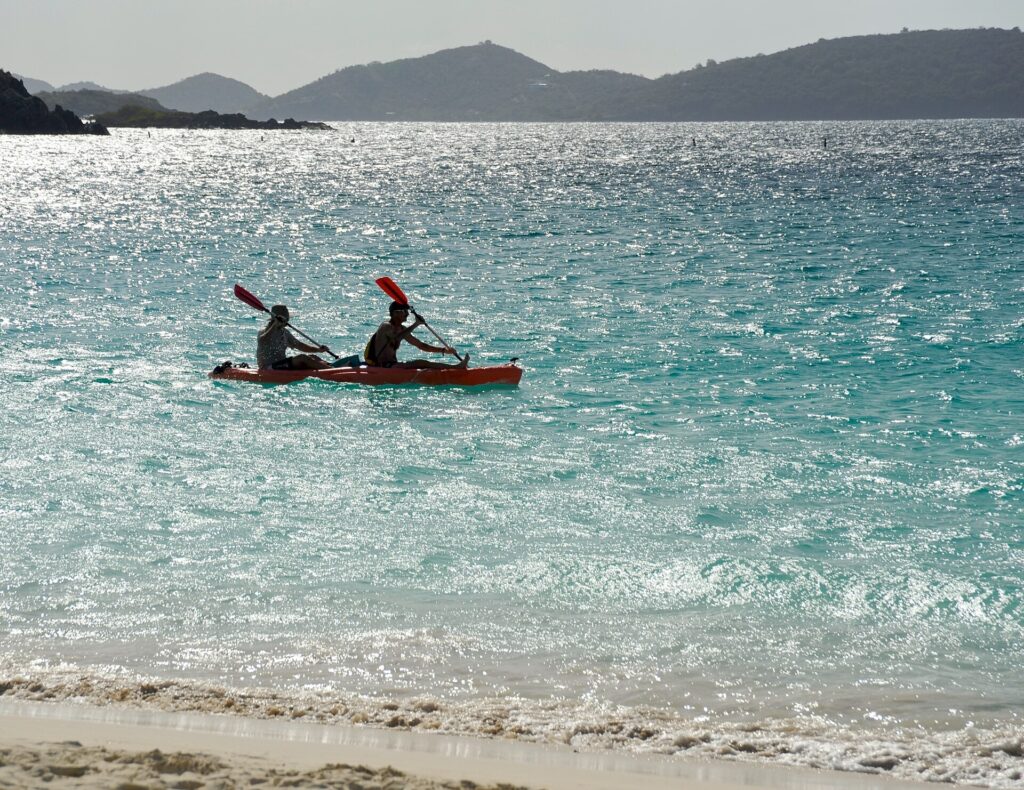
St John North Shore Beaches
North Shore Road strings together five beaches in a few miles. Trunk Bay is only the busiest of them. Hawksnest Bay, right at the start of the road, is small and shaded, a good pick for a quick swim without driving far.
Cinnamon Bay is the longest stretch of sand in the park. It’s open enough that it rarely feels packed, even on a cruise day. Maho Bay is the one I send people to for turtles, which graze the seagrass close enough to shore that you can watch from the sand.
Francis Bay, furthest along the road, backs onto a wetland that draws herons and pelicans. It’s usually the quietest beach on the whole route. The short Francis Bay Trail behind it is an easy add for anyone who wants to stretch their legs instead of sitting on sand all day.
None of these four charge an entrance fee. That’s part of why regulars split their North Shore time between them instead of camping out at Trunk Bay all day. A single beach day can realistically cover two, maybe three, once you count driving and parking.
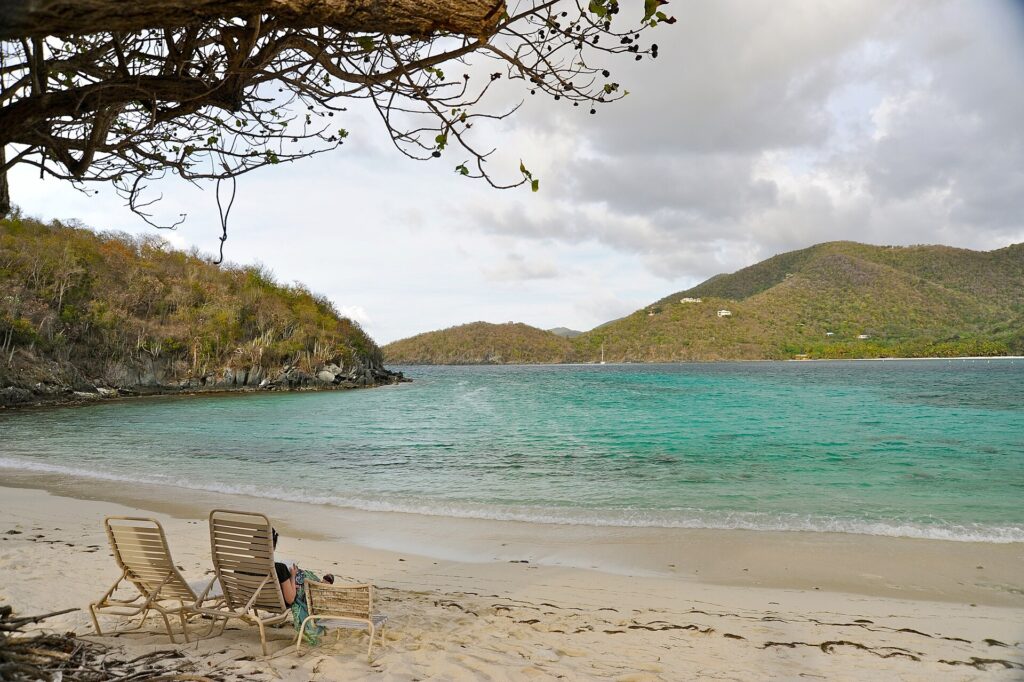
Is Cinnamon Bay Campground Open?
Cinnamon Bay is the only place to camp inside Virgin Islands National Park. Its history is bumpier than the rest of the North Shore. Hurricanes Irma and Maria wrecked the original campground in 2017, and it stayed closed for years while the site was rebuilt.
It reopened under a new operator in January 2022, with cottages, eco-tents, and bare sites. It’s closed and reopened more than once since then, including a short shutdown after Tropical Storm Ernesto in 2024.
As of this writing, the operator’s own site lists the campground as reopening rather than currently booking, with no nightly rates posted. If a night at Cinnamon Bay is part of the plan, check cinnamonbayvi.com directly first. The beach and its portable restrooms stay open to day visitors either way.

Annaberg Sugar Plantation
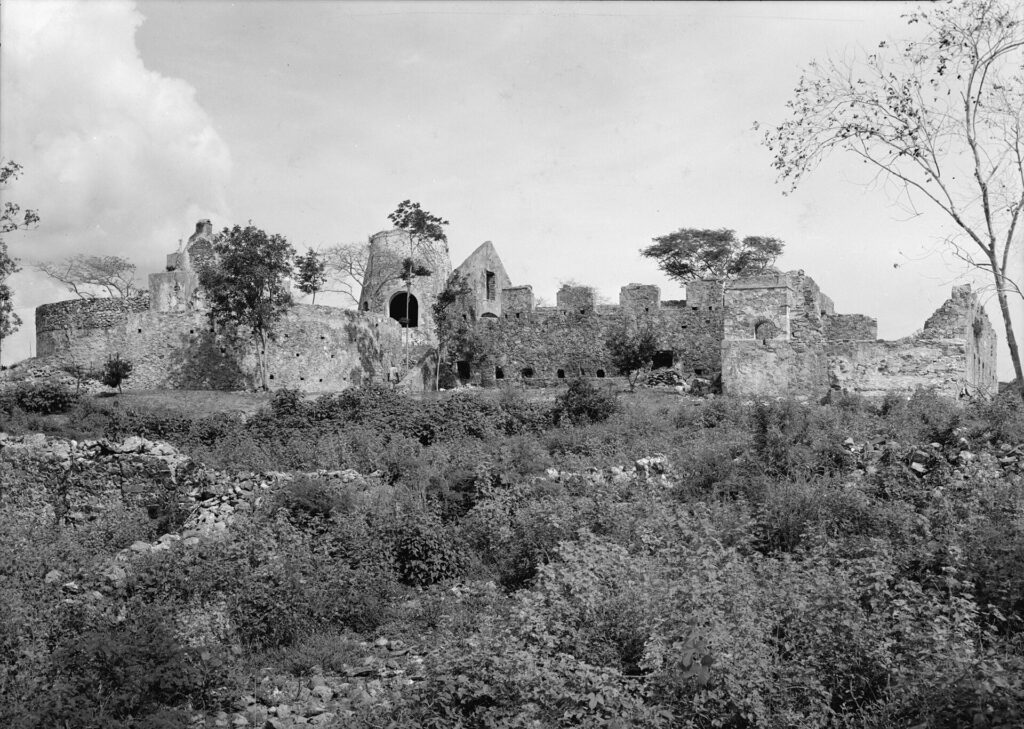
Annaberg sits down a spur road off North Shore Road, past Maho Bay. It’s worth the detour even on a beach-focused day. The National Park Service lays out a self-guided walking trail through the ruins: a windmill tower, the factory building, and the quarters where enslaved people who worked the plantation lived.
Signs along the trail lay out that history plainly, rather than glossing over it. Plan on an hour, maybe two if you read everything.
The path down from the parking area is steep and a little rocky. It levels out once you’re among the buildings. Go for the windmill tower and the harbor view from up top, and go slow on the way down, especially after rain.
Bring water and decent shoes rather than beach sandals. There’s no shade until you’re actually among the ruins, and the stone underfoot on the way down gets slick fast once it’s wet.
How to Get to Trunk Bay From Cruz Bay
North Shore Road runs straight out of Cruz Bay and reaches Trunk Bay in about ten minutes by car, without a turn you can miss. A taxi is the easier call if you’re not renting. The fare table above has the going rate.
Open-air “safari bus” taxis run the North Shore route regularly, so you rarely wait long for one heading back. Parking at Trunk Bay itself is limited and fills early, so aim to arrive not long after the fee booth opens if you’re driving.
A rental Jeep beats a low sedan if you’re hitting more than one North Shore beach in a day. The side roads here are steeper than they look on a map. A couple of the pull-offs along North Shore Road are tight enough that a bigger SUV struggles to turn around.
If you’re staying in Cruz Bay itself, walking or biking isn’t realistic for Trunk Bay specifically. It’s a longer, hillier haul than it looks on a phone map. There’s no shoulder to speak of once you’re past town.
Do you need a passport for St. John?
No. The U.S. Virgin Islands are a U.S. territory, and the federal government’s own guidance on territory travel confirms St. John doesn’t require a passport for U.S. citizens flying or sailing in directly, the same as Puerto Rico or Guam. Bring a government-issued photo ID, same as any domestic trip.
Prices are approximate, current as of publication, and change frequently — confirm the latest price with the retailer before buying.
St John FAQ
How much does Trunk Bay cost?
$5 per person for ages 16 and up, from sunrise to sunset. Kids 15 and under get in free, and Interagency Senior or Access pass holders pay $2.50.
Is Trunk Bay good for snorkeling?
Yes, especially for beginners and kids. The bay is shallow and calm, and a marked underwater trail runs along its west side. Go early, since visibility drops as the beach fills up.
Is Cinnamon Bay Campground open?
Its status has changed several times since Hurricanes Irma and Maria damaged it in 2017. Check the operator’s site, cinnamonbayvi.com, before planning a stay. The beach itself stays open to day visitors either way.
Do you need a passport to visit St. John?
No. St. John and the rest of the U.S. Virgin Islands don’t require a passport for U.S. citizens traveling directly, the same as Puerto Rico or Guam.
How do you get to Trunk Bay from Cruz Bay?
By taxi along North Shore Road, roughly $9 a person with two or more riders, or about a 10-minute drive if you have a rental car.
Packing for a national park beach day differs from a regular one. Our national park camping checklist is a good starting point if Cinnamon Bay factors into the trip, and our beach vacation packing list covers the everyday gear.
Published October 4, 2026.
Photo credits: (1) Sea kayaking on the calm water at Trunk Bay… — Fred Hsu (Wikipedia:User:Fred Hsu on en.wikipedia), CC BY-SA 3.0, via Wikimedia Commons; (2) Hawksnest Bay beach on St. John's North… — Fred Hsu (Wikipedia:User:Fred Hsu on en.wikipedia), CC BY-SA 3.0, via Wikimedia Commons; (3) Ruins of the Annaberg sugar plantation in… — U.S. Department of the Interior, U.S. Government work, public domain, via Wikimedia Commons.