

Some links on our site may earn us a commission at no extra cost to you. Learn more.
Missouri has more spring-fed, canoe-friendly water than almost any state east of the Rockies. Picking the right one of the best float trips in Missouri comes down to two things: how crowded you want it, and how cold you want the water. The Jacks Fork and Current are the classic family floats inside Ozark National Scenic Riverways. Colder and quieter, the Eleven Point and North Fork run through Mark Twain National Forest. Closer to St. Louis and Springfield, the Meramec and Niangua draw their own crowds. Least known of the bunch: the Big Piney, Black River, and Gasconade.
The Jacks Fork and the Current are old friends by now — I’ve paddled both more times than I can count, and camped inside the Riverways on trips that started as a weekend and stretched into four days. The scenery isn’t what surprised me first; plenty of rivers are pretty. It was the water. Clear and cold even in August, spring after spring pushing in from the bluffs. Every other Ozark river on this list shares that trait: gravel bottoms visible through six feet of water, and enough current to keep an easy paddle actually moving.
Best Rivers to Float in Missouri
Nine rivers make up the best floating in the state. No two feel alike. The table below is the fast version — character, who each one suits, where to camp — before I get into each one.
| River | Best For | Crowd Level | Camping |
|---|---|---|---|
| Jacks Fork | Short family floats, clear shallow water | Busy on summer weekends | NPS riverside campgrounds |
| Current River | Longer floats, classic Ozark scenery | Busiest river on this list | NPS campgrounds, Montauk SP |
| Eleven Point River | Cold, quiet, wilder water | Light, even in summer | USFS float camps, Greer Crossing |
| Meramec River | Easiest reach from St. Louis, caves nearby | Very busy on holiday weekends | Meramec State Park, private campgrounds |
| Niangua River | Bennett Spring water, bass fishing | Moderate | Bennett Spring SP, private campgrounds |
| Big Piney River | Slow, scenic, near Ft. Leonard Wood | Light | Private and forest campgrounds |
| North Fork White River | Coldest water on this list, trout | Light | Private and forest campgrounds |
| Black River | Rocky, technical water near the shut-ins | Moderate | Private campgrounds |
| Gasconade River | Longest, most remote stretches | Lightest on this list | Private campgrounds |
Ozark National Scenic Riverways
The Current and the Jacks Fork both run through Ozark National Scenic Riverways. That’s the National Park Service unit protecting both rivers, plus the springs, bluffs, and caves that feed them. It’s the busiest float water in the state. It’s also the easiest to plan around — access points, campgrounds, and outfitters are all stacked close together.
Jacks Fork River Float Trips
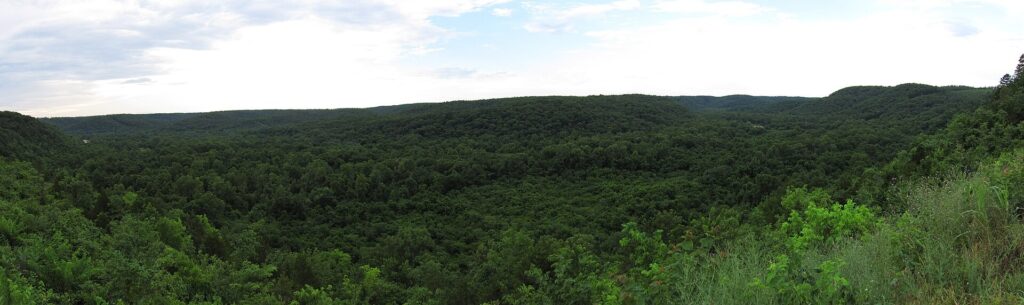
The Jacks Fork is the shorter, narrower of the two. It’s the one we’d send a first-timer or a family with young kids toward. Most stretches are shallow enough to see bottom the whole way. The put-ins near Alley Spring keep trips short enough to finish in half a day. Eminence is the base for both rivers — outfitters, motels, and the closest real grocery store. Summer weekends get crowded close to town. Go a few miles upstream, or float on a weekday, and the crowd mostly disappears.
Current River Float Trips
The Current is longer, a little deeper, and carries more push than the Jacks Fork. That makes it the better pick for a full-day float, or an overnight gravel-bar camp. It starts at Montauk State Park, where the trout-stream headwaters are barely wider than a creek. It widens steadily heading toward Van Buren, spring after spring adding to it. It’s also the busiest river in the state on a July weekend. Outfitters run shuttles nearly nonstop. An early start or a weekday float matters more here than almost anywhere else on this list. Our Current River float trips guide goes deeper on this river.
Mark Twain National Forest Rivers
Four rivers on this list run through Mark Twain National Forest, not a state park or a Park Service unit. The U.S. Forest Service puts the forest’s total floatable water at more than 350 miles. These rivers see far less traffic than the Current or the Jacks Fork. Smaller access points, fewer outfitters, more forest. What they share is cold water — most of it comes straight out of a spring, not off a warm lake surface.
Eleven Point River Float Trips
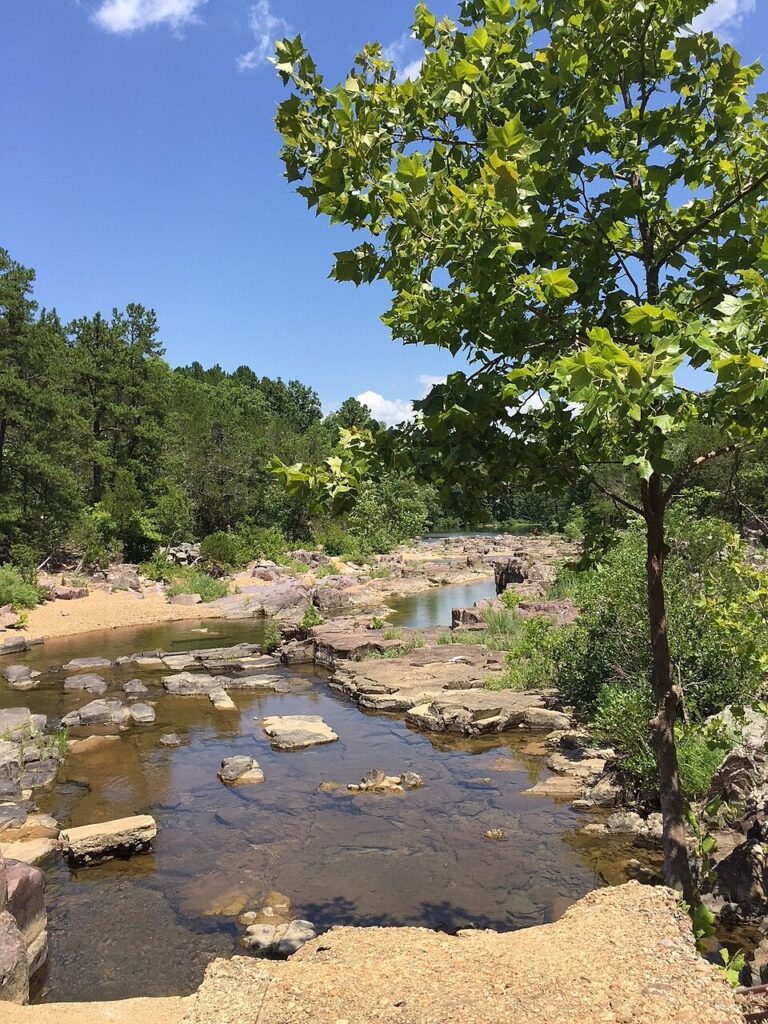
The Eleven Point is the coldest and least crowded river on this list. It’s a National Wild and Scenic River for a 44-mile stretch between Thomasville and Highway 142. Greer Spring, one of the largest in the state, roughly doubles the river’s flow partway down. The water stays cold enough that a summer float still calls for a splash jacket. Access points sit farther apart than on the Current or Jacks Fork. Trips run longer here, and see far fewer other boats. Closer to solitude than to a party atmosphere.
Big Piney River Float Trips
The Big Piney is a slower, gentler float than most rivers on this list. Good pick for a first trip in a canoe rather than a kayak. It winds past Fort Leonard Wood and the old Route 66 crossing at Devils Elbow — more history along the banks than most Ozark floats offer. Access points are spaced for half-day and full-day trips. It’s a tributary of the Gasconade, not a park or forest showcase river, so it stays quiet even when the Current is packed.
North Fork White River Float Trips
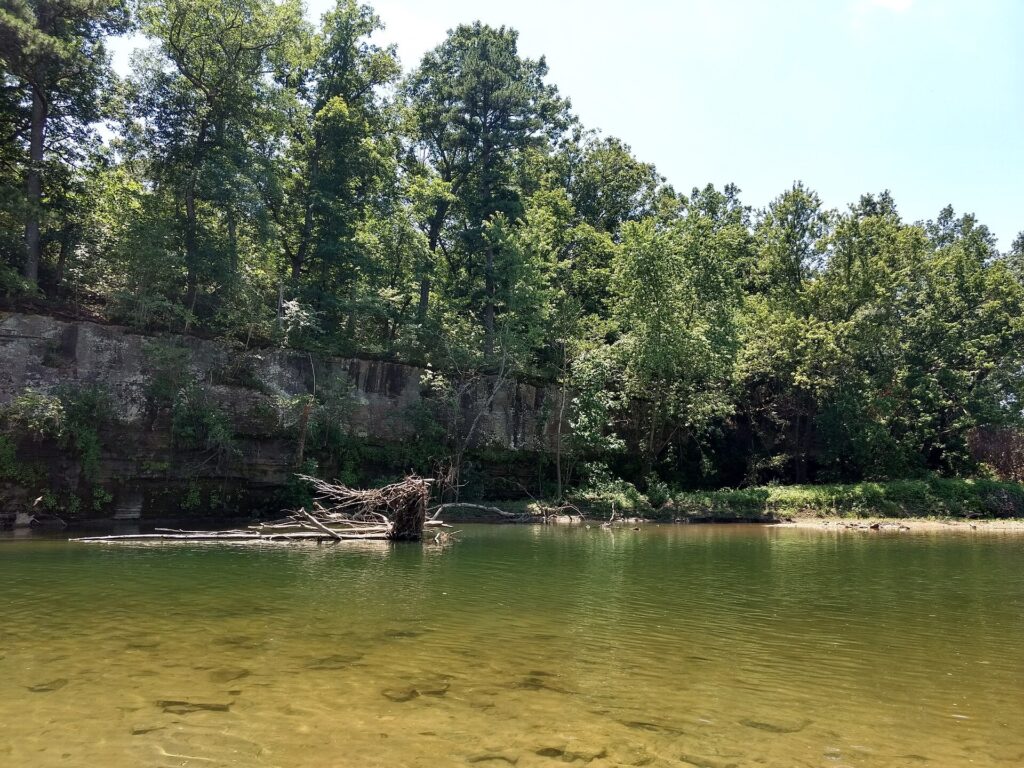
The North Fork is the coldest water on this list. Several large springs feed it, keeping it near trout-stream temperatures year-round — which is exactly why it’s managed as one. That cold water means a splash jacket even in July, if you’re planning to swim rather than just float. It also means the river almost never warms into the murky, algae-green water some Ozark streams get by August. It’s a shorter, quieter river than the Current or Eleven Point. Better suited to an afternoon than a full-day trip.
Black River Float Trips
The Black River’s East Fork carves through the rhyolite chutes at Johnson’s Shut-Ins State Park. The granite boulder field at Elephant Rocks State Park sits a short drive north. Both are worth a stop before or after a float on the main river near Lesterville. The float itself runs rockier and more technical in low water than the Current or Jacks Fork — more maneuvering around exposed gravel and boulders. Good match for paddlers who already have some river experience. A poor one for a first-time floater in a rental canoe.
Canoeing Rivers in Missouri
The last three rivers on this list don’t share one park or forest boundary. They’re grouped here because each solves a different problem — proximity to St. Louis, a different kind of fishing, or simply fewer people. Each is worth a special trip on its own, not just a fallback when the Current is full.
Meramec River Float Trips
The Meramec is the closest real float to St. Louis, about an hour’s drive. It shows on a holiday weekend — the stretch near Meramec State Park earns its party-river reputation honestly. Go upstream toward Steelville for a quieter run, or plan around a weekday instead. Beyond the paddling, the river’s own caves are most of the draw. Fisher Cave sits inside the state park; the show caves at Onondaga and Meramec Caverns are a few miles off the water.
Niangua River Float Trips
The Niangua below Bennett Spring is a different kind of float than the rest of this list. Slower current. Warmer water once you’re a few miles past the spring. Better known for smallmouth bass than for scenery. Bennett Spring itself puts out more than 100 million gallons of water a day — cold enough to run one of Missouri’s oldest trout parks at the headwaters. Downstream, the river warms and slows on its way toward Ha Ha Tonka and Lake of the Ozarks. Good pick for an angler dragging along a non-fishing group. Less so for anyone chasing the clearest water on this list.
Gasconade River Float Trips
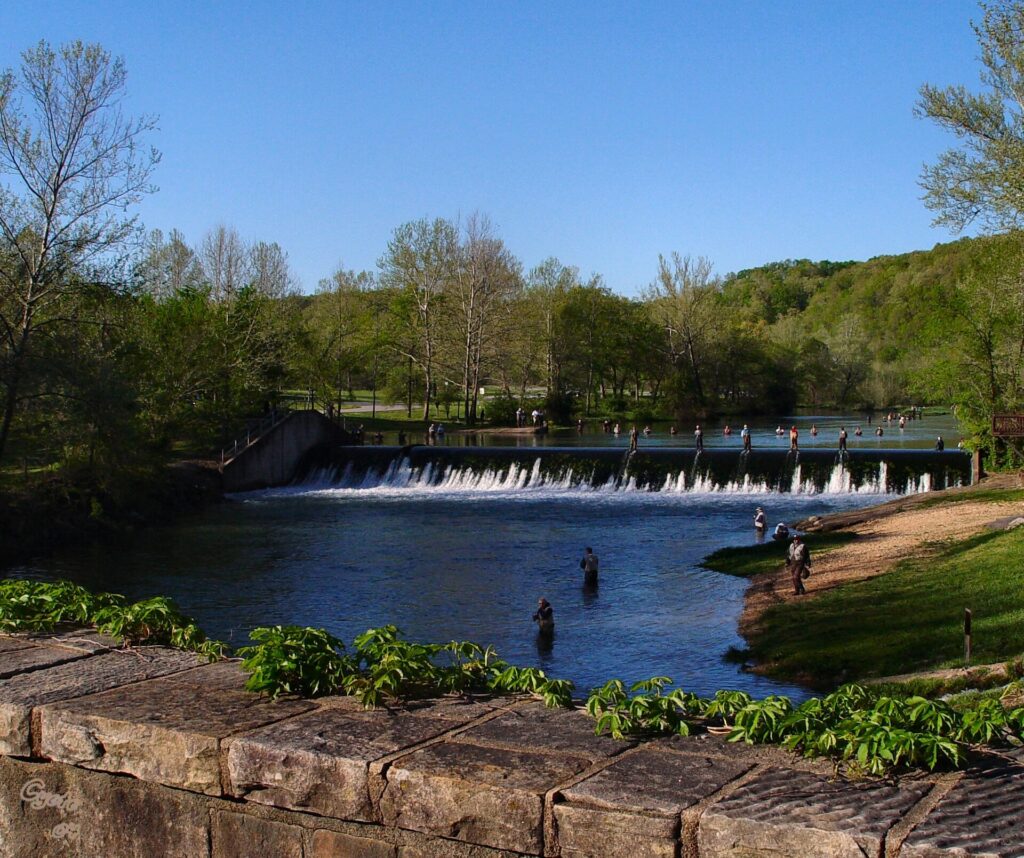
The Gasconade is the longest river that runs entirely inside Missouri. Most of it sees a fraction of the boat traffic the Current does. It’s a slower, warmer, more remote float than anything else on this list — better suited to a lazy multi-day trip than a fast afternoon paddle. Access points sit farther apart and are less developed. This is the one river here we’d tell a first-time Missouri floater to save for a second trip.
Missouri River Outfitters
Every river on this list has at least one outfitter within reach. Canoes, kayaks, rafts — and the shuttle back to your vehicle, which is the real service you’re paying for. Walking or driving back upstream isn’t practical on any of these rivers. Tubes are usually available too, for a slower day that takes no paddling skill at all. Our roundup of the best places to go tubing covers that side of things. Rules and boat availability vary by outfitter and by river. Call ahead on a holiday weekend to confirm before driving out.
Are Life Jackets Required in Missouri?
Inside Ozark National Scenic Riverways, the National Park Service requires children under 7 to wear a personal flotation device at all times on the Current and Jacks Fork. Every boat also needs one PFD available per person aboard, regardless of age. The same rules ban glass containers and styrofoam on or around the river. Rivers outside the Riverways — the Eleven Point in Mark Twain National Forest, the state parks along the Black River and Niangua — mostly mirror those same rules, even where they’re not federally enforced. Most outfitters simply won’t rent a boat without enough life jackets aboard. Bring your own if you’re bringing small kids; rental jackets don’t always come in child sizes.
What Is the Best River to Float in Missouri?
For me, it’s the Jacks Fork for a family trip and the Eleven Point when I want quiet. Those two cover most of what people are actually looking for on this list. Shallow, short, and forgiving, the Jacks Fork won’t give a first-time paddler in a rental canoe a bad day. Reaching the Eleven Point takes more planning and a longer drive. The payoff: a river that still feels like it belongs mostly to the fish and the herons. Want company, an easy shuttle, and a gravel bar big enough to camp on together? The Current is the answer — built for a crowd, not in spite of one. If a Midwest road trip has you looking past Missouri too, our guide to Starved Rock covers a very different river day trip near Chicago.
Float FAQ
What is the best river to float in Missouri?
The Jacks Fork and Current River, both inside Ozark National Scenic Riverways, are the most popular and easiest to plan around. For quieter water, the Eleven Point River in Mark Twain National Forest sees far fewer boats.
Are life jackets required to float in Missouri?
Inside Ozark National Scenic Riverways, children under 7 must wear a personal flotation device at all times. Every boat needs one PFD per person aboard. Most outfitters won’t rent a boat without enough life jackets for everyone in it.
How many rivers are good for floating in Missouri?
Nine rivers make up most of the state’s floating: the Jacks Fork, Current, Eleven Point, Meramec, Niangua, Big Piney, North Fork of the White, Black River, and Gasconade.
What is the coldest river to float in Missouri?
The North Fork of the White River runs coldest. Several large springs feed it, keeping it near trout-stream temperatures even in summer. The Eleven Point and Current are close behind.
Is glass allowed on Missouri float trips?
No. Ozark National Scenic Riverways bans glass containers and styrofoam on or around the Current and Jacks Fork. Most other rivers and outfitters enforce the same rule.
Published September 28, 2026.
Photo credits: (1) featured, A river scene along the Ozark National… — National Park Service, U.S. Government work, public domain, via Wikimedia Commons; (2) A wide valley view of the Jacks Fork River… — Chris M Morris, CC BY 2.0, via Wikimedia Commons; (3) Marble Creek running through the Mark Twain… — U.S. Forest Service, U.S. Government work, public domain, via Wikimedia Commons; (4) The Big Piney River flowing past wooded… — Inklein, CC BY-SA 4.0, via Wikimedia Commons; (5) Looking upstream at the dam where Bennett… — Wylie "Cyote" C, CC BY-SA 3.0, via Wikimedia Commons.