

Some links on our site may earn us a commission at no extra cost to you. Learn more.
The best tubing in the country runs through two very different kinds of water. Warm, spring-fed rivers you can float all day without paddling. Faster mountain and Ozark rivers where a canoe beats a tube most of the year. Our pick for a family trip is Deep Creek in the Great Smoky Mountains. Next come the Ozark rivers of southern Missouri, then eight more rivers we can vouch for or source cleanly, from Florida springs to a New England whitewater run.
We’ve tubed Deep Creek more times than we can count and paddled both of the big Ozark rivers. The Florida springs we know from years of South Florida trips — repeat visits, not a single stop. None of the picks below are a one-time thing for us. They’re the rivers we go back to. The rest of this list adds honest, well-sourced picks that round out a real coast-to-coast tubing trip.
Best Rivers for Tubing
Here’s the quick version: where each river runs, how long the float takes, and whether a tube is waiting for you when you get there. Details and sources for every stop follow below.
| River | State | Float Length | Difficulty | Kid-Friendly | Tube Rental On-Site |
|---|---|---|---|---|---|
| Deep Creek | NC | Short to long, season-dependent | Class I | Yes | No — Bryson City, just outside the park |
| Jacks Fork River | MO | Half-day sections | Class I, slow | Yes | Limited — mostly canoe/kayak outfitters |
| Current River | MO | Half- to full-day sections | Class I | Yes | Yes |
| Ichetucknee Springs | FL | About 45 minutes to an hour | Class I | Yes | Yes, in the park |
| Rainbow River | FL | About half a day with the shuttle | Class I | Yes | Yes |
| Salt River | AZ | A few hours between sites | Class I | Yes | Outside the forest boundary |
| Comal River | TX | Under two hours, in town | Class I | Yes | Yes |
| Shenandoah River | VA | Half- to full-day sections | Class I | Yes | Yes |
| Farmington River | CT | 2.5 miles, about two hours | Class I–III | Older kids | Yes |
| Esopus Creek | NY | A few miles, rocky in low water | Class I–II | Older kids | Yes |
| Delaware River | PA/NJ | Half- to full-day sections | Class I | Yes | Yes |
Deep Creek Tubing
Deep Creek is the trip we send every family to first. It runs right past the campground inside Great Smoky Mountains National Park. The ride gets better the farther upstream you start. Head above the Indian Creek junction for a faster, rockier run before the current settles down again near the campground. Depending on the season and water level, you can ride the whole way back to camp. That makes for one of the best afternoons in the park.
The National Park Service is blunt about the risk. It says “water recreation is not recommended in Great Smoky Mountains National Park due to numerous hazards.” People tube Deep Creek anyway, sensibly: watch the water level, wear shoes, and skip it after heavy rain. The park doesn’t rent tubes, but outfitters just outside the boundary in Bryson City do. For the full write-up on the campground, waterfalls, and even the crawdads, see our Deep Creek guide. Staying longer in the Smokies with the family? Our guide to the Smokies with kids rounds out the rest of the trip.
Jacks Fork River Float Trips
The Jacks Fork is the smaller, wilder sister of the Current River, both inside Ozark National Scenic Riverways. It’s spring-fed, crystal clear, and cold even in August. Long stretches flow very slowly. That’s why we’d bring a paddle rather than count on the current — a canoe or kayak makes the day here. A tube is a slower way to see it.
Access runs in order from Buck Hollow down through Alley Spring, Bay Creek, and on toward Eminence. Camping is available at the NPS sites along the way. For put-ins, mileages, and the outfitters who run shuttles, our Jacks Fork River float guide has the full breakdown.
Current River Float Trips
The Current is the bigger of the two Ozark rivers. It has more put-ins, more outfitters, and an easier day for a first-timer. We’ve floated both rivers. If you want quiet, choose the Jacks Fork. If you want a full-service day with the widest choice of sections, choose the Current.
The classic day float runs from Akers down to Pulltite. Van Buren makes a solid base, with camping and rental shops nearby. See our Current River float guide for section-by-section detail.
Ichetucknee Springs State Park
Ichetucknee is north Florida’s spring-fed classic — clear, cold water year-round. It’s one of the few tubing rivers where the whole trip stays inside a state park. The tubing run leaves from the south entrance at Dampier’s Landing. It takes about 45 minutes to an hour to the takeout, with a tram or a short trail back to your car. For hours, fees, and the Blue Hole snorkel spot, see our full Ichetucknee Springs guide; Ginnie Springs is the closest neighbor, about 25 minutes away.
The park’s hours and fees page lists the gate open from 8 a.m. to sundown and a per-vehicle entrance fee. Tubes and life jackets rent inside the park. No coolers or glass are allowed on the river, and everyone has to be off the water by 6 p.m. The north section stays closed to tubing to protect the ecosystem there, so this is a south-entrance trip only.
Rainbow River Tubing
Down the road from Ichetucknee, in Dunnellon, the Rainbow River runs just as clear and just as cold. KP Hole County Park is the main put-in, with tube rentals on site. A return shuttle from Blue Run of Dunnellon Park turns the float into a half-day outing. Watch for manatees in the cooler months — they move up the spring run when the Gulf gets chilly.
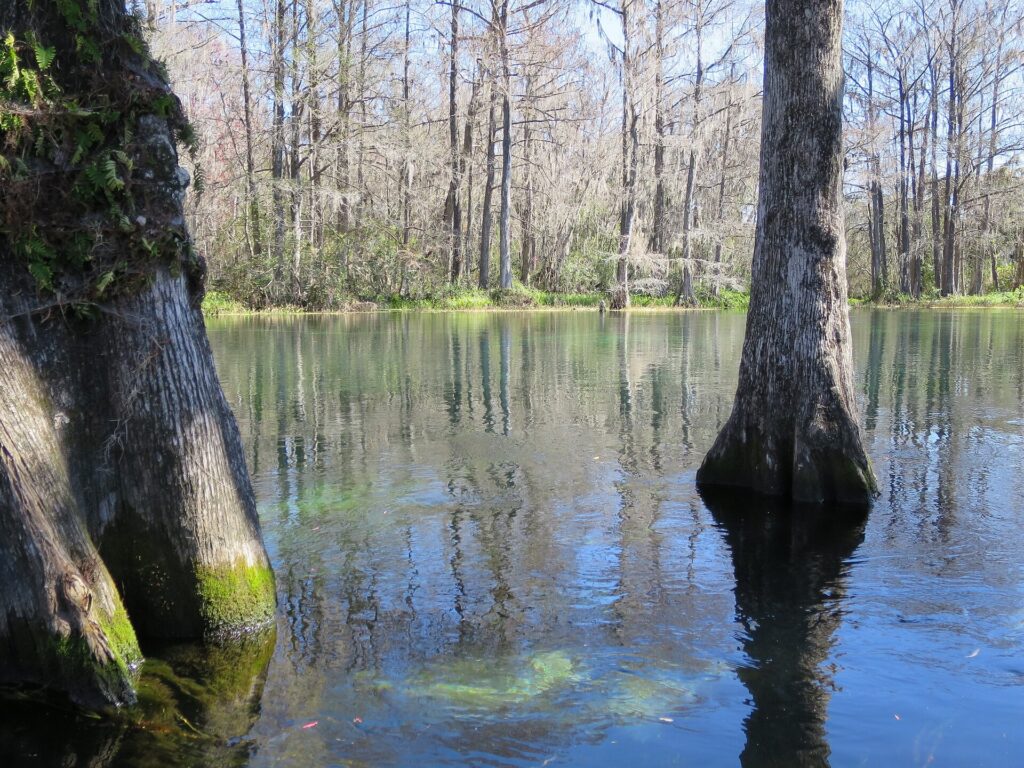
Salt River Tubing
Arizona’s Lower Salt River, east of Phoenix inside Tonto National Forest, is the desert answer to a summer float. Several recreation sites string along the river — Water Users, Coon Bluff, Phon D Sutton, Pebble Beach. Pick a short stretch, or link a few together for a few hours on the water. Wild horses are a common sight grazing the banks.
A Tonto Daily Pass covers parking at the day-use sites, cheaper bought ahead from a vendor than at the on-site machine. Tube rentals aren’t run by the Forest Service itself — they operate from outside the forest boundary. Glass containers aren’t allowed at the recreation sites.
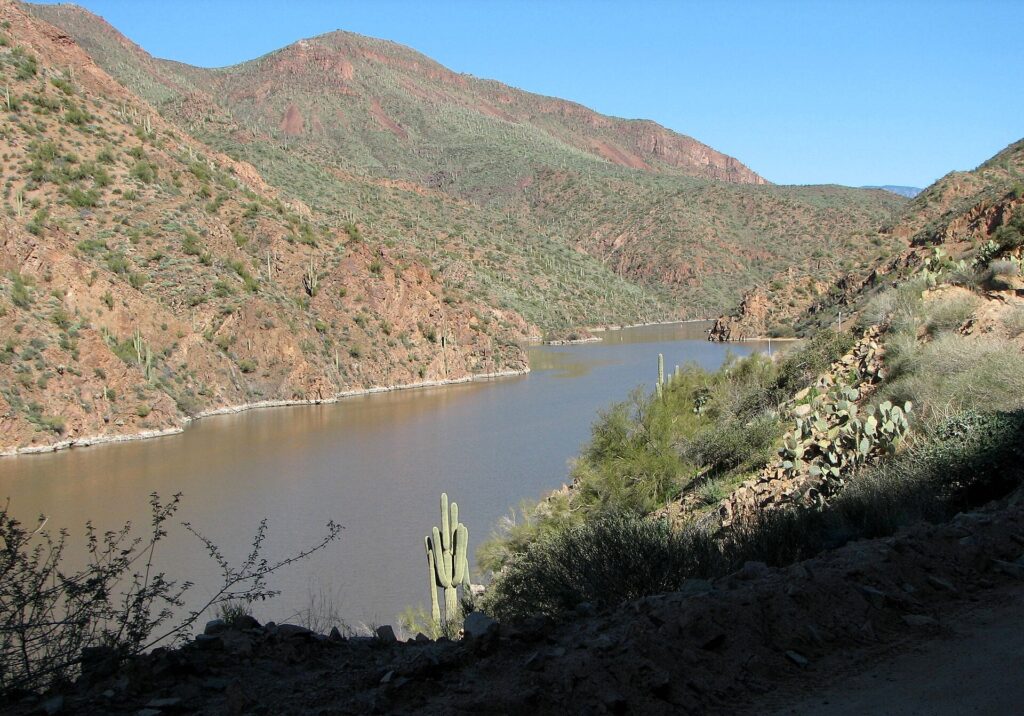
Comal River Tubing
The Comal, running straight through New Braunfels, Texas, is a short, cold, spring-fed float. It’s over almost as soon as it starts — which is exactly why it draws crowds all summer. The nearby Guadalupe River is the longer alternative when you want a full day instead of an hour.
New Braunfels enforces a strict container ordinance on both rivers: no cans, glass, styrofoam, or disposable food wrappers. Coolers are capped at one per person, 30 quarts or smaller, with a locking lid. Tubes can’t exceed five feet in any dimension. Bring a soft-sided cooler and a single tube and you’ll clear the checkpoint without trouble.
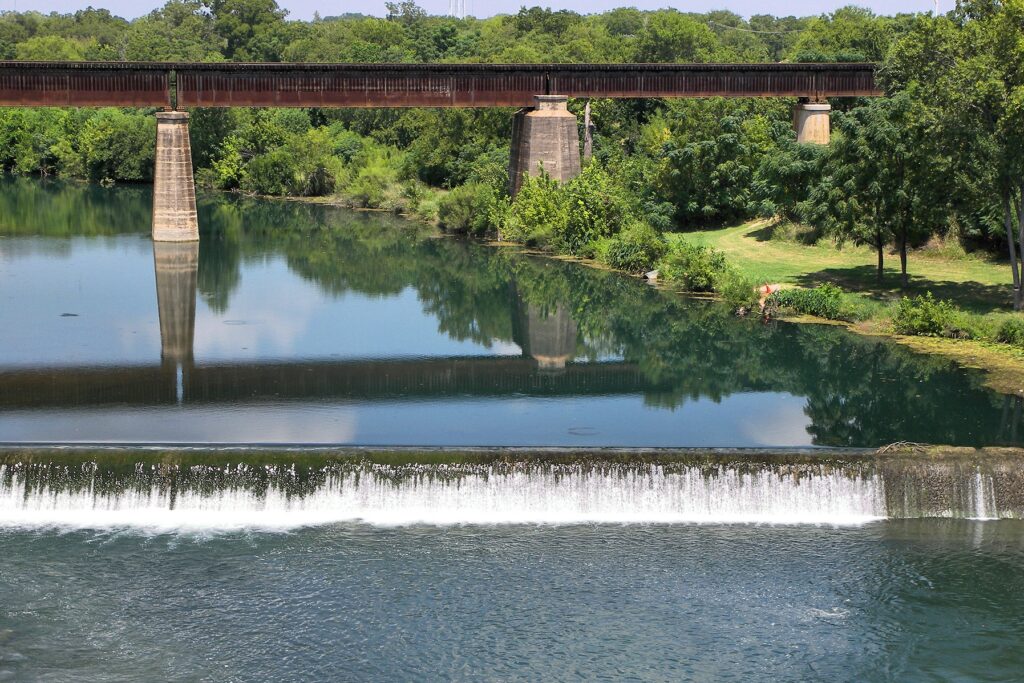
Shenandoah River Virginia
The Shenandoah is a wide, gentle river through Virginia’s Blue Ridge. Shenandoah River State Park near Bentonville is the easiest way in. There are no designated swimming beaches, but wading and floating are permitted along the park’s river access points. Outfitters around Front Royal and Luray run guided tube and canoe trips for the stretches outside the park.

Farmington River Tubing
The Farmington, through Satan’s Kingdom State Recreation Area in New Hartford, Connecticut, is not a lazy float. The run covers about two and a half miles through a narrow gorge, with three stretches of Class I, II, and III water. That’s real rapids, not just current. A vendor rents tubes on-site, though the schedule shifts with staffing, so it’s worth checking ahead.
The park itself is free for parking and river access, open 8 a.m. to sunset. An alcohol ban is in effect, and no pets are allowed. This is the one river on this list we’d point an older kid or a confident swimmer toward, rather than a first-timer.

Esopus Creek New York
In the Catskills, the Esopus Creek through Phoenicia has been a summer tubing spot since long before it was trendy. New York classifies it as a navigable stream. That keeps it legally open to the public for tubing and paddling, even where it crosses private land. Outfitters based in Phoenicia, near the Woodland Valley Bridge access, rent tubes and run the shuttle.
Flow here depends on releases from the Ashokan Reservoir upstream. The water runs colder and can move faster than the spring-fed rivers on this list. It’s a rockier, more hands-on float — worth doing once you’ve got a river or two of tubing experience under your belt.
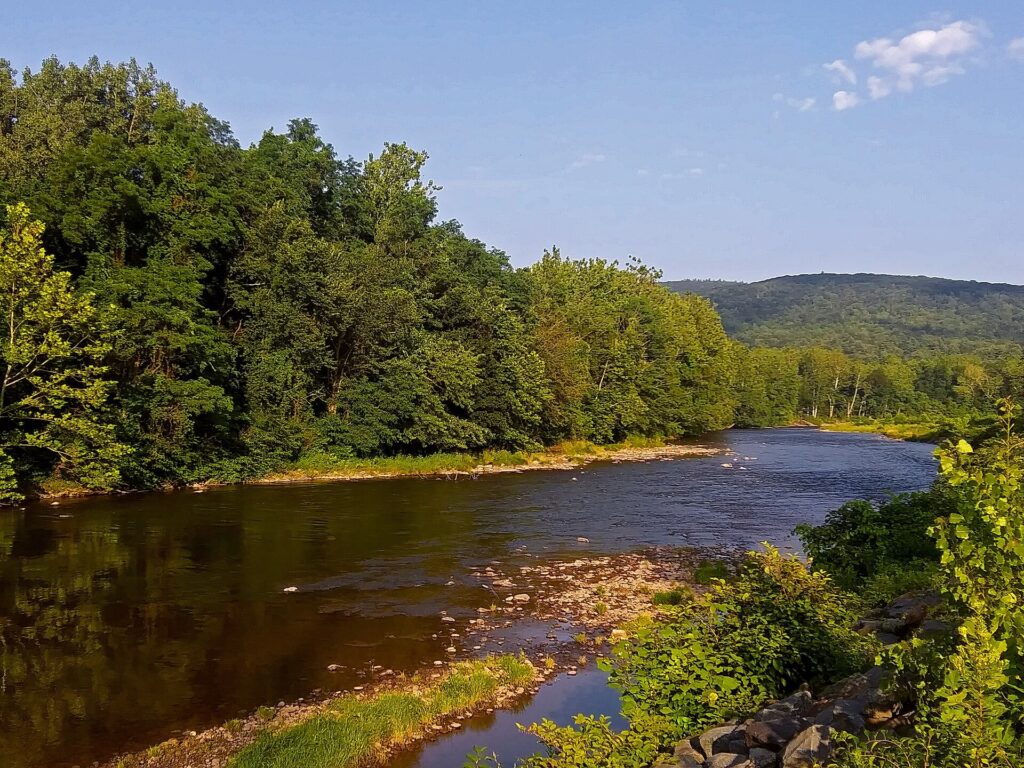
Delaware Water Gap
The Delaware River flows through the Delaware Water Gap National Recreation Area, on the Pennsylvania–New Jersey border. It’s slow, wide Class I water — one of the most forgiving multi-day floats on this list. Outfitters based in Milford, Bushkill, and Portland rent tubes and rafts and run the shuttle back to your car.
The National Park Service requires any child 12 or under to wear a Coast Guard–approved life jacket at all times on the river. Every boater has to have their own PFD on board too. It must stay within reach even if they’re not wearing it. Never swim across the river, and never mix alcohol with time in the water.

Best Time to Go Tubing
For most of the rivers on this list, tubing season runs late spring through early fall. That’s once the water has warmed up and the current has dropped from snowmelt or spring rain. The Farmington, Esopus, Delaware, and Shenandoah all fit that window, with July and August the busiest and most reliable stretch.
The spring-fed rivers break that rule. Deep Creek, the Jacks Fork, the Current, Ichetucknee, Rainbow, and the Comal all hold a steady temperature year-round. The water itself is rarely the limiting factor — the weather around it is. The Salt River in Arizona runs on desert time. It’s warm enough to float long before and after the Northeast rivers open, but best avoided on the hottest afternoons of summer.
Tubing FAQ
Is tubing safe? It can be, if you match the river to your experience. Class I water like Deep Creek, the Ozark rivers, or the Florida springs is forgiving. Anything with rapids, like the Farmington, deserves a life jacket and a look at current conditions before you go.
What to bring tubing? Water shoes for rocky riverbeds, sunscreen, and a way to secure your phone and keys. A life jacket for any child under about 60 pounds, regardless of what the river requires. A soft cooler, where coolers are even allowed, beats a hard one for getting on and off a tube.
How long does tubing take? It ranges from about 45 minutes on a short spring run like Ichetucknee. A half-day float with a shuttle, like the Rainbow River or the Ozark rivers, is common too. Check the table above for a river-by-river estimate.
Do you need a permit to go tubing? Rarely for the tubing itself. Several of these rivers charge a parking or day-use fee — the Tonto Daily Pass on the Salt River is one example. NPS-managed rivers like the Delaware and the Ozark rivers also ask you to follow posted boating and safety rules once you’re on the water.
Prices are approximate, current as of publication, and change frequently — confirm the latest price with the retailer before buying.
Published September 27, 2026.
Photo credits: (1) featured, Clear blue water at the Head Spring in… — Ebyabe, CC BY-SA 2.5, via Wikimedia Commons; (2) Bald cypress trees along the clear water of… — Art Anderson, CC BY-SA 3.0, via Wikimedia Commons; (3) The Salt River flowing through the Arizona… — Bernard Gagnon, CC BY-SA 3.0, via Wikimedia Commons; (4) The Guadalupe River near New Braunfels… — Larry D. Moore, CC BY 4.0, via Wikimedia Commons; (5) Aerial view of the Shenandoah River winding… — La Citta Vita, CC BY-SA 2.0, via Wikimedia Commons; (6) A scenic view of the Farmington River in… — National Park Service, U.S. Government work, public domain, via Wikimedia Commons; (7) Esopus Creek flowing through the Catskills… — Daniel Case, CC BY-SA 4.0, via Wikimedia Commons.