

Some links on our site may earn us a commission at no extra cost to you. Learn more.
The Roaring Fork Motor Nature Trail is a 5.5-mile, one-way loop road on the edge of Gatlinburg. It packs more into an hour than almost any other drive in the Smokies. You get log cabins, a working tub mill, and a roadside waterfall, all without leaving the car if you don’t want to. Plan on 45 minutes if you don’t stop. Two to three hours if you do.
I’ve driven this loop more times than I can count, in every season it’s open. It’s still the first thing I send friends to when they only have a morning in Gatlinburg. Go early. The road is one lane, one direction, with nowhere to pass. By mid-morning in October it backs up behind whoever stopped to photograph the first cabin. Bring cash or a card for the parking tag, a full tank of gas, and patience for the switchbacks — this isn’t a road to rush.
How Long Is the Roaring Fork Motor Nature Trail?
The National Park Service lists the trail at 5.5 miles, one-way, on a narrow and winding paved road. It starts off Cherokee Orchard Road, a short drive up from traffic light #8 in downtown Gatlinburg. The loop comes back out the way you drove in. It never crosses itself.
It isn’t open year-round. The park’s current road schedule runs Roaring Fork from April 17 through November 29. It’s gated shut the rest of the winter, because the surface is too narrow and steep to plow safely. Check the seasonal status before you drive up, especially in early spring or late fall, when the open date can shift.
The road is also too tight for anything big. Motorhomes, buses, and vans over 25 feet are turned away. So is anything towing a trailer. If you’re pulling a camper, park it at your campground and take the smaller vehicle up.
Roaring Fork Motor Nature Trail Stops
The stops come in roughly this order as you drive the loop. The times below are our own rough estimates for a relaxed pace, not official park figures. Pull all the way off the pavement at each one. There’s no shoulder to speak of, and the cars behind you still need to get by.
| Stop | What It Is | Time to Allow |
|---|---|---|
| Noah “Bud” Ogle Place | 1880s farmstead with cabin, tub mill, and flume | 20–30 min |
| Rainbow Falls Trailhead | Parking for the 5.6-mile round-trip hike to Rainbow Falls | Half day if hiking |
| Grotto Falls Trailhead | Trillium Gap trailhead, very limited parking | 1–2 hrs if hiking |
| Ephraim Bales Place | 1890s two-part log cabin and outbuildings | 10–15 min |
| Alfred Reagan Place | Painted house and a working tub mill | 10 min |
| Place of a Thousand Drips | Roadside waterfall, viewable from the car | 5 min |
| Full loop, no stops | Just the drive | 30–45 min |
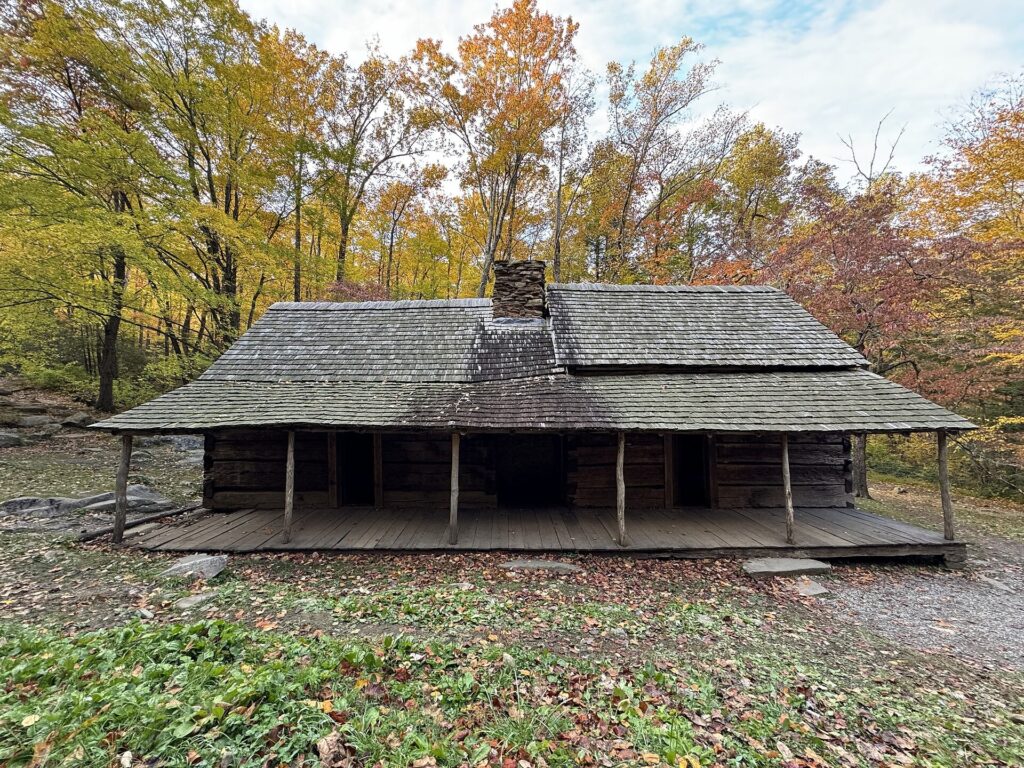
Noah Bud Ogle Place
This is the first stop, and the easiest to justify getting out of the car for. A short self-guided path loops past the cabin, a wooden flume, and a tub mill. A tub mill is a small, water-powered mill that uses a wooden tub instead of a millstone wheel to turn the grinding stone. It’s a quick, flat walk. Good for a stretch before the road narrows.
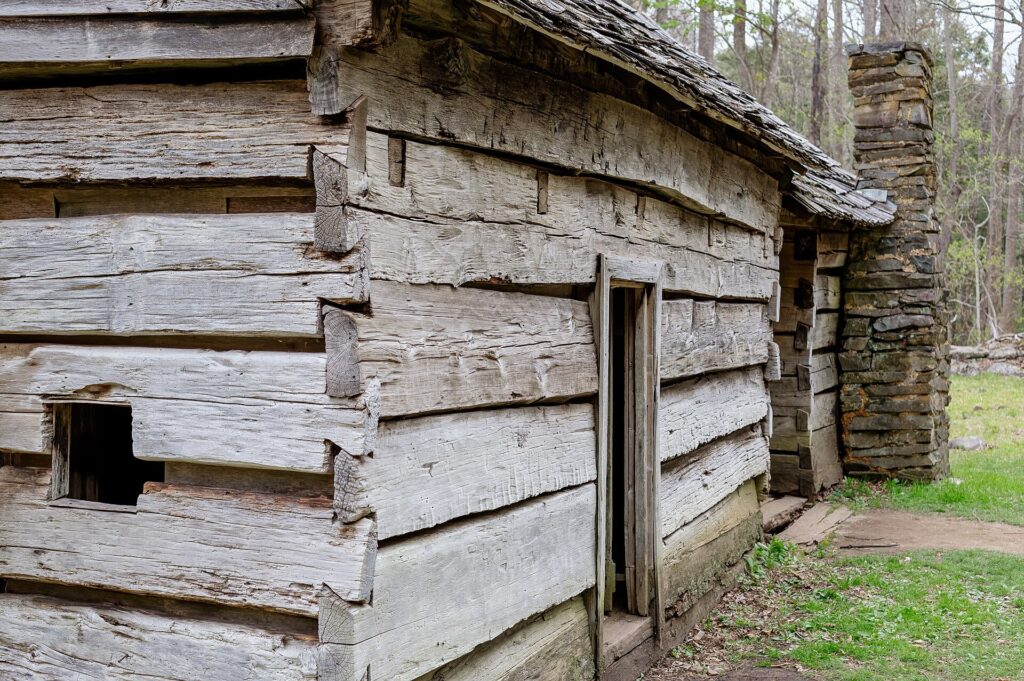
Ephraim Bales Place
Further along, the Ephraim Bales place is a two-part log cabin. The family built it up in stages, roughly 1890 to 1930, according to the park’s own history of the site. Ephraim owned 72 acres and farmed about 30 of them. He raised nine children in a cabin you can walk the full length of in under a minute. Look for the single small “granny hole” window cut into one wall. It’s the only opening of its kind on the property, there to let heat in and cold out without cutting more logs than the family had to.
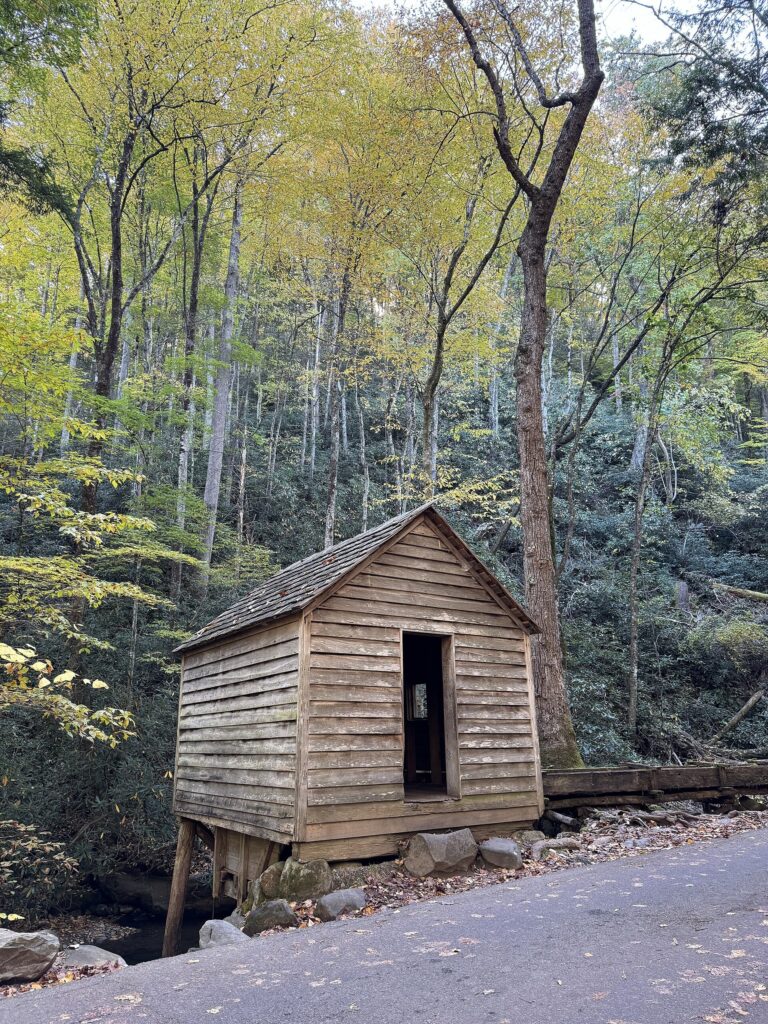
Alfred Reagan Place
The Reagan place stands out because it’s painted. Almost none of the other homesteads on this loop are. Beside it sits Reagan’s tub mill, still standing over the creek that once turned it. It’s a smaller stop than Bales or Ogle. It’s also the easiest one where you can actually see something moving, since the mill sits right at the road’s edge.
Place of a Thousand Drips
Near the end of the loop, water runs off a rock face onto the road shoulder in dozens of thin streams. There’s more after rain, sometimes barely a trickle in a dry stretch. The park service marks it as stop 15 on the numbered roadside signs. You don’t need to leave the car to see it. Pull into the small turnout if there’s room. If there isn’t, slow down and look left.
Rainbow Falls Trailhead
Rainbow Falls has its own trailhead directly off Roaring Fork. The hike is a 5.6-mile round trip that the park rates moderately strenuous. It’s a real commitment, not a stroll. Budget most of a half day if you’re doing it properly, with real shoes and water. The trail keeps climbing past the falls toward Mount LeConte for hikers who want to keep going. We’ve written up that whole climb separately if you’re weighing it.
If you only have the morning, skip the hike and save Rainbow Falls for a trip built around it. Trying to fit a 5.6-mile hike into a loop drive is how people end up rushing both.
Grotto Falls Trailhead
About two miles into the drive, the Trillium Gap trailhead marks the start of the hike to Grotto Falls. The park is blunt about the lot here: parking is very limited. Arrive before 9 a.m. on a weekend and you’ll probably find a spot. Arrive at noon and you’re circling.
Grotto Falls is a shorter, friendlier hike than Rainbow Falls. It’s also the one trail in the park where you walk behind the waterfall instead of just looking at it. We cover it in more depth in our roundup of the best waterfalls in the Smokies. Bring shoes with real grip. The rocks past the falls stay wet and slick even on a dry day.
Roaring Fork Motor Nature Trail Parking
Every vehicle parked anywhere in the park for more than 15 minutes needs a parking tag. The park’s fee page prices them at $5 for a day, $15 for a week, and $40 for the year. Roaring Fork itself doesn’t sell tags on site. Buy one before you drive up, at a visitor center, a campground kiosk, or online.
The trailhead lots fill first. If your plan includes Grotto Falls or Rainbow Falls, treat the parking tag like a ticket you need in hand before you leave your hotel. Don’t plan to sort it out on arrival.
Prices are approximate, current as of publication, and change frequently — confirm the latest price with the retailer before buying.
Roaring Fork Motor Trail Vs Cades Cove
Cades Cove is the bigger, more famous loop, and it draws the bigger crowd for it. Eleven miles, open fields, a real shot at seeing a bear or a herd of deer. Roaring Fork is smaller, tighter, and slower. It trades wildlife odds for history. You come here for the cabins and the mills, not the open valley view.
If I only had one morning in Gatlinburg, I’d take Roaring Fork over Cades Cove. It’s closer to town and it’s shorter. No vehicle over 25 feet is allowed on it, which alone keeps the worst of the RV backups off the road. Cades Cove is worth the drive too, just on a different day, with more time set aside. Doing both on the same trip works fine. Just don’t try to fit them into the same afternoon — each one deserves its own unhurried morning.
Roaring Fork Motor Nature Trail Reviews
How long is the Roaring Fork Motor Nature Trail? It’s 5.5 miles, one-way, and takes about 30 to 45 minutes to drive without stopping. Plan two to three hours if you’re getting out at the cabins and walking the short paths.
When is the Roaring Fork Motor Nature Trail open? It runs seasonally. Under the park’s current schedule it opens April 17 and closes November 29. The exact dates can shift slightly year to year, so check current conditions before you go.
Can you drive an RV on the Roaring Fork Motor Nature Trail? No. Motorhomes, buses, and vans longer than 25 feet are prohibited. So is any vehicle towing a trailer.
Do you need a parking tag for the Roaring Fork Motor Nature Trail? Yes, for any stop over 15 minutes. Tags run $5 a day, $15 a week, or $40 a year. They aren’t sold on this road, so buy one ahead of time.
Is the Roaring Fork Motor Nature Trail worth it? For a short, first-hand look at how mountain families actually lived here, yes. It’s the best hour you can spend in Gatlinburg that doesn’t involve a hike. Go before mid-morning and you’ll have most of the cabins to yourself.
For the rest of your visit, our guide to planning a Smoky Mountains trip covers where to base yourself and how to build a full itinerary around days like this one. Our Mount LeConte guide covers the longer hike this trailhead connects to, if you want to go further.
Published September 28, 2026.
Photo credits: (1) featured, The narrow paved loop of the Roaring Fork… — Missvain, CC BY 4.0, via Wikimedia Commons; (2) The log Bud Ogle cabin at the start of the… — Missvain, CC BY 4.0, via Wikimedia Commons; (3) The Ephraim and Minerva Bales log cabin… — David Ratledge, CC BY 4.0, via Wikimedia Commons; (4) The Alfred Reagan tub mill, a small… — Missvain, CC BY 4.0, via Wikimedia Commons; (5) Roaring Fork creek running alongside the… — Missvain, CC BY 4.0, via Wikimedia Commons.