

Some links on our site may earn us a commission at no extra cost to you. Learn more.
A Current River float trip is the most flexible paddling day in Ozark National Scenic Riverways. Put in near Montauk State Park for a short morning run. Or start at Akers and work down to Big Spring over a long weekend. Access points sit close together. A half-day float is easy to plan. Van Buren makes a solid base, with groceries, gas and a motel a few minutes from the water.
Families usually do best starting at Akers or Pulltite, where the water stays gentle and parking is easy. A multi-day trip is easiest to build around the campgrounds at Round Spring, Two Rivers and Big Spring, with a night at each one.
We’ve floated more than one stretch of the Current. What stands out every time is how clear and cold the water stays, even in August. The Ozark rivers run spring-fed, so they’re crystal clear and full of life — crawdads under every flat rock, minnows in the shallows, a heron working the bank now and then. It’s a different kind of float than a warm lowland river. Pack a light jacket even on a hot day.
Current River Float Times
The park breaks the river into named sections between access points. It publishes mileage and float time for each one. A canoe or kayak covers these times about right. Rafts and tubes run 25 to 50 percent slower over the same water.
| Section | Miles | Float Time |
|---|---|---|
| Baptist Camp to Cedar Grove | 6.9 mi | ~3 hrs |
| Cedar Grove to Akers | 7.7 mi | ~3 hrs |
| Akers to Pulltite | 9.6 mi | ~4 hrs |
| Pulltite to Round Spring | 8.9 mi | ~4 hrs |
| Two Rivers to Powder Mill | 7.3 mi | ~3 hrs |
| Van Buren to Big Spring | 4.3 mi | ~2 hrs |
| Big Spring to Cataract | 8.8 mi | ~4 hrs |
Add time for a lunch stop on a gravel bar. Expect the shorter numbers on a low-water summer week, and the longer ones after rain.
The upper river above Two Rivers runs faster and rockier. It gets more shade and fewer people on a weekday. Below Two Rivers, the Current widens and slows. That’s also where most of the park’s authorized canoe outfitters put people on the water. Renting a boat with a shuttle is the easiest way to do a one-way float without leaving a second car at the take-out.
Akers to Pulltite Float
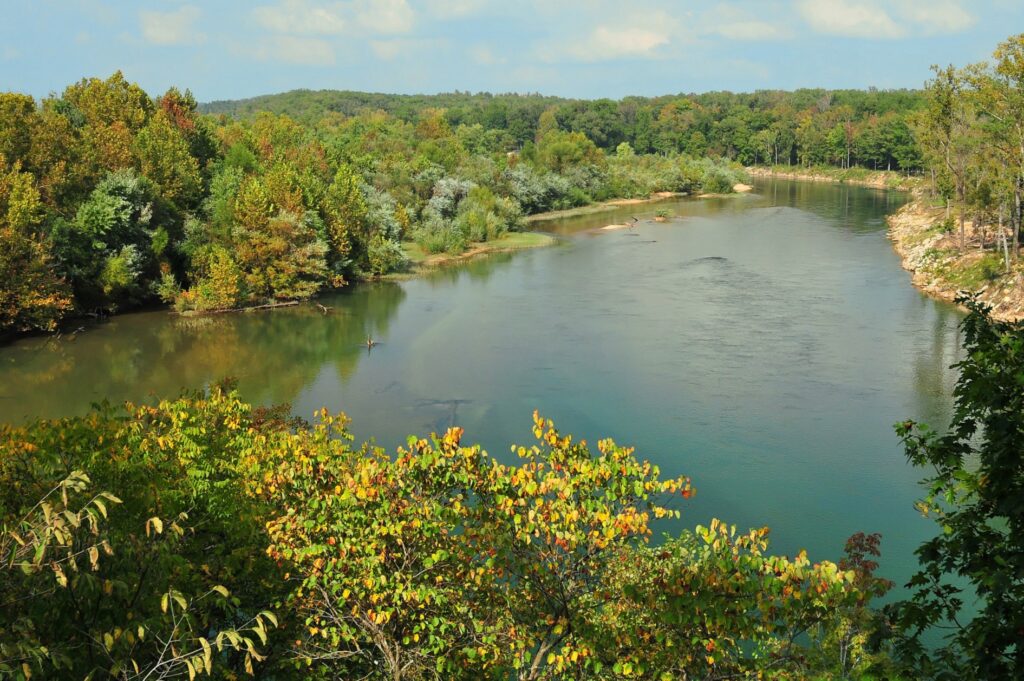
If we had to pick one day on the Current, this is it. About 9.6 miles and 4 hours by canoe or kayak, easy Class I water, and enough gravel bars for a break whenever you want one. It’s long enough to feel like a real trip and short enough to finish well before dinner.
Best Time to Float the Current River
Spring is the best window for the upper river. Snowmelt and rain keep the water high enough to float sections that run too shallow by August. It’s also the coolest, quietest time to be on the water. Pack layers — the spring-fed river stays cold no matter what the air feels like.
Summer is the busy season, especially on weekends and holidays on the lower river below Round Spring. Weekday mornings are the way around the crowds. Fall brings the water back down and clears out the coolers-and-tubes crowd. It also pairs well with a drive through the Ozark hills once the leaves turn. Winter floating is possible, but it’s really only for people with a drysuit and experience.
Montauk State Park
The Current River starts here. Missouri State Parks puts the combined flow of Montauk’s springs and Pigeon Creek at more than 40 million gallons a day. That steady, cold water is why the park stocks the river with rainbow trout instead of running a normal warm-water fishery.
Montauk is a Missouri state park, not part of the national riverways. It has its own campground, cabins and a small store. It’s worth the stop if you want to see where the river is born before you get in a boat, or if trout fishing is part of the trip.
The river below the park is barely a creek at first — narrow, shallow, easy to wade across in spots. It only starts to look like the Current most people picture once more spring branches join in downstream. That makes the stretch right below Montauk a better stop for a picnic than for a full day on the water.

Big Spring Missouri
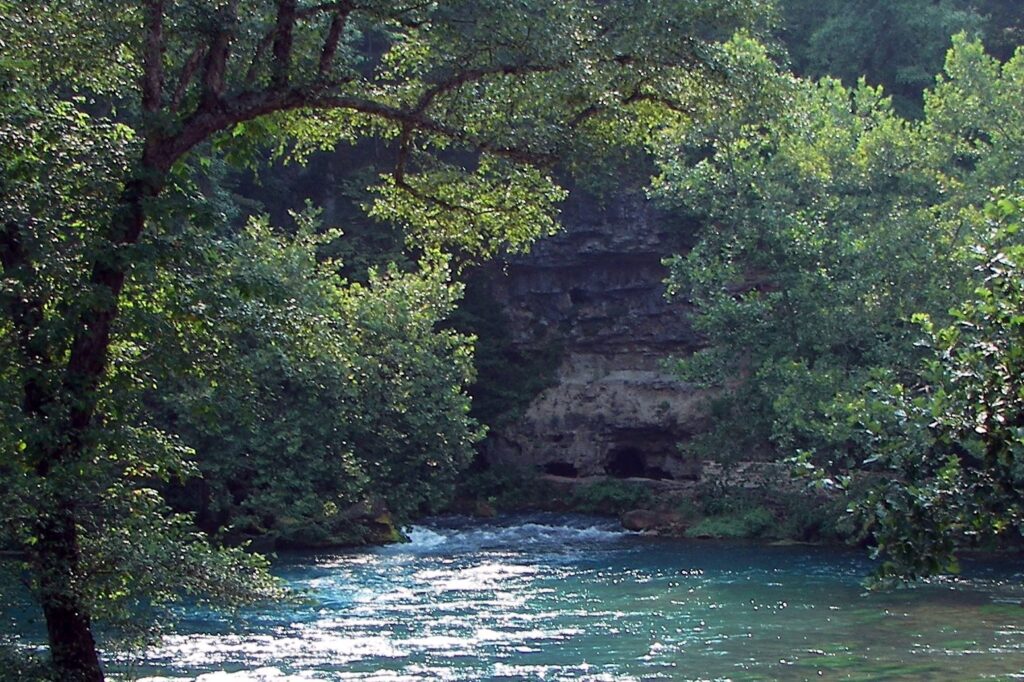
Near Van Buren, Big Spring adds more water to the Current than any other spring on the river. That’s more than 250 million gallons a day, one of the largest single springs in the country. It surfaces ice-blue at the base of a bluff and runs straight into the river. You can feel the temperature change from a canoe seat downstream of it.
Van Buren is the best base for a Current River trip. It sits at the bottom of most of the popular float sections, though Eminence works just as well if you’re floating the upper river or pairing the trip with the Jacks Fork. It has groceries and gas, and puts Big Spring within a few minutes’ drive. The historic Big Spring Lodge sits at the spring itself. The grounds around it are closed for a restoration project as of this writing, but the campground, boat ramp and trails nearby stay open.
Current River Camping
The park runs developed campgrounds at several access points, including Akers, Pulltite, Round Spring, Two Rivers and Big Spring. Nightly fees run from about $10 to $65, depending on the site and campground, per recreation.gov. Sites book out fast for a summer weekend. All of them take reservations online rather than first-come, first-served. Book as soon as your dates are set.
Gravel bar camping is the other option, and it’s free with no reservation needed. The park allows it at approved locations along the river. Stay limits and fire rules are set out in the superintendent’s compendium, and the exact limits vary by stretch, so it’s worth a quick read before you go. It’s a good option for a multi-day float, where you’d rather stop wherever the day’s paddling ends than plan around a specific campground.
Whatever you’re bringing, our national park camping checklist and camping gear checklist for beginners both apply here too.
Current River Rules
Glass containers and styrofoam are banned on and around the river. Bring cans or reusable bottles instead. Everyone needs access to a personal flotation device. Kids under 7 must wear one at all times, no exceptions. Bring your own, or rent one from an outfitter along with the boat.
Alcohol and drug rules are enforced strictly here. Plan the cooler accordingly. Know before you go: the lower river below Round Spring gets genuinely crowded on a holiday weekend, wall-to-wall coolers and tubes by early afternoon. If you want quiet water, float early or pick an upper section instead.
Wear shoes you don’t mind getting wet. The gravel bars are easy walking, but the riverbed itself mixes gravel with slick rock. A bare foot on a mossy rock is how most float-trip injuries happen. An old pair of sneakers or water shoes solves it.
Current River vs Jacks Fork
We’ve floated both, and they reward different trips. If you want quiet water and a wilder feel, choose the Jacks Fork. It’s smaller, slower in long stretches, and carries a fraction of the Current’s summer traffic. If you want a full-service day with the widest choice of put-ins and the easiest access, choose the Current.
Neither one is the wrong pick. First-timers and families usually do better on the Current. There are simply more access points to bail out early if the day runs long. Paddlers who’ve already done a Current River float once, and want less company, are the ones who go looking for the Jacks Fork next.
| Trait | Current River | Jacks Fork |
|---|---|---|
| Size | Bigger, more volume | Smaller, spring-fed and wilder |
| Crowds | Busy below Round Spring on holidays | Quieter most of the year |
| Best for | Canoes, kayaks, tubes, rafts | Canoes and kayaks more than tubes |
| Access | More put-ins, easier parking | Fewer, more remote access points |
Prices are approximate, current as of publication, and change frequently — confirm the latest price with the retailer before buying.
How Long Does It Take to Float the Current River?
How long does it take to float the Current River? It depends on the section and the boat. A canoe or kayak covers most named sections in 2 to 4 hours. Rafts and tubes run 25 to 50 percent slower, per the park’s float-time estimates.
Where does the Current River start? At Montauk State Park. A cluster of springs combines with Pigeon Creek to put more than 40 million gallons a day into the river.
Is there a fee to float the Current River? No entrance fee applies at Ozark National Scenic Riverways. You’ll pay only for camping, if you use a developed campground, or for an outfitter if you rent gear or a shuttle.
What’s the difference between the Current River and the Jacks Fork? The Current is bigger, busier and easier to access. The Jacks Fork is smaller, quieter and better suited to a canoe or kayak than a tube.
What campgrounds are on the Current River? The park’s developed campgrounds along the river include Akers, Pulltite, Round Spring, Two Rivers and Big Spring. Gravel bar camping is also allowed at approved spots along the way, free and without a reservation.
Published September 27, 2026.
Photo credits: (1) featured, The Current River flowing past wooded banks… — NPS / /JoAnn Miller, U.S. Government work, public domain, via National Park Service; (2) The Current River flowing between wooded… — Michael Gäbler, CC BY 3.0, via Wikimedia Commons; (3) Shallow rapids on the young Current River… — Yinan Chen, CC BY 3.0, via Wikimedia Commons; (4) Big Spring at the base of a wooded bluff… — Kbh3rd, CC BY-SA 3.0, via Wikimedia Commons; (5) Wide panorama of the Current River winding… — Michael Gäbler, CC BY 3.0, via Wikimedia Commons.