

Some links on our site may earn us a commission at no extra cost to you. Learn more.
Ozark National Scenic Riverways protects two spring-fed rivers in the Missouri Ozarks: the Current and the Jacks Fork. It also protects dozens of cold springs, a couple of show caves, and a stretch of the Ozark Trail. There’s no entrance fee. Camping runs from developed campgrounds all the way to bare gravel bars, and the water stays cold enough for a splash top even in August. Most visitors base themselves in Eminence or Van Buren. From there, they spend two to four days moving between springs, floats, and one cave tour.
I’ve made the drive to this corner of Missouri more times than I can count. I usually bring a cooler, a couple of kayaks, and at least one dog. She seems to think every gravel bar was built just for her. The rivers here really are what people say: crystal clear, cold even in July, and full of life. Minnows dart around your ankles, herons work the banks, and every so often a water snake slides off a rock. If I could only recommend one river for a family paddle, it would be the Jacks Fork.
Where Is Ozark National Scenic Riverways?
Ozark National Scenic Riverways sits in the southeastern Missouri Ozarks, a couple of hours south of St. Louis. It follows the Current River and the Jacks Fork River. Along the way, it protects the bluffs, springs, and caves around both rivers. Officially, the National Park Service’s own page on the park makes a striking claim: it calls this the first national park area created to protect an entire river system.
There’s no entrance fee here, per the park’s own fee page. You only pay if you camp, book the cave tour, or rent gear from an outfitter.
Along the way you pass through Shannon County, where a small herd of wild horses roams the fields near the rivers. Nobody owns them, and the park asks visitors to watch from a distance rather than approach. A short stretch of the Ozark Trail also runs through the park here, tying it into the wider trail network across the Missouri Ozarks.
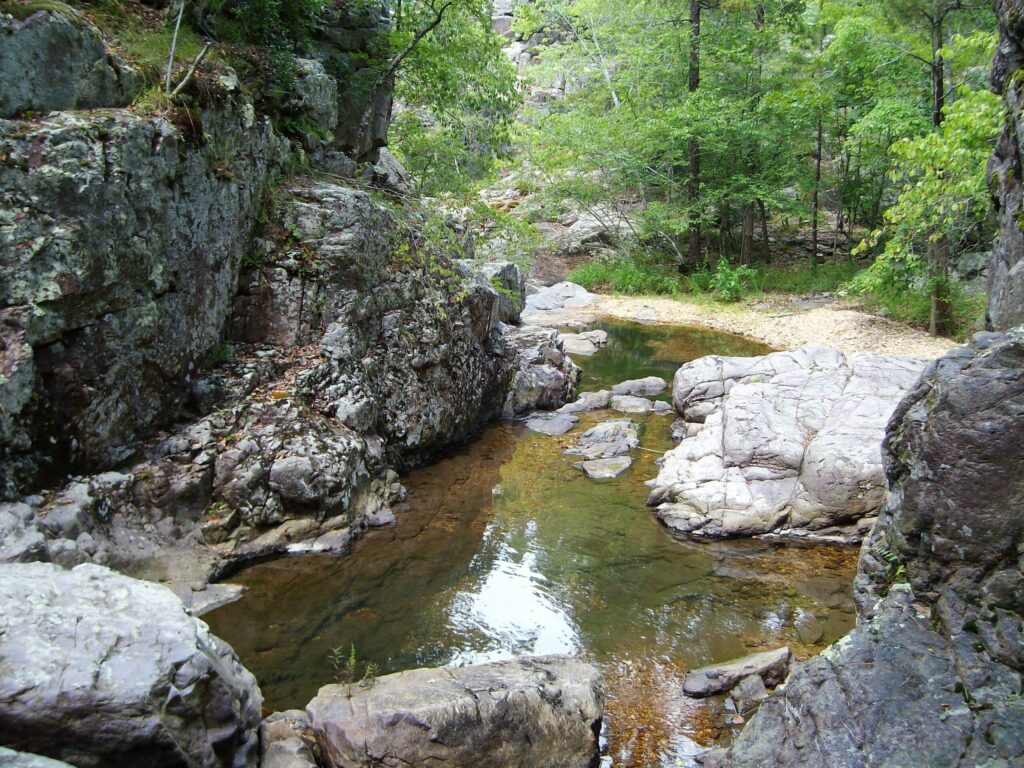
Big Spring Missouri
Big Spring is the single most impressive stop in the park, and it’s an easy one even on a day you’re not floating. Cold, blue-green water boils up out of the ground here. Within a few hundred feet it becomes a river of its own, flowing into the Current a short walk away.
According to the park’s springs page, Big Spring’s flow runs up to 289 million gallons a day. That makes it one of the largest single springs in the country. Its water stays a steady, chilly temperature year-round, so wading in on a hot afternoon feels like stepping into a walk-in cooler.
A short paved loop sits right at the spring itself. Longer hiking trails climb into the hills above it if you want more than a look and a photo. Nearby, the historic Big Spring Lodge and cabins sit near the Big Spring entrance south of Van Buren, and it’s a natural stop before or after a Current River float.
Alley Spring and Mill
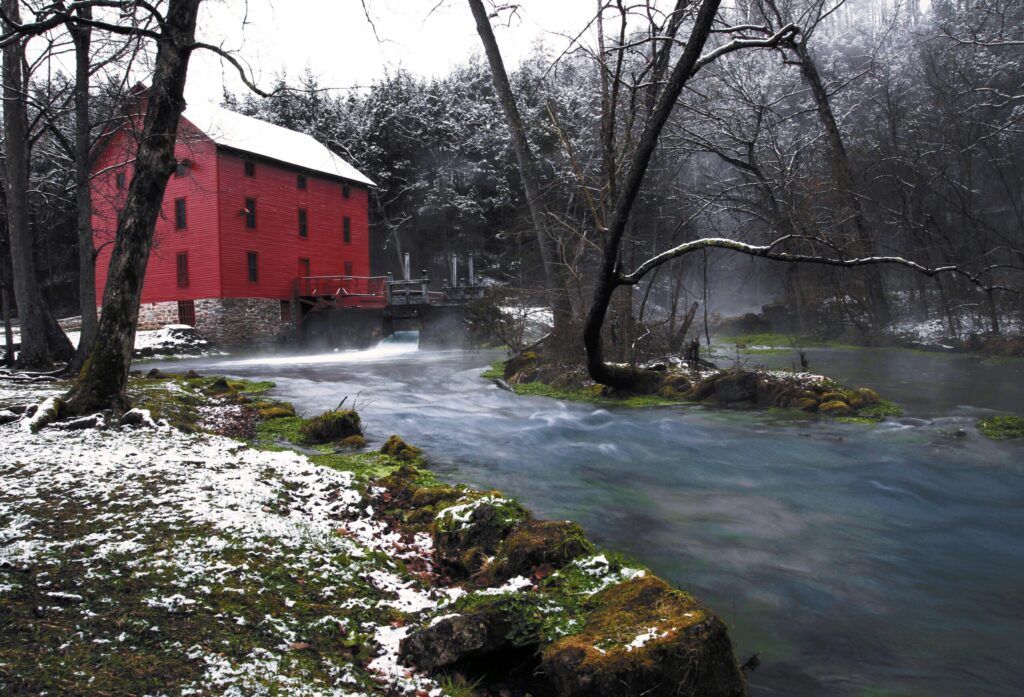
Alley Spring is the most photographed spot in the park, mostly because of the red mill that sits right on top of it. Alley Mill was built in the early 1900s to grind local grain. It’s still standing over the spring today, framed by a limestone bluff behind it.
Its spring pushes out a steady flow of clear, cold water that becomes the upper Jacks Fork River. A swimming area, a picnic ground, and a campground all sit right next to it, which makes Alley Spring an easy half-day stop even without a float planned.
If you only have time for one spring on this trip, I’d put this one at the top of the list. The mill gives you something to look at beyond just the water. It’s also an easy, flat walk from the parking area to the spring itself.
Round Spring Cave Tours
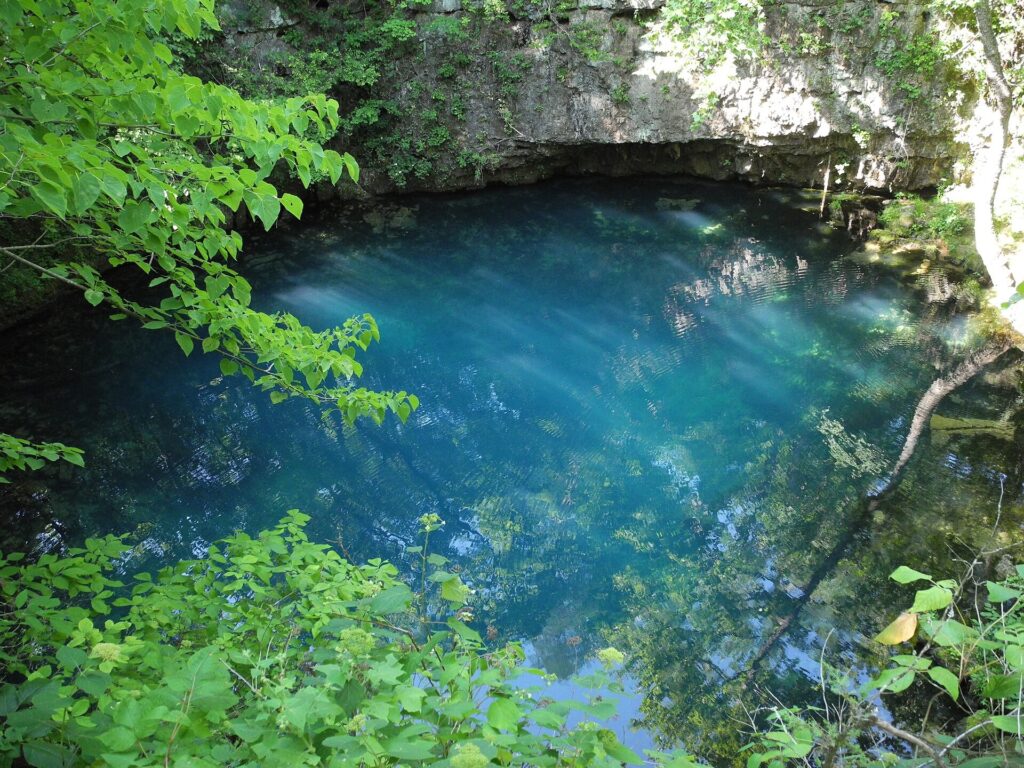
Round Spring itself is a smaller, almost perfectly circular pool tucked below a rock rim. It’s one of the prettiest quick stops in the park. Right next to it sits Round Spring Cave, the only cave in the Riverways still open for public tours — every other cave here has been closed to protect bats from white-nose syndrome.
Tours run daily from Memorial Day weekend through Labor Day, leaving at 10 a.m., noon, and 2 p.m. Tickets go on sale 30 minutes before each tour. Per the park’s cave page, they cost $10 for adults and $5 for kids 12 and under. There are no advance reservations, and each tour caps at 15 people, so arrive early on a busy weekend.
Expect a genuine lantern tour through an undeveloped cave, not a paved walkway. Wear real shoes you don’t mind getting muddy, and plan on a couple of hours underground.
Ozark National Scenic Riverways Camping
Camping here runs from developed campgrounds with real bathhouses down to a gravel bar with nothing but a fire ring. Every developed campground is reservable on recreation.gov. Per the park’s camping page, sites can be booked up to six months in advance.
| Campground | River | Known For | Reservations |
|---|---|---|---|
| Big Spring | Current River | Big Spring itself, hiking trails | recreation.gov |
| Alley Spring | Jacks Fork River | The red mill, swimming area | recreation.gov |
| Round Spring | Current River | Cave tours, popular floating hub | recreation.gov |
| Pulltite | Current River | Campsites right along the water | recreation.gov |
| Two Rivers | Current & Jacks Fork | Sits at the confluence of both rivers | recreation.gov |
| Akers | Current River | Riverside sites, canoe access | recreation.gov |
Gravel bar camping is free and first-come, and it’s the classic way to camp on a multi-day float. In exchange, pack out everything you bring in, including ashes from a fire. Pitch your tent on bare gravel rather than on vegetation. New to camping in a national park unit? Our national park camping checklist covers what these campgrounds do and don’t provide, and our camping gear checklist for beginners is a good place to start packing from.
Jacks Fork vs Current River
The two rivers feel different even though they’re only a few miles apart at their closest. Jacks Fork is narrower and quieter, with long, slow stretches that reward a canoe or kayak more than a tube. Current River is bigger and busier, with more put-in points, more outfitters, and a lot more company on a summer weekend. The Current begins upstream at Montauk State Park, a trout-stream headwater outside the Riverways.
Want a quiet paddle with just your own group and long stretches where you won’t see anyone else? Choose the Jacks Fork. Want the widest choice of put-ins and takeouts, and don’t mind sharing the water? The Current is the easier river to plan a trip around.
I’ve floated both more than once, and the Jacks Fork is still the one I’d pick first for a family trip. It’s simply a gentler, calmer river to be new to.
Places to Stay Near Ozark National Scenic Riverways
Eminence and Van Buren are the two real bases for a trip here, and neither sits more than a few minutes from the water. Eminence is closer to the Jacks Fork and the upper Current, with cabins, campgrounds, and canoe and kayak outfitters clustered around town. Van Buren sits near Big Spring and the lower Current, with a similar mix of cabins, motels, and float-trip outfitters.
Neither town is large, so book ahead for summer weekends and holidays; rooms and campsites both fill fast once the water warms up. Let whichever spring or river you want to see first decide your base. Driving in from out of state? Our national park road trip packing list is a decent starting point for what to bring. Want to compare rivers before you pick a base? Our best float trips in Missouri roundup lines up the options, and our Missouri Ozarks road trip guide ties the whole region together into a longer loop. Driving down from Chicago? Starved Rock is the closer Midwest float-and-bluffs day trip if you want a preview before the longer haul to the Ozarks.
Ozark National Scenic Riverways Weather
Spring and early summer are the busiest stretch and, honestly, the best one. Upper reaches of both rivers only carry enough water to float comfortably in spring, so April through June brings the widest range of trips actually running.
Summer runs warm and crowded, especially on the lower Current near Round Spring on holiday weekends. Even then, the water stays cold enough that overheating is rarely a problem. Fall brings lower water, thinner crowds, and color on the bluffs, and that’s honestly when I tend to go back myself. Winter turns quiet and cold, with the cave tours closed for the season, but the springs themselves keep flowing year-round.
Camping FAQ
Does Ozark National Scenic Riverways have an entrance fee?
No. The park charges no entrance fee. You only pay for camping, the cave tour, or gear rentals from an outfitter.
Which river is better for a family float, the Jacks Fork or the Current?
The Jacks Fork is quieter and slower, which makes it the easier river for a first family paddle. The Current has more put-ins and more traffic, which suits a bigger group that wants options.
How much does the Round Spring Cave tour cost?
Tickets cost $10 for adults and $5 for children 12 and under. They’re sold in person 30 minutes before each tour, with no advance reservations.
Where can you see the wild horses at Ozark National Scenic Riverways?
The wild horses live in Shannon County, in the fields and open areas near the rivers. Sightings aren’t guaranteed, so treat one as a bonus rather than something to plan a whole trip around.
Should I stay in Eminence or Van Buren?
Eminence sits closer to the Jacks Fork and the upper Current. Van Buren sits closer to Big Spring and the lower Current. Pick whichever river or spring you plan to see first.
Prices are approximate, current as of publication, and change frequently — confirm the latest price with the retailer before buying.
Published September 27, 2026.
Photo credits: (1) featured, Big Spring, one of the largest springs in… — NPS Photo, U.S. Government work, public domain, via National Park Service; (2) Bluffs above Prairie Hollow Gorge at Ozark… — NPS / /JoAnn Miller, U.S. Government work, public domain, via National Park Service; (3) Alley Mill above Alley Spring at Ozark… — NPS Photo, U.S. Government work, public domain, via National Park Service; (4) The deep turquoise pool of Round Spring… — Kbh3rd, CC BY-SA 3.0, via Wikimedia Commons; (5) Klepzig Mill on a spring branch in Ozark… — NPS Photo, U.S. Government work, public domain, via National Park Service; (6) Rocky Falls tumbling over red shut-in rock… — NPS / Wil Marischen, U.S. Government work, public domain, via National Park Service.