

Some links on our site may earn us a commission at no extra cost to you. Learn more.
A Grand Canyon South Rim itinerary works best over two full days. One $35 entrance fee per vehicle covers both adults in the car, per the National Park Service. A single day still works for a first look at the rim, but it skips the hike most visitors come for. The fact that shapes the whole trip: the South Rim sits at 7,000 feet. That elevation hides just how much hotter and drier it gets once you drop into the canyon itself.
I’ve driven through the Southwest on long road trips enough times to know altitude and dry heat trick people who’ve only hiked near sea level. The temperature swing between the rim and the inner canyon is the detail that catches first-time hikers off guard. So the plan below keeps hiking to the cool morning hours, and saves the rim itself for midday and sunset.
Quick facts
| Detail | What to know |
|---|---|
| Entrance fee | $35 per private vehicle, valid 7 days, per the National Park Service |
| Elevation | About 7,000 feet on the rim; the inner canyon runs far hotter |
| Getting around | Free shuttle buses on the Village, Kaibab Rim and Hermit Road routes |
| Hermit Road | Closed to private vehicles March 1-November 30; shuttle or bike only |
| Day hikes | Do not attempt rim-to-river-and-back in one day, especially May-September, per the NPS |
| Best season | Spring and fall for milder weather; November-February for the smallest crowds |

How much does it cost to enter Grand Canyon National Park?
The park charges $35 per private vehicle for a standard entrance pass. That single fee covers everyone riding in the car, per the National Park Service’s own fee page. So two adults driving in together split it to $17.50 each. The pass stays valid for seven days, though, so it covers more than just a two-day visit if your trip runs longer. Shuttle buses inside the park are free once you’re in. So the entrance fee is the only fixed cost most visitors pay before lodging, food and gas.
| Item | Cost | Per person (2 adults) | Notes |
|---|---|---|---|
| Standard entrance pass | $35 per vehicle | $17.50 | Valid 7 days; covers both adults in one car |
| Park shuttle buses | $0 | $0 | Free once inside the park |
| Entrance cost per day (2-day trip) | $35 total | $8.75 | Based on the 7-day pass split across 2 days |
Grand Canyon South Rim Itinerary 2 Days
Day one starts at the rim, not on a trail. Arrive by mid-morning and pay the entrance fee. Then park in Grand Canyon Village before switching to the free shuttle. The park itself warns of traffic and parking problems near the village, especially in summer. So leaving the car early helps. Spend the first hours riding the Kaibab Rim shuttle route, which stops at Yaki Point and the Yavapai Geology Museum, per the National Park Service’s own shuttle guide. In the afternoon, take the Hermit Road shuttle out to the string of overlooks along that 7-mile stretch. It’s closed to private cars from March through November, so the bus is the only motorized way to see it. Stay out for sunset, since the light along Hermit Road’s western overlooks is a big part of why people plan a full afternoon just for that route.
Day two is for hiking, and it should start early. The NPS is direct about this: don’t try to hike from the rim to the river and back in a single day. That’s especially true between May and September, when the heat turns dangerous fast. The Hikers’ Express shuttle leaves Bright Angel Lodge at 6, 7 and 8 a.m. and drops hikers at the South Kaibab Trailhead. The NPS’s own day-hiking guide recommends a turnaround of up to about 6 miles round trip on South Kaibab, since that trail has no water and little shade. Bright Angel Trail is the gentler alternative instead. Day hikes there run up to 12 miles round trip, with more shade along the way.
Grand Canyon South Rim Shuttle Routes
The Village (Blue) route is the one you’ll use the most. It connects the visitor center, lodges, campgrounds and Market Plaza every 12 to 15 minutes, per the National Park Service. The Kaibab Rim (Orange) route reaches Yaki Point and the Yavapai Geology Museum, running from 6 a.m. until an hour after sunset. The Hermit Road (Red) route covers the scenic overlooks west of the village, also running until an hour after sunset. All shuttle service is included with the entrance fee. So there’s no extra cost once you’re inside the park.
Skip driving Hermit Road yourself between March and November. Private vehicles aren’t allowed on it during that stretch. So instead, park the car at the visitor center and let the free shuttle do the work.
Best Time to Visit Grand Canyon South Rim
Spring and fall bring milder rim temperatures and fewer crowds than peak summer, according to the National Park Service. Summer brings inner-canyon temperatures over 100 degrees, plus monsoon thunderstorms with lightning risk from July through September. Winter, November through February, is the least crowded stretch of the year, though snow and ice can affect rim trails and some facilities.
If hiking below the rim is the goal, spring and fall give the best balance of manageable heat and open trail conditions. Summer still works for a rim-only visit, but plan hikes for early morning only. Because monsoon storms build fast in the afternoon, also plan to be off any exposed overlook before clouds stack up over the canyon.
Grand Canyon South Rim Lodging Reservations
Lodging inside the park fills up fast. So the NPS itself recommends reserving rooms as far ahead as possible for spring, summer and fall visits. Entrance passes don’t need advance booking, though; you can pay at the gate or online before you arrive. If a rim-to-river hike below Bright Angel or South Kaibab is part of the plan, check current water status before you go, since some seasonal water sources are subject to pipeline breaks.
Also book any mule rides or ranger-led programs early. Those fill independently of general lodging, and they often sell out during the busiest months. Campgrounds inside the park fill up on the same schedule, so treat a tent site as a reservation, not a backup plan, during spring, summer and fall.

Tips for Visiting Grand Canyon South Rim
Skip driving Hermit Road between March and November. The free shuttle is the only motorized option, so plan around its schedule instead of your own car. Skip a rim-to-river day hike entirely, too, unless you’re training for it specifically. The NPS also calls it out by name as a hike that turns life-threatening in summer heat. Also skip arriving without extra water and food for a hike, because South Kaibab Trail has none available along the way.
Finally, don’t skip checking the season before you plan Hermit Road sunset photos. Winter closures and weather can shorten shuttle hours with little notice. Because that schedule shifts through the year, confirm current shuttle hours the same day you plan to ride, not weeks in advance.
Grand Canyon National Park 2 Days
I’ve started early enough mornings on a farm to know the value of being somewhere before the crowd shows up. That’s exactly what a Grand Canyon sunrise at the rim rewards, then, on a clear morning. For a first trip, I’d build the two-day plan above around an early Hikers’ Express shuttle on day two, since it buys the coolest hiking hours before the heat sets in. Save Hermit Road’s overlooks for the late afternoon shuttle instead, when the light does more of the work than a longer hike would.
For more high-desert and mountain destinations, see our Southwest & Desert category. For other national park guides on the site, see our National Parks category.
The South Rim is one park on a longer southwest drive. See the two-day Zion itinerary and the Utah Mighty 5 road trip for the parks to the north. Joshua Tree also works as a first stop for anyone driving from Southern California.
Frequently asked questions about a Grand Canyon South Rim itinerary
What is the fee to enter the Grand Canyon?
A standard vehicle pass costs $35 and covers everyone in the car for 7 days, per the National Park Service.
Do you need a car at the Grand Canyon?
You do not need a car once you’re there. Free shuttle buses cover the Village, Kaibab Rim and Hermit Road areas, and Hermit Road is closed to private cars from March through November anyway.
Can you hike to the bottom of the Grand Canyon in one day?
The National Park Service advises against attempting a rim-to-river-and-back hike in a single day, especially from May through September, when heat makes it dangerous.
How many days to visit Grand Canyon South Rim?
Two full days cover both the main rim overlooks and a morning hike, though a single day still works for a shorter, rim-only visit.
Prices are approximate, current as of publication, and change frequently — confirm the latest price with the park, operator or provider before you go.
Updated September 23, 2026.
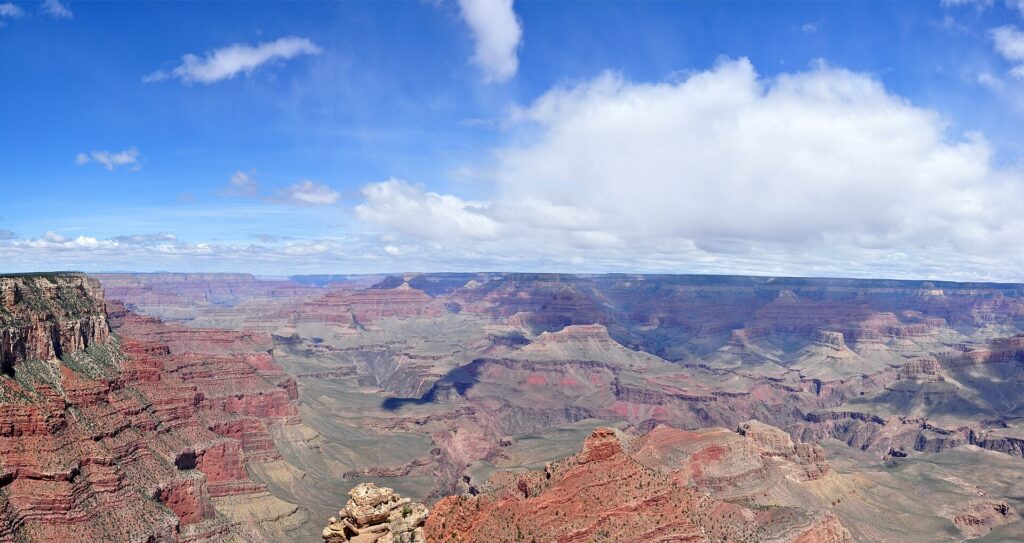
Photo credits: (1) The Grand Canyon from Yaki Point on the… — National Park Service, U.S. Government work, public domain, via Wikimedia Commons.