

Some links on our site may earn us a commission at no extra cost to you. Learn more.
Machu Picchu tickets cost S/152 for a foreign adult on a standard circuit, plus a S/11 conservation fee added in May 2026. Circuit 2 is the right call for a first visit, because it covers the classic temple plazas. Circuit 3 is the pick for a Huayna Picchu or Machu Picchu Mountain hike, and the site caps daily entry at 4,500 visitors, per Wikipedia’s sourced figures.
I have traveled in Peru and visited Machu Picchu myself. The mistake I watched other travelers make was buying an entry ticket without matching it to a train and bus time first. That gap turned a relaxed morning into a dash through the ticket line in Aguas Calientes. Match the circuit, the train, and the bus window before buying anything, and the day runs itself.
Machu Picchu Tickets 2026
| Quick fact | Detail |
|---|---|
| Foreign adult entry ticket | S/152 standard circuit, S/200 with a mountain climb |
| Conservation fee | S/11 per foreign visitor, added 1 May 2026, per Infobae |
| Daily visitor cap | 4,500, up to 5,600 in peak season, per Wikipedia’s sourced figures |
| Huayna Picchu | Circuit 3-A, small daily cap, sells out months ahead |
| Machu Picchu Mountain | Circuit 1-A, separate limited permit, easier to get than Huayna Picchu |
| UNESCO World Heritage status | Inscribed 1983, elevation 2,430 meters, per the UNESCO World Heritage List |
| Book by | 3–6 months for June to September; 6–10 weeks in shoulder season |
| Circuit | Per-adult ticket | Cost for two adults | Extra permit |
|---|---|---|---|
| Circuit 1 (Panoramic), sub-routes 1-B to 1-D | S/152 | S/304 | None |
| Circuit 2 (Classic), 2-A and 2-B | S/152 | S/304 | None |
| Circuit 3 (Royalty), 3-B and 3-D | S/152 | S/304 | None |
| Circuit 3-A + Huayna Picchu | S/200 | S/400 | Small daily cap, sells out first |
| Circuit 1-A + Machu Picchu Mountain | S/200 | S/400 | Separate limited permit |
A standard circuit is S/152 per adult whichever route you pick, so two adults pay S/304 before any climb. The mountain sub-routes cost S/200 each, which takes two adults to S/400. Add the S/11 conservation fee per foreign visitor on top of either figure.
Machu Picchu Entrance Fee
Read this before you budget, because the price in dollars that most guides quote is a moving target and there is a new charge on top of it.
Peru sets the price in soles, not dollars. A standard circuit for a foreign adult is S/152. The routes that include a mountain climb are S/200. Students pay S/77 on a standard circuit, children aged 3 to 17 pay S/70, and under-threes are free. Convert those at whatever the rate is the week you book, rather than trusting a rounded dollar figure on a third-party site.
Since 1 May 2026 there is also a conservation surcharge. SERNANP adds S/11 for foreign visitors and S/5 for Peruvians, charged per visit on top of the entrance ticket, per Infobae. It had been approved back in 2023 and postponed more than once, which is why plenty of older guides do not mention it. Under-threes are exempt.
Prices and rules here change more often than at most sites, so confirm on the Ministry of Culture’s own ticket platform before you pay anybody.
Machu Picchu Circuits Explained
The system was reorganised in June 2024 and the old “Circuit 1, 2, 3” shorthand no longer describes what you actually buy.
There are still three circuits, but they now contain ten sub-routes between them, and the sub-route is what you book. The first covers the panoramic upper ground across four sub-routes, with 1-A carrying the Machu Picchu Mountain climb. Next is the classic walk through the agricultural and urban sectors, two sub-routes, and the most complete visit of the three. Last comes the royal and lower sector, again four sub-routes, with 3-A for Huayna Picchu and 3-D for Huchuy Picchu.
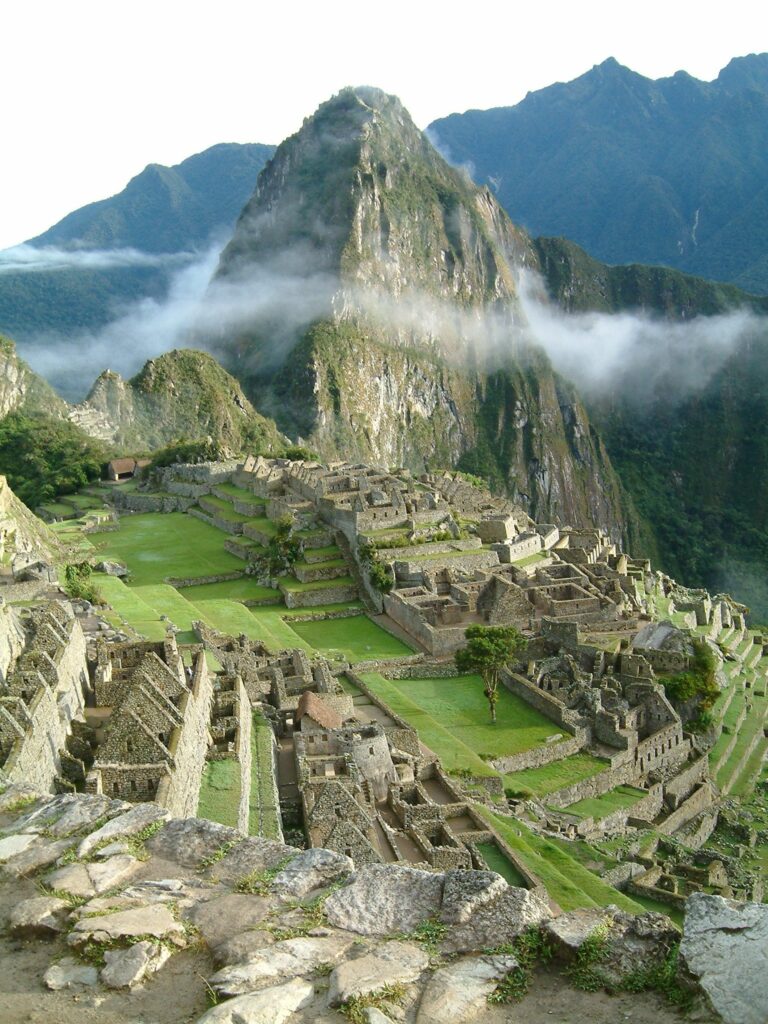
On the famous postcard angle, be wary of anyone who tells you there is exactly one right answer. The Guardian’s House viewpoint is reachable from more than one route at different heights, and guides disagree about which sub-route gives the best version of it. What matters more is that you cannot switch once you are inside: the route you bought is the route you walk.
Machu Picchu Rules
The rule that catches people out has nothing to do with tickets. There are no toilets inside the citadel, and leaving through the main gate ends your visit. No re-entry on the same ticket, including for the bathroom.
The public toilets are at the entrance building just outside the gate, they cost about S/2, and they are busiest between 6 and 9 a.m. Go at your hotel, go again at the entrance, and carry coins.
Bags are capped at 40 by 35 by 20 centimetres. The official code of conduct bans tripods, monopods and selfie sticks, walking poles and portable chairs, drones, food and kitchenware, umbrellas, hard-soled or heeled shoes, musical instruments and aerosols. You must stay on the marked route, and you cannot climb on or touch the stonework. Breaking those gets you removed without a refund.
Machu Picchu Altitude
Here is the thing almost everyone has backwards. Machu Picchu is not the altitude problem. Cusco is.
Cusco sits at about 3,400 metres. The citadel is around 2,430, and Aguas Calientes, the town below it, is 2,040. So the place people worry about is roughly a thousand metres lower than the city they flew into to get there, and the citadel has the milder climate of the two.
Which means the acclimatisation happens before you ever see the ruins. The advice that comes up again and again from travellers is to give Cusco two gentle days on arrival, or better, drop into the Sacred Valley at around 2,700 metres first and come up to Cusco afterwards. Coca tea divides people: some swear by it, others find it upsets their stomach. Hydrate, skip the alcohol on the first night, and treat a headache as information rather than something to push through.
Machu Picchu Tickets Cost
Standard circuits all cost the same, S/152 for a foreign adult, so the route you choose is not a money decision. The mountain sub-routes are the exception at S/200. Peruvian and Andean Community adults pay S/64, which is worth knowing for a mixed group.
The upper terraces on Circuit 1 carry the wide panoramic view and the Guardian’s House angle. Most first-timers want Circuit 2, which threads the Temple of the Sun and the main plazas and covers the recognisable structures in the shortest walk. For the royal and lower sector, or for either mountain climb, you need Circuit 3 and its sub-routes. Those climbing permits are sold as part of the higher-priced ticket rather than bolted on afterwards.
Which Machu Picchu circuit is best?
Circuit 2 is the decisive pick for a first visit. It threads the Temple of the Sun, the main plazas, and the residential terraces in roughly two to four hours. It is also the route behind most classic postcard photos. Circuit 1 suits photographers instead, since its upper-terrace routes give the wide panoramic view. However, that view comes without the full walk through the residential sector that circuit 2 covers. Still, pick circuit 1 only if a lighter amount of stair climbing genuinely matters, because circuit 2 covers more ground in the same time window.
Huayna Picchu Tickets
Summiting Huayna Picchu or Machu Picchu Mountain requires circuit 3. It is the only ticket that connects to either hiking permit, per PeruRail’s ticket guide. Huayna Picchu has the smallest daily cap on the mountain and sells out first, typically months ahead in high season. Machu Picchu Mountain is the easier of the two to still find closer to a travel date. Published capacity figures for both vary between sources, so book on the assumption they are tighter than whatever number you read. Both hikes add real time and elevation gain to a day already built around a train and a bus. Book the earliest entry window available if either summit is the goal, because a later slot leaves less daylight for the climb.

How to Get to Machu Picchu
Most travelers reach Machu Picchu by train to Aguas Calientes, the town below the site, and then a Consettur shuttle bus up to the entrance, per PeruRail’s own routing guide. Trains typically depart from Ollantaytambo, a short drive from Cusco, or occasionally from Poroy closer to the city. The bus is the only practical way up from the town; walking the access road takes considerably longer. Book the train first, since it sets the entry window that the ticket, and then the bus, both need to line up around. Every entry ticket also requires the exact passport number used at checkout, so travel with that same passport on the day.
Machu Picchu Entry Times
Entry is by hourly slot, and there is a 30-minute grace period after the time printed on your ticket. Miss that and they can turn you away.
Now the counterintuitive part, which comes up repeatedly from people who have been. Something like nine in ten visitors come in the morning, so the afternoon empties out. One traveller put it plainly: by about three o’clock they felt like they had the ruins to themselves. Morning gets you the mist, which usually burns off between nine and ten and which some people find is the picture they wanted anyway. Morning is also compulsory if you have a mountain permit, because those slots are early.
The trade-off with an afternoon slot is the journey home, so sort the return train before you book it, and know that restaurants in Aguas Calientes shut by ten or eleven.
Machu Picchu Tickets Official Website
Avoid third-party reseller sites instead of the official Joinnus platform. Resellers add markup and cannot guarantee a specific circuit or entry window. Pass on circuit 1 if a hiking permit is the priority, since it does not connect to Huayna Picchu or Machu Picchu Mountain. A second, separate entry would still be required either way. Also, never lock in a train or bus time after buying the entry ticket. A mismatched arrival time is the most common reason travelers miss their entry window at the gate. Skip walking the access road from Aguas Calientes to save the bus fare, too; it takes far longer than most schedules allow.

Machu Picchu Tickets How Far in Advance
A month is not enough in summer, and that is the most common planning mistake. For June through September work on three to six months, because the early-morning slots go first. Some operators say six to eight for July and August.
Shoulder season in April, May and October runs six to ten weeks. In the wet season you can often get away with two to four weeks, with New Year’s Day the exception. Book a mountain permit the day your dates are fixed. Huayna Picchu is the tightest constraint in the system, and published daily caps vary between sources, so treat it as small and gone early rather than trusting a number. Waiting until arrival in Cusco to buy any of these tickets risks ending up on a circuit, or a day, that was not the plan. A little advance planning also leaves room to adjust if a preferred window sells out first.
Which Machu Picchu Tickets to Buy
The simplest plan beats the ambitious one here. I have found that a circuit 2 ticket for an early-morning entry window is the safest first move. The circuit 3 hiking permit is worth adding only after a train and bus time are confirmed around it. Circuit 2’s classic route through the Temple of the Sun and the main plazas covers the site’s most important structures. It does this without the extra elevation gain and the tighter permit cap that come with circuit 3’s hikes. So, for most first-time travelers, an early slot on the classic route delivers the postcard view and the temple detail in one unhurried morning. Save the harder hikes for a return trip once the essentials are checked off.
Frequently asked questions about machu picchu tickets
How much does a Machu Picchu ticket cost?
S/152 for a foreign adult on a standard circuit, or S/200 on a route that includes a mountain climb, plus a S/11 conservation fee per foreign visitor since May 2026. Two adults on standard circuits pay S/304 before that fee.
Which tickets do you need for Huayna Picchu or Machu Picchu Mountain?
Huayna Picchu sits on Circuit 3-A and Machu Picchu Mountain on Circuit 1-A, both sold as a higher-priced S/200 ticket rather than an add-on. Huayna Picchu has the tighter cap and goes first.
How many Machu Picchu tickets per day?
The daily visitor cap is 4,500, rising to as many as 5,600 in peak season, per Wikipedia’s sourced figures.
How far in advance do you need to book Machu Picchu?
At least a month ahead for a standard circuit. Book as soon as dates are fixed if a hiking permit is part of the plan, per PeruRail’s ticket guide. Waiting longer usually means losing the earliest entry windows first.
What is the best Machu Picchu circuit?
Circuit 2, the classic route through the Temple of the Sun and the main plazas, covers the most recognizable structures in the shortest walk.
Explore more destination guides and trip-planning advice for help mapping out the rest of a Peru itinerary.
Prices are approximate, current as of publication, and change frequently — confirm the latest price with the park, operator or provider before you go.
Updated September 23, 2026.
Photo credits: (1) Cusco Cathedral on the Plaza de Armas — etsai, CC BY 2.0, via Wikimedia Commons.