

Some links on our site may earn us a commission at no extra cost to you. Learn more.
A Zion National Park itinerary for two days covers Angels Landing or Observation Point, the Zion Canyon shuttle, and a walk into The Narrows. It starts with a $35 vehicle entrance fee, per the National Park Service. Families with less time do well cutting it to one day and skipping Angels Landing’s permit entirely. The one reservation that trips people up: Angels Landing requires its own permit through a lottery, separate from the entrance fee, per the National Park Service.
I have driven canyon country roads in the Southwest often enough to know a shuttle-only park changes how you plan the whole day. My habit from whitewater trips in Colorado carries over here. I check conditions before committing to the water, and I check the Virgin River’s flow before a Narrows hike the same way.
Best Zion National Park Itinerary
| Quick facts | Details |
|---|---|
| Entrance fee | $35 per private vehicle, valid 1-7 days, per the National Park Service |
| Getting into Zion Canyon | Shuttle-only during peak season; personal vehicles are not allowed on Zion Canyon Scenic Drive when the shuttle runs, per the National Park Service |
| Angels Landing permit | $6 non-refundable lottery application fee, plus $3 per person if a permit is issued, per Recreation.gov |
| The Narrows (bottom-up) | No permit needed from Temple of Sinawava to Big Spring; a 10-mile round trip, per the National Park Service |
| Narrows closure line | Closed to all travel above 150 cubic feet per second, with thigh-deep crossings starting around 70 cfs, per the National Park Service |
Here is the arithmetic for two adults doing the classic two-day plan. One $35 vehicle entry covers both days at the gate. If both hikers apply for an Angels Landing permit, that adds $6 each in application fees, per Recreation.gov. A permit that is actually issued adds another $3 per person on top of that.
| Item | Cost | Who needs it | Notes |
|---|---|---|---|
| Vehicle entrance fee | $35, valid 1-7 days | Every visitor | One fee covers the whole stay, per the National Park Service |
| Angels Landing lottery application | $6 per person, non-refundable | Anyone hiking Angels Landing | Charged whether or not you win, per Recreation.gov |
| Angels Landing permit, if issued | $3 per person | Winners only | Added to the $6 application fee, per Recreation.gov |
| Two-adult trip total (both win permits) | $53 | – | $35 entry + ($6+$3) x 2 people |
Zion National Park Itinerary 2 Days
Give day one to Angels Landing or Observation Point. Both start from the shuttle’s Grotto or Weeping Rock stops. Give day two to The Narrows and a slower morning at the visitor center. Angels Landing needs a permit won through the lottery, so build your first day around whichever hike you actually have a permit for, not the one you wanted.
If the lottery does not come through, Observation Point offers a similar canyon view without a permit requirement, per the National Park Service’s trail listings. It is also a longer, steeper trail, so budget more time for it than for Angels Landing. Save The Narrows for day two regardless. Checking the morning flow report before you commit to the water matters more than which specific day you go.

Zion Shuttle System
The shuttle runs during the park’s peak season. Personal vehicles are not allowed on Zion Canyon Scenic Drive while it operates, per the National Park Service. No separate reservation or fee applies beyond the park entrance fee. Plan to park at the visitor center or in Springdale and board the shuttle from there.
During the off-season, the road reopens to personal vehicles and the shuttle pauses. Check the current schedule on the park’s site before you arrive, since the dates shift from year to year. Either way, a 2-day Zion National Park itinerary depends on getting an early shuttle. The first hikers on the trail get the emptiest overlooks and the coolest canyon temperatures.
Two separate shuttle lines run from the visitor center: the Zion Canyon Line into the park itself, and the Springdale Line through the gateway town, per the National Park Service. Staying in Springdale without a car works fine because of that second line; you can board it near most hotels and connect to the park shuttle at the visitor center. Check the current seasonal schedule online before you arrive, since first and last departure times shift with the time of year.
Angels Landing Permit Cost
Every hiker on Angels Landing needs a permit. You apply through a seasonal lottery or a day-before lottery on Recreation.gov. The application costs $6 per person and is non-refundable whether or not you are selected. A winning application adds a further $3 per person, per Recreation.gov.
Because the fee structure charges you just for entering the lottery, apply only once you are sure about your dates. A day-before lottery exists for travelers who did not plan far ahead. So a missed seasonal window is not the end of the option, just a tighter one. Check the results the same afternoon, since the day-before window closes fast.

The Narrows Zion Hike
Walk the bottom-up route from Temple of Sinawava to Big Spring. It is a strenuous 10-mile round trip that needs no permit, per the National Park Service. Wear closed-toe shoes and carry a sturdy hiking stick. The river bottom is uneven, and the current pulls harder than it looks from the bank.
Skip The Narrows entirely above 150 cubic feet per second, when the park closes it to all travel, per the National Park Service. Expect thigh-deep, current-fighting crossings once flow passes about 70 cfs. Check the current flow report the morning of your hike, not the night before. Canyon conditions change fast after storms upstream, even ones you never see from the trailhead.
Itinerary for Visiting Zion National Park
Skip planning around Angels Landing before you have a permit in hand. Build the schedule around Observation Point or The Narrows first. Slot Angels Landing in only if the lottery comes through. Also skip driving Zion Canyon Scenic Drive on a shuttle-season day expecting to park along the road; the road itself is closed to private vehicles during that stretch.
Skip a Narrows attempt without checking the morning flow report. A river that was calm two days ago can close overnight after rain far upstream. Finally, skip assuming the entrance fee covers Angels Landing. It only covers the park gate, and the permit fees are separate, per Recreation.gov.
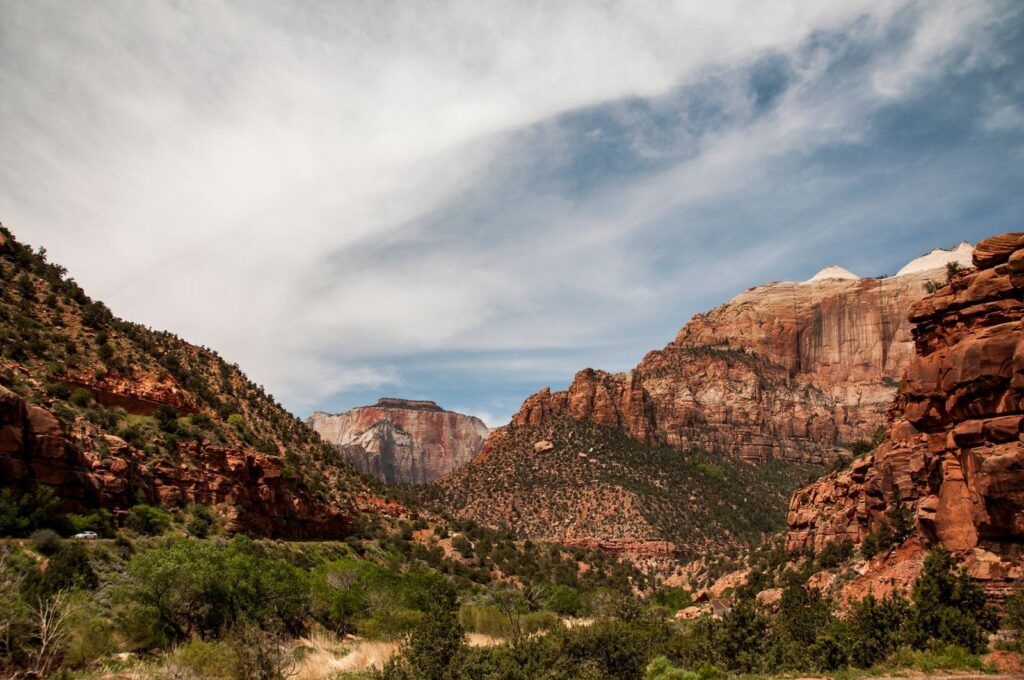
Plan a Zion National Park Itinerary With Best Times to Visit and Hikes
Spring and fall bring milder canyon temperatures and a full shuttle schedule, per the National Park Service. That combination makes both Angels Landing and The Narrows easier to plan around. Summer adds heat that turns an all-day Narrows hike into a real endurance test. Start at the first shuttle of the day if you go in July or August.
Winter flips the logistics. The shuttle often pauses, and personal vehicles can drive Zion Canyon Scenic Drive directly. Narrows flow tends to run higher and colder in winter, though, which raises the odds of a closure. Check both the shuttle schedule and the river flow report for your travel dates before finalizing a 2-day Zion National Park itinerary.
Zion is usually one stop on a bigger loop. The Utah Mighty 5 road trip puts it in order with the other four Utah parks. The Grand Canyon South Rim itinerary is the next park south, and Joshua Tree works as the California end of the drive.
Frequently asked questions about a Zion National Park itinerary
Is 2 days enough for Zion National Park?
Two days is enough for one major hike, like Angels Landing or Observation Point, plus a Narrows walk and time at the visitor center. Add a third day if you also want the Subway or a backcountry route; both need their own permits.
Do you need a permit to hike Zion National Park?
No, most day hikes need no permit. Only Angels Landing, the Subway, canyoneering routes, and overnight backcountry trips require one, per the National Park Service.
How much does it cost to go to Zion National Park?
A private vehicle costs $35, valid for 1 to 7 consecutive days, per the National Park Service. An annual pass good only at Zion runs $70.
Can you drive through Zion National Park?
Not during the shuttle season. Personal vehicles are barred from Zion Canyon Scenic Drive while the shuttle operates, per the National Park Service. Outside that season, the road reopens to personal vehicles.
Do you need reservations for Zion National Park?
Enter the Angels Landing lottery as early as the seasonal window allows, if that hike is the priority. Then check the Narrows flow report the morning you plan to hike, rather than days in advance.
Can you visit Zion National Park without a car?
Yes, the Springdale Line shuttle connects the town to the park’s visitor center, per the National Park Service, so a car is not required once you have arrived.
More Southwest trip planning is in our Southwest and desert guides and our national parks guides.
Prices are approximate, current as of publication, and change frequently — confirm the latest price with the park, operator or provider before you go.
Updated September 23, 2026.