

Some links on our site may earn us a commission at no extra cost to you. Learn more.
Elkmont Campground sits inside its own ghost town, a few miles up Little River Road from Sugarlands. It has 220 campsites. It also has a historic district of old vacation cabins you can walk straight through, plus a synchronous firefly show every early summer that needs its own lottery to see. There are no showers and no hookups. What you get instead: flush toilets, cold water, and more shade than almost any other campground in the Great Smoky Mountains.
I’ve driven through and stayed around the Smokies more times than I can count, and Elkmont gets the same reaction out of first-time campers every year. They show up expecting a normal gravel loop. Instead they get a national historic district. I grew up on a farm, where summer tent camping was a given. These days I split time between a stretch near Chicago and Southern California, where air conditioning is the given. Elkmont splits the difference: shaded enough to stay cool, organized enough — numbered loops, a camp store, a real reservation system — to plan down to the campsite.
Elkmont Campground
Elkmont has 220 sites: 200 standard tent and RV pads, plus 20 walk-in tent sites. Recreation.gov’s listing is clear that none of them have electric, water, or sewer hookups. Only three sites carry a 5-amp outlet, and that’s reserved for medical equipment. Each site allows up to six people. Every campsite is reservation-only — there’s no showing up and hoping for an open pad.
What you do get: flush toilets, cold running water, and utility sinks at every restroom, plus potable water at nearby spigots. There’s no shower house and no RV dump on-site. The nearest dump station is about six miles away at Sugarlands, so plan for that if you’re coming off a multi-night trip. Quiet hours run 10 p.m. to 6 a.m. Dogs are welcome on a leash no longer than six feet. The campground stays open year-round, though the camp store and office keep shorter hours from November through April.
Elkmont Historic District
Before it was a campground, Elkmont was a company town. The park’s own history page traces it back to 1908, when the Little River Lumber Company built it to house loggers. By its peak, between 1912 and 1918, Elkmont had grown to more than 1,500 residents — briefly the second-largest town in Sevier County. When the timber ran out in 1925, the company pulled up its rail lines and closed the town for good.
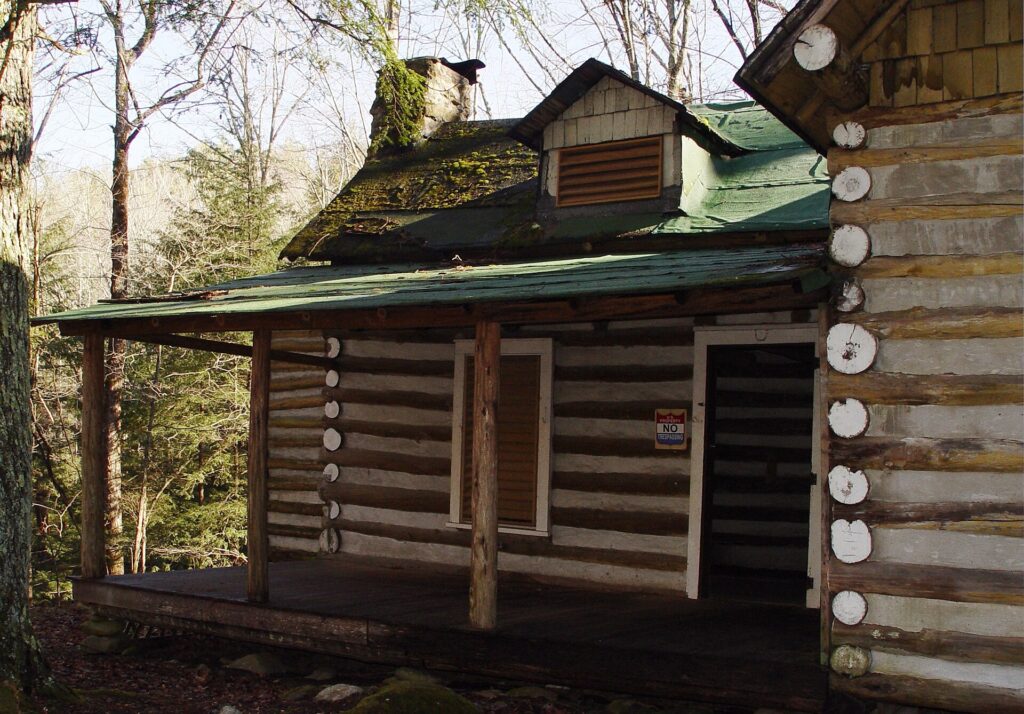
Two private clubs had already leased land from the lumber company and stayed on after the loggers left. The Appalachian Club held the east side of town. The Wonderland Club held the west side, and built the Wonderland Hotel as a getaway for its members. Both clubs kept their cabins as summer retreats for decades after the park formed around them, under long-term leases that eventually expired. The hotel fell into disrepair once its lease ended and is gone now. A good chunk of the Appalachian Club’s side survived on purpose.
The park says eighteen of those cabins are being actively preserved rather than left to fall down like the rest of the old resort. The Appalachian Clubhouse and Spence Cabin were rehabilitated back in 2010. They’re open for day use by permit now — people book them for reunions and small weddings. Four more cabins got preservation work in 2017. Those are open for the public to walk through, no permit required.
Little River Trail
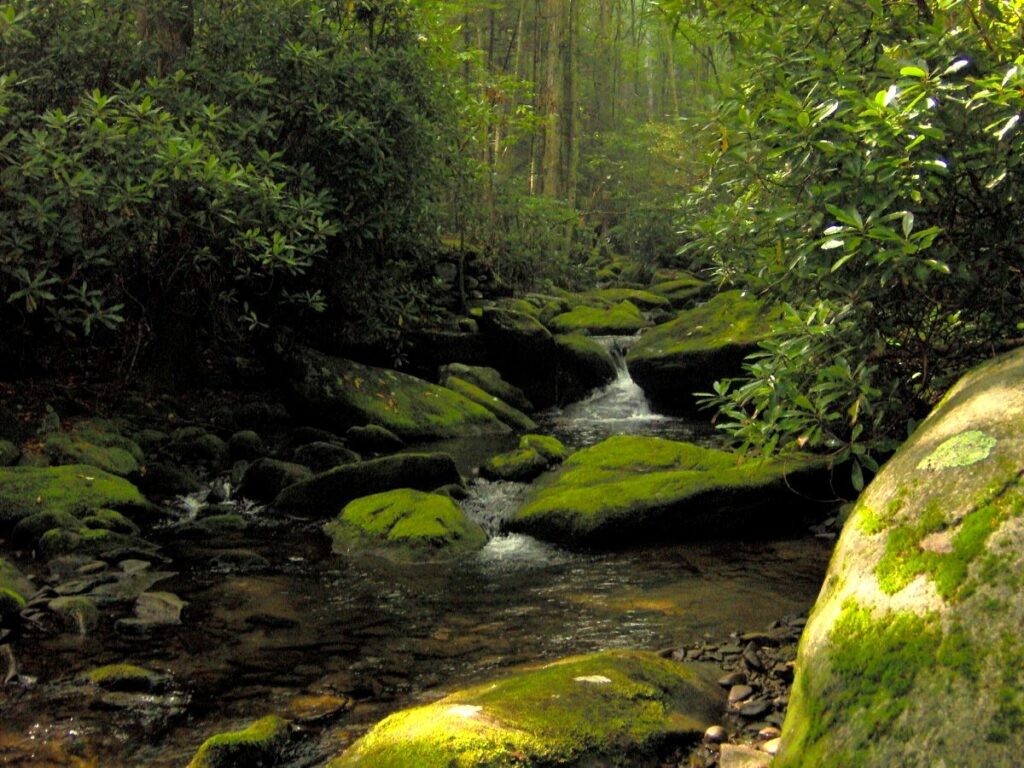
Little River Trail is the flattest, easiest walk out of Elkmont. It’s the one I’d send a first-time hiker on. It follows an old logging railroad grade along the river, wide and level enough for a stroller, with the water in earshot almost the whole way. It’s also the anchor of the park’s best-known day loop here.
Combined with Cucumber Gap Trail and a stretch of Jakes Creek Trail, it forms a loop. The park’s own trail guide lists that loop at 5.4 miles roundtrip. Both trailheads sit inside the Elkmont Historic District, a short one-way drive apart. Along the way you’ll cross stone walls and old chimneys — leftover foundations from cabins that never made the preservation list. Spring brings a heavy wildflower bloom through this stretch, which is part of why it gets busy on weekends.
Jakes Creek Trail
Jakes Creek Trail is the other half of that loop, with a different personality than Little River. It’s still a wide old roadbed. But it climbs at a steadier, rockier grade than Little River’s flat railroad bed. Nothing technical — just enough of a pull that you’ll notice it in your legs on the way back down.
Like its neighbor, Jakes Creek passes more of those stone foundations, tucked back in the trees where the road used to run. The Cucumber Gap connector between the two trails is the narrowest stretch of the loop, with more ups and downs. Trailheads for both Little River and Jakes Creek sit inside the historic district. Park once and hike either direction.
Swimming Holes Near Elkmont Campground
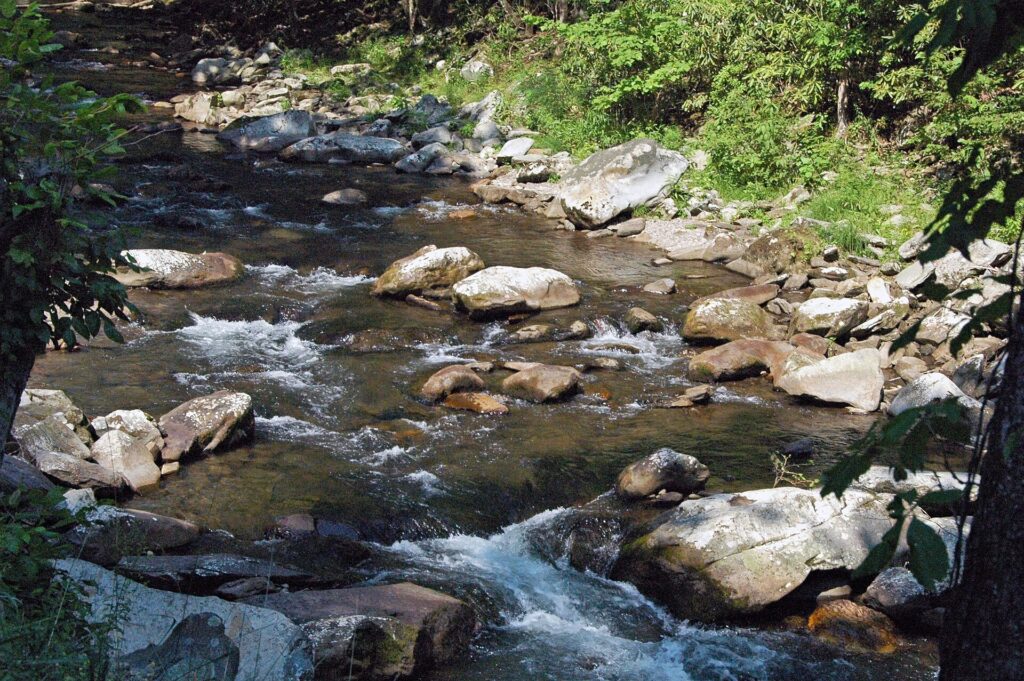
The Little River runs right past the campground, wide and shallow in places with plenty of flat rock to spread a towel on. It’s cold, even in the middle of July. It’s the kind of water you want after a sweaty hike, not before one.
That said, the National Park Service is blunt about this stretch of river and every other one in the park: swimming and tubing are not recommended in park waters. There are no lifeguards. The current picks up fast after rain, and the rocks underneath are slicker than they look. Wading and cooling your feet off is one thing. Treating it like a managed swimming beach is another.
Synchronous Fireflies Smoky Mountains
Elkmont is one of only a few reliable places in North America to see Photinus carolinus, a firefly species that flashes in sync. Dozens of them light up together for a few seconds, then go dark together, over and over for hours. It’s one of nineteen firefly species living in the park. It’s the only one that does this.
The show runs for a couple of weeks each year, and the exact dates move. According to the park’s firefly page, recorded peak dates have fallen anywhere from the third week of May to the third week of June since 1993. That’s why the park runs a lottery instead of first-come-first-served access. Nobody can promise a date months out when the bugs themselves haven’t decided yet.
Firefly Lottery Smoky Mountains
Applications go through Recreation.gov, not the campground office. You pick two preferred dates inside that year’s viewing window. Winners get a vehicle reservation. Everyone else can still see the show if they’re already registered to camp at Elkmont, since the park closes the area at night to all but permit holders and campers.
| 2026 Step | Date or Fee |
|---|---|
| Lottery opens | April 21 |
| Application window | April 24–27 |
| Winners notified | By May 6 |
| Viewing dates | May 20–27 |
| Application fee | $1.00 |
| Vehicle reservation fee (if selected) | $29.00 |
Bring a red-filtered flashlight. White light and camera flashes disrupt the display, so the park asks you to leave them off. Stay on the marked trail the whole time. It’s worth building a trip around if the dates line up — the sync itself is stranger to watch in person than any photo manages to capture.

How to Get to Elkmont Campground
From Sugarlands Visitor Center, follow Little River Road west along the river. The Elkmont turnoff comes well before Metcalf Bottoms, and it’s well signed. The campground entrance and the historic district trailheads share the same turn, so there’s no second stop to find later.
Coming from Gatlinburg, it’s the same route in reverse — into the park past Sugarlands, then onto Little River Road. There’s no cell service once you’re off the main park road. Download directions and your campsite confirmation before you leave town. For the rest of the park, our Smokies trip-planning guide and our roundup of the best campgrounds in the Great Smoky Mountains cover how Elkmont stacks up against the park’s other options.
Prices are approximate, current as of publication, and change frequently — confirm the latest price with the retailer before buying.
Elkmont Campground Rules
- Does Elkmont Campground have showers? No. Restrooms have flush toilets, cold running water, and utility sinks, but there’s no shower house anywhere in the campground.
- Is Elkmont Campground open year-round? Yes. The campground stays open all year, though the camp store and office run shorter hours from November through April.
- How many campsites are at Elkmont Campground? 220 total — 200 standard tent and RV sites plus 20 walk-in tent sites — and none have electric, water, or sewer hookups.
- Are pets allowed at Elkmont Campground? Yes, on a leash no longer than six feet, though pets are restricted to roads and a couple of specific trails elsewhere in the park.
Published September 28, 2026.
Photo credits: (1) featured, The Appalachian Clubhouse building in the… — Brian Stansberry, CC BY 3.0, via Wikimedia Commons; (2) A preserved log cabin in the Daisy Town… — Steven C. Price, CC BY-SA 3.0, via Wikimedia Commons; (3) The Jakes Creek Trail near Elkmont in the… — Brian Stansberry, CC BY 3.0, via Wikimedia Commons; (4) Boulders in the Little River near Elkmont… — James St. John, CC BY 2.0, via Wikimedia Commons; (5) Long-exposure light trails from synchronous… — Rick Shu, CC BY-SA 3.0, via Wikimedia Commons.