

Some links on our site may earn us a commission at no extra cost to you. Learn more.
Florida springs camping means something different at every park. Blue Spring has air-conditioned cabins. Salt Springs has a full RV hookup. Most of the rest fall somewhere in between, with a plain tent pad and a fire ring. Ten of the state’s most-visited springs let you sleep within walking distance, or a short drive, of 72-degree water. Below is what each one actually offers — plus the one popular spring, Ichetucknee, that has none at all.
I’ve pitched a tent within earshot of a spring more times than I can count, dog underfoot, a niece or nephew asking when we can get in the water. These campgrounds don’t feel like a beach campground. No ocean breeze. Just live oaks, palmetto, and water moving all night a few hundred feet from the tent. Packing for one looks like packing for any Florida campsite, plus water shoes for the morning walk to the spring. Our Florida springs guide covers the swimming and paddling side of each park. This one is just about where to sleep.
Florida springs with camping
Ten springs on this list have camping on-site or right next door. No two run the same fee schedule. Treat the table below as a starting point. Confirm the current rate before booking — Florida camping fees shift by site type and season.
| Spring | Site Types | Reservations | Fee Range |
|---|---|---|---|
| Blue Spring State Park | Campsites & cabins | State park system | $6/vehicle day-use; camping billed separately |
| Wekiwa Springs State Park | Standard, primitive, equestrian/group | State park system | $24/night standard; $5/person primitive |
| Salt Springs | RV (full hookup) & tent | recreation.gov | Check the current fee on fs.usda.gov |
| Juniper Springs | Tent/RV, no hookups | recreation.gov | Check the current fee on fs.usda.gov |
| Alexander Springs | Tent/RV, no hookups | recreation.gov | Check the current fee on fs.usda.gov |
| Manatee Springs State Park | Standard, group, glamping | State park system / concessionaire | $6/vehicle day-use; glamping roughly $90–$225/night |
| Silver Springs State Park | Full hookup to tent, cabins | State park system | $8/vehicle day-use |
| Ginnie Springs | Tent, water & electric | Private, park’s own system | $30–$40/person/night tent; +$15/night water & electric |
| Rainbow Springs State Park | RV up to 103 ft, full hookups | State park system | Per-site nightly rate, booked online |
| Ichetucknee Springs State Park | No camping | — | — |
Florida springs with cabins
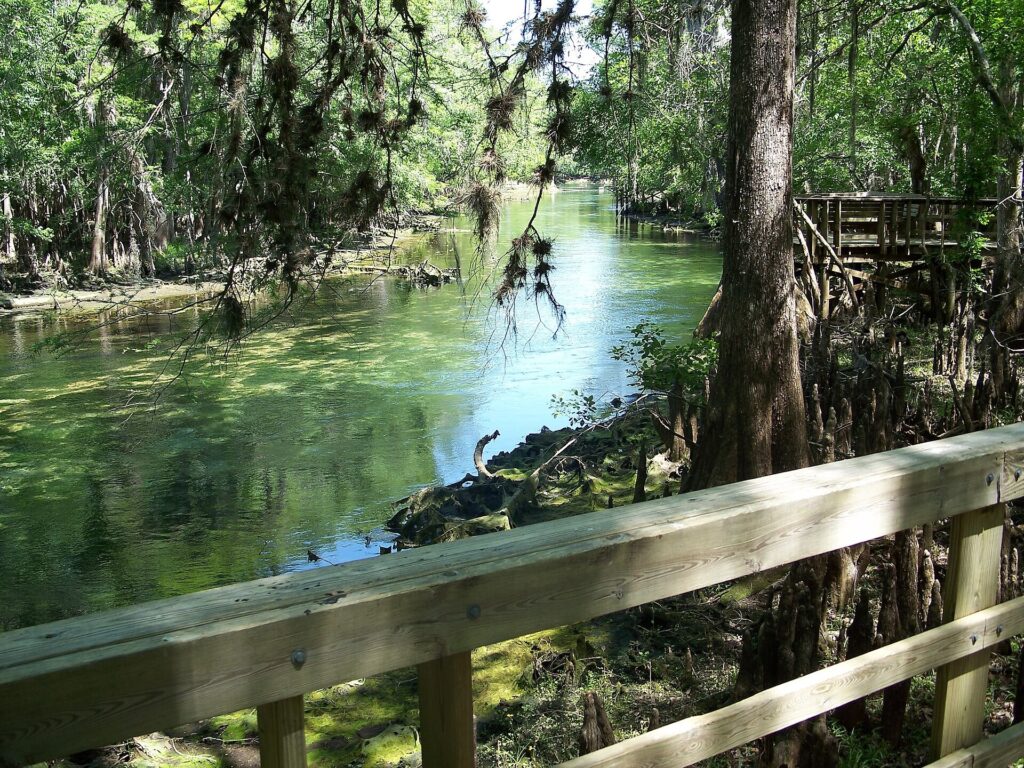
Blue Spring State Park pairs a campground with a set of waterfront cabins. Both sit inside the same park boundary as the manatee boardwalk. The cabins book out fastest during manatee season. Waking up a short walk from the boardwalk beats driving in through the gate before sunrise. Tent and RV sites sit in a separate loop from the cabins. Camping runs through the state park reservation system, apart from the park’s day-use fee.
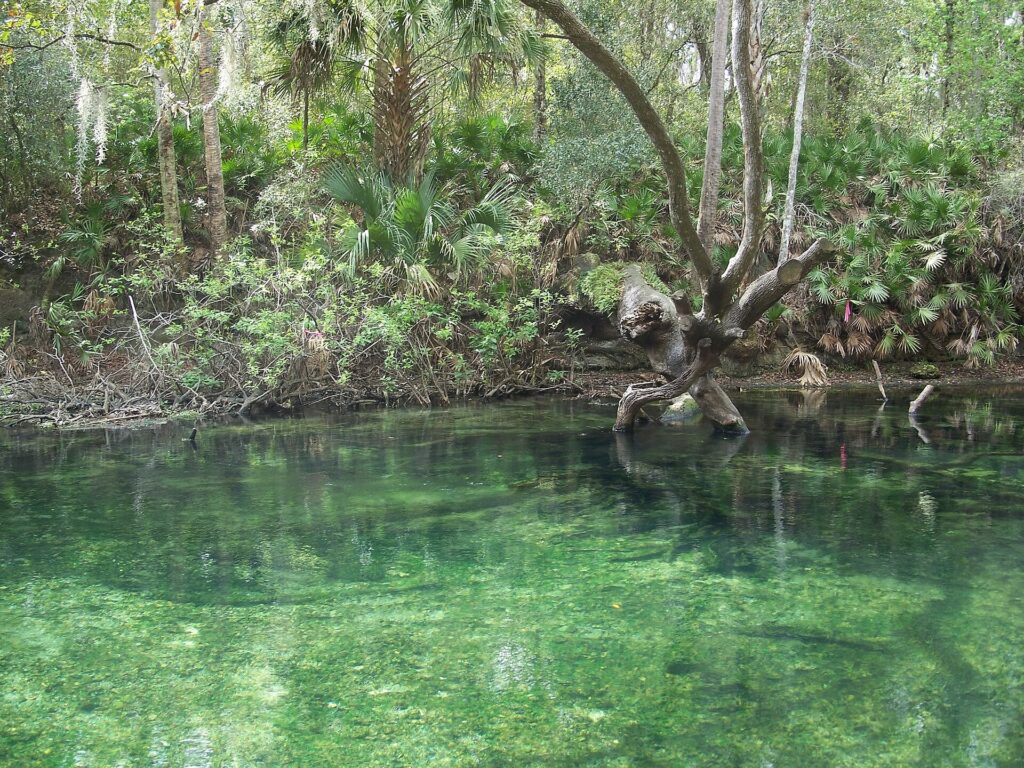
Silver Springs State Park runs a campground and a separate set of cabins on the Ocala side of the park. Sites range from full-hookup RV spots to simple tent pads under old oak trees. A campground this close to a real spring is rare in Florida. It fills often in the cooler months, when winter manatee sightings and mild paddling weather overlap. Parking sits close to the spring. The walk from a campsite to the glass-bottom boat dock is short, even on a busy day.
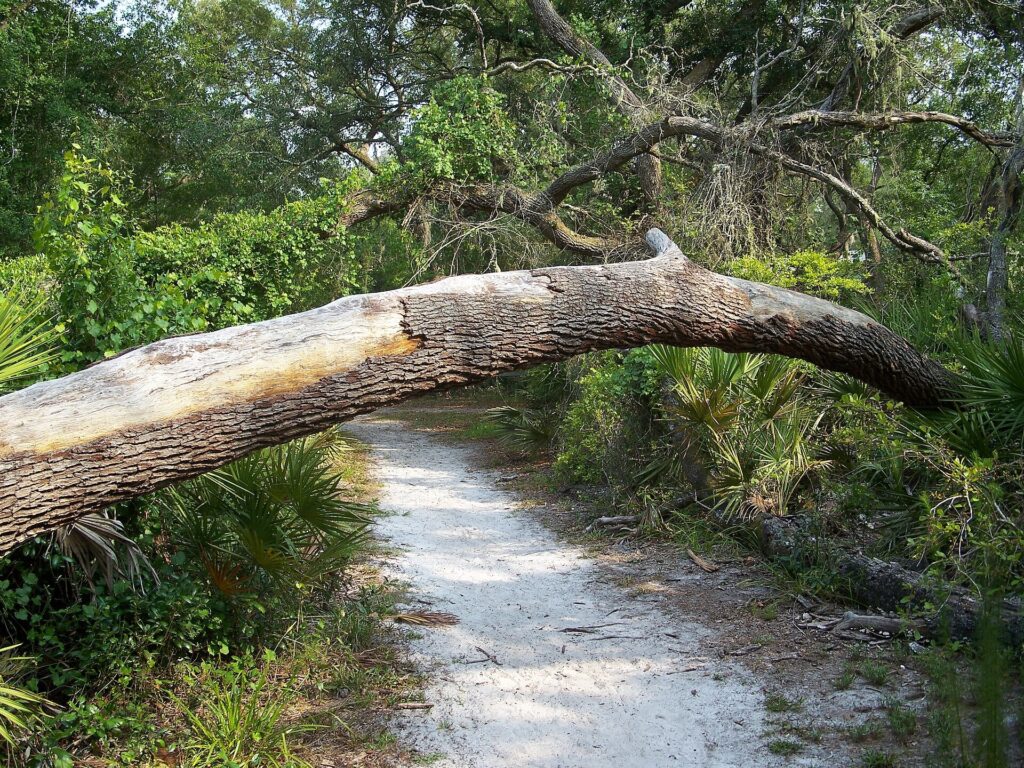
Manatee Springs State Park adds a glamping option to its standard camping. Canvas tents with real beds, run by the park’s on-site concessionaire, sit in the Hickory Loop of the family campground. Nightly rates run roughly $90 to $225, depending on season. There’s also a primitive group camping area, suited to scout troops and larger parties. One thing worth knowing before the drive. The park’s own page lists the waterfront restroom and RV dump station near the spring as closed. RV campers should plan around that until it reopens.
Florida springs with RV camping
Three of the ten run true hookups — water and electric at minimum — rather than a bare tent pad.
Salt Springs is the only campground in Ocala National Forest with full RV hookups. It’s also the largest. Its recreation.gov listing counts roughly 165 sites. They split between an electric loop for RVs and trailers and a tent-only loop with no hookups. A marina, boat launch, and camp store sit inside the same campground. Day-use and camping fees are billed separately. Reservations run through recreation.gov, not a walk-up system. Pets are allowed at the campsite, but not in the day-use swimming area.
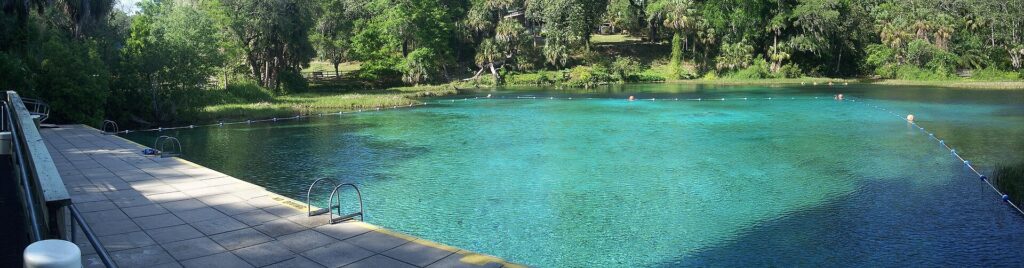
Rainbow Springs State Park runs its campground through its own gate, separate from the headsprings and tubing entrances. There’s no walking between a campsite and the swimming area — plan on driving. Sites take RVs up to 103 feet, with full hookups for water, sewer, and 20/30/50-amp electric. The campground office keeps its own hours, mornings through late afternoon only. Booking runs through the same state park reservation system used at any Florida state park.
Ginnie Springs is private, not a state park. Camping runs on its own rates, not a state fee schedule. Tent sites along the river run $30–$40 per person, per night. A water-and-electric add-on runs roughly $15 more per site, per night, at sites near the general store. There’s no sewer at the site itself; a dump station covers that. Tent camping doesn’t need a reservation, except for groups of 30 or more in the off-season. A water-and-electric site needs booking at least 48 hours ahead, through the park’s own system.
Juniper Springs camping reservations
The campground at Juniper Springs sits off the entrance road in shaded scrub forest. It has 79 sites split across three loops. There are no full hookups. Each loop has hot showers, flush toilets, and a dump station. A small camp store near the entrance covers ice, firewood, and a few basics. Camping is billed separately from the day-use fee, and from the Juniper Run canoe rental and shuttle. The forest’s fee pages weren’t loading current rates at publication. Confirm the number on fs.usda.gov before you book.
Reservations run through recreation.gov, not first-come, first-served. A booking matters most on weekends. The campground, the canoe shuttle, and the swimming area at the springhead all fill up together. The swim area and the short boardwalk to Fern Hammock Springs both sit within walking distance of the campground. Our camping gear checklist is worth a look before a night here. The campground has no full hookups to fall back on.
Alexander Springs camping
Alexander Springs runs a 67-site campground across four loops. Each has its own bathhouse and a small camp store for firewood and basic supplies. Level, shaded parking pads work for RVs as well as tents, even without hookups. Salt Springs is the pick in Ocala National Forest if hookups matter. Alexander’s pads are still wide enough for a mid-size RV to park comfortably. The swimming beach and picnic area sit close to the campground. So does the canoe and kayak launch on Alexander Run. That kind of walkability isn’t true at every Ocala forest spring.
Camping check-in runs 2 p.m., and reservations go through recreation.gov. Day-use and camping fees apply separately — confirm both on fs.usda.gov before the drive out. Black bears and raccoons both turn up in the campground on a regular basis. Food storage matters more here than at a typical state park site.
Wekiwa Springs camping
Wekiwa Springs State Park sits twenty minutes from downtown Orlando. Standard sites run $24 a night plus tax, plus a $6.70 nonrefundable reservation fee. An RV, cabin, bungalow, boat, or yurt adds a $7 nightly utility fee, per the park’s fee page. Tent campers skip that charge. Primitive camping runs $5 per person, per night, plus tax. Equestrian and group camping is priced by headcount instead of by site. Hiking in for the night instead, the park’s trail system passes two primitive camps: Camp Cozy and Big Buck Camp.
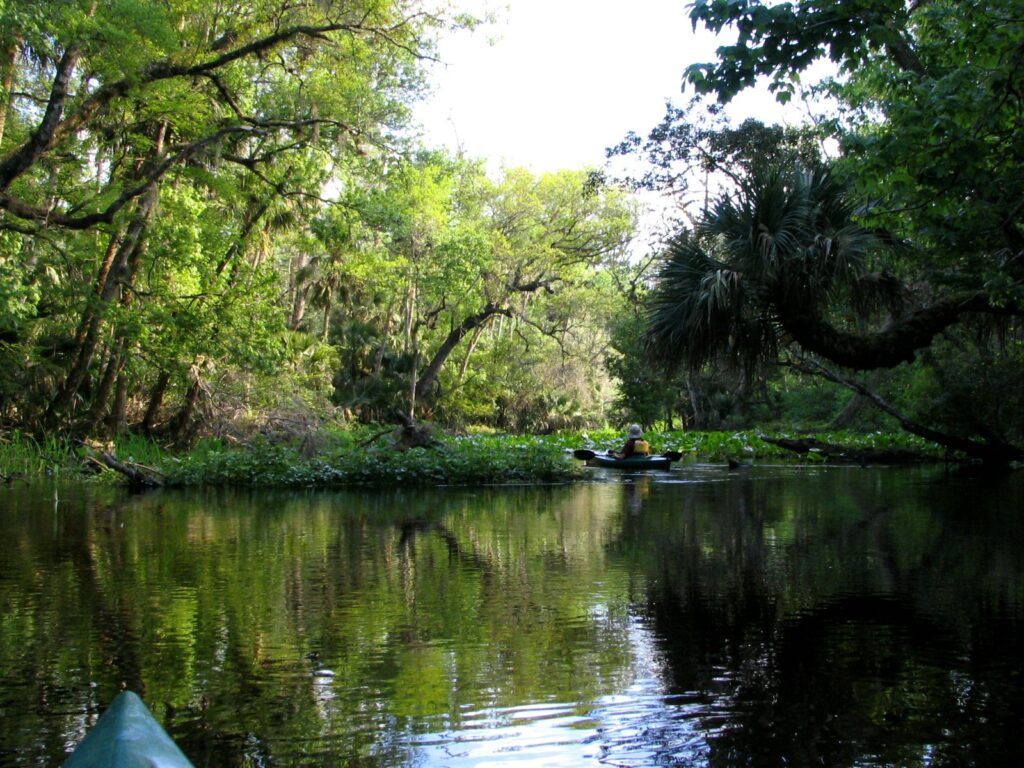
The developed campground has a bathhouse with hot showers — more than most primitive Florida camping trips offer. That’s the reason a lot of first-time tent campers start here. Wekiwa’s day-use reservation system, required since September 2025, doesn’t apply to campers. A camping reservation already covers park entry. Book with more lead time than a same-week day visit needs. The campground fills well before the day-use gate does on a nice weekend. Our national park camping checklist covers most of the same gear a state forest campground calls for.
Ichetucknee Springs camping
Ichetucknee Springs State Park is the one popular spring on this list without camping of its own. Neither the north nor south entrance has a campground, and the park’s own materials don’t list one. Lodging near Ichetucknee means picking a nearby town instead of a park campsite. High Springs and Fort White both sit a short drive from either entrance. Both put you close enough for an early tubing run the next morning. If camping matters more than the tubing itself, Ginnie Springs and Rainbow Springs State Park both sit within a short drive. Both take reservations directly.
Camping FAQ
Can you camp at Ginnie Springs Florida?
Yes. Ginnie Springs runs tent camping along the river for $30–$40 per person, per night, plus a water-and-electric add-on. It’s privately run, not a state park.
Can you camp at Silver Springs Florida?
Yes. Silver Springs State Park runs a campground and a set of cabins on the Ocala side of the park. Sites range from full hookups to simple tent pads.
Does Ichetucknee Springs have camping?
No. Neither entrance at Ichetucknee Springs State Park has a campground. The closest options are Ginnie Springs and Rainbow Springs State Park, both a short drive away.
What are the camping options at Wekiwa Springs State Park?
Wekiwa Springs runs standard sites, primitive tent sites, and equestrian and group camping. It also has two hike-in primitive camps on its trail system. Standard sites run $24 a night plus tax and fees.
Does Alexander Springs have camping?
Yes. Alexander Springs runs a 67-site campground across four loops in Ocala National Forest. It doesn’t have RV hookups the way Salt Springs does.
Prices are approximate, current as of publication, and change frequently — confirm the latest price with the retailer before buying.
Published October 2, 2026.
Photo credits: (1) featured, Pine and scrub forest inside Ocala National… — Miosotis Jade, CC BY-SA 4.0, via Wikimedia Commons; (2) The spring run at Blue Spring State Park in… — Ebyabe, CC BY-SA 3.0, via Wikimedia Commons; (3) A sandy trail near the Silver River at… — Ebyabe, CC BY 2.5, via Wikimedia Commons; (4) A wooden boardwalk over the spring run at… — Ebyabe, CC BY 2.5, via Wikimedia Commons; (5) A wide view of the spring-fed swimming area… — Ebyabe, CC BY 2.5, via Wikimedia Commons; (6) A canoe on the Wekiwa Run spring water near… — The original uploader was Mwanner at English Wikipedia., CC BY-SA 3.0, via Wikimedia Commons.