

Some links on our site may earn us a commission at no extra cost to you. Learn more.
The short version of what to pack for the Smoky Mountains: layers you can add or shed, shoes with real grip for wet rock, cash or a card for the parking tag, and a downloaded map. Your phone stops being useful the moment you’re actually inside the park, so plan around that. Everything else on this list exists to solve one of those four problems.
I’ve driven into these mountains with a car packed for every possible day. About half of it always came home untouched. After enough trips through Gatlinburg and Cades Cove with the dogs in the back seat, my list gets shorter every year, not longer. What actually earns a spot in the trunk is boring: layers, real shoes, cash, and a full water bottle. Nobody has ever regretted packing light and buying a $4 rain poncho at a gas station instead.
Smoky Mountains Packing List
This is the master list, in the order it actually matters. The table below marks what’s a day-hike item, what’s for camping, and what’s for both. That way you’re not hauling a bear-proof cooler into Cades Cove for an afternoon walk.
| Item | Why | Day Hike or Camping |
|---|---|---|
| Layered clothing (fleece + rain shell) | Elevation can run 10–20°F colder up top | Both |
| Broken-in shoes with real tread | Trail rock stays wet most of the year | Both |
| Reusable bottle + filter or tablets | Stream water needs treating first | Both |
| Bear-proof cooler or hard-sided container | Required overnight at drive-in campsites | Camping |
| Cash or card for the parking tag | $5 a day, $15 a week, or $40 a year | Both |
| Offline map, downloaded before you arrive | Cell service drops out inside the park | Both |
| Headlamp | No light once you’re past a ridgeline at dusk | Both |
| Small first-aid kit | The nearest help can be a real drive away | Both |
| Trash bag or zip bags | Pack out food smells that draw bears | Both |
How Cold Does It Get in the Smoky Mountains?
Base-to-summit swing is real here, not marketing copy. The park’s own weather page puts the difference at 10 to 20 degrees Fahrenheit between the valley floor and Kuwohi (formerly Clingmans Dome), the park’s high point. Wind and cloud cover can widen that further. A July afternoon that’s 88°F in Gatlinburg runs closer to 65°F at the Kuwohi summit — cool enough for a jacket in the middle of summer.
That’s why a sunny morning in Cades Cove can turn into a cold, foggy afternoon at Newfound Gap without any weather actually rolling in. You just drove up 3,000 feet.
What to Pack for a Trip to the Smoky Mountains
- A fleece or wool midlayer that packs small
- A rain shell that doubles as a wind layer
- Synthetic or wool base layers, not cotton
- Gloves and a light hat for spring, fall, and any summit trip
- One extra pair of socks per day
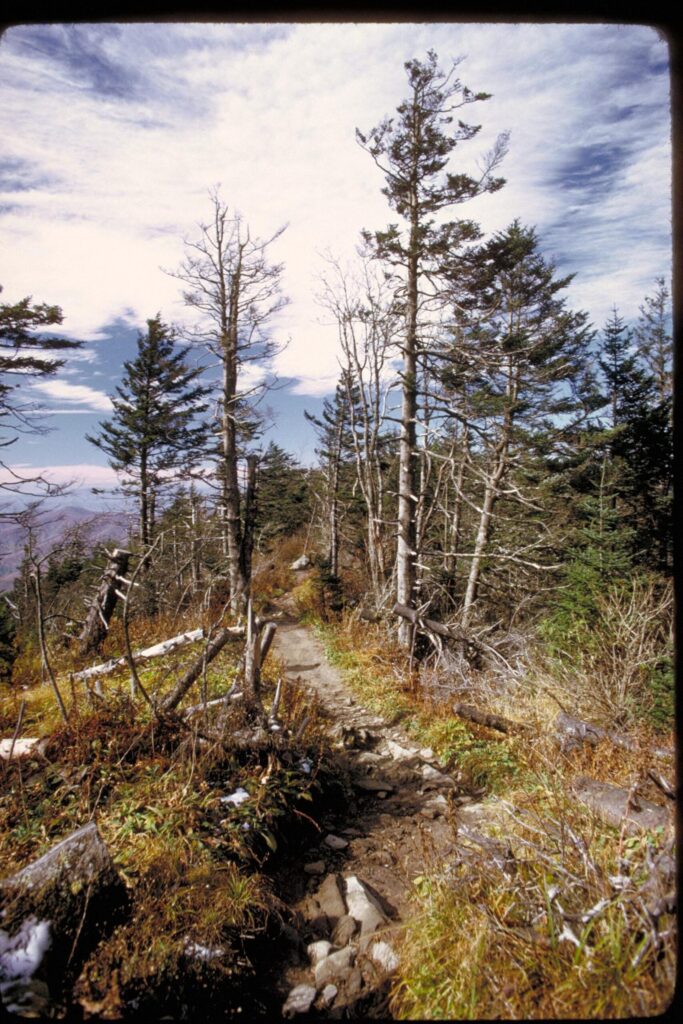
How Much Rain Does the Smoky Mountains Get?
A lot, and it doesn’t ease up by season. The same NPS weather page lists average annual rainfall at 55 inches in the lowlands, climbing to 85 inches a year at Kuwohi’s summit. That’s nearly double, and enough to make this one of the wetter corners of the eastern half of the country.
Pack for it like it’s coming, because on any given day it probably is. A real rain shell beats a poncho on a windy ridge, but a poncho beats nothing. Quick-dry pants and shirts matter more here than almost anywhere else we’ve hiked, since cotton stays wet and cold for the rest of the day once it’s soaked.
Best Hiking Shoes for Smoky Mountains
Skip the brand-new shoes. The rock along most creeks and waterfalls here is smooth and slick even when it looks dry. Broken-in tread with real lugs makes a bigger difference than boot height. Trail runners are fine for the easier, well-graded trails; anything steep, rocky, or near a waterfall calls for a stiffer sole and ankle support.
Packing List for Smoky Mountains
- Trail shoes or boots, already broken in
- Wool or synthetic hiking socks, two pairs minimum
- Gaiters if you’re doing a creek crossing on purpose
- A pair of camp sandals so wet shoes can dry overnight

Can You Drink the Water in the Smoky Mountains?
Not straight from a stream. The park’s own hiking safety guidance is to treat any water you take from a creek or spring before drinking it, since it can carry the parasite Giardia. Boiling for a minute or running it through a filter rated for particles as small as one micron both work.
Most trailheads here don’t have a water fountain waiting for you, either. Sugarlands and Oconaluftee visitor centers do; the gravel pull-off where you park for a hike almost never does. What’s in your bottle when you lock the car is what you’ve got until the next stream.
Packing List for the Smoky Mountains
- At least 1 liter of water per person for a short hike, more for anything over a few miles
- A squeeze filter or purification tablets for longer days
- A collapsible bottle as backup capacity, not your only container
Do I Need Bear Spray in the Smoky Mountains?
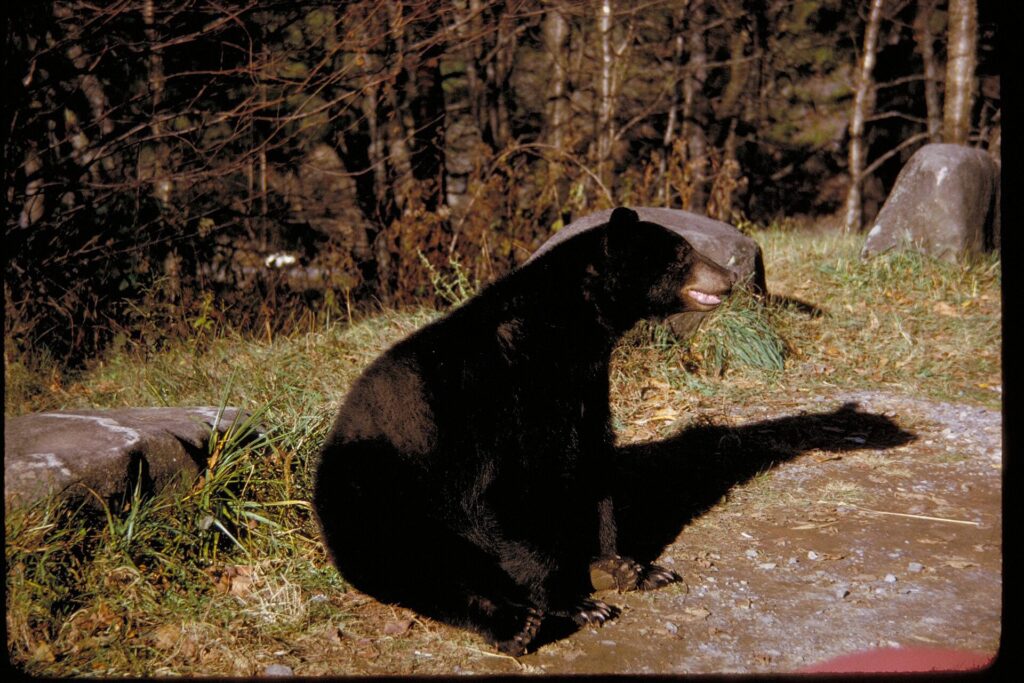
Food storage matters more than spray. The park’s bear safety page is direct about it: lock your car, since bears can and do open unlocked doors. Use the bear-proof containers at campgrounds and picnic areas for any food or trash. Backcountry campers store everything scented on the provided cable systems, not in a tent.
As for spray, the park’s own page mentions it only as a last resort, used if a bear is within 20 yards and won’t back off. It’s legal to bring. But it’s a backup to good food storage, not a substitute for it.
Great Smoky Mountains Parking Tag
Every vehicle parked anywhere in the park longer than 15 minutes needs one, trailhead or scenic overlook alike. The park’s fee page lists it at $5 a day, $15 a week, or $40 a year, and it applies to every vehicle size. Buy it online ahead of time or from a kiosk at a visitor center, then display it on your dash. We’ve covered the whole system, including where the kiosks are, in our Smoky Mountains parking tag guide.
Pack a pen. Writing the date on a paper tag at a trailhead kiosk with no pen in the car is a small, avoidable annoyance we’ve watched other people deal with more than once.
Is There Cell Service in the Smoky Mountains?
Barely any. The same hiking safety page calls cell service extremely limited across most of the park. That matches what I’ve seen driving Newfound Gap Road and Cades Cove Loop: a bar or two near the main visitor centers, then nothing. Download your maps before you leave Gatlinburg, Cherokee, or wherever you’re staying; see our guide to offline maps for a road trip for how.
The headlamp belongs on this list for the same reason. Sunset from Kuwohi is worth the drive, but the walk back to the parking area happens in the dark, on a paved but steep path, with no streetlight anywhere near it. A phone flashlight will get you there. A headlamp gets you there with both hands free.

What to Pack for Hiking in the Smoky Mountains
A day hike and a camping trip share most of the same list: layers, water, shoes, the parking tag. Camping adds the bear-proof storage, a headlamp you’ll actually use every night instead of once, and enough extra socks that wet ones stop being an emergency. The table up top marks the difference item by item.
Traveling with nieces and nephews, the list barely changes. It just gets one size smaller in places: kid-sized rain layers, snacks that don’t melt, and a printed map as backup. Lose the paper map once with a five-year-old and you’ll never travel without a backup again. Our Smoky Mountains with kids guide covers family-specific gear in more detail.
What to Bring to the Smoky Mountains
Do You Need Bug Spray in Smoky Mountains?
It’s not required, but it earns its spot in your bag from late spring through summer, especially near water and at lower elevations. Gnats and mosquitoes get noticeably worse right after rain, which around here is often.
Can You Carry Bear Spray in a National Park?
Yes, the Smokies don’t ban it. The park’s own bear-safety page describes using it if a bear is within 20 yards and won’t leave, but it’s a backup, not a substitute for locking your car and storing food correctly in the first place.
Do I Need Hiking Boots for Smoky Mountains?
Not strictly. Plenty of people do the easier, well-graded trails in trail runners with no trouble. What matters more than boot height is the tread: worn-down soles are what actually cause a fall on wet rock near a waterfall.
For the rest of a Smokies trip — where to base yourself, what to see, and how the days fit together — our guide to planning a trip to the Great Smoky Mountains covers the whole picture. Our national park road trip packing list is a good starting point if you’re combining this stop with others.
Prices are approximate, current as of publication, and change frequently — confirm the latest price with the retailer before buying.
Published September 26, 2026.
Photo credits: (1) featured, Backpackers hiking a forest trail in Great… — National Park Service, U.S. Government work, public domain, via Wikimedia Commons; (2) High-elevation spruce-fir trail near the… — National Park Service, U.S. Government work, public domain, via Wikimedia Commons; (3) River stones covered by a thin layer of… — Scott Basford, CC BY-SA 3.0, via Wikimedia Commons; (4) A black bear sitting upright in Great Smoky… — National Park Service, U.S. Government work, public domain, via Wikimedia Commons; (5) Sunset light over the mountains seen from… — No machine-readable author provided. Blinutne assumed (based on copyright claims, CC BY-SA 3.0, via Wikimedia Commons.