

Some links on our site may earn us a commission at no extra cost to you. Learn more.
Ichetucknee Springs State Park is a 6-mile, spring-fed river in North Florida. The water holds at 72°F all year. Tubing now launches from a single spot, the south entrance’s Dampier’s Landing. The float runs 45 minutes to an hour. A separate, tubing-free spring pool at the north entrance handles the swimming and snorkeling, and the whole river closes for the day at 6 p.m.
I grew up in South Florida. A spring run like this one was the standard cure for a July afternoon. We’ve floated and snorkeled more than one of the state’s spring-fed rivers over the years. Ichetucknee is the one people bring up first when they compare notes on where the water runs clearest.
Ichetucknee Springs Tubing
Every tubing launch at the park now runs through Dampier’s Landing at the south entrance. The park’s entrances page confirms the north section, where the Head Spring sits, no longer allows tubing at all. The Midpoint launch is also closed for repairs as of this writing. Check ahead before you plan a route around it.
Dampier’s Landing closes at 5 p.m. The park stops renting tubes at 4:30 p.m., so a late-afternoon start is a bad idea. Swimmers have to stay on their tube for the float. The current does the work, and nobody paddles this one.
What you get for it is a shaded tunnel of cypress and oak leaning in from both banks. The sandy bottom stays visible the entire way. It’s a float meant for looking down, not around.
Ichetucknee Tram
A tram shuttles tubers back to the south entrance parking after the float. It needs a wristband bought at the General Store. Prefer to walk it off instead? A roughly half-mile trail leads back to the south lot and skips the tram line entirely.
How Long Does It Take To Tube Ichetucknee Springs?
Figure 45 minutes to an hour on the water from Dampier’s Landing. The current is gentle and steady the whole way. There’s no real effort involved beyond staying in your tube and enjoying the shade.
That short window is easy to underestimate. Build in time before and after for the tram or the walk back, plus parking. A tubing stop here fits comfortably into a half-day rather than eating a whole one.
Ichetucknee Springs Kayak Launch
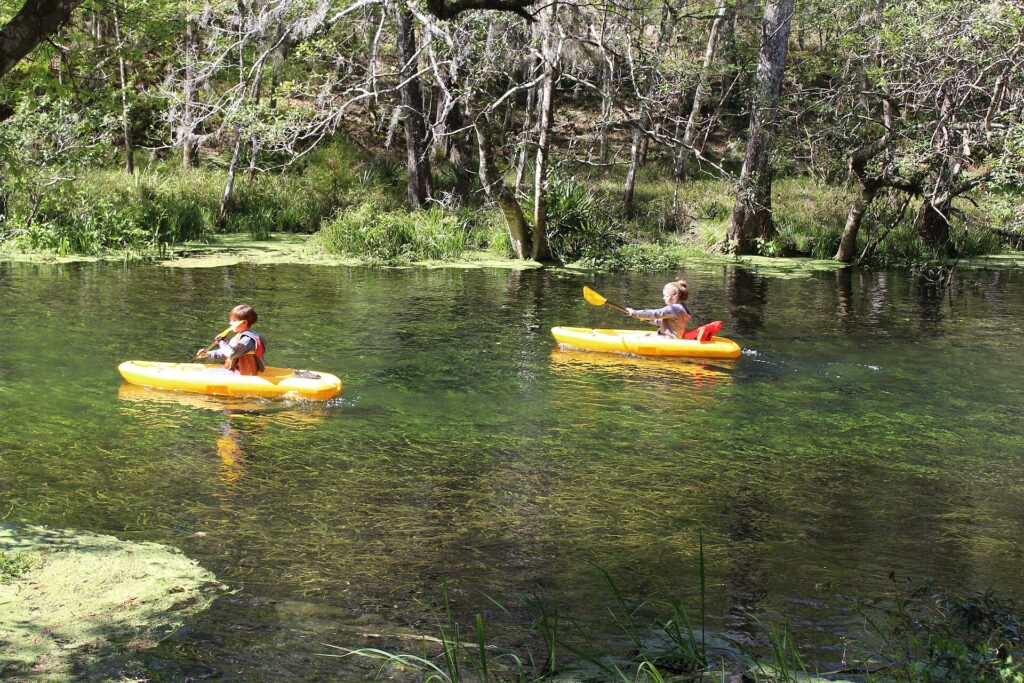
The North Canoe Launch handles non-motorized boats year-round and closes at 3 p.m. daily. It has a kayak cradle launch pad. Getting a kayak or canoe into the water doesn’t mean wading in through the mud first.
Dampier’s Landing at the south entrance works as a put-in for paddlers too, not just tubers, on the same year-round schedule. Either launch puts you on the same slow, clear current the tubes ride.
Ichetucknee Springs Fees
The park is open 365 days a year, from 8 a.m. until sundown. The park’s fee page lists entry by how you arrive, not by a flat per-person rate.
| Entry Type | Fee |
|---|---|
| Standard vehicle (2–8 people) | $6 |
| Single-occupant vehicle | $4 |
| Motorcycle (1–2 riders) | $4 |
| Pedestrian, cyclist, or extra passenger | $2 |
Blue Hole and its trail close an hour before sundown. The Head Spring area closes 30 minutes before that. Everyone has to be completely off the river by 6 p.m., tubers included.
Entry runs first-come, first-served at the gate. The park’s fee page is clear that paying online ahead of time doesn’t reserve a spot or move you past a full lot. On a busy weekend, getting there early matters more than getting there prepared.
Both entrances have picnic tables, grills, and restrooms. The south side runs a concession stand; the north side has a seasonal food truck. Lunch doesn’t have to mean leaving the park.
Ichetucknee Head Spring
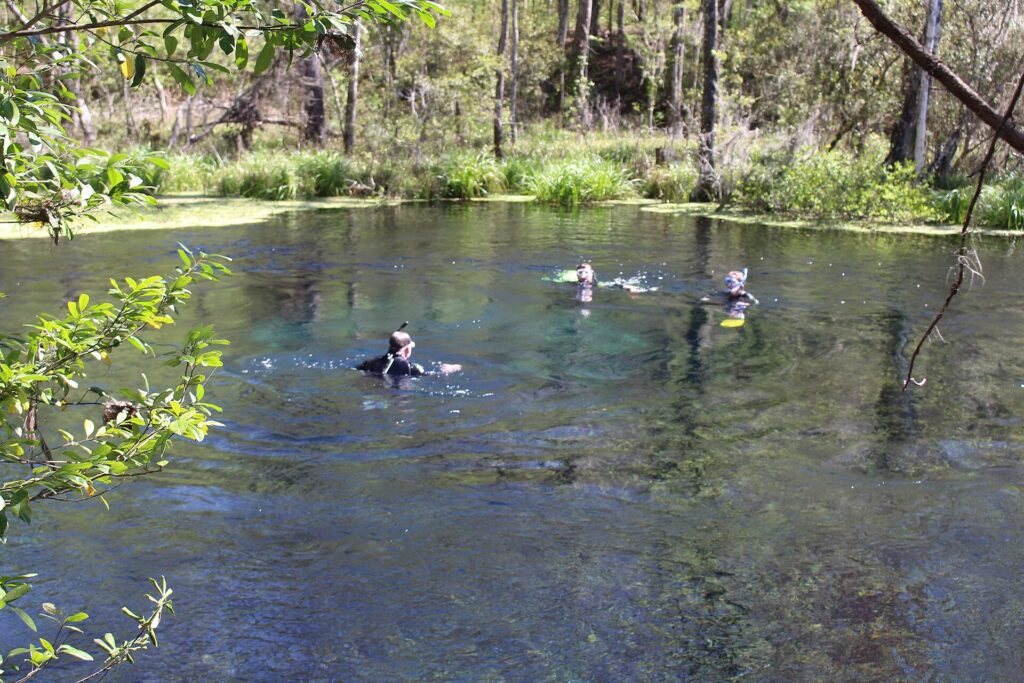
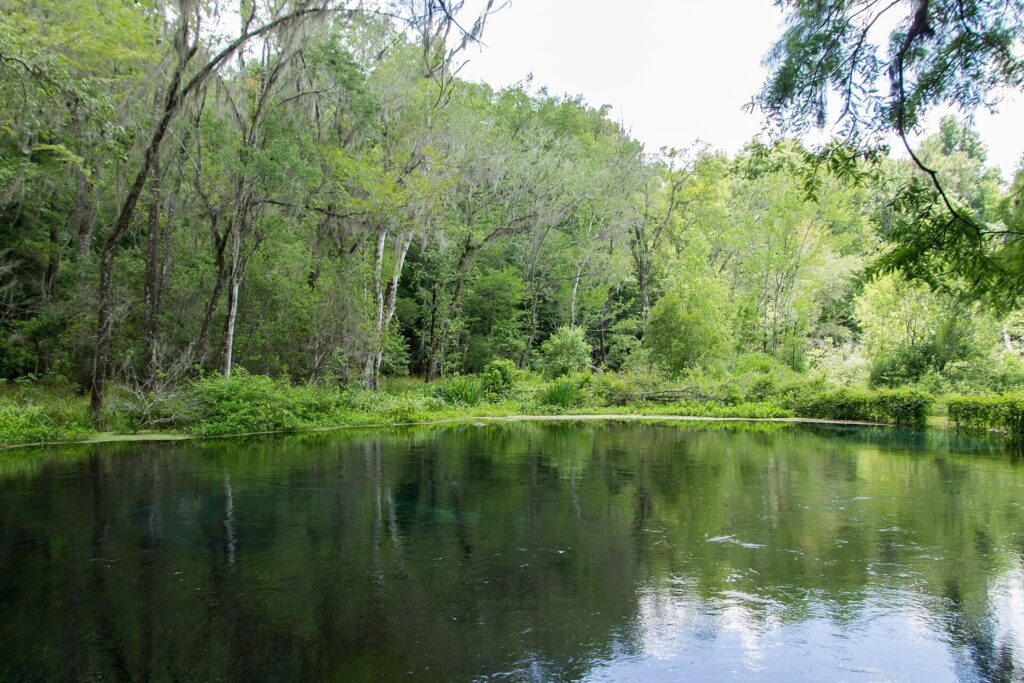
The Head Spring sits at the north entrance and is off-limits to tubes entirely. This is a swim-and-snorkel spot, not a float. The park’s own materials call it a National Natural Landmark and one of the most pristine spring runs left in the state. It’s easy to believe once you’re looking down through it.
Blue Hole is a half-mile walk from the same entrance. It holds the same 72°F year-round, so it’s a year-round snorkel even when the tubing side of the park is quiet. It draws a crowd on a warm weekend, and going early is worth it. If snorkeling is the draw, our John Pennekamp snorkeling guide covers the saltwater version of the same idea.
The park also runs a chair lift at the spring for anyone who needs help getting in and out of the water. It’s a detail that’s easy to miss until you need it.
Ichetucknee Springs Wildlife
The park’s own wildlife list runs from Suwannee cooters and Suwannee alligator snapping turtles in the river to gopher tortoises in the sandhill along Pine Ridge Trail. Barred owls and American kestrels turn up often enough that regulars know to listen for them.
Manatees make the park’s list too. They’re a cold-weather visitor working up from the Santa Fe River, not a year-round sight. Don’t plan a summer trip around seeing one. Our guide to the best time to see manatees in Florida covers when they show up.
Ichetucknee Springs State Park Hiking Trails
All three trails start at the north entrance. Trestle Point Trail runs about 0.75 miles along the river, shaded the whole way. It’s open to leashed dogs.
Pine Ridge Trail is a two-mile, self-guided loop through sandhill and longleaf pine. It’s a different landscape than the spring run most people come for, and it’s also pet-friendly.
Blue Hole Trail is the short one: a half-mile walk to the spring itself. It closes an hour before sunset, same as the spring area it leads to.
What To Bring To Ichetucknee Springs
Water shoes earn their keep here. The riverbed is sandy in most spots, but there’s enough submerged wood and rock near the launches to make bare feet a bad idea getting in and out.
The tree canopy over the tubing run cuts a lot of sun. Blue Hole and the Head Spring are more open, so sunscreen still belongs in the bag. A dry bag or a waterproof phone case is worth it too; nothing you bring on a tube stays dry for long.
Bring cash or a card for tube rental and the tram wristband at the General Store. Pack snacks for the parking lot, not the water; food isn’t allowed on the river at all.
Ichetucknee Tube Rental
The General Store at the south entrance rents tubes. Outside vendors near the park do too, if you’d rather bring your own or pick one up on the way in. Either way, the tube can’t be more than 60 inches long or wide, so oversized novelty tubes get turned away at the water.
The river itself runs a short list of rules. No coolers, food, glass, or disposable containers on the water, and no alcohol anywhere inside the park. Pets, tobacco and vapes, radios, and oversized inflatables are out too, which keeps the float quiet and the water clean.
Where To Stay Near Ichetucknee Springs
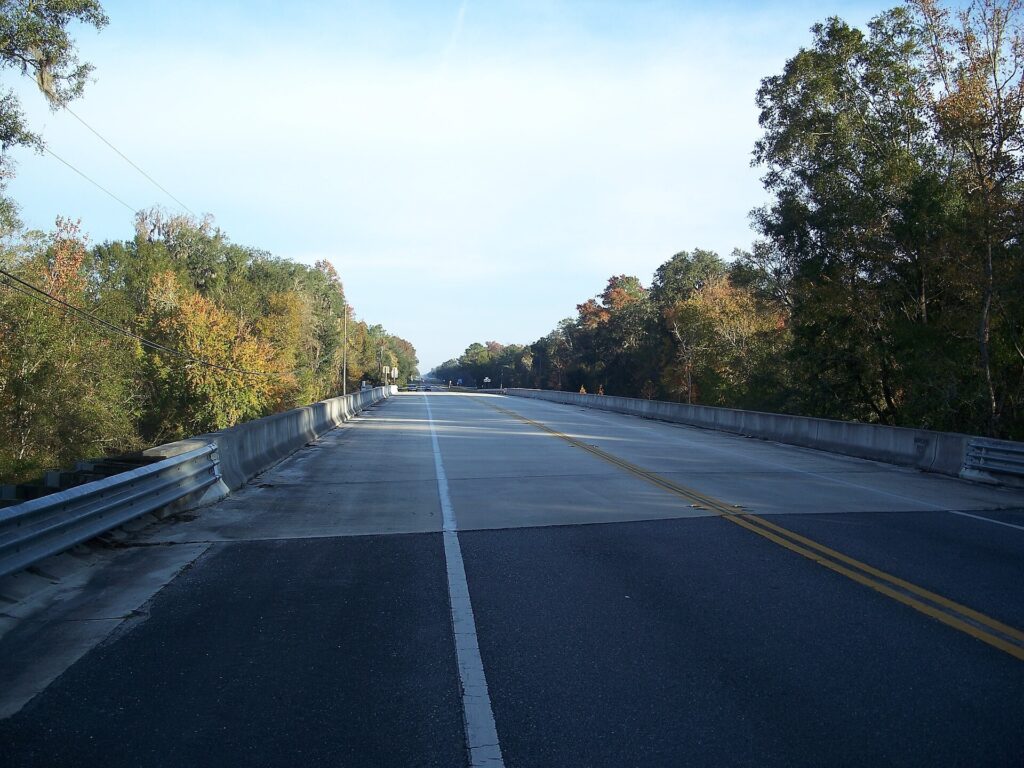
Both entrances carry a Fort White, Florida address. That small town is the closest base for an early tubing start. High Springs is a short drive further up the highway, and it doubles as the jumping-off point for the Santa Fe River and the springs clustered around it.
High Springs Florida
High Springs sits where the Santa Fe River runs through town. It’s the more built-up of the two bases, with more places to eat and stay than Fort White has. It’s also the usual jumping-off point for Ginnie Springs and the rest of the Santa Fe cluster, so it earns a second night if a single spring isn’t the whole trip.
Neither entrance lists camping of its own. Lodging near Ichetucknee means picking a nearby town, not a park campground. We’ve made the drive out from High Springs before, and it’s an easy add-on to a wider spring-hopping day rather than a destination that needs its own overnight.
A day here pairs naturally with any other Florida spring on the list. It’s a different kind of clear water than the reef trips further south. Our best Florida springs near Gainesville guide covers the other springs in this part of North Florida. For other rivers worth floating, our roundup of the best places to go tubing lines up several more.
Prices are approximate, current as of publication, and change frequently — confirm the latest price with the retailer before buying.
Ichetucknee Springs Facts
How long does it take to tube Ichetucknee Springs? Plan on 45 minutes to an hour from Dampier’s Landing at the south entrance, the only tubing launch currently running.
Can you drink at Ichetucknee Springs? No. Alcohol is banned on the river and everywhere inside the park boundary.
Is Ichetucknee Head Spring open for tubing? No. The north entrance and its Head Spring are for swimming and snorkeling only; every tubing launch is now at the south entrance.
How much does it cost to get into Ichetucknee Springs? A standard vehicle runs $6, a single-occupant vehicle or motorcycle $4, and walk-ins or cyclists $2, per the park’s fee page.
Can you bring your own tube to Ichetucknee Springs? Yes, as long as it’s no more than 60 inches long or wide. Rentals are also available at the General Store by the south entrance.
Published September 28, 2026.
Photo credits: (1) featured, Clear spring water reflecting blue sky and… — The Florida Guidebook from Florida, USA, CC BY 2.0, via Wikimedia Commons; (2) Kids paddling down the Ichetucknee River — Michael Rivera, CC BY-SA 4.0, via Wikimedia Commons; (3) Clear turquoise water at Blue Hole Spring… — Michael Rivera, CC BY-SA 4.0, via Wikimedia Commons; (4) Tubers floating on the Ichetucknee River — Florida Guidebook from Florida, USA, CC BY 2.0, via Wikimedia Commons; (5) The Santa Fe River at a bridge crossing… — Ebyabe, CC BY-SA 2.5, via Wikimedia Commons.