

Some links on our site may earn us a commission at no extra cost to you. Learn more.
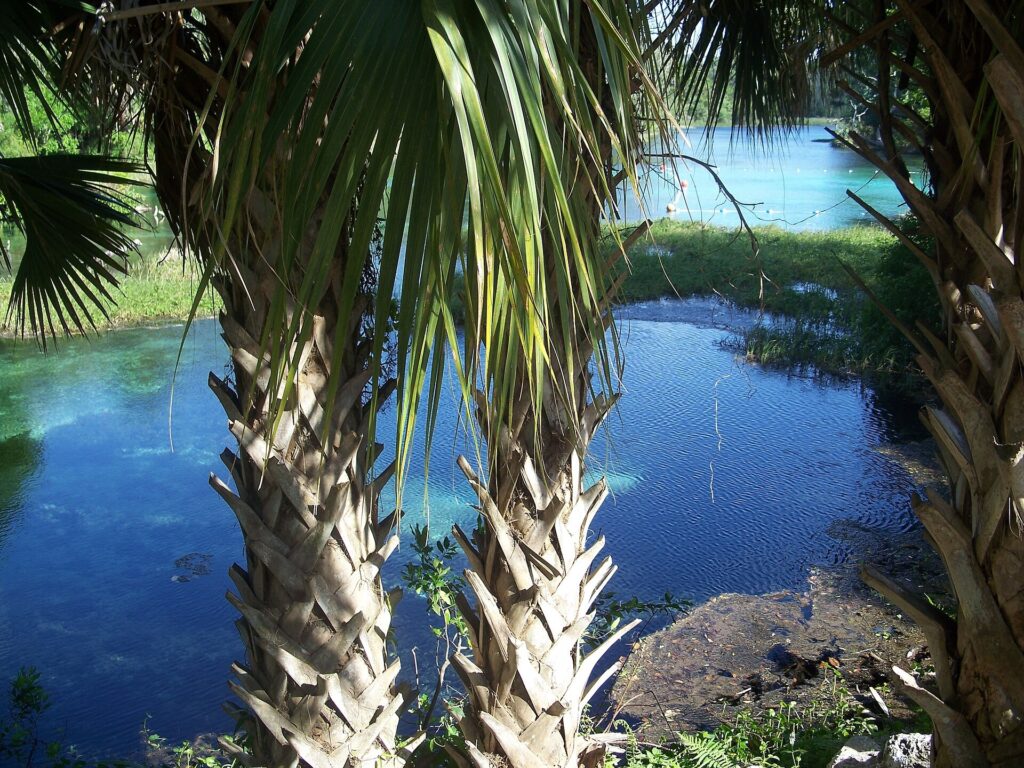
Rainbow Springs State Park sits on the headwaters of the Rainbow River in Dunnellon, Florida. The spring water runs 72 degrees, clear enough to see every fish from the bank. The park has two very different sides. A quiet headsprings area handles swimming, snorkeling, and garden walks. Downstream, a separate tubing entrance is built for floating. A day-use reservation is now required just to get in the gate. Plan ahead — the reservation matters as much as the packing list.
We’ve floated our share of spring-fed rivers with the nieces and nephews in tow. Rainbow Springs plays by the same rules the good ones always do. The water is colder than it looks, even in July. A cheap pool noodle beats a fancy tube if you’re only doing it once. My packing list for a spring day hasn’t changed in years. Water shoes, a dry bag for the phone, enough sunscreen to reapply halfway down the run. Somebody always wants to skip the dry bag to save space. Somebody always regrets it by the takeout.
Rainbow Springs State Park Fees
Rainbow Springs State Park actually runs on three separate gates, and each one charges its own way. At the headsprings entrance, the park lists $5 per vehicle carrying two to eight people. A single-occupant car pays $4, and anyone arriving on foot or by bike pays $2.
Florida State Parks now requires a day-use reservation for every headsprings visitor, effective April 29, 2026. The gate closes once the park hits capacity for the day — no walking up and hoping for the best.
| Entrance | Activity | Fee |
|---|---|---|
| Headsprings (main park) | Swimming, snorkeling, gardens, canoe/kayak launch | $5/vehicle (2–8 people), $4 single occupant, $2 walk-up |
| Tubing entrance (S.W. 180th Ave. Rd.) | Tubing the river, seasonal | Set by the concessionaire; call ahead |
| KP Hole Park (Marion County) | Tubing and kayak launch, day use | Separate county gate fee |
| Camping entrance | Overnight camping | Per-site nightly rate, booked online |
The tubing entrance runs on its own schedule entirely. Per the park’s hours page, it opens daily in the warmer months. From October through March, it drops to weekends only. Guest Services Inc. runs that gate as a separate concession from the main park.
Rainbow Springs State Park Things to Do
The headsprings side of the park is built for a slow morning, not a fast one. Seven miles of nature trails wind through shaded gardens planted with azaleas, oaks, and magnolias. A 2.5-mile loop climbs high enough for a look down into an old phosphate pit. Florida State Parks lists the swimming area at 10 to 18 feet deep, holding a steady 72 degrees year-round. A summer afternoon and a January morning feel about the same once you’re in the water.
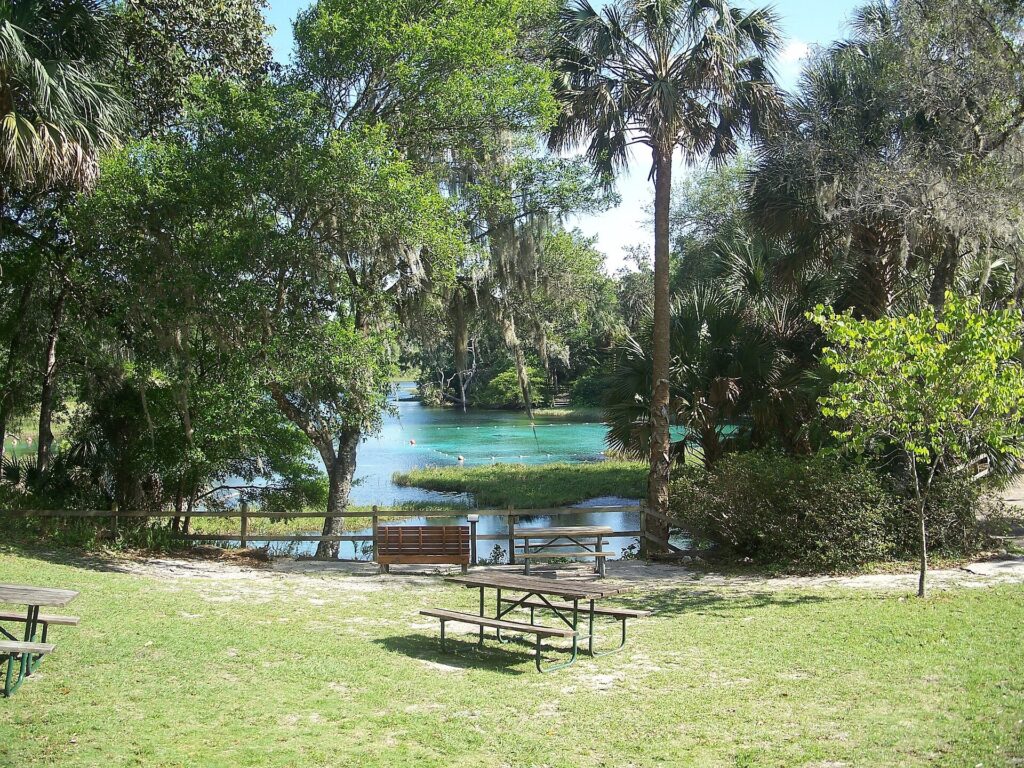
Inflatables aren’t allowed at the headsprings — no rafts, no tubes, no beach balls. Bring a mask and fins instead of a floatie if this is the entrance you’re using. Canoes and kayaks launch from here too, either your own or a rental from the concession by the gift shop. Dunnellon sits close enough to Orlando for a day trip. Families already staying near Disney World can add a Rainbow Springs morning without much extra driving.
Rainbow Springs State Park Waterfalls
The waterfalls in the garden aren’t natural — and the park doesn’t pretend otherwise. Rainbow Springs spent decades as a phosphate mining operation and then a privately run tourist attraction. The hand-built waterfalls date to that era, stacked from local rock over the natural spring flow. They stayed when the state took the property over and turned the grounds into a park.
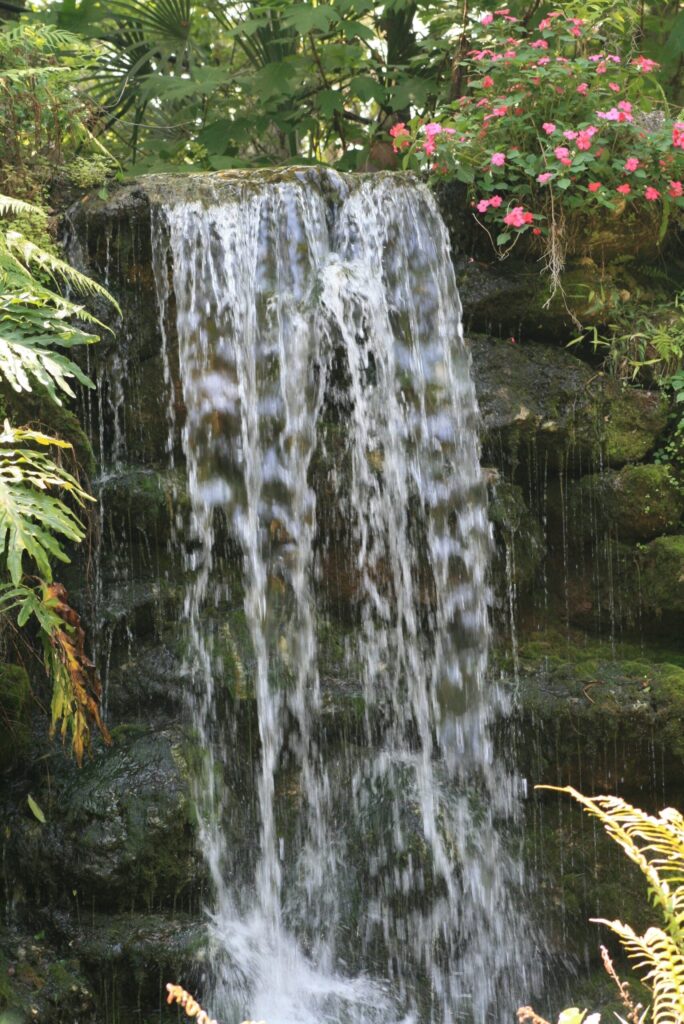
Knowing that doesn’t make them less worth a look. The water drops through several tiers into a shaded pool, framed by the same azaleas that bloom hardest in late winter. It’s a five-minute stop next to the hours you’ll spend in the water. But it’s the one part of the visit built for a camera rather than a swimsuit. That’s why the headsprings side feels more like a garden than a boat ramp.
Rainbow River Tubing
Tubing doesn’t happen at the headsprings. It happens at a separate entrance on S.W. 180th Avenue Road, a few miles from the swim area. Riders have to be at least 5 years old. The park requires a life jacket for anyone age 5 or 6, even in water this calm. Guest Services Inc. runs tube rentals and a shuttle back upriver from this gate.
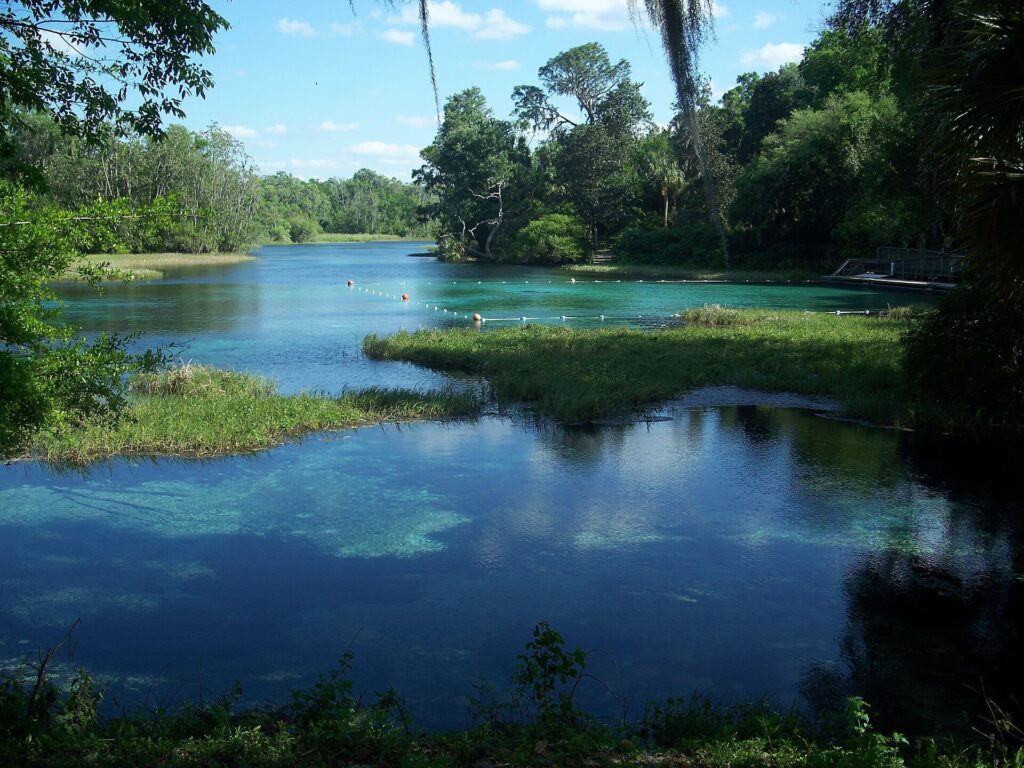
Expect glass-clear water over sand and eelgrass, with turtles sunning on logs. The current is gentle enough that nobody’s paddling hard to keep up. Bring a rope or a way to link tubes together if your group includes anyone under 10. The current isn’t fast, but it is a current, and littles drift faster than you’d think. We’ve rounded up more float and tube options in our guide to the best places to go tubing. It’s worth a look if this one doesn’t fit your dates. If manatees or a mermaid show are more the goal, Weeki Wachee is the other Gulf-side spring worth pairing with this one.
KP Hole Park
KP Hole Park is Marion County’s own entrance to the Rainbow River, a short drive from the state park. It’s unrelated to the park administratively: different owner, different gate, different fee. Marion County’s own park page dates its ownership of the site back to 1953. The land started out as a private boys’ camp in the 1920s.
It’s the launch a lot of local tubers and kayakers actually use. It sits closer to the river’s middle stretch, and isn’t tied to the state park’s reservation system. Rentals at KP Hole include a return shuttle from Blue Run of Dunnellon Park downriver. A group without vehicles staged at both ends can still do the float. If the state park’s tubing entrance is closed for the season, KP Hole is the backup plan. Check the county’s own hours before driving out — the two calendars don’t always match.
Rainbow River Kayaking
Kayaking and canoeing both launch from the headsprings side. Bring your own boat, or rent one from the concession there. Private paddlers can put in at the headsprings launch too. That means portaging about 1,800 feet from the parking area down to the water. Not a quick carry if you’re hauling a heavy kayak solo.
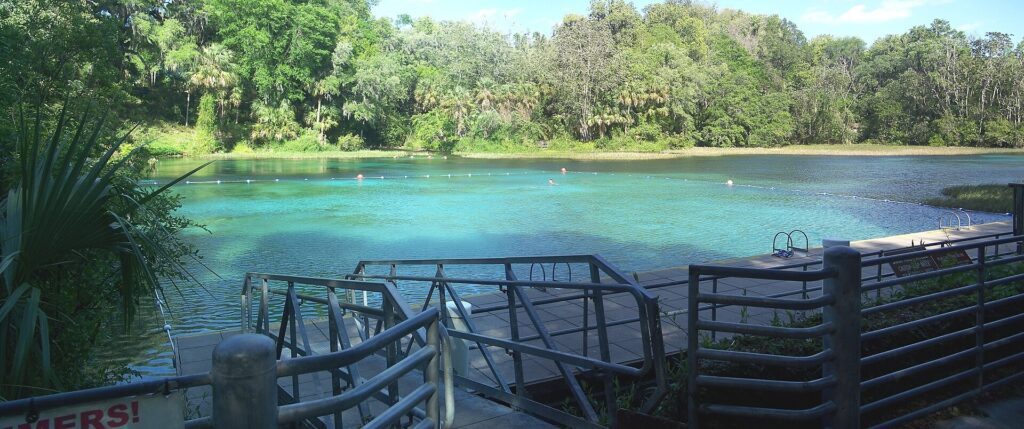
Paddling upstream from the headsprings takes you toward the spring vents themselves. The water goes from clear to almost invisible up there. Paddling downstream puts you on the same run the tubers float, just faster and with more control over where you stop. Either direction, the current is mild enough for a first-timer. The scenery doesn’t change much whether you’re in a kayak or standing waist-deep. Think cypress knees, the odd turtle, egrets working the shallows.
Rainbow Springs State Park Camping
The campground has its own entrance and its own gate, open only to registered campers with a reservation already booked. Sites take RVs up to 103 feet, with full hookups: water, sewer, 20/30/50-amp electric. There’s also a handful of tent-only, hike-in sites, with water and a lighter 110-volt outlet nearby. Check-in doesn’t start until 3 p.m. The park is firm about it: no early arrivals.
Book through the same state park reservation system used for camping at any Florida state park. Expect it to fill fast around spring break and summer weekends. The campground office keeps separate hours from the rest of the park — mornings through late afternoon only. A late arrival call won’t get answered the way it would at the main gate. Run through our camping gear checklist for beginners before you go. Hookups don’t help much if you forgot the sewer adapter.
Rainbow River Manatees
Manatees aren’t the reason most people come to Rainbow Springs. They’re not guaranteed here the way they are twenty minutes north at Crystal River. A few do drift into the spring run during the coldest stretches of winter. That’s when the 72-degree water stays warmer than the Gulf. If you’re paddling or floating on a cold January morning, keep an eye on the grass beds along the edges. That’s where they tend to sit.
Don’t expect the organized swim-with-manatees tours you’ll find in Crystal River. Rainbow Springs doesn’t run that kind of program, and getting close to one here is closer to luck than plan. Give any manatee you do see plenty of room and let it move on its own.
Rainbow Springs FAQ
Do you need a reservation for Rainbow Springs State Park?
Yes. As of April 29, 2026, the headsprings entrance requires a day-use reservation for every visitor. Book it in advance through the state park reservation system. The park can also close early once it reaches capacity, so don’t wait until the last minute.
How deep is Rainbow Springs?
The swimming area runs 10 to 18 feet deep, holding a steady 72 degrees year-round. Snorkeling is allowed only inside the buoyed swim area.
Can you bring a tube to Rainbow Springs State Park?
Not to the headsprings — inflatables, including tubes, rafts, and balls, aren’t allowed there. Tubing happens at the park’s separate tube entrance on S.W. 180th Avenue Road, or at KP Hole Park down the road.
Is KP Hole the same as Rainbow Springs State Park?
No. KP Hole Park is a Marion County park with its own gate, fee, and hours. It sits near Rainbow Springs State Park and floats the same river. But the two aren’t run by the same agency.
What time does Rainbow Springs State Park open?
The headsprings entrance opens at 8 a.m. and stays open until sunset, 365 days a year. It can close early if the park hits capacity. The tubing and camping entrances keep their own separate hours.
Prices are approximate, current as of publication, and change frequently — confirm the latest price with the retailer before buying.
Published September 28, 2026.
Photo credits: (1) featured, Swimmers in the clear blue headspring… — Ebyabe, CC BY 2.5, via Wikimedia Commons; (2) A wide view across the spring basin and… — Ebyabe, CC BY 2.5, via Wikimedia Commons; (3) One of the hand-built waterfalls in the… — Patty O'Hearn Kickham from Guelph, Ontario, Canada, CC BY 2.0, via Wikimedia Commons; (4) The clear spring-fed river run at Rainbow… — Ebyabe, CC BY 2.5, via Wikimedia Commons; (5) A panoramic view of the swimming area and… — Ebyabe, CC BY 2.5, via Wikimedia Commons; (6) One of the spring vents at Rainbow Springs… — Ebyabe, CC BY 2.5, via Wikimedia Commons.