

Some links on our site may earn us a commission at no extra cost to you. Learn more.
The closest springs near Gainesville are less than 30 minutes off the road. Poe Springs Park and Rum Island are both under 30 miles from downtown. Ginnie Springs, Gilchrist Blue Springs, Ichetucknee, and Rainbow sit another 10 to 20 minutes past them.
Manatee Springs is the farthest of the group, worth the extra half hour for winter manatees on the Suwannee. Pick by activity: Ichetucknee for tubing, Ginnie for cave diving, Devil’s Den for a year-round dive, Manatee Springs for manatees. Two of them fit into a single day.
I’ve floated and swum springs like these all over Florida since I was a kid. Growing up in South Florida, a spring day meant a two-lane road through pasture and pine that opened onto water clear enough to read a dime on the bottom in fifteen feet.
The temperature never moves, a steady 68 to 72°F whatever the season, so a spring that feels bracing in July is the warmest water around in January. That’s the case for the springs near Gainesville: less about one postcard spot, more about matching the spring to what you actually want to do that day.
Florida springs near Gainesville
Four springs sit within about half an hour: Poe Springs Park, Rum Island, Ginnie Springs, and Gilchrist Blue Springs. All four are on or near the Santa Fe River, northwest of town through the High Springs corridor.
Here’s how the full Gainesville-area cluster compares on drive time, fee, and what each one is actually good for. Most of that drive follows the same stretch of two-lane road out of town, past pasture and pine.
High Springs itself is a good midpoint stop for gas or a late breakfast. Poe Springs, Rum Island, Ginnie, and Gilchrist Blue all sit within about ten minutes of the town center. Ichetucknee and Rainbow are a further stretch north and south of that cluster.
Manatee Springs and Devil’s Den sit off on their own, west toward Chiefland and Williston. Weekday mornings are the easiest time to visit any of them. A Saturday in warm weather can fill the lot by mid-morning at the cheaper, closer parks.
| Spring | Minutes from Gainesville | Entry fee | What it’s for |
|---|---|---|---|
| Poe Springs Park | ~25 | $6/vehicle May–Sept, free Oct–Mar | Swimming, picnicking |
| Rum Island | ~30 | Day-use access | Snorkeling, canoe put-in |
| Gilchrist Blue Springs | ~30 | $6/vehicle | Swimming, paddling |
| Ginnie Springs | ~35 | Day-pass admission | Tubing, cave diving, camping |
| Ichetucknee Springs | ~35 | $6/vehicle | Tubing, snorkeling |
| Devil’s Den | ~40 | Paid, reservation-only | Year-round cavern snorkel/scuba |
| Rainbow Springs | ~45 | Fee varies by entrance | Swimming, tubing, kayaking |
| Manatee Springs | ~45 | $6/vehicle | Winter manatees, swimming, camping |
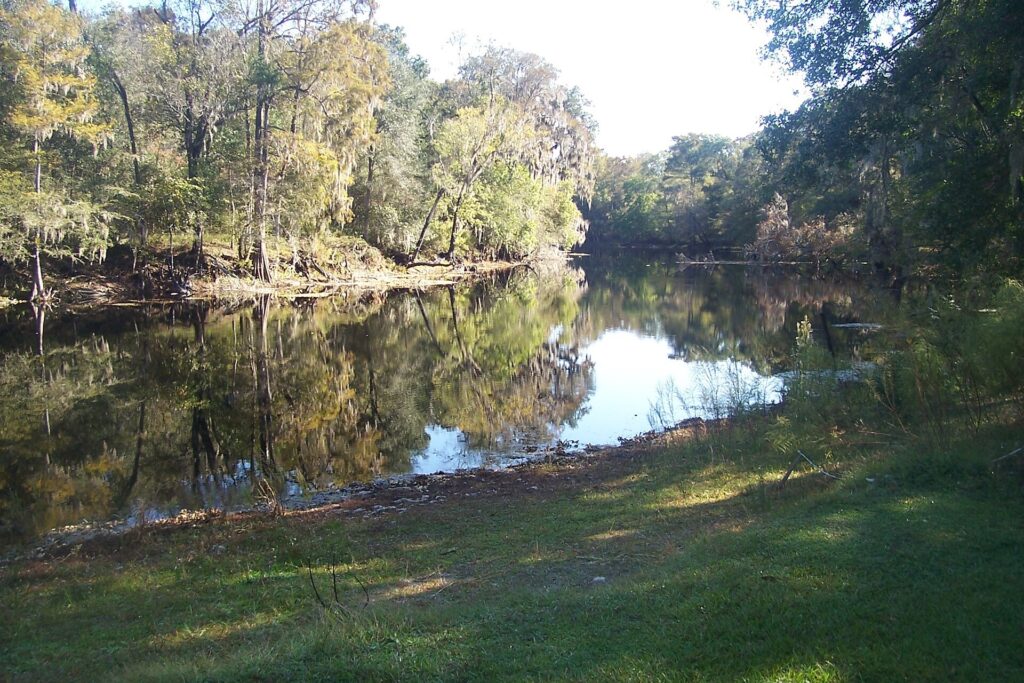
Best springs near Gainesville Florida
Every spring in this cluster is spring-fed and clear. They’re not interchangeable, though. A few notes on each before you pick one:
- Poe Springs Park — A county park with a swimming basin, picnic shelters, and a boat ramp. The county’s fee page lists $6 per vehicle from May through September, and free entry the rest of the year.
- Rum Island — A small, low-key Santa Fe River access point. A short walk gets you to a spring-fed swimming hole, better for a quiet dip than a full day out.
- Gilchrist Blue Springs — Now a state park rather than the private park it used to be. The state’s page notes that swimming and paddling are limited while the spring run is under construction, so check current status before you go.
- Rainbow Springs — A wide, deep spring pool with a paddling launch and a manmade waterfall left from its old attraction days. Every visitor now needs a day-use reservation.
- Manatee Springs — The outlier. Cooler months bring manatees up from the Suwannee, plus there’s a boardwalk, a campground, and a paddle trail connecting to the Nature Coast State Trail.
- Devil’s Den — A privately run cavern spring. Snorkel or certified scuba only, reservation required, open year-round regardless of weather since the water sits underground.
None of these need to be an all-day commitment on their own. Poe Springs plus Rum Island is an easy half-day loop, since they’re a few minutes apart on the same road.
Ginnie and Ichetucknee both run longer. Plan the better part of a day if tubing or diving is the point, rather than a quick swim.
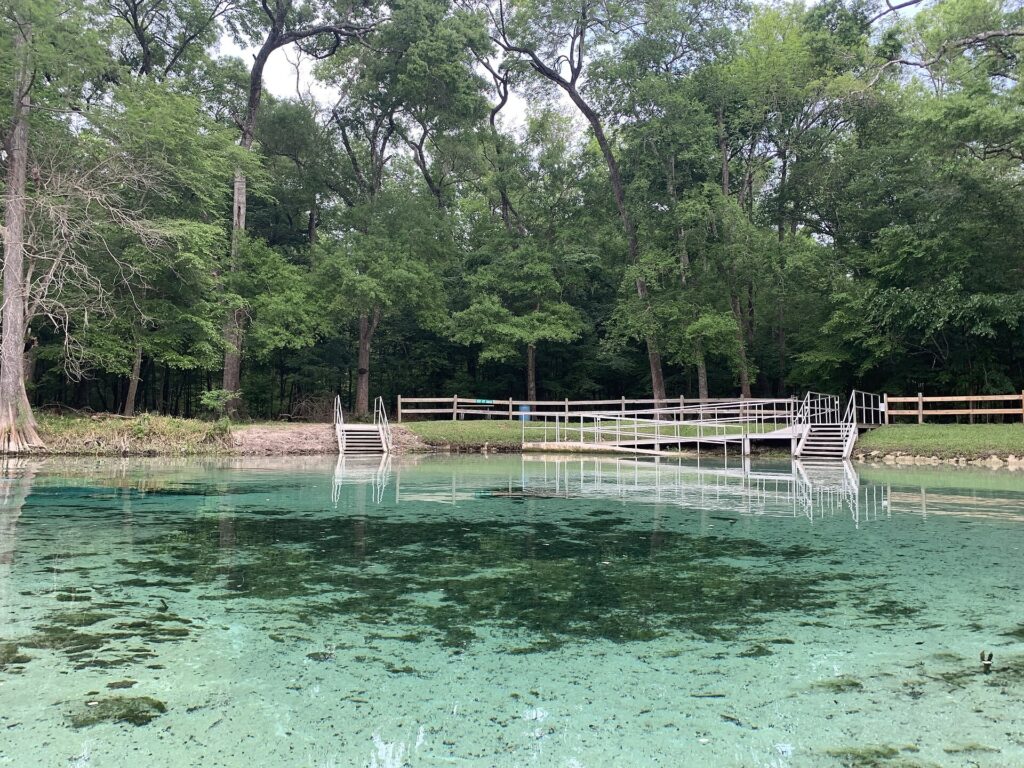
Ichetucknee Springs tubing
Ichetucknee is the tubing spring in this cluster. Eight named springs feed a six-mile run through shaded hammock. The water holds at a steady 72°F year-round, comfortable even on a cool morning.
The park’s own site has the Midpoint Tube Launch closed for repairs. Current tubing starts at the south entrance, with rentals cutting off well before closing.
Go early. The park caps capacity and closes to new arrivals once it fills, and a summer weekend afternoon is the slowest possible time to find that out.
Bring your own tube if you have one. Renting on-site is easy, but the line for it is the same line everyone else is standing in on a busy day.
Blue Hole, one of the eight springs feeding the run, is worth the detour even if you skip the full float. It’s deep and cold even by spring standards, set apart enough from the main route to stay calmer than the put-in.
Our full Ichetucknee Springs State Park guide has the shuttle logistics and the Blue Hole approach. Our tubing roundup covers how it stacks up against the state’s other float trips.
Ginnie Springs cave diving
Ginnie Springs runs a different crowd than Ichetucknee. It’s privately owned and charges a day-pass admission at the gate. It draws certified cave and cavern divers as much as it draws tubers.
Visibility in the main spring run is good enough that Ginnie is regularly ranked among the best freshwater dives in the country. Floating and paddling are open to everyone. The cave systems are not, and that’s enforced.
It’s also the one spring here set up for an overnight. The campground has both tent sites and RV hookups across two hundred wooded acres. Anyone staying without a parent or guardian has to be 18 or older, with ID.
Devil’s Eye and Ginnie Cavern are the names divers know it by. Neither is a place to wander into without the training and the gear for it.
For everyone else, the appeal is simpler: a wide, deep spring basin, an easy shore entry, a short paddle to the river for tubers. There’s enough shade along the bank to camp out for the afternoon instead of just passing through.
The clarity makes the bottom look closer than it is, so it’s easy to underestimate how deep the main basin actually runs. Our Ginnie Springs guide has the admission tiers and camping details.
Devil’s Den snorkeling
Devil’s Den is the odd one out on this list. It’s an underground cavern spring, reached down a stairway cut into limestone, not an open-air swimming hole.
Snorkeling and certified scuba are the only ways in. Reservations are required in advance. The water stays at a constant 72°F whether it’s August or January.
A cold snap that shuts down an open spring doesn’t touch it. Because it’s a cavern and not a river, there’s no tubing or paddling angle here, and no camping either.
It’s a stop on its own. Pair it with a closer spring like Poe Springs or Ginnie rather than building a full day around it.
The look of the place is the draw as much as the swim. Light comes down through a hole in the limestone ceiling and lands on the water in a way no open spring can match.
The enclosed setting means wind and rain outside don’t touch conditions underground. Bring a mask that actually fits; a leaky one is a bad way to spend a reservation you can’t easily rebook.
Chemical sunscreen isn’t allowed in the water. Pack a mineral one, or skip it for the short walk down.
What springs are near Gainesville FL?
Eight springs sit within about 45 minutes of Gainesville. That’s Poe Springs Park, Rum Island, Gilchrist Blue Springs, Ginnie Springs, Ichetucknee, Rainbow, Devil’s Den, and Manatee Springs. Most cluster around the Santa Fe River near High Springs, with Manatee Springs and Devil’s Den farther out toward the Suwannee.
How far is Manatee Springs from Gainesville?
Manatee Springs is about 45 minutes southwest of Gainesville, near Chiefland. It’s the farthest spring in this cluster, and the only one where manatees are the draw.
They move up the Suwannee into the spring run in the cooler months. That’s a different season, and a different reason to visit, than the swim-and-float trip the closer springs are built for.
Outside of manatee season it still holds up as a regular spring visit. An 800-foot boardwalk follows the run down to the Suwannee.
The same paddle launch that puts manatee-watchers on the water in winter works just as well for a normal kayak trip in warmer months.
How far is Ichetucknee Springs from Gainesville?
About 35 minutes, mostly on two-lane roads through Alachua and Columbia counties. It’s the closest true tubing river to Gainesville, which is why it fills up first on a warm weekend.
How far is Ginnie Springs from Gainesville?
Roughly 35 minutes, just outside High Springs. It’s close enough to pair with Poe Springs or Rum Island on the same drive, since all three sit along the same short stretch of river.
How far is Devils Den from Gainesville?
About 40 minutes, southwest toward Williston. Book the reservation before you drive out; it isn’t a walk-up spring.
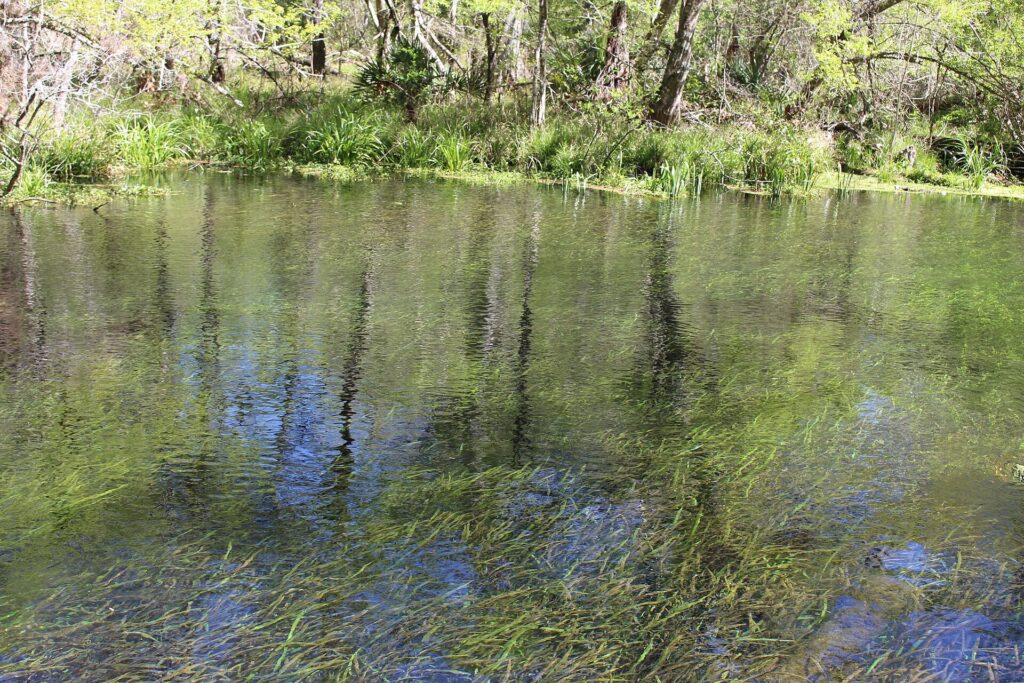
Natural springs near Gainesville
For more of the state’s spring country, our Florida springs guide covers the parks farther out. It runs from the Ocala National Forest springs to the manatee-season spots near the Gulf.
Most of them run the same way these do: a modest vehicle fee, a swim area open from morning to sunset. The water never changes temperature, no matter what the calendar says.
Prices are approximate, current as of publication, and change frequently — confirm the latest price with the retailer before buying.
Published October 2, 2026.
Photo credits: (1) featured, Swimming cove at Poe Springs Park near High… — Paul Clark, CC BY 2.0, via Wikimedia Commons; (2) Clear spring water at Poe Springs Park near… — Paul Clark, CC BY 2.0, via Wikimedia Commons; (3) Rum Island Springs on the Santa Fe River… — LittleT889, CC BY-SA 4.0, via Wikimedia Commons; (4) The clear Ichetucknee River winding through… — Michael Rivera, CC BY-SA 4.0, via Wikimedia Commons.