

Some links on our site may earn us a commission at no extra cost to you. Learn more.
Here’s what to pack for Colorado in winter, in one line: layers, boots with real tread, sun protection, and a plan for snowy roads. Everything else on this list solves one of those four problems. Nothing on it is a specialty item. If you forget something, any mountain town sells it.
I’ve packed for enough Colorado winters with nieces and nephews in the back seat that I don’t overthink it anymore. My early mistake was dressing for the temperature at the trailhead. An hour later, at 11,000 feet with the wind up and the sun behind a ridge, that outfit was wrong. Now everything in my bag doubles as a layer, my boots still have tread, and hand warmers live in the same jacket pocket on every trip. The list barely changes between a weekend in Breckenridge and a week based in Denver. What changes is how much of it I use.
Colorado Winter Packing List
This is the master list, in the order each item earns its spot in the suitcase. The table separates everyday cold and driving from what’s specific to skiing or a trail day. That way you’re not hauling ski gear into a weekend of restaurants and hot springs.
| Item | Why | When |
|---|---|---|
| Base, mid, and shell layers | Single-digit mornings turn into 40°F afternoons | Every day in the mountains |
| Waterproof, insulated boots | Dry feet on packed snow and afternoon slush | Any outdoor plans |
| Microspikes or traction cleats | Grip on icy trailheads and parking lots | Hiking, snowshoeing |
| Sunglasses or ski goggles | Snow glare the thin air doesn’t filter | Anywhere above treeline |
| SPF lip balm and sunscreen | Altitude sun burns faster than sea-level sun | Daytime outdoors |
| Insulated gloves plus a liner pair | A dry backup once the first pair gets wet | Skiing, sledding, snowball fights |
| Reusable water bottle | Altitude dries you out faster than the cold suggests | All day, every day |
| Hand and toe warmers | Cheap insurance on a chairlift or an overlook | Cold mornings, lift rides |
| Ice scraper and a small shovel | For the rental car’s windshield and wheel wells | Driving anywhere in the mountains |
| Neck gaiter | Blocks wind at the collar without a bulky scarf | Skiing, hiking, driving stops |
What to Pack for a Winter Trip to Colorado
The swing is the whole story. Denver’s January normals from the National Weather Service run from an 18°F low to a 45°F high. Denver is the mild end of the state.
Grand Lake sits at 8,369 feet on the west side of Rocky Mountain National Park. The park’s own weather table shows a January high of 31°F and a low of 2°F there. A parking lot at 7 a.m. and the same lot at 1 p.m. are different climates. One heavy coat handles neither end well.
Three thin layers beat one thick one. Start with a base layer against the skin, add a fleece or light puffer, and finish with a wind- and water-resistant shell. Skip cotton entirely. It holds moisture and turns cold fast once you’ve sweated on a trail or a run.
Pack more layers than you think you need for your upper body, and fewer for your legs. Most people run warm from moving around and cold in their hands, ears, and neck. That is where a spare pair of gloves and a warm hat earn their keep.
Best Boots for Colorado Winter
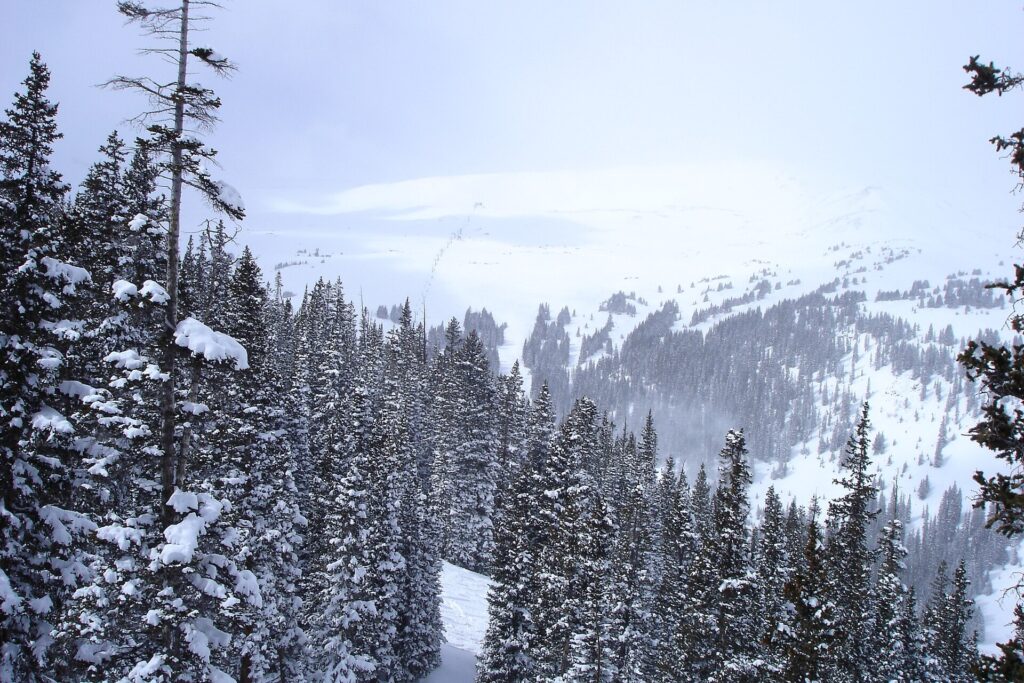
Waterproof, insulated boots do more for a Colorado winter trip than almost anything else on this list. Packed snow turns to slush by afternoon in town. Sneakers won’t stay dry through an afternoon walking around Breckenridge or Estes Park.
For anything on a trail, add microspikes or traction cleats that slip over the boot. Trailheads and overlooks ice over even on sunny days. Packed snow on a popular trail gets slicker, not softer, as more people walk it. Rocky Mountain National Park’s winter visit page advises traction devices and expects snow-packed trails from October into early June.
Break the boots in before you fly out. A blister two hours into a mountain town is a rough start to a trip, and there’s nowhere to sit it out past the parking lot. Two pairs of wool socks per day is not over-packing. It’s the difference between a dry second walk and a wet one.
How to Prepare for Altitude in Colorado
Denver starts a mile up at 5,280 feet, and most ski towns sit between 8,000 and 10,000 feet. Breckenridge is around 9,600. The air is thinner and the sun is stronger up there than at sea level, even on a cold day. Sunglasses, SPF lip balm, and real sunscreen belong in your daypack next to your gloves.
Hydrate, and take the first day slow. That is the whole plan. Drink more water than feels necessary, and don’t start with the hardest hike or the longest ski day on the list.
The air is dry as well as thin. Lips crack within a day, every car door throws a static shock, and a lot of people wake up with a dry nose. A refillable water bottle you actually use, lip balm in every coat pocket, and a small bottle of lotion cover all of it. Electrolyte mix is a nice extra, not a substitute for the water.
Colorado Traction Law
Colorado’s traction law is in effect every year from September 1 through May 31 on I-70 between Dotsero and Morrison. CDOT can also activate it on any other state highway when weather requires. It isn’t a suggestion, and a rental car doesn’t exempt you.
Under the rules updated in fall 2025, your tires need at least 3/16 inch of tread and one of three markings: the mountain-snowflake winter symbol, an all-weather rating, or M+S for mud and snow. That applies to all-wheel and four-wheel drive vehicles too. A car that misses the tire standard needs chains or an approved traction device on two or more drive tires. When CDOT escalates to the passenger vehicle chain law, every vehicle needs chains or an approved device.
The fine schedule on CDOT’s traction law page starts at $100 plus a $33 surcharge. It climbs to $500 plus a $157 surcharge if your car blocks a travel lane. The bigger cost is the closure itself. One spun-out sedan on the Eisenhower Tunnel approach can hold the whole corridor for hours.
If you’re renting, ask for all-wheel or four-wheel drive when you book. Don’t count on the lot having one left in January. Before you drive off, check the sidewall for the snowflake or M+S mark, because an AWD rental on plain all-season tires is still out of compliance. A set of cable chains sized for the rental costs far less than losing half a driving day, even if it never leaves the trunk. Check cotrip.org for closures before you leave Denver.

Ski Rental in Colorado
Renting skis, a snowboard, or boots at a mountain town shop is usually cheaper than renting at the resort base. It’s faster too, since the base shops are slammed at 8:30 a.m. Town shops also tend to fit boots more carefully, because that’s most of what they do all winter.
Reserve ahead for the holiday weeks and Presidents’ Day, when the good sizes go first. A shop that lets you swap boots mid-week if the fit is wrong beats one that’s a block closer to your hotel.
Bring your own boots only if they already fit well and you’re skiing more than a couple of days. Otherwise, rented boots that fit beat a pair of your own that don’t. Flying with skis adds a bag fee and a long walk through the terminal. For a long weekend, the rental wins.

What to Pack for a Ski Trip to Colorado
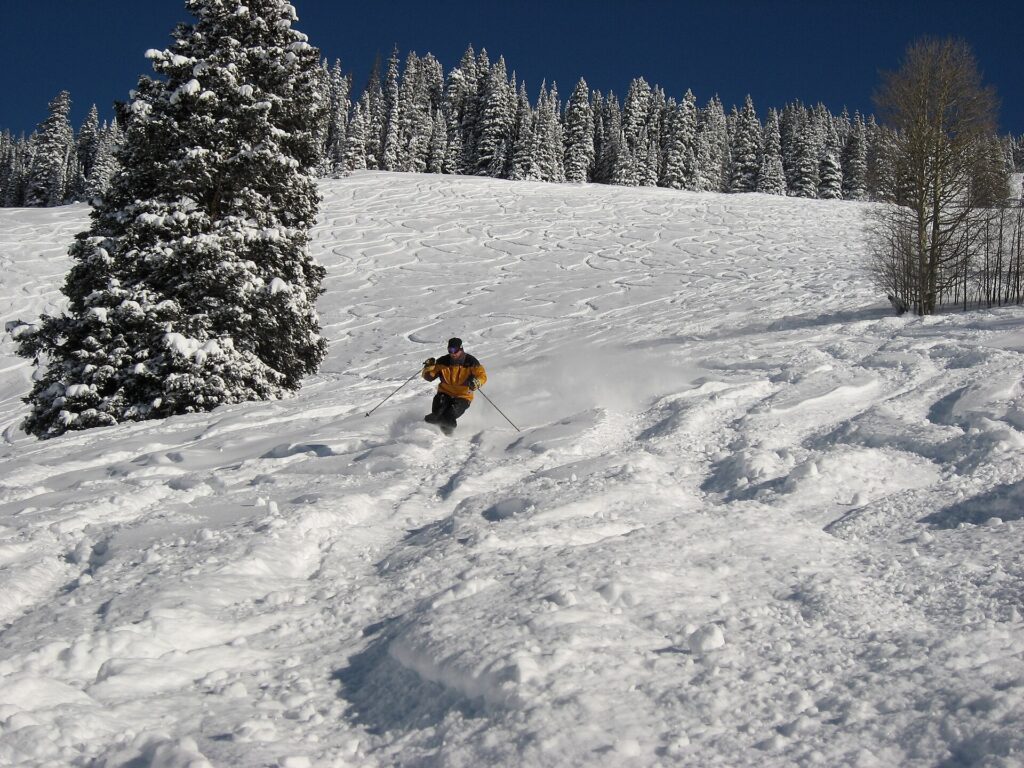
Pack goggles, not sunglasses, for actual runs. A single pair built for variable light fogs less than you’d expect. A neck gaiter blocks wind at the collar better than a scarf, which comes loose on a chairlift.
Pack liner gloves under insulated mittens rather than one thick pair. Your hands run cold fast on a lift, and a dry liner pair to swap into after lunch matters more than a heavier glove. Toe warmers go in the boots before the first run, not after your feet are numb.
Skip the bulky ski jacket if you’re renting outerwear, which many rental packages include. Skip jeans entirely. They’re slow to dry and add no insulation once wet, and a base layer under rented snow pants does the job better. A heavy parka meant for a city sidewalk is the one item that always comes home unused. The umbrella is a close second; the wind turns it inside out on the first walk.
Colorado FAQ
What to Pack for Denver in December?
Denver in December runs milder than the mountains, with normal highs in the mid-40s and lows around 18°F. A warm coat, a hat, and boots that handle slush cover a downtown weekend. Bring the layers anyway. A day trip to a ski town or a storm off the Front Range changes the math fast, and the sun at 5,280 feet still calls for sunglasses.
What to Pack for Colorado in December?
The same list, with the shell and the mittens doing more of the work. December is the darkest month, and the sun is down before 5 p.m. Grand Lake’s December average runs from a 13°F low to a 32°F high. Add a headlamp for the walk back from dinner, and book rental gear early, because the holiday weeks empty the shops.
How Cold Does It Get in Colorado in Winter?
Mountain towns see January mornings in the single digits, with highs in the 30s and 40s by early afternoon. Denver averages a 45°F January high. That swing is why layers matter more than one heavy coat. The parking lot at 7 a.m. feels like a different climate than the same spot at 1 p.m.
Do You Need Chains to Drive in Colorado?
Not always, but you need to be ready. Colorado’s traction law runs September 1 through May 31 on I-70 between Dotsero and Morrison. It requires winter-rated tires with 3/16 inch of tread, or chains. A rental with all-wheel drive and properly marked tires covers most trips without ever needing chains.
For the driving side of the trip, our road trip packing list covers the car basics this guide doesn’t repeat. If Rocky Mountain National Park is on the itinerary, our Rocky Mountain National Park in winter guide covers what’s open. Our timed-entry guide explains how the park’s reservations work. If skiing is the main event, our Colorado ski resorts for beginners guide sorts out which mountain fits a first trip.
Prices are approximate, current as of publication, and change frequently — confirm the latest price with the retailer before buying.
Published October 7, 2026.
Photo credits: (1) Snow falling on evergreen trees along a ski… — Zach Dischner, CC BY 2.0, via Wikimedia Commons; (2) A skier on a snow-covered run at Vail… — Flickr user: Brendan Gray London, UK https://www.flickr.com/photos/grayskull/, CC BY-SA 2.0, via Wikimedia Commons.