

Some links on our site may earn us a commission at no extra cost to you. Learn more.
Rocky Mountain National Park never closes for the season, but a lot of it does. Trail Ridge Road shuts down above treeline once the snow builds up. Old Fall River Road doesn’t reopen until summer. The crowds that clog Bear Lake Road in July thin out to almost nothing. What’s left is the version of the park locals actually prefer: snowshoe trails with fresh tracks, elk down in the meadows, and an entrance fee that costs the same as any other month.
I’ve driven up from Denver on plenty of gray January mornings. The Beaver Meadows entrance is nearly empty. Chains sit in the back of the truck, just in case Bear Lake Road gets slick. That’s the trade winter makes here. You lose the high alpine drive across Trail Ridge Road, and you gain a park that finally has room to breathe. Snowshoeing across Sprague Lake with nobody else on the ice is a different experience than fighting for a Bear Lake parking spot in August. It’s the one I’d pick most winters.
Is Rocky Mountain National Park Open in Winter?
Yes. Rocky Mountain National Park is open every day of the year. The entrance fee applies in December the same as it does in July. What changes is access to the high country.
Trail Ridge Road, the park’s route over the Continental Divide, tops out at 12,183 feet. It only crosses the alpine tundra in summer. The National Park Service doesn’t post an exact winter closing date in advance. It depends on when the first serious storm hits. Old Fall River Road, the older one-way route to Fall River Pass, is a summer-only road too. It typically doesn’t reopen until the Saturday closest to the Fourth of July.
Bear Lake Road, the corridor most winter visitors actually use, stays open all year. That’s the good news for planning: you don’t need a timed entry reservation in winter. The reservation system that manages summer crowds only runs from late May through mid-October.
Things to Do in Rocky Mountain National Park in Winter
A shorter list of open roads doesn’t mean a shorter list of things to do. Snowshoeing, sledding, wildlife watching and short hikes below treeline all hold up fine once the high passes close. Here’s what’s realistically open once the snow settles in.
| Feature | Winter status |
|---|---|
| Trail Ridge Road | Closed above the snowline; no fixed date, call ahead |
| Old Fall River Road | Closed; typically reopens around July 4 |
| Bear Lake Road | Open year-round; traction control possible |
| Hidden Valley sledding hill | Open; the park’s only designated sledding area |
| Entrance stations | Open, normal fee charged |
| Timed entry reservations | Not required |
| Visitor centers | Open, shorter weekend hours |
Nothing on that list requires you to book ahead the way summer does. Show up, pay at the gate, and decide once you’re there. Snowshoe, sled, or just drive Bear Lake Road for the view.
What Is the Entrance Fee for Rocky Mountain National Park?
A one-day vehicle pass costs $30, per the park’s fee page. A seven-day pass runs $35, and it’s worth it if you’re staying more than a day or two. Walking or biking in costs $15 for one day, or $20 for a week. A motorcycle pass runs $25 for one day or $30 for a week.

If you’re planning to hit more than one park this year, the park-specific annual pass is $70. We’ve broken down when an annual pass actually pencils out against paying per visit in our national park road trip cost guide. The math holds the same in winter. It just takes more visits to break even, since you’re not stacking several parks into one trip the way a summer road trip usually does.
None of the winter closures change the fee. You pay the same to walk into Hidden Valley in January as you do to drive Trail Ridge Road in July.
Is Trail Ridge Road Open in Winter?
Not above treeline. Trail Ridge Road is the highest continuous paved road in the country, climbing to 12,183 feet. The stretch across the alpine tundra closes for the season once heavy snow moves in. The park doesn’t announce a firm date ahead of time. Crews close it storm by storm. The recorded status line (970-586-1222) is more current than anything printed here.
Below the closure gates, sections of the road stay open. Hidden Valley is about seven miles in from either the Beaver Meadows or Fall River entrance. It’s accessible along Trail Ridge Road all winter. That’s also where the park’s sledding hill sits, which is no coincidence.
If you’re used to driving Trail Ridge Road in summer, from Estes Park through to Grand Lake on the west side, let go of that plan in winter. The road doesn’t connect the two towns again until the snow clears in late spring. Grand Lake becomes a long way around instead, via US 40 over Berthoud Pass.
Is Bear Lake Road Open in Winter?
Yes, and it’s the road that carries most winter visitors. Bear Lake Road runs 9.2 miles from the Trail Ridge Road junction near Beaver Meadows up to the Bear Lake trailhead. It climbs from about 8,200 feet to 9,475 feet. The National Park Service keeps it open and plowed all year.

That doesn’t mean it drives like a summer road. Snow and ice show up on Bear Lake Road through the winter and spring. The park says traction control can go into effect without much warning. Check your tires before you leave Estes Park, not after you’re on the switchbacks.
The other change is parking. There’s no winter shuttle service on Bear Lake Road, so every visitor is driving their own car up. The lot at Bear Lake fills by around 9 a.m. on winter weekends. Get there early, or plan on parking farther down the corridor and walking in.
Snowshoeing in Rocky Mountain National Park
Snowshoeing is the easiest winter activity in the park to pick up with no experience. All you need is snowshoes, waterproof boots and poles. The National Park Service notes that most trails above 9,000 feet can be explored on snowshoes once there’s enough snow on the ground.
The Bear Lake corridor has the obvious targets. The Bear Lake Loop is a flat 0.6 miles. Nymph Lake is a half-mile in. Dream Lake is 1.1 miles. Emerald Lake, the turnaround most people use, sits at 1.7 miles. Sprague Lake, a short drive back down the road, has its own 0.8-mile loop. It’s flat enough to be listed as wheelchair and stroller accessible in summer, which makes it an easy first snowshoe outing in winter too.

Expect snow on these trails from late October into early June. Pack traction for your boots even on stretches where you’re not snowshoeing the whole way. Rangers lead programs through the park year-round, and winter is when snowshoe walks tend to show up on the calendar. Check a visitor center before you drive up expecting a spot, since the schedule changes year to year. There are no groomed cross-country ski trails in the park, so backcountry skis are the only ski option if you’d rather glide than snowshoe.
Hidden Valley Sledding
Hidden Valley is the only spot in the entire park where sledding is allowed. It’s set up for exactly that: about seven miles from either the Beaver Meadows or Fall River entrance, right along the stretch of Trail Ridge Road that stays open all winter.
The rules are simple, and the park enforces them. No sleds with metal runners. Go down feet-first. Stay inside the marked sledding area. Pets aren’t allowed on the hill. There’s no rental gear or tow rope waiting for you, either. Bring your own sled and plan on the walk back up each run.
It’s a low-key stop, not an all-day destination. It’s an easy add if you’re already driving up for snowshoeing or a look at Bear Lake. Conditions depend entirely on how much snow has actually fallen. A warm, dry stretch in early winter can leave the hill bare even when the calendar says January.
Winter Wildlife Rocky Mountain National Park
Winter is genuinely one of the better times to see wildlife here, and the park’s own guidance backs that up. Winter wildlife viewing is particularly good from the snowshoe trails. Animals move down to lower elevations to escape the deep snow above treeline.
Elk are the animal most people come across. They graze in meadows like Moraine Park and Horseshoe Park, where the grass is easier to reach under a thin layer of snow. Bighorn sheep stay active through the winter too, working their way along rocky slopes and sometimes right along the roadside.

Give animals room. A grazing elk or a bighorn ram standing close to the road is common enough here that it stops feeling remarkable. That’s exactly when people get too close for a photo. Watch from your car or from well back on the trail. Let the animal decide when to move, not you.
What to Wear in Rocky Mountain National Park
Layers matter more here than almost anywhere else we send people in Colorado. Trailheads like Bear Lake sit above 9,000 feet. The alpine sections the road doesn’t even reach in winter push past 12,000. Wind and sun exposure change fast at that elevation, even on a clear day.
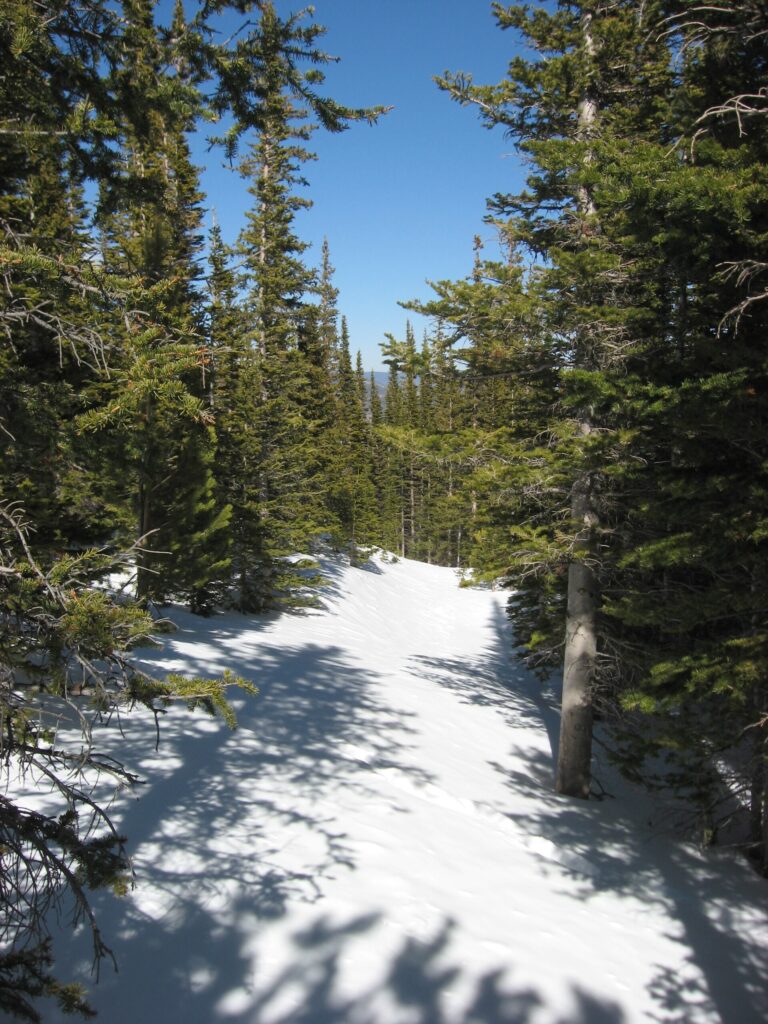
Waterproof, insulated boots are worth the investment over sneakers with wool socks. Snow on shaded trail sections doesn’t fully melt from late October through early June. Traction devices that strap onto your boots make the packed, icy stretches manageable. A shell layer that blocks wind does more good than an extra sweater underneath it.
If you’re driving up from Denver, or flying into the state for the trip, our national park road trip packing list covers the layering basics in more depth. The short version for Rocky Mountain in winter: base layer, insulating mid-layer, waterproof outer shell, traction devices, and a hat that actually covers your ears. Hydrate more than feels necessary. Altitude dries you out faster than cold gets credit for.
Rocky Mountain National Park Winter FAQ
Can You Drive Through Rocky Mountain National Park in the Winter?
Not end to end. Trail Ridge Road, the only route that crosses the park between Estes Park and Grand Lake, closes above treeline for the season and doesn’t reopen until late spring. You can still drive into the park from either side and explore what’s open near that entrance. You just can’t cross over the top in winter.
Can You Sled in Rocky Mountain National Park?
Yes, at Hidden Valley. It’s the only area in the park where sledding is allowed. Bring your own sled without metal runners, and plan to hike back up yourself, since there’s no tow rope or rental gear on-site.
When Does Trail Ridge Road Open?
The National Park Service doesn’t set a fixed date each year. The road opens once crews finish clearing the snowpack, which typically stretches into late May. Timed entry reservations, when they’re required, don’t start until Trail Ridge Road itself is open for the season.
How Cold Does It Get in Rocky Mountain National Park?
Cold enough that layering matters, and conditions swing fast. The park’s own advisories warn that sun, wind, blowing snow and icy roads can all show up in the same afternoon. Temperatures drop further the higher you go. Bear Lake at 9,475 feet runs noticeably colder than the valley floor near the entrance stations.
Is Rocky Mountain National Park Worth Visiting in Winter?
Yes, if you’re after quiet trails over an alpine road trip. You give up driving over Trail Ridge Road and the wildflower season. In exchange you get empty snowshoe trails, easier wildlife viewing, and Bear Lake Road without the summer crowds. It’s a different park in winter, not a lesser one.
Prices are approximate, current as of publication, and change frequently — confirm the latest price with the retailer before buying.
Published October 6, 2026.
Photo credits: (1) Bear Lake covered in snow and ice at Rocky… — Jonathan Wisner, CC BY 2.0, via Wikimedia Commons; (2) Sprague Lake in winter with snow along its… — Charles M. Sauer, CC BY-SA 3.0, via Wikimedia Commons; (3) A bighorn sheep standing along a road in… — dw_ross, CC BY 2.0, via Wikimedia Commons.