

Some links on our site may earn us a commission at no extra cost to you. Learn more.
Estes Park sits at Rocky Mountain National Park’s east entrance. It holds up as its own trip, even before you drive through the park gate. The Stanley Hotel, the Riverwalk, Lake Estes and the aerial tramway fill a full day on their own. Elk wander onto Main Street on their own schedule every fall. Give it a full weekend if the park and the town are both on the list. Give it longer if Trail Ridge Road is part of the plan.
I’ve based trips around Estes Park more times than I can count. Usually there’s a niece or nephew in the back seat asking when we’ll see an elk. It’s an easy town to slow into. Nowhere downtown is more than a fifteen-minute walk from anywhere else. A good half of what’s worth doing there doesn’t need a car at all.
Things to Do in Estes Park
Estes Park splits into two kinds of day: the town itself, and the park next door. Downtown covers the Stanley Hotel, the Riverwalk, Lake Estes and the aerial tramway. None of it requires a park entrance fee. Rocky Mountain National Park is a separate stop, with its own entrance fee. For part of the year, it also runs its own reservation system.
Here’s roughly what each piece costs and when it runs.
| Attraction | Cost | Best Season |
|---|---|---|
| Stanley Hotel tours | Priced per tour, booked directly through the hotel | Year-round |
| Riverwalk & downtown | Free | Year-round |
| Lake Estes trail & marina | Free to walk; boat rentals cost extra | May–September for boating |
| Estes Park Aerial Tramway | $39.95 adult, $24.95 child (6–17) | Daily, spring through early November |
| Trail Ridge Road | Included with park entrance | Late May–early October, weather permitting |
| Elk viewing | Free | Peaks in September and October |
Stanley Hotel Estes Park
The Stanley Hotel opened in 1909. It sits on a hill above downtown, a wraparound-porch, white-clapboard building you can pick out from several blocks away. It’s the hotel that put the idea for The Shining in Stephen King’s head, after a stay in the off-season. The hotel leans into that history instead of downplaying it.
The hotel runs several tours, each about an hour. There’s a daytime historic tour, a nighttime ghost tour and a tour built around The Shining. There’s also a whiskey tour through its private collection. Book directly through the hotel’s own site, where prices vary by tour and time of day. Even without a tour, the lobby and the porch are open to walk through. The view back over Estes Park from the front lawn is worth the short climb up.

Estes Park Riverwalk
The Riverwalk follows the Big Thompson River through downtown. It connects the two halves of Elkhorn Avenue on a paved path close enough to the water to hear it over the shops. It’s flat, it’s short, and it’s the easiest way to see downtown without moving the car twice.
Taffy is the running joke of Estes Park shopping. Several taffy and fudge shops sit within a few blocks of each other downtown, pulling and cutting candy in the front window. It’s hard to walk past one without a kid asking to go in. Beyond the candy, downtown is mostly outdoor gear shops, ice cream counters and a handful of art galleries. All of it is walkable from one parking spot.
Lake Estes
Lake Estes sits just east of downtown, dammed on the Big Thompson River. A paved trail circles the water, flat enough for strollers and easy enough for a pre-dinner walk. The marina rents kayaks, paddleboards and pontoon boats through the warmer months. The lake is stocked for fishing too, if that’s more the pace you want.
It’s a good stop for a slower morning, especially with elk sometimes grazing in the grass near the trail. Keep the same distance from them here that you would inside the park. Lake Estes is town, but the elk never got that memo.
Estes Park Aerial Tramway
The tramway climbs from downtown to the top of Prospect Mountain. It’s one of the only spots in town with a wide view of both Estes Park and the mountains behind it that doesn’t require a hike. Cabins run continuously rather than on a set schedule, so there’s rarely a long wait to go up.
The tramway lists adult tickets at $39.95, per the tramway’s own site. Kids six to seventeen run $24.95, and children five and under ride free. It runs daily through early November, then reopens in spring. Check the current schedule before building a day around it. A mountaintop ride is the first thing weather shuts down.
Trail Ridge Road
Trail Ridge Road carries US 34 over the top of Rocky Mountain National Park. It climbs to 12,183 feet and runs about 48 miles between Estes Park and Grand Lake, on the park’s west side. It’s the highest continuous paved highway in the country. Most of it sits above treeline, so the views run for miles once you’re up there.
The road closes for the season every fall and doesn’t reopen until late spring. The National Park Service typically has the alpine section shut by mid-October and open again by Memorial Day weekend, though exact dates move with the snowpack. Call the park’s road status line or check its site before driving up in shoulder season. The gate can close with little warning.

Bear Lake Shuttle
Bear Lake Road is the most popular corridor in the park. Its trailhead parking lots fill by mid-morning most of the summer. The free shuttle system solves that. Park at the Estes Park Visitor Center or one of the park-and-ride lots, and a bus runs the loop to Bear Lake, Sprague Lake and the other stops along that road.
It’s seasonal, running through the busiest stretch of summer and into early fall. It doesn’t cost anything beyond what you’ve already paid to get into the park. You still need a park entrance pass to ride it. Depending on when you’re visiting, you may also need a timed entry permit to reach the corridor. More on that next.
Rocky Mountain National Park Timed Entry
Rocky Mountain National Park runs a timed entry reservation system from late May through mid-October, per the park’s own site. It comes in two versions. A standard permit covers most of the park, including Trail Ridge Road, the Alpine Visitor Center and the west side. It’s required for entry between 9 a.m. and 2 p.m. A second permit, Timed Entry+, adds the Bear Lake Road corridor and is required over a longer window through the day.
Either one costs a non-refundable $2 booking fee through Recreation.gov. That’s not a park admission fee stacked on top of the entrance pass, just a reservation charge. Once you’re inside for your window, you can stay as long as you like. We’ve written up the whole system, including how far ahead to book, in our Rocky Mountain National Park timed entry guide.
When Is Elk Rutting Season in Estes Park?
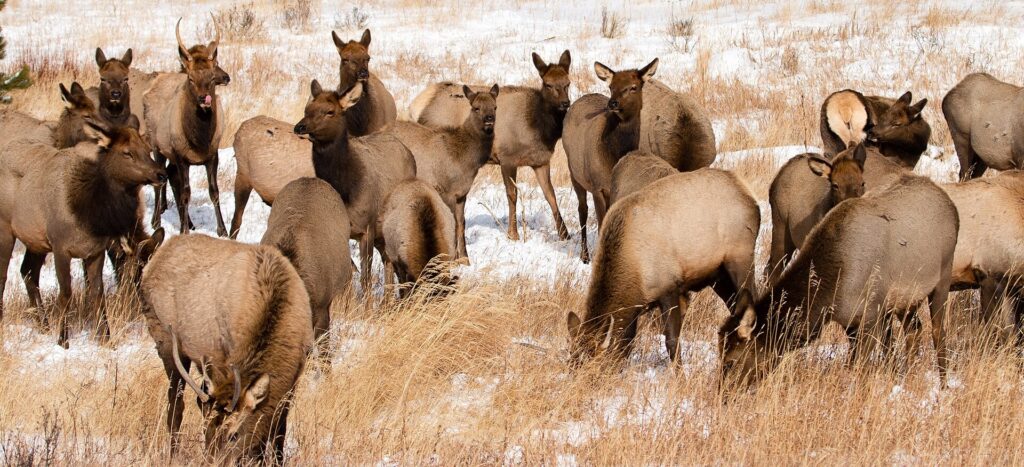
Fall is when Estes Park earns its reputation for elk in the middle of town, not just in the park. Bulls come down out of the high country to gather harems in the meadows. More than a few times a season, that means the golf course and the lawns downtown too. The bugling starts in September and usually carries into October.
The National Park Service closes several meadows overnight during the rut, including Horseshoe Park and Moraine Park, to keep foot traffic clear of the animals. Wherever you’re watching from, town or park, the rule is the same. Stay 75 feet back, skip the calls, and leave the lights off. A bull elk defending a harem does not care that you’re standing on a sidewalk.
How Far Is Estes Park from Denver by Car?
The drive from Denver runs about an hour and a half under normal traffic. That’s roughly 65 miles up US 36 through Boulder and Lyons, before the road climbs into the canyon toward Estes Park. It’s a straightforward drive, with no mountain passes to worry about. That makes Estes Park one of the easier day trips out of Denver, even without staying over.
Staying longer and adding the park itself is worth planning around, rather than squeezing into an afternoon. Pack for a proper stay. If camping in the park is part of the plan, our national park camping checklist covers what to bring beyond the usual overnight bag.
Prices are approximate, current as of publication, and change frequently — confirm the latest price with the retailer before buying.
Estes Park Frequently Asked Questions
What Is Estes Park Known For?
Estes Park is known as the main gateway to Rocky Mountain National Park. It also has its own small-town list: the Stanley Hotel, the Riverwalk, Lake Estes and elk that wander into town every fall.
Is the Stanley Hotel Haunted?
That’s the hotel’s own claim to fame, and its ghost tours lean into it. Nobody needs to believe in ghosts to enjoy the history behind The Shining or the view from the front porch.
How Long Is the Estes Park Riverwalk?
It runs a short stretch through the middle of downtown, easily covered in fifteen or twenty minutes at an easy pace. Longer if the taffy shops get involved.
Is Lake Estes Free?
Walking the trail around it costs nothing. Renting a kayak, paddleboard or pontoon boat from the marina is the only part of a Lake Estes visit that costs money.
When Does Trail Ridge Road Close?
The alpine section closes for the season every fall, typically by mid-October. It doesn’t reopen until Memorial Day weekend the following year, sooner or later depending on snowfall. Check current status before counting on it.
Published October 6, 2026.
Photo credits: (1) Trail Ridge Road winding through the alpine… — Greg Tally – User: (WT-shared) WineCountryInn at wts wikivoyage, CC BY-SA 3.0, via Wikimedia Commons; (2) An elk standing in a meadow in Rocky… — National Park Service, U.S. Government work, public domain, via Wikimedia Commons.