

Some links on our site may earn us a commission at no extra cost to you. Learn more.
Breckenridge and Keystone sit twenty minutes apart in Summit County, Colorado. Both ride the same Epic Pass. The choice isn’t really about which mountain is “better.” It’s about what kind of week you want. Breckenridge has the bigger, higher terrain and a real historic Main Street. Keystone has the easier slopes, the shorter walk to the lift, and the only night skiing of the two.
I’ve based us in both towns on ski weeks with my nieces and nephews, and the difference shows up fast. Breckenridge means parking once and walking to dinner past gift shops and old brick storefronts. Keystone means boots off and hot cocoa poured within ten minutes of the last run. The condo sits that close to the lift. Neither trip feels like a compromise to me. They’re just different kinds of easy.
Breckenridge Terrain
Breckenridge spreads across five numbered peaks, Peak 6 through Peak 10, with roughly 2,900 skiable acres and 35 lifts. The base sits at 9,600 feet. The high alpine bowls off Peak 6 and Peak 8 climb past 12,900 feet, among the highest lift-served terrain in North America.
That elevation spread is the point. Peak 9 and Peak 10 hold most of the intermediate cruising. Peak 6 and Peak 7 tend to stay quieter. The bowls above treeline get steep fast once the snow sets up. A first visit rarely covers the whole mountain in one week.
The trail mix skews toward experienced skiers. A good chunk of the mountain is rated advanced or expert, with the rest split evenly between beginner and intermediate. A family with a mix of skill levels can still make it work. The easiest runs are concentrated lower on Peak 9 and Peak 10, not spread across the whole resort.

Keystone Terrain
Keystone is smaller on paper: about 3,150 acres and 21 lifts across three mountains. It’s built for a different kind of day. The front side, Dercum Mountain, runs long and wide from a base around 9,300 feet. Groomed cruisers reach a summit near 12,400 feet.
North Peak and the Outback sit further back. They hold the bump runs and open bowls for anyone who wants more of a workout by afternoon. Families get an easy morning, and locals get a challenge later in the day, without switching resorts.

| Category | Breckenridge | Keystone |
|---|---|---|
| Skiable acres | About 2,900 | About 3,150 |
| Lifts | 35 | 21 |
| Base elevation | 9,600 ft | 9,280 ft |
| Summit elevation | 12,998 ft | 12,408 ft |
| Vertical drop | 3,398 ft | 3,128 ft |
| Night skiing | No | Yes |
| Town style | Historic mining town | Purpose-built village |
| Drive from Denver | About 1 hr 45 min–2 hr | About 1 hr 30 min–2 hr |
| Adult lift ticket, weekday | ~$234 | ~$206 |
| Adult lift ticket, weekend | ~$281 | ~$243 |
It’s a natural progression, too. A nervous skier can spend the whole morning on Dercum Mountain’s green runs, ride the gondola over to North Peak after lunch feeling more confident, and only tackle the Outback’s bowls once the legs and the nerve are both warmed up. Both mountains sit well above 9,000 feet, noticeably thinner air than most visitors are used to. Take the first day slow, and drink more water than feels necessary before pushing into steeper terrain.
Breckenridge Main Street
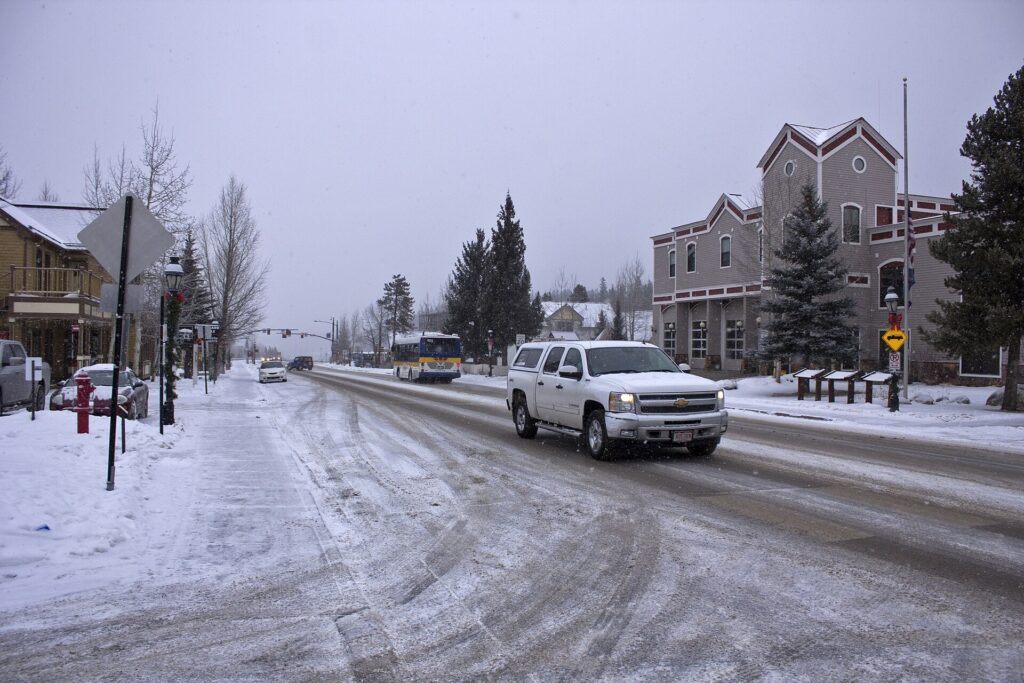
Breckenridge is a National Historic District, and it looks it. Victorian-era storefronts line Main Street for about a mile. A free gondola runs from the south end of town up to the base of Peak 7 and Peak 8. Parking once and skipping the car for the rest of the trip is realistic.
Evenings are the reason to pick the town over the village. There are bars, real restaurants beyond a resort cafeteria, and a holiday-lights season that runs well past New Year’s. It’s a livelier base. It also comes with more walking and more people on the sidewalk than Keystone ever has.
Breckenridge started as a gold-mining camp in 1859, and the town leans into it. Old miners’ cabins sit a block off Main Street. The Blue River runs right through the middle of downtown. A handful of the original Victorian buildings now hold coffee shops and ski shops instead of hardware stores and saloons. It reads as a real town that happens to have a ski resort attached, not the other way around.
Keystone Village
Keystone’s base is River Run Village, built around a gondola and a compact cluster of condos, shops, and a small ice rink. It’s designed to be small. Ski in, ski out, and be back at the condo within minutes. That matters more with little kids than a charming Main Street does.
Keystone also runs its own children’s ski school with a dedicated kids-only base area, away from the adult lesson meeting spot. That keeps drop-off simple. A winter family program adds fireworks, s’mores, and a torchlight parade on a regular schedule. Tubing and an ice rink cover anyone who wants a break from skiing for an afternoon.
Lodging here tends to run a notch cheaper than Breckenridge for a comparable unit. The town itself has less pull on its own; you’re paying for the mountain, not the streetscape.

Keystone Night Skiing
Night skiing is Keystone’s real point of difference. Front-side cruisers like River Run and Endeavor light up after sunset. They stay open for skiing well into the evening on a regular schedule through the winter.
Breckenridge doesn’t offer night skiing at all. An evening run after a late arrival, or one more hour on the mountain after an early dinner, only happens at Keystone.
Breckenridge Lodging
Breckenridge lodging spans a wider range than Keystone’s. Options run from budget motels a few blocks off Main Street to slopeside condos at the base of Peak 8 and Peak 9. Being a real, walkable town with its own economy keeps demand higher across the board. Prices follow, especially over holidays.
The upside is choice. A couple on a tight budget and a family wanting a ski-in condo can both find something in Breckenridge without leaving town. That isn’t always true at smaller resort villages.
Breckenridge Epic Discovery
Once the snow melts, Breckenridge doesn’t go quiet. Epic Discovery, the summer adventure park at the base of Peak 8, runs an alpine slide, a ropes course, and zip lines. A scenic chairlift ride up the mountain covers anyone who just wants the view without the gear.
It’s a half-day activity more than a full one. That makes it easy to pair with a Main Street lunch or an afternoon at nearby Lake Dillon.

Keystone Bike Park
Keystone runs its own lift-served bike park in summer. The gondola hauls riders and bikes up to trails that range from smooth, wide beginner flow to rockier, technical black-diamond lines further down the mountain.
It’s a smaller operation than Breckenridge’s Epic Discovery in scope. It’s still the better pick for anyone who wants to ride a mountain bike rather than sample adventure-park activities.
Denver to Breckenridge Drive Time
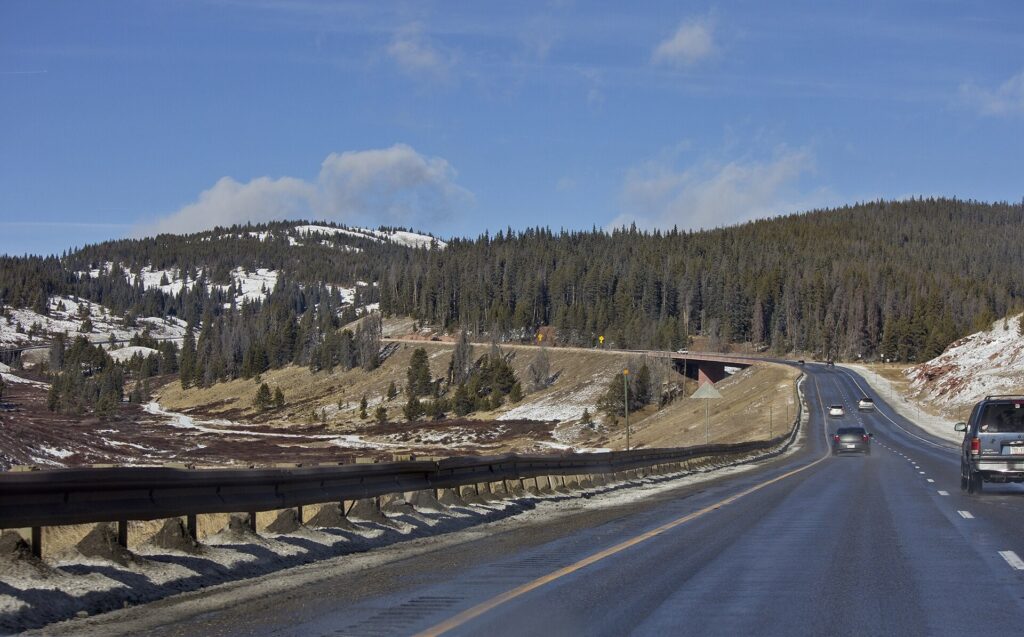
Breckenridge is about 80 miles from Denver. That’s generally a drive of one hour forty-five minutes to two hours, depending on traffic. Keystone is a little closer, around 75 miles and roughly ten minutes less on a clear day. Both routes run west on I-70 through the Eisenhower-Johnson Tunnel. The Colorado Department of Transportation says the tunnel crosses the Continental Divide at an average elevation of 11,112 feet. It saves drivers more than nine miles compared with the old route over Loveland Pass.
The tunnel is also the chokepoint. Sunday afternoons heading back toward Denver are the worst of the week almost year-round. A normal two-hour drive can stretch well past three once ski traffic backs up at the portal.
Once you’re actually in Summit County, the free Summit Stage bus is worth using instead of the car. Summit County’s own transit page confirms the service doesn’t charge a fare. Routes reach both towns, with a transfer at Frisco or Silverthorne connecting Breckenridge riders to Keystone.
Both towns also work as one stop on a bigger loop. Glenwood Springs and Rocky Mountain National Park’s timed-entry system are both easy add-ons. They fit if the trip has more than a long weekend to work with.
Keystone FAQ
A few questions come up constantly when people are choosing between these two.
Is Breckenridge or Keystone Better for Beginners?
Keystone edges it out for a true first-timer. The front side is almost entirely long, consistent greens and blues from top to bottom. Fewer steep pitches show up here than even on Breckenridge’s lower mountain.
Which Is Better, Breckenridge or Keystone?
Neither is better outright; the two suit different trips. Breckenridge wins for a livelier town, bigger and higher terrain, and more restaurant options. Keystone wins for convenience, night skiing, and an easier learning curve for kids or first-time skiers.
Is There Night Skiing at Keystone?
Yes. Keystone lights a stretch of front-side terrain after dark, including runs like River Run and Endeavor. That runs through most of the winter. Breckenridge has no night skiing.
How Far Is Breckenridge From Denver by Car?
Breckenridge is roughly 80 miles from Denver. That’s about a two-hour drive west on I-70 through the Eisenhower-Johnson Tunnel under normal conditions, longer on a busy weekend.
Prices are approximate, current as of publication, and change frequently — confirm the latest price with the retailer before buying.
Published October 6, 2026.
Photo credits: (1) featured, The Lake Chutes at Breckenridge Ski Resort… — The original uploader was Entplex at English Wikipedia., CC BY 2.5, via Wikimedia Commons; (2) A snow-covered ski run at Breckenridge… — Dusty Wright, CC BY 3.0, via Wikimedia Commons; (3) Bowl terrain on The Outback at Keystone… — Rudi Riet from Washington, DC, United States, CC BY-SA 2.0, via Wikimedia Commons; (4) Historic storefronts along North Main… — Bidgee, CC BY-SA 3.0 au, via Wikimedia Commons; (5) Keystone Lake with the Keystone Resort base… — K.warterbeck, CC BY-SA 3.0, via Wikimedia Commons; (6) Green ski slopes at Breckenridge, Colorado… — Davepark, CC BY-SA 3.0, via Wikimedia Commons; (7) Interstate 70 running through the mountains… — Bidgee, CC BY-SA 3.0 au, via Wikimedia Commons.