

Some links on our site may earn us a commission at no extra cost to you. Learn more.
A Denver weekend works best as two loops. Day one is downtown on foot from Union Station: Larimer Square, the Denver Art Museum, a ballgame at Coors Field. Day two goes out to Red Rocks in the morning. It comes back through the Museum of Nature and Science or the Botanic Gardens and ends in RiNo.
Two days covers the city. If you have a Monday, spend half of it in Golden or Boulder. The best stops in Denver are free. The paid admissions in the table below are the whole budget beyond food and a bed.
I fly into Denver on the way to Estes Park and the ski towns. For years I treated it as an airport with a skyline, which was a mistake. A weekend in the city is also the smart way to spend a first night at 5,280 feet before you go higher. That matters more than most people expect. My nieces and nephews rank the city by the dinosaur hall and the Red Rocks stairs. Honestly, that ranking holds up.
Is 2 days enough in Denver?
Yes, for the city itself. Downtown is compact and the free shuttle runs the length of 16th Street. The two big museums sit within a short ride of each other. What two days cannot cover is the mountains, and that is fine. Denver is the front porch, not the house.
Here is the plan I hand to family. Costs are for an adult who does not live in Colorado.
| When | Stop | Adult cost | Time to allow |
|---|---|---|---|
| Day 1 morning | Union Station and LoDo on foot | Free | 1.5 hours |
| Day 1 midday | 16th Street FreeRide to Civic Center, Denver Art Museum | $27 to $30 | 2.5 hours |
| Day 1 evening | Larimer Square dinner, Rockies game if home | Ticket price varies | 3 to 4 hours |
| Day 2 morning | Red Rocks Amphitheatre (Morrison) | Free | 2 hours plus 30 minutes each way |
| Day 2 afternoon | Museum of Nature and Science or Botanic Gardens | $27.95 or $16.25 | 2.5 hours |
| Day 2 evening | RiNo murals, breweries, Denver Central Market | Free to walk | 2 to 3 hours |
| Airport both ways | RTD A Line | $10 Airport Day Pass | 37 minutes each way |
Swap the order if there is a concert at Red Rocks on day two. The amphitheatre closes to the public early on show days. Move it to the first morning and push the museum back.
Denver Union Station
Start here, because the A Line drops you inside it. The Great Hall is free to wander and it is the best waiting room in the country. Long wooden benches. A bar built into the old ticket windows. Shuffleboard tables and a ceiling that makes you look up. Nobody minds if you sit for an hour with a coffee and do nothing.

The blocks around it are Lower Downtown, LoDo to everyone who lives here. Old brick warehouses, restaurants on the ground floors, Coors Field a few blocks up. This is also the most expensive place to sleep in Denver. Rates jump on home-game weekends. If the hotel prices scare you, RiNo is one train stop away and cheaper.
Larimer Square Denver
Larimer Square is the 1400 block of Larimer Street, five minutes on foot from the station. It is the oldest block downtown and it looks the part. Victorian brick, string lights across the street, Colorado flags hanging from the lines in season. Come at dusk when the lights are on and the sidewalk tables fill up.
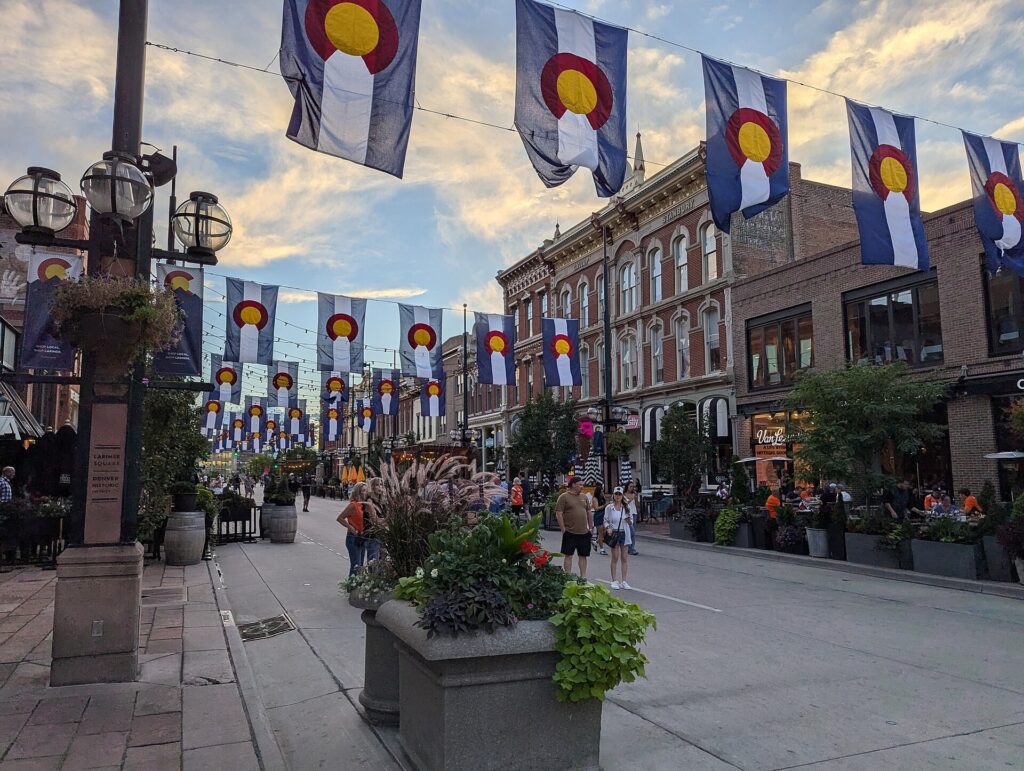
It is a dinner street more than a daytime stop. Book somewhere on the block for the first night and the hardest logistics problem of the weekend is solved. The 16th Street FreeRide stops a block away. You can reach it without a car from anywhere downtown.
Coors Field
A Rockies game is the cheapest big-crowd evening in the city. The ballpark is a ten-minute walk from Union Station. Bargain seats are in the Rockpile bleachers in center field. One purple row in the upper deck marks exactly one mile above sea level. Sit anywhere on the third-base side for the mountain view over the outfield.
Football is a different trip. The Broncos play at Empower Field at Mile High across the river. From September through January a home game eats a whole afternoon and every hotel room near the station. Check the home schedule before you book the weekend either way.
Denver Art Museum
The Denver Art Museum is the day-one afternoon. Ride the FreeRide to the Civic Center end of 16th Street and walk two blocks south. The Hamilton Building is the one that looks like a titanium crystal fell over. The newer Martin Building next to it holds most of the collection.

Non-resident adults pay $27 on weekdays and $30 on Fridays, weekends and holidays, according to the museum’s plan-your-visit page. Anyone 18 and under gets in free. Colorado residents pay $22 or $25. It is closed on Wednesdays and stays open until 8 p.m. on Tuesdays, which is the quiet slot.
Two and a half hours is plenty. The western art and the Indigenous Arts of North America floors are the reason to come here. No other city’s art museum does those two things this well. Skip the ticketed special exhibitions unless one is specifically what you came for.
Denver Museum of Nature and Science
This is the museum I pick when nieces and nephews are along. It sits on the east edge of City Park, a short drive or bus ride from downtown. The dinosaur hall is the main event. Go up to the top-floor atrium afterward for the view: the skyline in front, the Front Range behind it.
The museum puts adult admission at $27.95, youth 3 to 18 at $20.95 and seniors at $23.95. The planetarium is another $7 on top. Doors open at 9 a.m. every day and most Fridays run until 9 p.m. Arrive at opening. The dinosaur hall is a different place at 9:15 than at noon.
Red Rocks Amphitheatre
Red Rocks is about 15 miles west of downtown in Morrison. On a non-concert day it is the best free thing in the metro area. You park, walk up, and sit in an amphitheatre wedged between two sandstone monoliths. The venue’s own FAQ confirms admission and parking are free. The park opens an hour before sunrise and closes an hour after sunset.
Go early. Morning light hits the rocks from behind you and the stairs are empty. The people running them for exercise are already done. The amphitheatre sits at 6,400 feet, so the climb from the stage to the top row is harder than it looks. Take it slow on day two; you are not acclimated yet.
On show days the amphitheatre usually closes to the public after lunch, around 2 p.m., for sound checks. Check the concert calendar the week before. Dogs are allowed on a leash during non-event hours. That is why mine has been up those steps more than once. The Visitor Center under the top plaza is worth 20 minutes. The Trading Post below is the gift shop and the start of a short loop trail through the rocks.
RiNo Art District
RiNo, the River North district, is where the day-two evening goes. It is an old warehouse strip northeast of downtown that turned into murals, breweries and food halls. It is one A Line stop from Union Station, at 38th and Blake. Walk Larimer Street from about 25th to 35th. You will pass more painted walls than you can photograph.
Be honest with yourself about what it is. The murals are free and excellent and the beer is good. The district is long and thin, though, so a “quick walk” between two spots can be 20 minutes. Sunday mornings feel empty. Friday and Saturday nights do not.
Denver Central Market on Larimer is the easy dinner. It is a food hall with a row of counters, so a group that cannot agree eats together anyway. Sit outside if it is warm. Then ride the train back or walk the 25 minutes to Union Station along the tracks.
Denver Botanic Gardens
If the group is more garden than dinosaur, swap the Nature and Science museum for the Botanic Gardens. They sit on York Street, east of downtown beside Cheesman Park. Two stops justify the ticket: the Japanese garden and the tropical conservatory. The rock alpine garden shows what actually grows at this altitude. The Gardens’ visit page lists adults at $16.25, seniors and military at $12.50, and children 3 to 15 at $12.
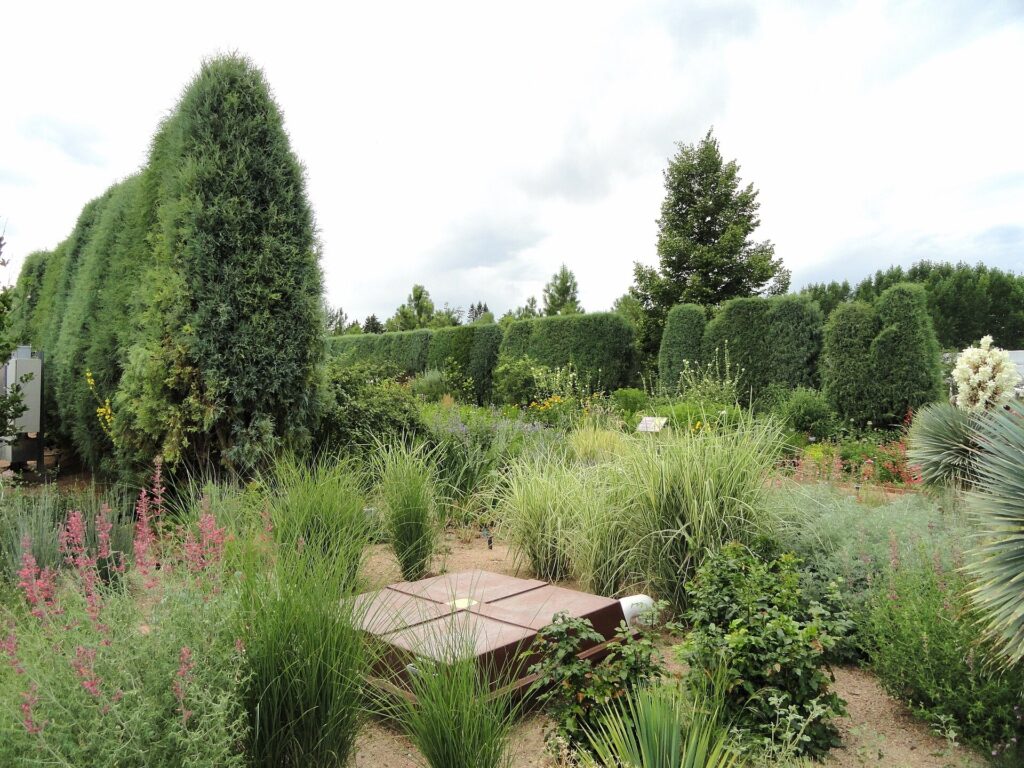
Hours run 9 a.m. to 7 p.m. in the warm months. Parking in the garage across the street is free but limited. The overflow is street parking in Cheesman Park where signs allow it. Two hours is enough; summer weekends are busy by 11.
How to get around Denver
You do not need a car for the downtown day. The A Line runs 23 miles from the airport to Union Station in about 37 minutes. Trains come every 15 minutes through the day. RTD’s fare page lists the Airport Day Pass at $10 and a regular Day Pass at $5.50. Anyone 19 and under rides free. The 16th Street FreeRide shuttle has no fare at all and runs every 4 to 12 minutes between Union Station and Civic Center.
Day two is the car day. Red Rocks has no useful transit. A rental picked up downtown on the second morning costs less than two days of it. Give yourself 30 minutes each way to Morrison and more on a Saturday.
Then there is the altitude. Denver sits at 5,280 feet, and the 13th step of the State Capitol has “One Mile Above Sea Level” carved into it. Drink more water than you want, go easy on the first evening’s drinks, and keep day one flat. If you are continuing to Rocky Mountain National Park, read our note on Rocky Mountain timed entry before you leave the city. The reservation window is not something to sort out at the gate. Sunglasses and lip balm belong in your day bag here even in October. Our national park road trip packing list covers the rest.
Golden or Boulder
Golden wins if you are already at Red Rocks. It is the next town north along the foothills, about 15 miles west of Denver. Clear Creek runs straight through downtown with a paved path on both banks. The “Howdy Folks” arch spans Washington Avenue. The Coors brewery tour is a 90-minute walk through the malting, brewing and packaging floors. It runs Thursday through Monday; book it on the brewery’s site before you go.
Boulder is about 30 miles northwest and is the better half-day if you want a hike. Chautauqua Park sits at the base of the Flatirons and the trails start right from the lawn. The lot fills early on weekends. Pearl Street’s pedestrian blocks are the lunch stop. If you are driving on west through the mountains afterward, Glenwood Springs is the natural next night.
Denver FAQ
Is Denver walkable?
Yes, downtown is. Union Station, Larimer Square, Coors Field, the 16th Street shuttle and the Art Museum all sit within a flat 20-minute walk of each other. RiNo, the museum in City Park and the Botanic Gardens need a train, a bus or a short drive. Red Rocks needs a car.
Is Red Rocks free to visit?
Yes. Admission and parking are free on non-event days. The park is open from an hour before sunrise to an hour after sunset. On concert days the amphitheatre usually closes to the public around 2 p.m., so check the show calendar and go in the morning.
What is the elevation of Denver?
Denver sits at 5,280 feet, exactly one mile above sea level. Red Rocks is higher at 6,400 feet, and Estes Park and the ski towns are higher still. Spend the first night in the city, drink water, and take day one slow before you climb.
Is Denver expensive?
Hotels near Union Station are, especially on Rockies and Broncos weekends. The rest is reasonable. The two big museums cost under $30 each. Red Rocks, Union Station, Larimer Square and the RiNo murals are free, and the airport train is $10 for the day.
Prices are approximate, current as of publication, and change frequently — confirm the latest price with the retailer before buying.
Published October 6, 2026.
Photo credits: (1) featured, Red Rocks Amphitheatre seating and stage… — Sarbjit Bahga, CC BY-SA 4.0, via Wikimedia Commons; (2) The front of Denver Union Station with its… — Missvain, CC BY 4.0, via Wikimedia Commons; (3) Larimer Square in Denver with string lights… — Sdkb, CC BY-SA 4.0, via Wikimedia Commons.