

Some links on our site may earn us a commission at no extra cost to you. Learn more.
Three days is enough to see the main parts of Yosemite if each day gets one area. Day 1 is Yosemite Valley, Day 2 is Wawona and the Mariposa Grove of giant sequoias, and Day 3 is the high country along the Tioga Road. Glacier Point slots in as an add-on whenever its road is open. When snow closes the Tioga Road, Day 3 becomes a second Valley day.
We have done big national-park days with nieces and nephews along, and the plans that hold up put one big area in each day and leave the afternoons loose. The distances inside this park are longer than a map suggests. I would rather see three areas properly than chase five from a car window.
Is 3 days enough for Yosemite?
I would say three days covers the greatest hits and leaves you wanting a fourth. The Valley alone can fill two days, so the plan below keeps it to one and trades the rest for the sequoias and the high country. Road and trail status changes daily, so read the park’s current conditions page before you go.
In early October 2026, smoke from the Dome Fire northeast of Wawona closed Glacier Point Road and several trails. Fire, snow and repair work can each shut a road here with little notice. Check the page again the morning you drive in.
| Day | Area | Plan | Drive or transit | Fee |
|---|---|---|---|---|
| Day 1 | Yosemite Valley | Tunnel View, Lower Yosemite Fall loop, Valley shuttle, Mist Trail late in the day | Free Valley shuttle, 7 am to 10 pm | Covered by the entrance fee |
| Day 2 | Wawona and Mariposa Grove | Free grove shuttle, Lower Grove loop, Grizzly Giant | Highway 41 to the South Entrance | Covered by the entrance fee |
| Day 3 | Tioga Road and Tuolumne Meadows | Olmsted Point, Tenaya Lake, Tuolumne Meadows | 47 miles from Crane Flat to Tioga Pass | Covered by the entrance fee |
| Add-on | Glacier Point | View over the Valley when the road is open | Glacier Point Road | Covered by the entrance fee |
How much does it cost to enter Yosemite?
The park’s fees page lists $35 per private vehicle, $30 per motorcycle and $20 per person on foot or by bicycle. That pass is good for seven days, which covers this whole plan. Bring a card, because the park does not accept cash.
A Yosemite annual pass is $70, and the America the Beautiful annual pass is $80. Each non-US resident aged 16 and older also pays a $100 nonresident fee on top of the entrance fee, which the park states on the same page.
The reservation rule has changed between years, so I will not restate it here. It lives on the park’s reservations page, and our guide to Yosemite reservations covers it in full.

Yosemite Valley
Spend Day 1 in the Valley and leave the car parked. The Valley shuttle is free, runs from 7 am to 10 pm, and the park lists buses every 12 to 22 minutes on the Valleywide route. Start at Tunnel View on Wawona Road, where El Capitan and Bridalveil Fall rise with Half Dome in the background.
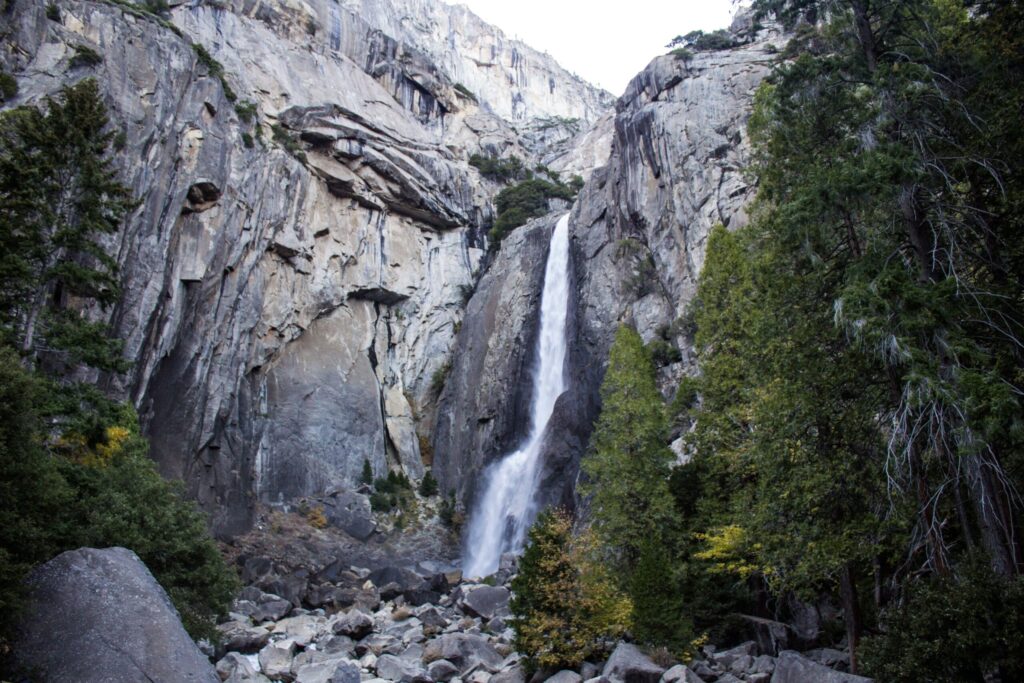
Next, walk the Lower Yosemite Fall loop, which the park lists at 1 mile for the entire loop. It is flat, easy and a big return for very little effort. Then ride the shuttle east and spend the middle of the day on the valley floor, where the meadows and the Merced River make a slow lunch.
Is the Mist Trail closed?
It can be, on a schedule. In autumn 2026 the park’s Vernal Fall and Nevada Fall page listed weekday repairs through October, closing the Mist Trail Monday to Thursday from 7 am to 3:30 pm. Check that page for the current schedule before you go.
While repairs like that are running, I would plan the climb for a Friday to Sunday, or for a weekday after 3:30 pm. The park lists the Vernal Fall footbridge at 1.6 miles round trip with 400 feet of gain. Reaching the top of Vernal Fall is 2.4 miles round trip and 1,000 feet of gain, up a steep granite stairway of over 600 steps. Expect slippery footing and heavy spray in spring and early summer, which is where the name comes from, the park says.
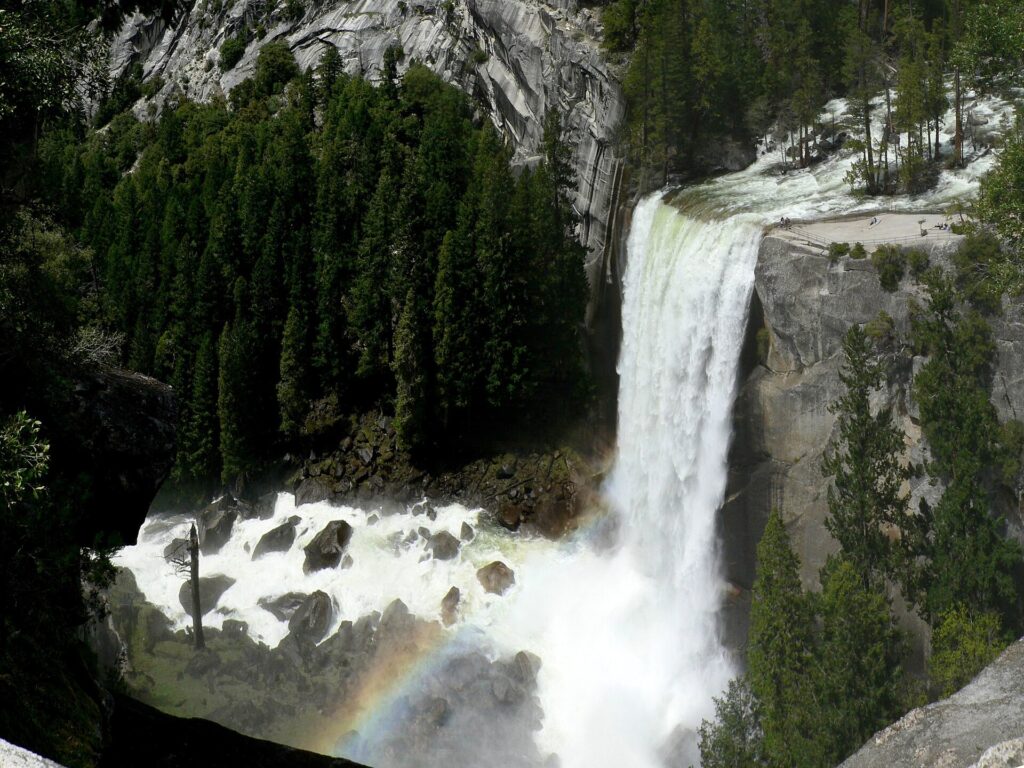
Both falls run fullest in spring and early summer, according to the same page. In autumn the flow is far lighter, so the views are calmer and the steps are drier.
Mariposa Grove
Day 2 belongs to the giant sequoias. The park’s Mariposa Grove page lists a free shuttle from the Welcome Plaza near the South Entrance, with buses about every 15 minutes. For 2026 it gives September 24 to October 31 hours of 8 am to 5 pm, with the last bus leaving the grove at 5:30 pm. Hours shift to 8 am to 3:30 pm in November, and there is no shuttle from December 1 to April 14.
The Welcome Plaza has roughly 300 parking spaces, and the park says it may fill by late morning. I would arrive mid-morning at the latest. The Mariposa Grove Road is open only to vehicles with a disability placard.
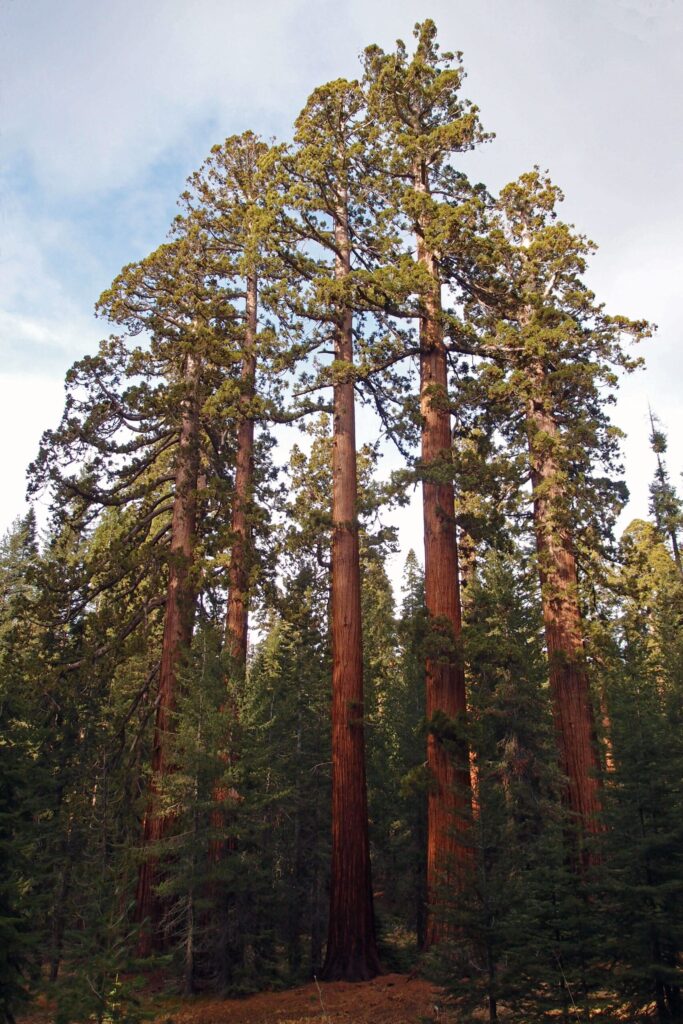
The Lower Grove loop is 0.3 mile and takes 30 to 45 minutes, which is the easy option. Walking to the Grizzly Giant area instead is about 2 miles each way with roughly 500 feet of gain. Ride the shuttle up and walk back down if your legs want a compromise.
Is Glacier Point Road open?
It depends on the week. Smoke and firefighting on the Dome Fire closed it in early October 2026, and snow closes it for the winter, so check the conditions page before you plan around it. The park’s road-opening page says plowing normally begins on or about April 15 and takes one to two months. It adds that April and May weather make opening dates impossible to predict.
The seasonal Glacier Point tour bus runs only while the road is open, and the park gives late May through September as its approximate window. Our guide to Glacier Point covers the viewpoint itself, so I will not repeat it here. If it is open on your Day 2 afternoon, it fits after the grove. If it is closed, Tunnel View on Day 1 is your big Valley view.
Tioga Road
Save Day 3 for the high country. The Tioga Road runs 47 miles between Crane Flat and Tioga Pass, and the park says it is open approximately late May or June through October or November. In early October 2026 it was open with construction delays of 10 to 15 minutes on weekdays, and it closes for the season once heavy snow arrives. Check the conditions page before you count on it. If it is closed, give Day 3 to a second day in the Valley.
Stop first at Olmsted Point, at 8,400 feet, for the view of Half Dome from behind and a 0.25-mile trail across glacial boulders. Then Tenaya Lake, a large alpine lake right beside the road, which is good for a picnic. Granite domes frame the shoreline in every direction.

Tuolumne Meadows
Tuolumne Meadows sits at 8,600 feet. Lembert Dome is a short, steep climb with views over the meadow, and Soda Springs is a carbonated spring inside a log enclosure. The park notes there is no gas in Tuolumne Meadows. Fill the tank before you leave the Valley.
The Tuolumne Meadows shuttle runs typically mid-June through early September, so it will not be running in autumn. Food and services can also be limited from September until the road closes. Pack lunch and water, and treat the road as the main event rather than a single stop.
Where to stay in Yosemite
Inside the park, lodging is run by Yosemite Hospitality. The park’s lodging page lists the Valley options, Curry Village cabins and Housekeeping Camp, plus Tuolumne Meadows Lodge tent cabins 50 miles from the Valley. Reservations open 366 days ahead and fill from spring through fall.
The park’s driving page lists the gateway towns by travel time to the Valley. El Portal is about 30 minutes, Mariposa and Groveland about 1 hour 15 minutes, and Oakhurst about 1 hour 30 minutes. For this plan, El Portal suits Day 1, and Oakhurst or Mariposa suit Day 2 at the South Entrance.
The conditions page lists Yosemite Valley campgrounds as reservation-only, so book before you count on a site. Our national park camping checklist covers what to bring if you camp.
Does Yosemite have bears?
Yes, and food storage is a rule, not a suggestion. The park defines food as any item with a scent, regardless of packaging, which includes soap, toiletries, trash and empty coolers. Per its food storage page, a car may hold food in daylight with the windows completely closed.
After dark, use a food locker. The page says failure to store food properly may bring impoundment of your food or car, a fine of up to $5,000, or removal from your lodging. Our national park road trip packing list covers the gear for a trip like this.
Do you need chains for Yosemite?
Only when chain control is in effect, but the window is wide. The park says to expect chain requirements from November through March, and they can start as early as September or run as late as May. Under R-1 and R-2 some snow-tire and four-wheel-drive vehicles are exempt, while R-3 requires chains on every vehicle.
Even four-wheel-drive and rental cars must have chains in the car, according to the park. Inside Yosemite, call 209-372-0200 and press 1, then 1. Outside the park, the page points to Caltrans at roads.dot.ca.gov or 800-427-7623.
The drive in matters as much as the plan. The park lists Merced at 2 hours, Fresno at 2 hours 15 minutes by Highway 41, and San Francisco and Sacramento at about 4 hours. Los Angeles is about 6 hours. If you are combining this with a coast drive, our Pacific Coast Highway itinerary covers the other half.
Yosemite FAQ
How far is Yosemite from San Francisco?
The park lists the drive from San Francisco to Yosemite Valley at about 4 hours by Highway 120 or 140, at roughly 195 to 211 miles. Merced is about 2 hours, Fresno about 2 hours 15 minutes and Los Angeles about 6 hours.
Is the Mist Trail dangerous?
The granite steps are the hazard. The park warns of slippery footing and heavy spray in spring and early summer, and the route climbs over 600 steps to the top of Vernal Fall. Wear shoes with grip and keep children close to the inside of the stairs.
Is there a shuttle in Yosemite?
Yes. The Yosemite Valley shuttle is free, runs from 7 am to 10 pm and operates year-round, with buses every 12 to 22 minutes on the Valleywide route. A separate free shuttle serves the Mariposa Grove from the Welcome Plaza.
Do you need a permit for Half Dome?
Yes, when the cables are up. The park says permits come by lottery in March, with a limited number available two days in advance. This plan does not include Half Dome, so apply through the park’s own instructions.
Prices are approximate, current as of publication, and change frequently — confirm the latest price with the retailer before buying.
Published October 10, 2026.
Photo credits: (1) featured, Half Dome seen across a forested slope with… — NPS / Cindy Jacoby, U.S. Government work, public domain, via National Park Service; (2) Yosemite Valley from Tunnel View with El… — NPS / Cindy Jacoby, U.S. Government work, public domain, via National Park Service; (3) Lower Yosemite Fall pouring over granite in… — NPS / Cindy Jacoby, U.S. Government work, public domain, via National Park Service; (4) Vernal Fall dropping into a foaming pool… — Walter Siegmund, CC BY 2.5, via Wikimedia Commons; (5) Giant sequoia trunks rising through the… — NPS / Cindy Jacoby, U.S. Government work, public domain, via National Park Service; (6) Granite domes and a strip of Tenaya Lake… — NPS, U.S. Government work, public domain, via National Park Service.