
Some links on our site may earn us a commission at no extra cost to you. Learn more.
A good Switzerland itinerary for seven days uses three bases and trains for everything. Lucerne gets two nights, Interlaken three, and Zermatt the last. That covers Mount Pilatus, the Jungfraujoch, the Lauterbrunnen valley and the Gornergrat without a rental car. Every price below was read on the operators’ own pages on October 3, 2026. Late October and November are maintenance season for Swiss mountain lifts. Several of those pages show closures then, so recheck them before you book.
A mountain railway day is the one thing I plan around the forecast instead of the calendar. I would book the Jungfraujoch for the clearest morning you get and keep one flexible day in the week. Then I would carry a warm layer that feels like too much. The cold at the top catches people who dressed for the valley.
Switzerland Itinerary by Train
Days 1 and 2 sit in Lucerne, Days 3 to 5 in Interlaken, and Days 6 and 7 in Zermatt. Switzerland Tourism’s weather page charts an October average high of 14°C in Zurich and 11°C in Zermatt. Pack layers, and expect the summits to be colder still.
| Day | Base | Plan | Transport | Cost (CHF) |
|---|---|---|---|---|
| 1 | Lucerne | Chapel Bridge, old town, lake boat | On foot and boat | Boat free with a Swiss Travel Pass |
| 2 | Lucerne | Mount Pilatus | Cogwheel railway | 84 adult return |
| 3 | Interlaken | Train to Interlaken, evening by the lake | SBB train | Fare from the SBB timetable |
| 4 | Interlaken | Jungfraujoch | Eiger Express and Jungfrau Railway | From 129.60 return |
| 5 | Interlaken | Lauterbrunnen valley, Grindelwald First | Train and gondola | First gondola from 38 |
| 6 | Zermatt | Train to Zermatt, shuttle from Täsch if driving, village walk | SBB train | Fare from the SBB timetable |
| 7 | Zermatt | Gornergrat, then onward | Gornergrat railway | 132 adult return |
Trains and station stairs punish big suitcases, so I would travel with a carry-on and pack for layers. Our carry-on only packing list and the guide to travel backpacks for carry-on cover what fits.
Things to do in Lucerne
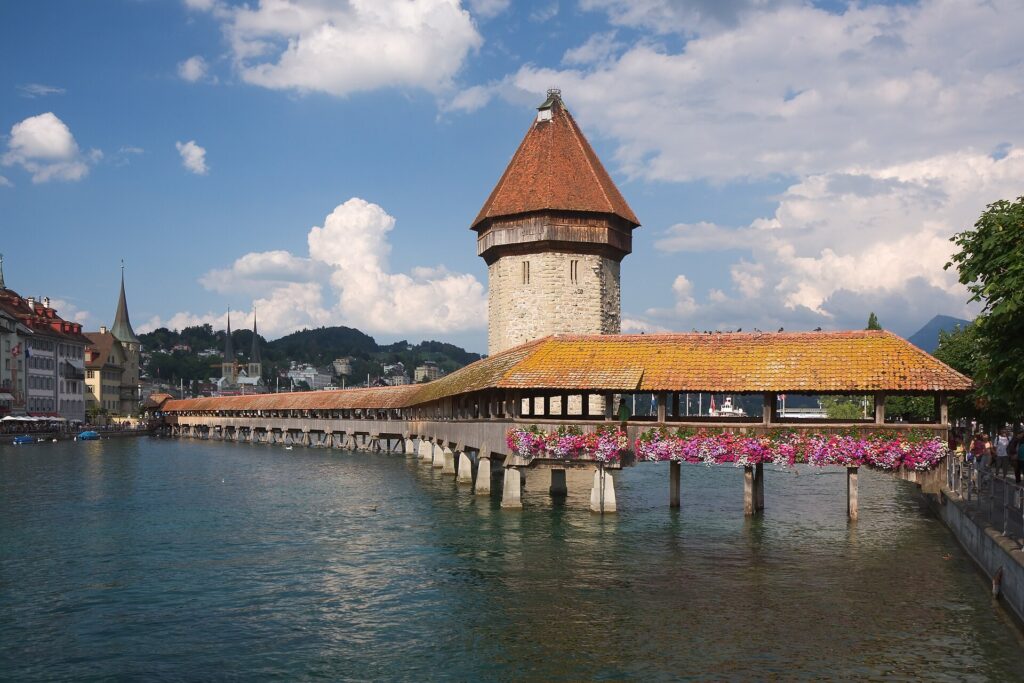
Lucerne is a half day on foot. That makes it the right first stop while you adjust to the time zone. Walk the covered Chapel Bridge over the Reuss, wander the old town, then take a lake boat. The lake operator’s FAQ says Swiss Travel Pass holders ride scheduled boats free. Half Fare card holders get 50% off.
Rigi is the other mountain close to Lucerne. The Swiss Travel System lists Rigi as included in the Swiss Travel Pass. It is the swap when Pilatus is under cloud. I would pick whichever peak has the clearer webcam that morning.
Is Mount Pilatus worth it?
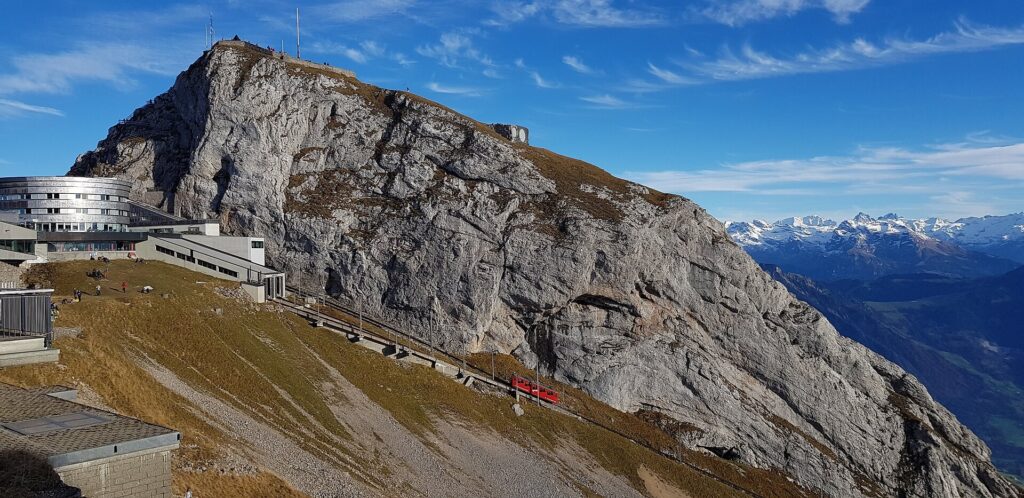
Yes, on a clear day, and it is the easiest mountain on this plan. The cogwheel railway climbs from Alpnachstad. The Pilatus price page lists an adult return at CHF 84, half price with a Half Fare card or Swiss Travel Pass.
Here is the part to re-check before you go. On October 3, 2026, the Pilatus timetable page listed the cogwheel railway as running May 11 to November 29, 2026. Through October 24 it ran daily, with a first departure at 08:10 and a last at 17:30 from Alpnachstad. The same page listed the panorama gondolas and aerial cableway as closed from October 19 to November 27, 2026 for maintenance. After October 24 the cogwheel runs a reduced schedule. In late autumn, check the timetable for your day and plan the cogwheel both ways.
The Golden Round Trip is listed at CHF 119.80 in second class for May to October. The timetable page ties it to the gondola schedule. That is a good reason to skip it late in the season.
Is the Jungfraujoch worth it?
I would book the Jungfraujoch, but only with a spare day built into the plan. Interlaken is the base because it sits between Lake Thun and Lake Brienz. Its Ost and West stations connect to Lauterbrunnen and Grindelwald. Day 3 is the move from Lucerne, and Day 4 is the mountain.
The Jungfraujoch main station is at 3,454 m and the Sphinx observation deck at 3,571 m, per jungfrau.ch. From Interlaken Ost the trip is 1 hour 30 minutes via the Eiger Express. From Grindelwald Terminal it is 45 minutes. The ticket page lists an adult return from CHF 129.60 and a CHF 10 seat reservation. A Good Morning Ticket is 15% off from May 1 to October 31, 2026.
The Swiss Travel System’s own price table shows CHF 240 for an adult on one day. The lower figure is a starting price, and the fare changes with station, date and discount card. I would budget for the higher one. Confirm your exact fare for your departure station on the operator’s page before you budget.
The summit view is a gamble. The operator runs ten live webcams across the region, two of them on the Jungfraujoch. Open them over breakfast and decide then. At that height I would take stairs slowly, drink water, and wear the warm layer.

Lauterbrunnen valley
Day 5 is the valley floor, and it works well as the swap day if Day 4 clouds over. The valley’s tourism site calls Staubbach Falls, at 297 m, the highest free-falling waterfall in Switzerland. It bills the valley as home to 71 waterfalls. Wengen and Mürren are the car-free villages reached by cable car and train.

Trümmelbach Falls are ten glacier waterfalls inside the mountain, reached by tunnel lift. The site lists daily opening from early April to early November. Hours are 9:00 to 17:00 outside July and August. It asks you to check hours at the start and end of the season.
Grindelwald First is the other half of the day. The gondola is listed from CHF 38 and takes about 25 minutes to reach 2,166 m. The First Cliff Walk is a 45 m footbridge that takes about 20 minutes. Its adventure package was listed as available April 13 to October 25, 2026.
How to get to Zermatt
Zermatt has always been car-free, so you arrive by train. The village’s arrival page says trains run every half hour. It puts Zurich Airport three and a half hours away. Drivers park in Täsch, five kilometers before the village. The shuttle train runs every 20 minutes and takes 12 minutes.
Inside the village you get e-taxis, horse-drawn carriages, bicycles and an e-bus. Every mountain day here starts from the station, so a small bag matters more than anywhere else on this route.
Optional add-on: the Glacier Express. The operator describes an eight-hour panoramic ride from the foot of the Matterhorn into the Engadin near St. Moritz, over 291 bridges and through 91 tunnels. A seat reservation is mandatory at CHF 54 in first and second class. The full-route second class fare is listed at CHF 159. The Swiss Travel Pass is accepted, but the reservation is not covered. It costs you a day, so I would only add it to an eight-day trip.
Gornergrat or Matterhorn Glacier Paradise
Pick one if you have a single morning. The Gornergrat sits at 3,089 m. The 2026/27 price sheet lists an adult return at CHF 132 from May to October. From November it drops to CHF 102. Swiss Travel Pass and Half Fare card holders get 50% off.
The Gornergrat timetable page listed service from April 20 to November 1, 2026. The first train left at 07:00, then every 24 minutes from 08:00. It also listed service suspended from November 2 to November 14, 2026 for construction work. If your Zermatt day falls in that window, Matterhorn Glacier Paradise is the swap.
Matterhorn Glacier Paradise lists a single and return ticket from CHF 120.00, valid to October 31, 2026, so check the page for prices after that. Half-fare and GA card holders get 50% off. Its weather page offers a forecast, a wind map and live webcams for the Glacier Paradise, Zermatt and the Gornergrat. Check the wind map, because the page itself warns that cold alpine air changes the day.
Is the Swiss Travel Pass worth it?
Not automatically, and on this route it is closer than the marketing suggests. The Swiss Travel System lists 2026 prices for unlimited trains, buses and boats. It adds entry to over 500 museums. Seat reservations on panoramic trains are not included.
| Pass length | 2nd class (CHF) | 1st class (CHF) |
|---|---|---|
| 3 days | 254 | 405 |
| 4 days | 309 | 492 |
| 6 days | 399 | 634 |
| 8 days | 439 | 697 |
Rigi, Stanserhorn and Stoos are included, and most other mountain railways are up to 50% off. A seven-day pass does not exist. A seven-day trip means the 6-day or 8-day pass, or the Flex version for non-consecutive days.
The Half Fare card is CHF 150 for one month, with 50% off trains, buses, boats and most mountain railways. Pilatus and Gornergrat together are CHF 216 at full price. Half off saves CHF 108 before you buy a single train ticket. I would price the card first.
The pass only wins if your train fares add up to more than its price. Run your seven legs through the SBB timetable and add up the fares. Then compare the total with CHF 399 to CHF 439 before you buy.
How much does a trip to Switzerland cost?
Expensive, and the mountain tickets are most of the visible cost. The four on this plan are Pilatus at CHF 84, the Jungfraujoch from CHF 129.60, First from CHF 38 and the Gornergrat at CHF 132. Together that is at least CHF 383.60 before any discount, and more if your Jungfraujoch fare is the higher one.
Switzerland Tourism says life in Swiss cities is quite expensive, and prices vary with the area. This post prices no hotels or meals, because none of the pages above state them. Check lodging for your own dates.
The currency is the Swiss franc. Switzerland Tourism says cash and cards are the common ways to pay. Visa, Mastercard, American Express and Maestro are widely accepted. Tipping is optional, and where it is customary it is about 10 percent or a rounded-up amount.
Switzerland Entry Requirements
For a visit under 90 days, the State Department’s Switzerland page says no visa is required. Switzerland Tourism says every traveler needs a valid passport. It says a visa is required for an uninterrupted stay of more than three months, and that Switzerland is part of the Schengen Area. Check the State Department’s Switzerland page against your passport expiry before you book.
Entry systems for Schengen countries change, so read the EU’s travel-europe site for what applies on your travel date. Flying from the US? Our TSA PreCheck, Global Entry and CLEAR comparison covers the airport end.
Switzerland FAQ
Is Switzerland expensive?
Yes. Switzerland Tourism says life in Swiss cities is quite expensive. The mountain tickets on this plan run from CHF 38 to CHF 132 each.
Do you need a passport for Switzerland?
Yes. Switzerland Tourism says every traveler needs a valid passport. The State Department’s Switzerland page says no visa is required for visits of 90 days or less.
Is Zermatt car free?
Yes. Zermatt’s arrival page says it has always been car-free. Drivers park in Täsch, five kilometers away, and take a 12-minute shuttle train.
Can you do Switzerland without a car?
Yes. This itinerary uses trains, a cogwheel railway, gondolas and a shuttle train, and nothing on it needs a car.
Prices are approximate, current as of publication, and change frequently — confirm the latest price with the retailer before buying.
Published October 22, 2026.
Photo credits: (1) featured, The Matterhorn rising above the Riffelhorn… — Andrew Bossi, CC BY-SA 2.5, via Wikimedia Commons; (2) The covered wooden Chapel Bridge and its… — Ikiwaner, CC BY-SA 3.0, via Wikimedia Commons; (3) The Pilatus cogwheel railway climbing the… — Pascal Niederberger, CC BY-SA 4.0, via Wikimedia Commons; (4) The Aletsch glacier seen from the Sphinx… — Marie-Lan Nguyen, CC BY 4.0, via Wikimedia Commons; (5) Staubbach Falls dropping over the cliff… — Andrew Bossi, CC BY-SA 2.5, via Wikimedia Commons.