

Some links on our site may earn us a commission at no extra cost to you. Learn more.
The best Costa Rica itinerary for ten days uses three bases and skips the rest. Those are La Fortuna for the Arenal volcano, Monteverde for the cloud forest and Manuel Antonio for the coast. Shared shuttles cover every leg, so a rental car is optional. Every figure below comes from the agencies’ and operators’ own pages as of early October 2026, so recheck before you book.
We have travelled all over the world, and the tropical trips that work share one trait. They have fewer bases than you first think you need. We have done rainforest-and-beach trips with nieces and nephews along, and the long transfer days are what wear a group down.
Costa Rica itinerary 10 days
Costa Rica is a country where the map lies. The distances look short and the mountain roads are slow, so every move between bases eats most of a day. Three bases and four moves is the limit that still leaves room to see something.
I would book the volcano and cloud-forest mornings first. The mountains are usually clearer early, and cloud and rain tend to turn up in the afternoon. The table shows the whole plan. Shuttle fares are quoted when you book, so they are not in the cost column.
| Day | Base | Plan | Transport | Cost |
|---|---|---|---|---|
| 1 | San José | Land, rest, Teatro Nacional if time allows | Taxi or pre-booked transfer | Quoted at booking |
| 2 | La Fortuna | Morning transfer, free afternoon | Shared shuttle, about 4 hours | Quoted at booking |
| 3 | La Fortuna | Arenal park trails in the morning, hot springs at night | Local taxi | US$15 adult, non-resident |
| 4 | Monteverde | Transfer day | Shuttle or car | Quoted at booking |
| 5 | Monteverde | Cloud forest reserve, early | Walk or short taxi | Set by the reserve |
| 6 | Monteverde | Hanging bridges or a slow day | Short taxi | Set by the operator |
| 7 | Manuel Antonio | Transfer day, evening on the coast | Shuttle, car or a small-plane leg | Quoted at booking |
| 8 | Manuel Antonio | National park, then beach | Walk or short taxi | $16 plus IVA adult |
| 9 | Manuel Antonio | Beach day with no plan | None | None |
| 10 | San José | Transfer to the airport, fly home | Shuttle, about 4.5 hours | Quoted at booking |
Costa Rica itinerary San Jose
San José sits at 1,149 meters, and the tourism board puts its average temperature at 24 degrees Celsius. It is a working capital, not a resort, so treat it as the place you land and sleep. The airport, SJO, is in Alajuela rather than in the city. Stay near the terminal and skip the downtown traffic.

If you land with an afternoon to spare, the Teatro Nacional is the one stop worth a walk. The tourism board dates its construction to 1890–1897. Everything else in the capital can wait.
Sort out the small things on day one. Outlets run at 110 V with standard US two-prong plugs, so American chargers work without an adapter. The colón is the official currency, and the tourism board says US dollars and major credit cards are widely accepted. It also calls the tap water drinkable except in a few rural areas.
Poás is the volcano day trip people add from San José. In early October 2026, SINAC’s Poás page marked the Botos lagoon as closed. Read that page again before you build a day around Poás, which is why it is not in the table.
Costa Rica itinerary La Fortuna
La Fortuna is the town and Arenal is the cone, about 7 kilometers away. The volcano has been active since July 29, 1968, and the tourism board says activity has dropped significantly since 2011. Go for the shape and the setting, not for lava glow.
Arenal Volcano National Park lists daily hours of 8 a.m. to 4 p.m., with US$15 for non-resident adults and US$5 for non-resident children, on its SINAC page. The trails are short and flat: Heliconia is 610 meters, Coladas is 1.7 kilometers and El Ceibo is 2.3 kilometers. The same page says climbing the cone is absolutely forbidden.

The hot springs are the other reason to base here. The water comes off the volcano, and the tourism board gives one river hot spring an average of 37 degrees Celsius. I would put the springs at the end of the day and the park walk at the start.
Lake Arenal, the country’s largest artificial lake, covers 87.8 square kilometers and is worth a look from the road. The La Fortuna waterfall drops 70 meters, according to the same tourism page. Both fit around a morning at the park without adding a day.
Costa Rica itinerary Monteverde
Monteverde is cold and wet compared with the coast, and that is the point. The cloud forest sits at 1,600 meters in the Sierra de Tilarán. The tourism board describes walking through trees in dense fog. Pack a real rain shell and a warm layer, even in the dry season.
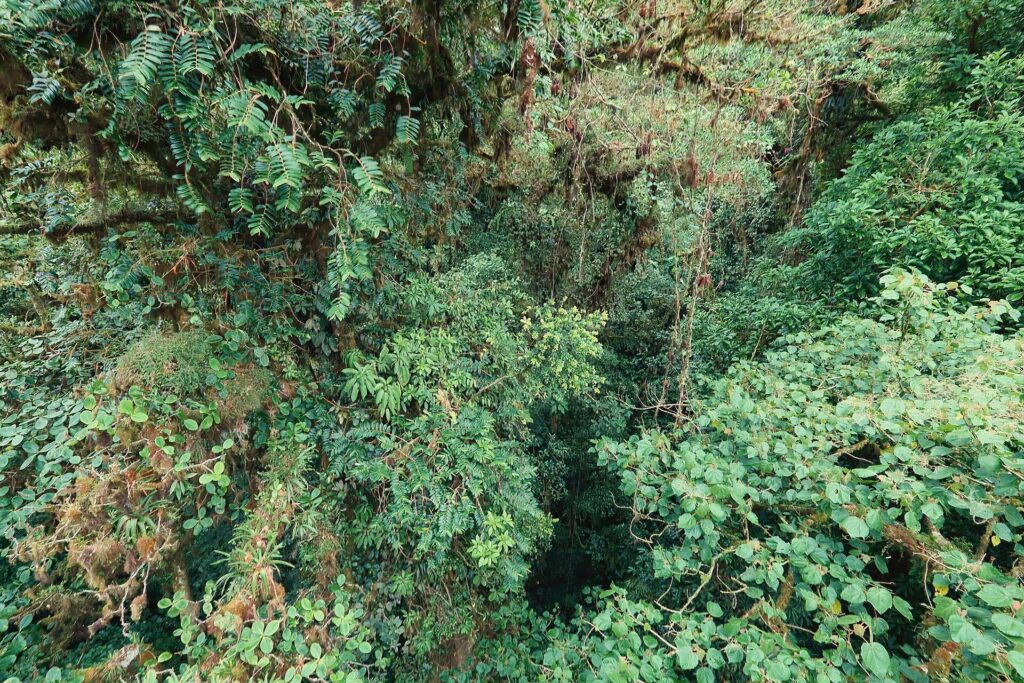
Santa Elena is the town that holds the hotels and restaurants. Around it you can climb trees, canyon, zip-line or walk in the private reserves. I would pick one canopy activity and one forest walk. Skip the rest.
A cloud forest is mostly fog, moss and birdsong. Guides find the animals, and a ticket does not promise them. The reserve sets its own price and hours, so check its page before you pick a date. I would book the first slot of the day.
Costa Rica itinerary Manuel Antonio
Manuel Antonio is the beach end of the trip. Its SINAC page lists the park as open Wednesday to Monday from 7 a.m. to 3 p.m. and closed Tuesday. Adults over 12 pay $16 plus IVA. Children 2 to 12 pay $5 plus IVA, and under 2 is free. The page says tickets are obtained only through the website, so plan the beach day for the Tuesday.

The tourism board calls it the second most visited park in the country. It lists monkeys, sloths, deer, birds and reptiles among the wildlife. The park also protects 12 islands that hold seabirds. Go in early, walk first and swim after.
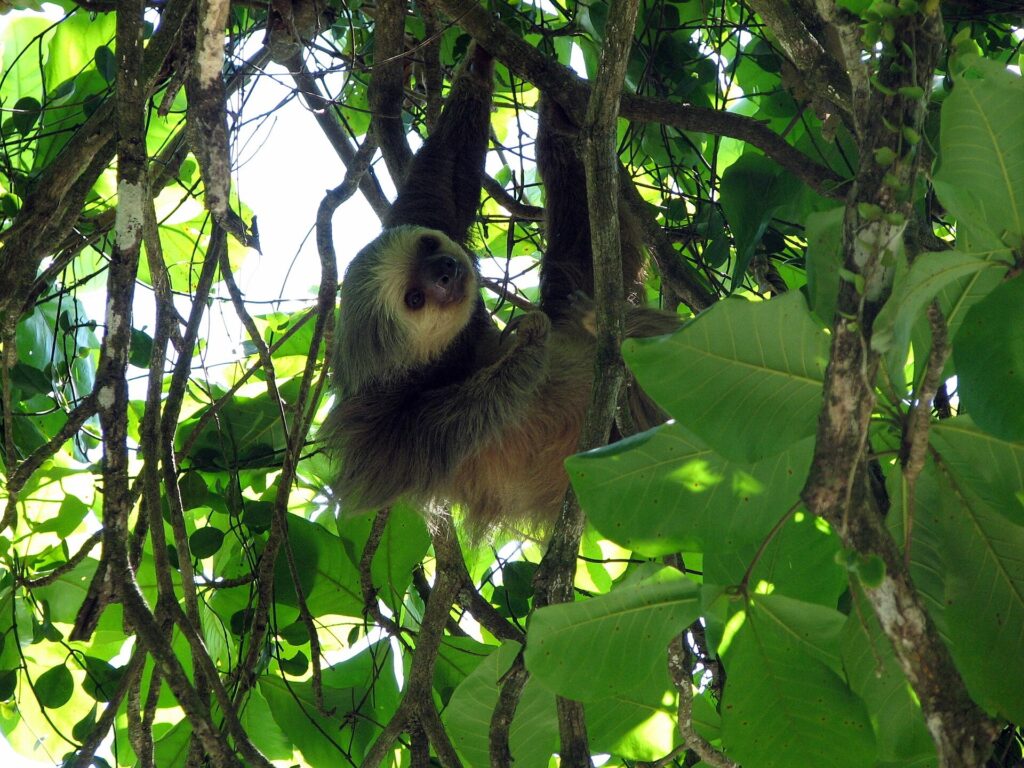
Here is the honest word on sloths. The ticket gets you into a park where they live, and it does not get you a sloth. A sloth is a still gray-brown lump in a green tree. A guide with a spotting scope finds the ones you would walk past.
Costa Rica itinerary without a car
On a first trip I would use shared shuttles for every leg and skip the rental. Interbus lists more than 180 routes and allows one carry-on and one suitcase per rider. It says to book well in advance.
Its route table shows about 4 hours from La Fortuna to San José. Monteverde and Manuel Antonio are each 4.5 hours from San José. La Fortuna to Manuel Antonio is 5 hours 30 minutes.
A car is a choice, not a shortcut. Alamo’s Costa Rica terms page says third-party liability cover is required unless you show proof of liability coverage or buy its protection package. Cover from US credit or debit cards is not accepted. The page also lists a $1,000 credit-card deposit and a minimum renter age of 21.
The tourism board adds two driving rules of thumb. Use a GPS app, and never leave valuables in the car.
Sansa lists daily flights to Quepos and Manuel Antonio. Its baggage page allows up to 4.5 kg (10 pounds) of carry-on at no charge, and checked bags depend on the fare. A small bag pays off here. Our carry-on-only packing list, packing cubes guide and carry-on backpack guide cover it.
The TSA PreCheck, Global Entry and CLEAR comparison covers the lines on the way home.
Costa Rica itinerary Caribbean side
The Caribbean coast is a swap for Manuel Antonio, not an add-on. Tortuguero is reachable only by boat or plane. The tourism board calls it the country’s most important place for nesting sea turtles, especially from March to October. It lists more than 400 bird species there.
Farther south, Cahuita National Park has black-sand beaches and 35 species of coral around Punta Cahuita. The Caribbean side has no well-defined dry season. The tourism board says the rain stays between 100 and 200 mm even in the driest months. Its two drier spells fall in February–March and September–October.
When is the best time to visit Costa Rica?
The Pacific side is driest from December to March, according to the tourism board, with April as a transition month. The rainy season runs May to October. July and August ease off in what the board calls the veranillo, or little summer. September and October are the wettest.
The national weather service, IMN, puts the central Pacific dry period at January to March, with 4 percent of the annual rain. Around Arenal it describes one rainy period from May to December or January. Rain eases in February, March and April.
Green season trades afternoon downpours for greener forest and quieter trails. The volcano and cloud-forest mornings still work.
Is 10 days enough for Costa Rica?
Yes, for three bases. Ten days gives you two or three nights at each base and room for the moves between them. A fourth base means trading a beach day for a bus.
Do you need a car in Costa Rica?
No, not for this route. Shared shuttles serve all three bases. A car adds mandatory liability cover, a card deposit and mountain driving in the rain.
Is Costa Rica safe for tourists?
For a planned route, mostly yes, with normal city and car precautions. The State Department issued a Level 2 advisory, exercise increased caution, on April 2, 2026, because of crime, so check the current level before you go. Keep valuables out of parked cars.
Do you tip in Costa Rica?
Not by default in restaurants and hotels. The tourism board says the 13 percent value-added tax and a 10 percent tip are included in the final price there. An extra tip is up to you.
How long can US citizens stay in Costa Rica?
Up to 180 calendar days, non-extendable, according to the tourism board. The State Department page says no visa is needed for stays under 180 days, the passport must be valid for the period of the stay and a return ticket is required. The tourism board lists a $29 departure tax, so ask your airline whether your fare includes it.
Prices are approximate, current as of publication, and change frequently — confirm the latest price with the retailer before buying.
Published October 11, 2026.
Photo credits: (1) featured, Arenal Volcano rising behind a church tower… — U.S. Government, U.S. Government work, public domain, via Wikimedia Commons; (2) Front of the Teatro Nacional de Costa Rica… — Wikimedia Commons contributor, CC BY-SA 3.0, via Wikimedia Commons; (3) Arenal Volcano seen across Lake Arenal… — User:Peter Andersen, CC BY 2.5, via Wikimedia Commons; (4) Cloud forest canopy in Monteverde, Costa… — Cephas, CC BY-SA 4.0, via Wikimedia Commons; (5) Hoffmann's two-toed sloth in a tree in… — Leyo, CC BY-SA 2.5 ch, via Wikimedia Commons.