

Some links on our site may earn us a commission at no extra cost to you. Learn more.
The cenotes near Tulum range from sunlit open pools to real cave-diving systems. The best pick depends on what you want. Gran Cenote and Dos Ojos Cenote are the classic cavern swims. Casa Cenote is the easiest open-water option. Cenote Calavera is where the jumpers go. All six sit within a 20-minute drive of town.
I’ve snorkeled a lot of clear water over the years — the reef at John Pennekamp, spring-fed holes from Midwest summers. That’s enough to know a good cave swim when I’m in one. A cenote at 8 a.m. is about as clear as fresh water gets. The mandatory life vest at the gate is the same one I’ve worn in a canoe on a Colorado river. Annoying for five minutes. Forgotten after that.
| Cenote | Type | Entry fee | Distance from Tulum |
|---|---|---|---|
| Gran Cenote | Cavern & open pool, snorkel | ~500 pesos ($25) | 4 km (2.5 mi) |
| Dos Ojos Cenote | Cavern snorkel & cave diving | ~350 pesos ($18) | 20 km (12 mi) |
| Casa Cenote | Open lagoon, connects to the sea | ~200 pesos ($10) | 10 km (6 mi) |
| Cenote Car Wash | Open surface, freediving | ~300 pesos ($15) | 8 km (5 mi) |
| Cenote Zacil-Ha | Platform swim, rope swing | ~300 pesos ($15) | 8 km (5 mi) |
| Cenote Calavera | Three entrances, cliff jump | ~300 pesos ($15) | 5 km (3 mi) |
The rules stay the same at all six. Shower before you get in. Skip the sunscreen and bug spray entirely — most gates check, and even “reef-safe” formulas carry chemicals NOAA links to marine damage. Non-swimmers get a mandatory life vest. Go at opening, 8 or 9 a.m., before the crowds and the tour vans arrive.
Gran Cenote
Gran Cenote sits just outside town, a few minutes north on the road to Cobá. It’s built for a first cenote swim. The open, lily-pad-covered pool leads into a partly roofed cavern hung with stalactites. The light drops off fast, and the water stays startlingly clear. Stone steps ease you in, not a ladder drop — that matters more than it sounds on a first visit. Entry runs about 500 pesos and includes a life vest and snorkel gear. The gate is open 8 a.m. to 4:45 p.m., with last entry at 4:15.
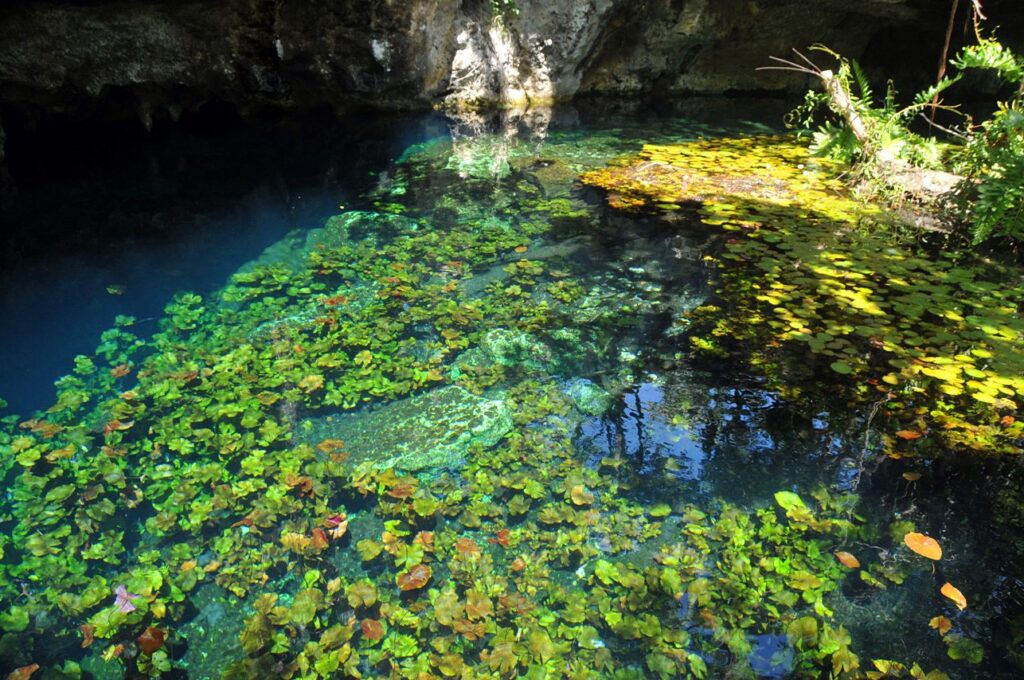
Small turtles turn up in the open section often enough that nobody’s surprised by them. PADI cavern-orientation dives use Gran Cenote as a training site, since the daylight zone is wide and forgiving. It’s also the busiest of the six by mid-morning. The gap between opening and about 9:30 is the real window.
Dos Ojos Cenote
Dos Ojos means “two eyes” in Spanish, named for its pair of connected sinkholes. It’s part of the Sac Actún system, one of the longest underwater cave networks yet mapped anywhere. Entry is about 350 pesos with a life vest included. The gate runs 8 a.m. to 5 p.m. A guided snorkel loop through the “Bat Cave” passage costs roughly $30 more. It’s worth it for the ceiling full of actual bats.

Snorkelers and open-water divers stay in the cavern zone, the part daylight still reaches. That’s where most of Dos Ojos’s visitors spend their time. Past that line is true cave diving. Total darkness. A guideline strung the whole way. A cave-specific certification is required to go further. For cave-trained divers back home, the closest comparison is Florida’s own Ginnie Springs — same clear spring-fed water, minus the Maya history.
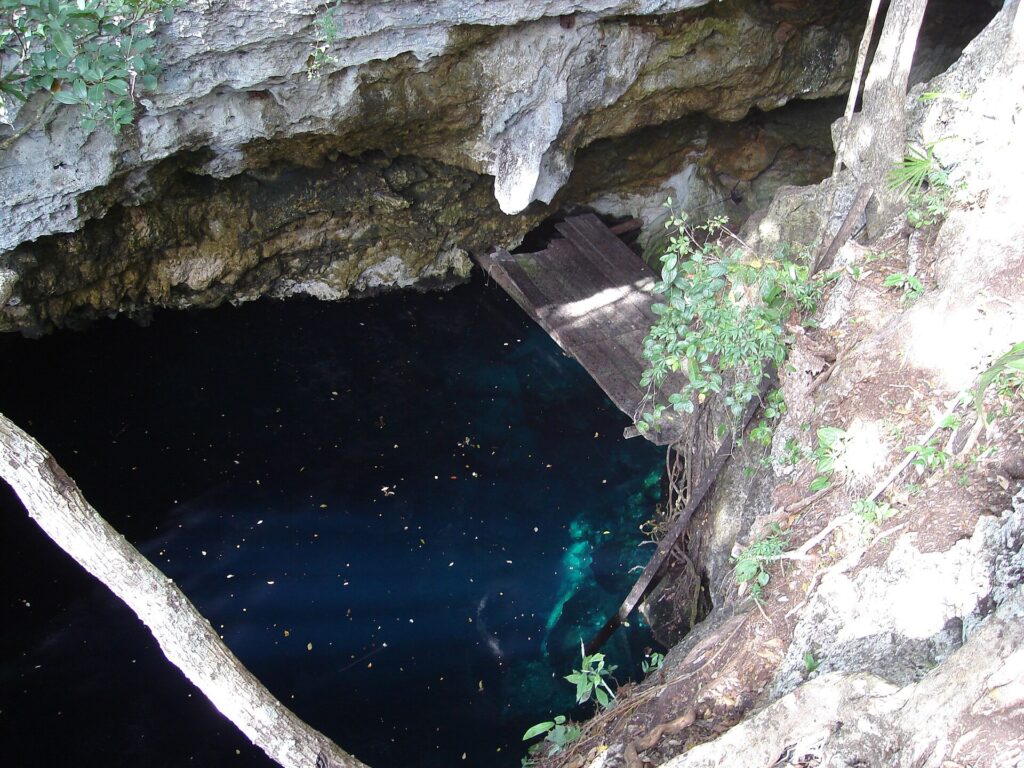
Dive shops across Tulum built entire businesses around this one cave system. They run two-tank cavern trips for beginners and multi-day cave certification courses for divers ready to go further. Snorkelers never need any of that. The cavern loop is the whole point for most visitors.
Casa Cenote
Casa Cenote, also called Cenote Manatí, is nothing like the other five. It’s a long, open, mangrove-lined lagoon that connects underground to the ocean. The water runs brackish in patches, and the swim feels more like a jungle river than a sinkhole. Entry is about 200 pesos, the cheapest of the six. Hours run 8 a.m. to 5 p.m.
There’s no cavern ceiling here, and no cave diving. Just a long paddle past mangrove roots thick with small fish. Signs at the edge warn about an occasional resident crocodile. That’s standard for a lagoon with an open connection to the sea, not a reason to skip it. Just stay out of the mangrove edges after dark. The far end, away from the entrance, is usually the quietest water of the day.
Cenote Car Wash
Cenote Car Wash, officially Aktun Ha, got its nickname from taxi drivers. They used to rinse their cabs in it before it opened to tourists. It’s an open surface pool about 8 km out on the Cobá road. Entry runs around 300 pesos. Lily pads cover the top, but visibility underneath runs surprisingly deep. Freedivers and underwater photographers favor it over the more crowded cavern cenotes.
It’s shallower at the edges and easier to just float in than Dos Ojos, with none of the cave-diving infrastructure. Like Casa Cenote, it’s home to a small resident crocodile that visitors occasionally spot near the far bank. On-site staff keep an eye on it. Bring your own mask and snorkel if you have them. The rental gear here is basic, and the line for it grows fast once a tour bus unloads.
Cenote Zacil-Ha
Zacil-Ha sits along the same Cobá-road cluster. It’s built around a wooden platform with a short rope swing. A couple of low jump points drop into open, sunlit water. Entry runs about 300 pesos. It opens later than the others, 10 a.m. to 5:30 p.m. That makes it a reasonable second stop after an early morning at Gran Cenote or Dos Ojos.
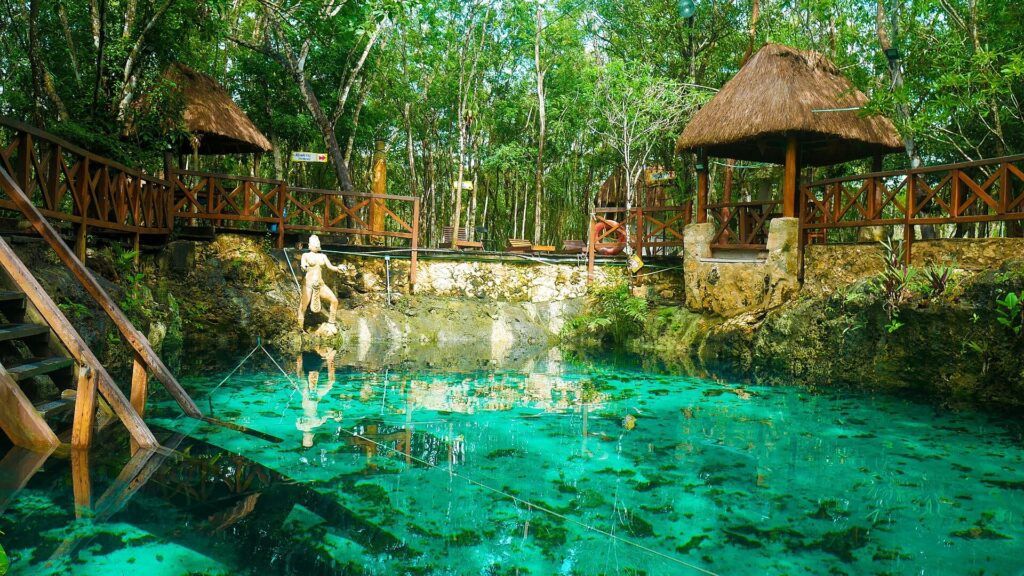
It’s shallower and calmer than Gran Cenote or Dos Ojos, with no cavern ceiling to swim under. That makes it a better fit for kids and weaker swimmers than the two cave-style cenotes. Changing rooms and showers are on site.
Cenote Calavera
Cenote Calavera earned its “Temple of Doom” nickname from three round openings in its limestone roof. From above, they look like eye sockets and a mouth. Entry is about 300 pesos, open 9 a.m. to 5 p.m. It’s the smallest of the six — more a deep round room than a cavern system.
There are three ways in: a ladder, a rope swing, or a straight jump. The jump drops roughly 15 feet through the largest opening. It draws a younger, jump-first crowd. It stays smaller and less crowded than Gran Cenote even at midday, since there’s less to see once you’re in the water. Bring water shoes. The limestone rim gets slick, and it’s a bad place to lose your footing on a rushed exit after a jump.
Prices are approximate, current as of publication, and change frequently — confirm the latest price with the retailer before buying.
Cenotes Facts
A few questions come up at every one of these gates, whichever cenote you pick first.

Are Cenotes Safe?
Yes, for the open swimming and snorkeling areas every cenote on this list is built for. The mandatory life vest covers non-swimmers. Staff keep an eye on the main pool at each site. The real risk sits past the cavern’s daylight zone, where only certified cave divers with a guide and a line belong. That boundary is exactly why Dos Ojos posts it so clearly.
Can You Wear Sunscreen in Cenotes?
Not usually. Most gates ask you to shower it off before entering. Several don’t allow it on-site at all, reef-safe or not — NOAA’s own research on sunscreen chemicals and aquatic life is why the rule is so strict in this cave-fed water table. Arrive already rinsed, and reapply after you’re back on dry land.
How Deep Are Cenotes?
It varies by site. Casa Cenote’s lagoon stays shallow enough to stand in near the entrance. A cave system like Dos Ojos drops well past recreational limits into passages mapped for miles underground. None of the six on this list require depth training to visit. The deep sections are for certified cave divers only.
The Maya treated cenotes as sacred portals to the underworld, not just swimming holes. Tulum’s own walled city sits close enough to several of these that a ruins visit and a cenote swim fit into one day — it’s overseen today by Mexico’s national anthropology institute, INAH. Pair either day with a reef morning back on the coast. The gear rundown at John Pennekamp back home covers the same mask-and-fins basics that work here: rinse the mask, spit-and-rub beats fogging spray, and a snug-fitting strap matters more than the price tag ever does.
Published October 5, 2026.
Photo credits: (1) featured, Turquoise water and stone steps at Gran… — Mrd93, CC BY-SA 4.0, via Wikimedia Commons; (2) The cavern entrance and clear water at Gran… — anjči from London, UK, CC BY 2.0, via Wikimedia Commons; (3) A snorkeler swims past a rock formation in… — Serge Melki from Indianapolis, USA, CC BY 2.0, via Wikimedia Commons; (4) A diver swims through a beam of light… — Serge Melki from Indianapolis, USA, CC BY 2.0, via Wikimedia Commons; (5) Cenote Zacil-Ha near Tulum, Mexico, with… — ROberto Carlos Román Don, CC BY-SA 4.0, via Wikimedia Commons; (6) An underwater view inside a cenote cave in… — dronepicr, CC BY 2.0, via Wikimedia Commons.