

Some links on our site may earn us a commission at no extra cost to you. Learn more.
The best Charleston itinerary for a weekend is three days. Spend one on the harbor, one on foot around the peninsula, and one on a plantation and a beach. Book the Fort Sumter ferry first, because it is the only way onto the fort. With two days, drop the plantation and the beach.
We have done enough walking-heavy city weekends, with nieces and nephews along and without, to know what breaks them. No anchor for the day, too many pins on the map, and shoes picked for looks. I plan an old Southern city with one anchor per day and a carry-on small enough that the cobblestones are the heaviest thing I handle. I would put the harbor day first while legs are fresh.
3 day Charleston itinerary
Each day answers one question. Day one is the harbor, and day two is the peninsula on foot. Everything off the peninsula, a plantation and the water, waits for day three.
The table puts a cost next to each block. Every figure comes from the operator’s or agency’s own page, read on October 3, 2026. Recheck anything you plan to pay for.
| Day and block | What | How you get there | Cost on the page |
|---|---|---|---|
| Day 1, morning | Fort Sumter | Ferry from Liberty Square or Patriots Point | $43 adult ferry; no NPS entrance fee |
| Day 1, afternoon | Fort Moultrie, Sullivan’s Island | Car or rideshare | $10 adult, free under 16 |
| Day 2, morning | The Battery and Rainbow Row | On foot | Free to walk |
| Day 2, midday | Charleston Museum | On foot or DASH | $15 adult, $6 child (single site) |
| Day 2, Saturday | Farmers Market, Marion Square | On foot or DASH | Saturdays 8 a.m. to 2 p.m. |
| Day 3, morning | Boone Hall | Car | $30 adult, $12 child 6 to 12 |
| Day 3, morning | Middleton Place | Car | $28 online adult, $10 child 6 to 13 |
| Day 3, morning | Magnolia | Car | $32 adult, $16 child 5 to 13 |
| Day 3, afternoon | Folly Beach County Park | Car | Parking $10 in October, $5 in November |
Fort Sumter ferry
Fort Sumter sits in the harbor, so the boat is the booking that shapes the weekend. NPS says the fort charges no entrance fee. Tickets for the authorized concession ferry are required, though, and can be bought in advance.
The operator, Fort Sumter Tours, lists adult tickets at $43. From late February through November 30, boats leave Liberty Square at 9:30 a.m., 12:00 p.m. and 2:45 p.m., and Patriots Point at 10:45 a.m. and 1:30 p.m., with fewer departures in December and early in the year. The whole trip runs about 2 hours 15 minutes, with roughly an hour at the fort.

I would take the first boat from Liberty Square and be back by midday. Carry a layer for the crossing, because the water is colder than it looks. In early October 2026 the operator’s page said the mobility lifts at the fort were out of order, with the ground-level parade ground still wheelchair accessible. Check that notice before you book if anyone in your group needs the lift.
For the afternoon, Fort Moultrie on Sullivan’s Island is reached by land. The park’s fee page listed $10 for adults 16 and over. Children under 16 enter free, and the park takes cards and contactless payments only. Rangers lead free tours at 11:00 a.m. and 2:00 p.m. when staff are available, so the 2:00 tour fits after a morning boat.
Patriots Point is the other ferry dock and has a naval and maritime museum. Its page listed adults at $28 and children 6 to 12 at $23, with parking charged separately. Read the fort’s NPS alerts page the week you go.
Charleston South of Broad
Start at the tip of the peninsula and walk north. The Battery and White Point Garden come first. Next come the pastel houses of Rainbow Row on East Bay Street, then the streets back toward the market.
Go early, because the narrow residential streets are quietest in the morning. Cobblestones are harder on feet than they look. I would wear flat, closed shoes and keep the sandals for the beach. Our carry-on only packing list covers how to fit that second pair in one bag.
Charleston King Street
King Street changes character as it climbs the peninsula. The lower blocks near Broad Street run to antiques and older storefronts. The middle blocks are the main shopping stretch. Upper King toward Cannonborough is where the newer places to eat and drink cluster.
The Charleston Museum sits at 360 Meeting Street. Its ticket page listed adult single-site admission at $15 and children at $6 on the date checked. The home page showed hours of 9 to 5.
If the walking day lands on a Saturday, the Charleston Farmers Market fills Marion Square from 8 a.m. to 2 p.m. The city’s page listed the 2026 season as April 4 through November 21.
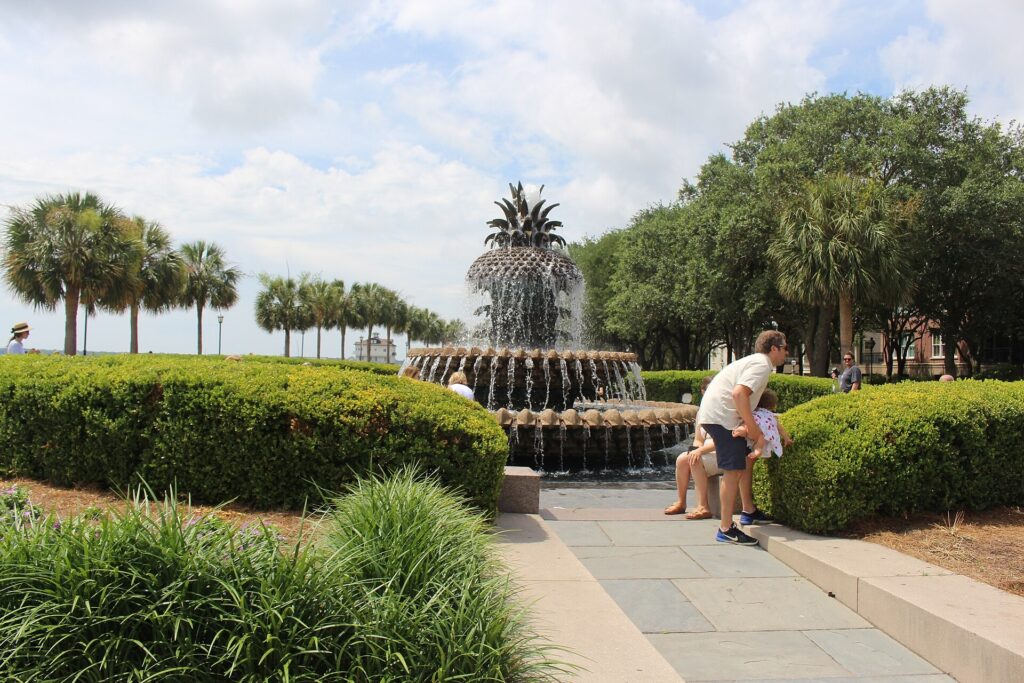
Finish at Waterfront Park for the pineapple fountain and the harbor before dinner. Upper King is a long walk back at the end of a full day. I would ride the free DASH shuttle for the return leg.
Which plantation to visit in Charleston?
Pick one. The three big plantations run on a similar day-trip scale, so a second one repeats more than it adds. Each tells the history of the people enslaved there on its own tour.
Boone Hall is the easiest single ticket. Its page listed adults at $30 and children 6 to 12 at $12. Every daily tour is included. That means the Black History in America exhibit in nine original cabins, a Gullah culture presentation, a first-floor house tour and a 30 to 40 minute tractor tour. Hours were Monday through Saturday 9 to 5 and Sunday noon to 5.

Middleton Place suits anyone who wants gardens plus a dedicated program on enslavement. Adults were $28 online and $32 in person. Children 6 to 13 were $10, and the house museum cost $15 on top. The 40-minute program, Beyond the Fields: Enslavement at Middleton Place, ran at 11:00, 12:00, 2:00 and 3:00 daily.
Magnolia suits a gardens-and-nature day. Its ticket page listed adults at $32 and children 5 to 13 at $16. The house tour and the 45-minute From Slavery to Freedom tour come with admission. The wildlife boat and nature train cost extra. Its FAQ listed free parking, hours of 9 to 5 and a 4 p.m. last ticket.
Charleston beaches
Folly Beach County Park is the simplest beach half-day, and Charleston County Parks sets parking by month. Its page listed $10 for October and $5 for November and December. From May through Labor Day it was $15 on weekdays and $25 on weekends and holidays. Payment is by card only, with a no-fee cash-to-card kiosk on site.

The page put lifeguards on weekends only through the end of September, so check before you swim outside that window. Dogs are barred from the public beach from 10 a.m. to 6 p.m., May 1 through September 30, and must be leashed at other times. Our beach vacation packing list has the bag checklist.
Angel Oak, on Johns Island, is a free stop that pairs with the beach. The city’s Angel Oak page puts the tree at an estimated 300 to 400 years old. The park is open seven days a week and closed on holidays, with donations welcome.
Charleston itinerary 2 days
With two days, keep the harbor day and the walking day and drop the plantation and the beach. That keeps the two things you cannot do anywhere else: the fort and the peninsula.
With one day, take the 9:30 a.m. boat from Liberty Square, walk the Battery and Rainbow Row after lunch, and skip the rest. It is a full day, and I would not add Fort Moultrie to it.
Charleston itinerary with kids
We have done city days with nieces and nephews along, and the schedule matters more than the sights. The 2 hour 15 minute ferry trip is the long block. I would pair it with a free afternoon instead of a second ticketed stop.
The cost side is gentler than it looks. Fort Moultrie is free under 16. Boone Hall is free for ages 5 and under, and Magnolia for ages 4 and under. The Charleston Museum listed a $6 child ticket.
Charleston parking
Park once and walk. The city’s rate sheet listed garages at $1 for every 20 minutes, with a $24 daily maximum. That sheet carries no date, so confirm at the gate. Leaving and re-entering restarts the clock.
Meters run Monday through Saturday from 9 a.m. to 6 p.m., and the city’s page lists Sundays and city holidays as free.
The DASH shuttle is free, per CARTA. Orange (route 210) runs between the College of Charleston and the Aquarium. Green (route 211) runs along Meeting and King streets. Purple (route 213) covers Lockwood Drive and Calhoun Street. CARTA’s page listed no hours or frequency on the date checked. I would not build a tight connection around it.
On the walking day I would leave the car in a garage and use DASH only to rest tired legs. Fort Moultrie, the plantations and the beach need a car or a rideshare.
Charleston in summer
Summer here is hot and humid. I would do the fort and the plantation in the morning and spend the afternoon indoors. The city’s Tourism Management Division issues the carriage medallions and enforces the rules. In warm months I would book a carriage or walking tour for the cooler evening hours.
Atlantic hurricane season runs June 1 to November 30. The National Hurricane Center puts the peak at September 10, with most activity from mid-August to mid-October. An October or November weekend is past the peak but still inside the season. Book refundable lodging and watch the forecast. Fort Sumter Tours listed daytime tickets as fully refundable if cancelled two hours before departure.
Tidal flooding can close streets even on a dry day. The city’s advisory, posted October 8, 2025, told people not to drive or walk through flooded streets. It also pointed them to the TideEye tool for closures.
How many days do you need in Charleston?
Three days covers every block in this plan, and two days works if you drop the plantation and the beach.
Is 2 days enough in Charleston?
Yes, if you accept dropping the plantation and the beach. Two days covers the Fort Sumter ferry and a full day on the peninsula. Those are the two things most people come for.
What to do in Charleston for a weekend?
Harbor on day one, the peninsula on foot on day two, and a plantation plus a beach on day three. Book the Fort Sumter ferry first, then the plantation, and walk up to everything else.
What is the best time to visit Charleston?
Spring and fall are the comfortable seasons for walking. Summer is hot and humid, and June through November is Atlantic hurricane season, so book refundable lodging for a summer or fall trip.
Is Charleston expensive to visit?
It does not have to be. The two big line items are the Fort Sumter ferry and one plantation, and both are in the table above. Angel Oak, DASH, the Battery and Rainbow Row cost nothing, and Fort Moultrie is $10 for adults.
Prices are approximate, current as of publication, and change frequently — confirm the latest price with the retailer before buying.
Published October 22, 2026.
Photo credits: (1) featured, Pastel-colored row houses along East Bay… — John Hoey from Framingham, MA, United States, CC BY 2.0, via Wikimedia Commons; (2) Brick walls of Fort Sumter in Charleston… — NPS Photo, U.S. Government work, public domain, via National Park Service; (3) Pineapple Fountain at Waterfront Park in… — Michael Rivera, CC BY-SA 4.0, via Wikimedia Commons; (4) Folly Beach pier reaching over the water… — Brian Stansberry, CC BY 3.0, via Wikimedia Commons.