

Some links on our site may earn us a commission at no extra cost to you. Learn more.
The best time to cruise the Caribbean is mid-December through April. The weather is dry, the sea is friendly and the fares are at their highest. For a better balance, sail in January after the holiday weeks, or in May, when crowds thin and storms are not yet a worry.
I would book the second half of January and let the route follow the month, not the other way around. We have sailed the Caribbean with nieces and nephews along, and the planning rule that matters most is simple: the calendar decides which islands you actually get. A September sailing trades the lowest fares of the year for the odds that your ports get swapped, and that trade is worth making only if you know you are making it.
What Is the Best Month to Cruise the Caribbean?
I would pick January for a first Caribbean cruise. It sits in the dry season, with temperatures in the 80s, and the holiday crowds have gone home before spring break begins. February is nearly as good.
March has the same weather with a different crowd. Spring break brings college groups and families onto the ships, and the ports fill up fast. If you like a quiet pool deck, aim one month earlier.

If January does not fit, May is the best backup. Rain and humidity creep up, but showers are short, fares drop into shoulder-season territory and the ships carry fewer people. June is close behind, because hurricane season starts on the calendar well before it starts in the water.
Skip the Christmas and New Year weeks unless a school break forces your hand. Those sailings are the busiest and the most expensive of the year. Early December gives you nearly the same weather for far less.
Caribbean Cruise Weather by Month
Here is the whole year in one table. Fare tiers are our own read of the usual pattern, not quoted fares: “High” means that month sits among the priciest of the year, and “Low” means among the cheapest.
| Month | Weather | Crowds and fare tier | Hurricane risk |
|---|---|---|---|
| January | Dry season, 80s | Busy but calmer than the holidays; Mid-high | Out of season |
| February | Little rain, 80s | Busy; High | Out of season |
| March | Dry, 80s | Spring break crowds; High | Out of season |
| April | High 80s, stays dry | High early, easing by month’s end; Mid | Out of season |
| May | Mid to upper 80s, brief showers | Shoulder season; Low to mid | Out of season; storms rare |
| June | Wetter, humid | Fewer crowds; Low to mid | Season opens; activity usually low |
| July | Hot, high 80s to 90s | School-break families; Mid | Season on; building |
| August | Hottest, humid | Families early, fewer later; Mid to low | Rising; peak window opens mid-month |
| September | Hot, humid, squalls | Fewest crowds; Lowest | Peak (September 10) |
| October | Warm, rainy | Quiet; Low | High until mid-month, then falling |
| November | Warm, afternoon showers | Quiet except Thanksgiving week; Low to mid | Tapering; season ends November 30 |
| December | Some of the best weather of the year | Early month Mid; holiday weeks Highest | Out of season; storms rare |
Packing changes with the month more than people expect. Our Caribbean packing list covers the swap between the dry-season layers and the wet-season rain gear.
Caribbean Cruise Hurricane Season
NOAA lists the Atlantic hurricane season as June 1 through November 30. The peak is September 10, with most activity between mid-August and mid-October. An average season over the 1991 to 2020 period had 14 named storms, 7 hurricanes and 3 major hurricanes.
Storms outside those dates are rare, and when they happen it is mostly in May or December. A storm somewhere in the Atlantic does not put your ship in danger. It means the line may route around it.
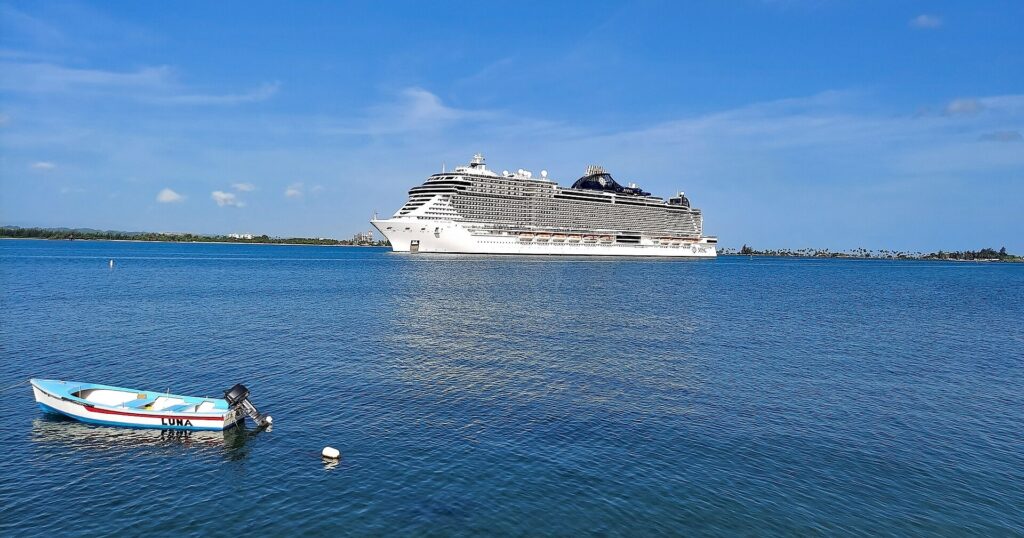
Geography matters too. Holland America says the southern Caribbean carries a lower risk of hurricanes, and that is where I would look first for a late-season sailing. Aruba, Bonaire and Curaçao are the classic example, because they are less prone to major storms.
If you do sail between mid-August and mid-October, three habits cut the risk. Fly in the day before you board, so one late flight does not strand you at the pier. Pick a southern route. Buy insurance early, because many policies stop covering a storm once it has been named.
What Happens to a Cruise During a Hurricane?
Ships go around storms, and the itinerary is what changes. Royal Caribbean says that when there is a potential threat to guests or ships, the itinerary may be altered to avoid the storm or any affected areas. The line posts updates on its travel updates page when a storm develops.
Norwegian Cruise Line is blunter. Its ships will not sail anywhere near a hurricane, even if your itinerary says otherwise, and your trip may skip ports or divert to other ones. Arrivals and departures can also run late.
In practice that means a port swap, a late return or an extra sea day in place of the island you picked. The ticket contract sets out refunds and compensation, so read it before you book, not after. A travel insurance policy that covers trip delay and interruption is the usual cushion, and it pays to check how it treats named storms.
If motion worries you, I would book a midship cabin on a lower deck. That spot moves the least on any ship in any month.
Cheapest Time to Cruise the Caribbean
The cheapest sailings are in September and early October. Those are also the weeks with the highest storm risk, so the discount is the price of the gamble. Late April, May and June are the best value without the same exposure.

The ladder from cheapest to dearest runs like this. September and early October sit at the bottom. Then come May, June, most of November and the first weeks of December. After that, January through early March sits in the middle to high range. At the top are Christmas and New Year, the spring break weeks and the peak summer school holidays.
Summer sits in the middle. School holidays push families onto the ships from June, and cabins go quickly once term ends, so book those sailings early. The afternoons are humid, but the sea is often at its calmest.
There are no fares in this post on purpose. The price depends on the ship, the cabin and the day you check, so read the number off the line’s own sailing page for the exact date you want. Treat anything you see in a roundup as a mood, not a quote.
When Is Wave Season for Cruises?
Wave season runs from January through March, and some lines start their deals as early as November. It is the busiest booking window of the cruise year. Lines add perks or lower base fares to fill ships early.
The perks fall into a few familiar buckets. You may see drink packages, Wi-Fi, prepaid gratuities and onboard credit. Family offers, a cheaper third or fourth passenger and discounts on specialty dining show up too, and what is on offer changes from line to line and week to week.
Wave season is about when you book, not when you sail. A January booking can be for a May sailing that already has shoulder-season fares, which stacks the two savings. If this is your first sailing, read our first cruise packing list before you lock in dates.
Eastern vs Western Caribbean Cruise
Eastern itineraries lean on St. Thomas, St. Maarten and San Juan. Western itineraries call at Cozumel, Grand Cayman, Costa Maya and Jamaica. Southern itineraries run down to Aruba, Curaçao and Barbados.
Many Western Caribbean sailings leave from Florida ports, and so do plenty of Eastern ones. That makes the flight in the night before an easy habit to keep.

From December through April, any of the three works. The weather is good everywhere, so pick on the islands, and our guide to the best Caribbean islands to visit helps you choose. From September through mid-November, I would lean south.
Royal Caribbean’s hurricane-season guide says the seas are much calmer in summer than in winter, because the high pressure and humid weather settle them. So the winter bargain is dry weather, not flat water. If you are planning a land stay instead of a ship, our best time to visit the Caribbean guide covers resorts and beaches.
Caribbean Cruise Facts
Is it safe to cruise during hurricane season?
Yes, for most travelers, with one condition: you accept that the itinerary may change. Lines steer ships away from storms, so the risk is to your ports and your schedule, not to your safety. If a swapped island would ruin the trip, sail between December and May.
Do you need travel insurance for a cruise?
For a September or October sailing, I would buy it. Look for coverage of trip delay, trip interruption and missed embarkation, and check how the policy treats named storms and when you have to buy it. Outside hurricane season the call is smaller, but a missed flight to the port is still the classic way to lose a cruise fare.
Is December a good time to cruise the Caribbean?
Early December is a very good time, and it is cheaper than the holiday weeks. The weather is warm and mostly dry, and hurricane season is over. The weeks around Christmas and New Year are the busiest and most expensive of the year.
Is September a good time to cruise the Caribbean?
September is the cheapest month and the stormiest. It suits flexible travelers who choose a southern route and carry insurance. A once-in-a-lifetime trip is a poor fit, because ports can change on short notice.
Published October 10, 2026.
Photo credits: (1) Four cruise ships docked in Nassau, Bahamas — Captain-tucker, CC BY-SA 3.0, via Wikimedia Commons; (2) Cruise ship entering San Juan Harbor… — P. Hughes, CC BY-SA 4.0, via Wikimedia Commons; (3) Cruise ship alongside the pier at… — MDCXLVI, CC BY-SA 4.0, via Wikimedia Commons; (4) Port of Falmouth, Jamaica, seen from a… — Sunnya343, CC BY-SA 4.0, via Wikimedia Commons.