

Some links on our site may earn us a commission at no extra cost to you. Learn more.
Punta Cana and Puerto Plata sit on the same island, both in the Dominican Republic. They aren’t much alike. Punta Cana is the all-inclusive resort strip on the east coast, built for people who want to land, check in, and stop thinking about logistics. Puerto Plata is the north coast: smaller hotels, working towns, a cruise-port district, and mountains close enough to hike the same afternoon you’re at the beach.
I’ve spent time on both coasts, and on most of the rest of the Caribbean besides. The choice usually comes down to what kind of week you want. Want a swim-up bar and zero decisions? Punta Cana wins easily. Want to drive somewhere different every day, even if that means fewer buffet lines? Puerto Plata is the better pick. Neither is the wrong answer. They’re just not the same trip.
Punta Cana vs Puerto Plata
Here’s the short version. The detail on each piece is below.
| Category | Punta Cana | Puerto Plata |
|---|---|---|
| Coast | East, Caribbean Sea | North, Atlantic side |
| Airport | PUJ, Punta Cana International | POP, Gregorio Luperón International |
| Lodging style | Large all-inclusive resorts, mostly on Bávaro Beach | Smaller hotels, boutique stays, condo rentals |
| Cruise ports | None | Amber Cove and Taino Bay |
| Signature day trip | Saona Island | 27 Waterfalls of Damajagua |
| Vibe | Resort bubble, minimal planning | Independent travel, more driving |
If you’re still deciding, ask yourself how much you want to leave the property. Punta Cana visitors mostly don’t, and the resorts are built for exactly that: multiple pools, several restaurants, a spa, nightly entertainment, all covered by the room rate. Puerto Plata visitors rent a car or hire a driver and treat the hotel as a home base, not the whole vacation. Neither approach is more “authentic” than the other — it’s a question of whether you want a week off from planning or a week of small day trips.
Things to Do in Punta Cana
Almost everything in Punta Cana happens on or near Bávaro Beach, the long stretch of white sand most of the big resort brands sit on. A reef runs offshore, so the water stays calm most days. That’s the whole pitch of this coast: swimming, not surfing. Public beach access exists between resorts, but the easy way in is still through a hotel.
Outside the resort gates, the go-to day trip is Saona Island. It’s a protected island off the southeast coast, reached by a combined speedboat-and-catamaran ride. The standard version stops at a shallow sandbar in open water, then lands on the island for a beach afternoon. A Punta Cana tour operator’s own site lists the full-day package at roughly $85 per adult, lunch and drinks included. Figure ten hours door to door. It’s a long day, and it eats one full vacation day, but it’s the outing almost every first-timer asks about.

Past the beach and the day trips, Punta Cana isn’t built for exploring on your own. Taxis between resorts cost real money. There isn’t much of a walkable town center near Bávaro. Most visitors never leave resort property except for one excursion. That’s the trade for the convenience.
Resort style matters here more than the beach does, since the beach itself doesn’t change much from hotel to hotel. Some properties are adults-only and run quieter, with a la carte restaurants instead of one big buffet. Others are aimed squarely at families, with kids’ clubs and shallow pool sections. Worth checking before you book, since a swap between the two is basically a different trip.

Things to Do in Puerto Plata
Puerto Plata rewards a rental car in a way Punta Cana doesn’t. Sosúa, a short drive east, has a curved bay with calmer water and a beach town built around it. Cabarete, a little further on, is one of the more established kitesurfing spots in the Caribbean. The trade winds pick up reliably in the afternoon, and outfitters line the beach road for lessons and gear.
Inland, the 27 Waterfalls of Damajagua is the north coast’s signature adventure trip: a guided climb and jump up a series of waterfalls and swimming holes cut into a river canyon. Guides are required. The site’s own pricing page sets admission at $21 for the full 27-waterfall circuit, on top of a customary guide tip; shorter 7- and 12-waterfall options cost less. Helmets and life jackets are provided. Most people book it as a package that includes hotel transport.
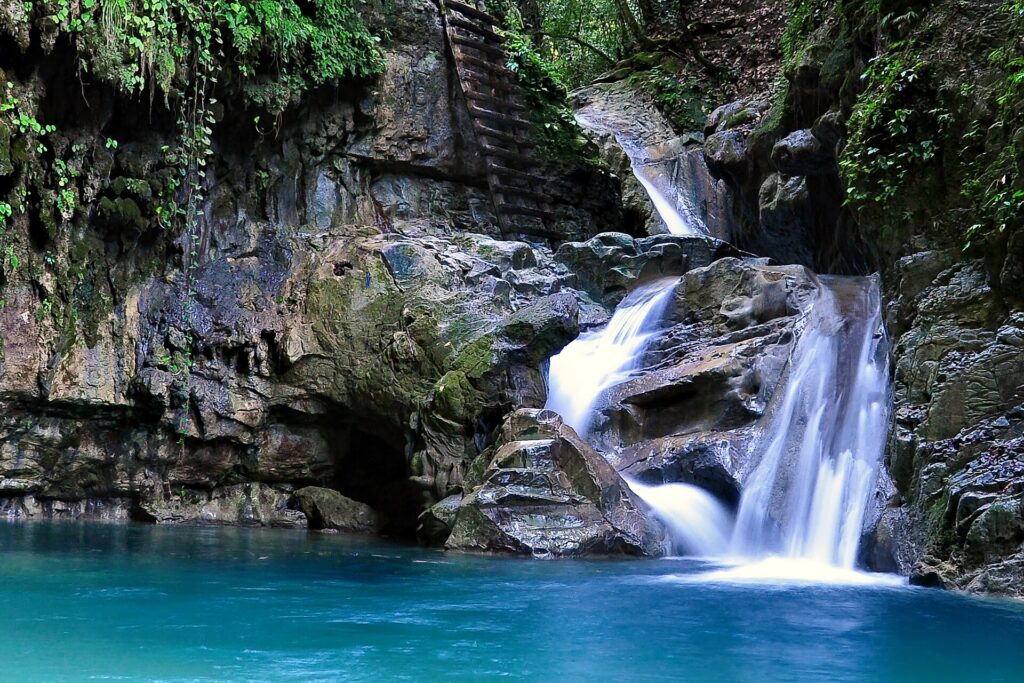
The town of Puerto Plata itself is workaday, not polished. That’s part of the appeal if you want a real place instead of a resort compound. There’s a cable car up Pico Isabel de Torres, a historic fort on the waterfront, and enough restaurants outside hotel walls to eat somewhere different every night.
The reef that keeps Bávaro’s water calm has a cousin along this coast, too. Sosúa’s bay has a shore snorkel right off the sand — not the clearest water in the Caribbean, but an easy one to do without a boat. Bring your own gear if you have it; rental stands along the beach are hit or miss on fit and condition.
Amber Cove vs Taino Bay
Cruise ships call at Puerto Plata, not Punta Cana, and they use one of two terminals. Amber Cove sits in Maimón Bay, a few miles outside the city. It’s a Carnival-brand terminal with its own pools, bars, and shops inside the gate — the kind of port where you can spend the whole call without a taxi. Taino Bay is different. It sits downtown, within walking distance of Puerto Plata’s own streets and the malecón, and it’s the terminal most other lines use, Royal Caribbean and Norwegian included.

Ship at Amber Cove and want the town? Budget for a taxi. Ship at Taino Bay? Walk straight off the pier into the city. Either way, the north-coast day trips above — Damajagua, Cabarete, Sosúa — are all bookable as shore excursions. The falls take a longer drive and eat more of a port day than the beach towns do.
Which airport is closer to Punta Cana?
Punta Cana International Airport (PUJ) sits right at the edge of the resort zone. Most transfers to Bávaro hotels run 15 to 30 minutes. It’s one of the busiest airports in the Caribbean, with direct flights from dozens of U.S. cities. It exists almost entirely to serve the resorts around it; there’s no real town at the airport itself.

Puerto Plata’s Gregorio Luperón International Airport (POP) is smaller and closer to the city, with fewer nonstop U.S. routes than PUJ. Flying between the two coasts is possible, but not efficient. There’s no fast overland connection, and driving across the island eats most of a day. Almost nobody treats Punta Cana and Puerto Plata as one trip. Pick a coast, and fly into its airport.
Do you need a passport for the Dominican Republic?
Yes. U.S. citizens need a passport valid for at least six months beyond arrival, per travel.state.gov. Stays of 30 days or less don’t need a separate visa. A $10 tourist card covers that window, and it’s usually already folded into the airfare rather than something you pay at the airport.
Every traveler also has to file an E-Ticket before arriving, and again before leaving. The Dominican migration authority’s own site describes it as a free digital form. It takes a few minutes online and is mandatory for entry and exit. Do it a day or two ahead, not at the gate; the confirmation gets scanned at immigration.
| Requirement | Detail |
|---|---|
| Passport | Valid 6+ months beyond arrival |
| Visa | Not required for stays up to 30 days |
| Tourist card | $10, typically included in airfare |
| E-Ticket | Free, online, required each way — migracion.gob.do |
The Dominican peso is the official currency. U.S. dollars are accepted at most resorts and tour desks, though change usually comes back in pesos. Keep small bills on hand for tips and market stalls. Connecting through a U.S. airport on the way home? Take a look at our TSA PreCheck vs. Global Entry comparison — Global Entry is the one that actually speeds up re-entry after an international trip.
Is Punta Cana safe to travel to?
Inside the resort zone, yes, and heavily so. The whole Bávaro strip is built around tourism, with private security at every hotel gate. The practical risks are the same ones you’d watch for on any beach vacation. Don’t swim alone after dark. Don’t flash jewelry or cash in town. Use a hotel-arranged or licensed taxi, not a random car flagged down outside the resort corridor.
How many days should you spend in Punta Cana?
Four to five nights covers it for most people. That’s enough beach time to actually relax, one day for Saona Island, and a spare day in case weather pushes the boat trip back. Shorter trips work too, but the appeal here is doing nothing for several days straight. A two- or three-night stay barely gets there.
What currency is used in Punta Cana?
The Dominican peso (DOP) is the official currency, though nearly every resort, tour desk, and gift shop in Punta Cana prices things in U.S. dollars and takes them directly. Cards work at most hotels. Cash still helps for tips, beach vendors, and small purchases in town.
When is the best time to visit Punta Cana?
December through April is the sweet spot: dry, warm, and outside Atlantic hurricane season, which officially runs June 1 through November 30. Late spring and summer bring more rain showers, usually short afternoon bursts rather than washed-out days, along with lower resort rates. Late fall carries the highest storm risk of the year, so it’s the one stretch worth watching a forecast for rather than booking blind.
Prices are approximate, current as of publication, and change frequently — confirm the latest price with the retailer before buying.
Published October 4, 2026.
Photo credits: (1) One of the 27 Waterfalls of Damajagua near… — Funcheta, CC BY-SA 4.0, via Wikimedia Commons; (2) Cruise ships docked at the Taino Bay cruise… — Jusunx, CC BY-SA 4.0, via Wikimedia Commons; (3) Terminal building at Gregorio Luperon… — Escla, CC BY-SA 3.0, via Wikimedia Commons.