

Some links on our site may earn us a commission at no extra cost to you. Learn more.
Aruba is a dry, sunny island with calm beaches on the west and south coasts and rocky desert on the east. The best things to do are Eagle Beach, Palm Beach and Baby Beach, a day in Arikok National Park and a swim at the Natural Pool. Add Flamingo Beach and a morning in Oranjestad if you have time.
We have done Caribbean beach days with nieces and nephews along, and one lesson carries straight to Aruba. The wind keeps you cool, so the sunburn shows up before you notice it.
I would pack half the clothes you think you need and twice the sunscreen. Which sunscreen matters here, and the reason is below.
Is Aruba Worth Visiting?
Yes, if you want sun, water and very little planning. Aruba gets little rain, the beaches are open to everyone, and the island is small enough to see most of it in a week. It is a beach island first, with desert and a little history on the side.
Do not expect a jungle. The east coast is cactus and black rock, and the swimming is on the other side. That split is the best way to plan a trip: beach mornings, then one big day inland.
If you are still weighing islands, our guide to the best Caribbean islands to visit shows where Aruba fits. Families should read the best Caribbean island for families guide next.
Things to Do in Aruba
Most things to do in Aruba are outdoors, and many are free. The table gives the cost and the best use of each one.
| Place | Cost | Best for |
|---|---|---|
| Eagle Beach | Free public beach | Wide sand and fofoti trees |
| Palm Beach | Free public beach | Calm water and water sports |
| Baby Beach | Free public beach | Shallow water for small kids |
| Arashi Beach | Free public beach | Snorkeling and sunsets |
| Arikok National Park | Park entrance fee, paid at the gate | Desert trails, caves and rough coast |
| Natural Pool | Park fee, plus a tour or 4×4 | Swimming on calm days |
| Flamingo Beach | Resort day pass, price set by the resort | A private-island day with flamingos |
| Oranjestad | Free to walk | Colorful buildings and Fort Zoutman |
Pair a beach morning with something from the next row down. The inland day is the one to plan around the weather.
Best Beaches in Aruba
Every beach in Aruba is public, apart from two private islands, Renaissance Island and De Palm Island. The west and south coasts are calm and good for swimming. The east and north coasts take wind and waves, so they are for looking, not swimming.
Eagle Beach
Eagle Beach is one of the widest beaches on the island, with soft white sand and plenty of room to spread out. It has parking, some shade and a few beach huts for drinks and water sports. The wind-bent fofoti trees are the photo everyone takes.
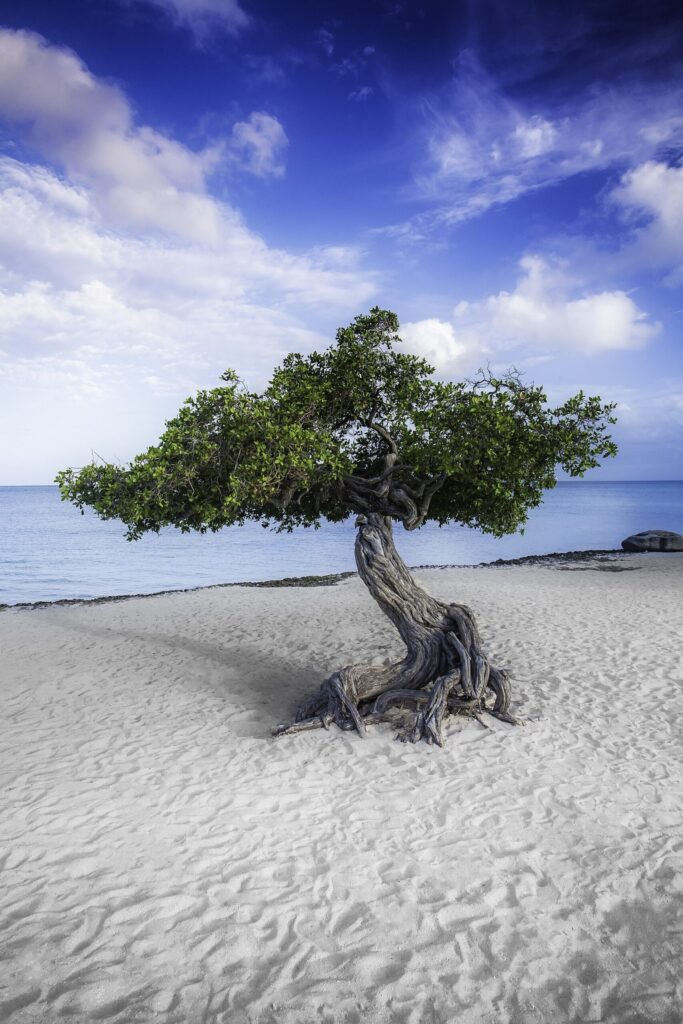
Sea turtles nest here, so stay off the sand with a car and keep your distance from any nest. You can rent a chair and umbrella from the water sports huts, or bring your own.
Palm Beach
Palm Beach is the resort strip, about two miles of white sand with calm water. It is the easiest place to swim and snorkel, and the piers and water sports huts are right there. Restaurants, bars and shops line the shore, so it works when you want everything within walking distance.

Expect it to feel like the tourist hub it is. That is a plus for dinner and a minus for quiet.
Baby Beach
Baby Beach sits at the southern tip near San Nicolas, about 45 minutes by car from the Palm Beach hotels. A man-made breakwater shelters the bay, so the water is warm, clear and shallow a long way out. That makes it the one I would pick for small kids and nervous swimmers.

Stay inside the bay, because a strong current runs beyond it. There is a grill, chair and windscreen rentals, free shade huts and bathrooms, so you can stay all day.
Arashi Beach
Arashi Beach is on the northwest coast near the California Lighthouse. The snorkeling is good close to shore, and the sunset view is quiet. Boca Catalina and Mangel Halto are two more snorkel stops, the first with gentle waves and reef fish just offshore, the second with calm water among mangroves.
Arikok National Park
Arikok National Park covers nearly a fifth of Aruba, with desert trails, caves and a rugged coast. It is the reason to rent a car or book a tour.
The Aruba tourism site lists the hours as 8 a.m. to 4 p.m. daily, and you buy the day pass at the park visitor center. The pass has a fee that goes to the park, so budget for it per person and read the current amount at the gate.
UTVs and ATVs are banned inside the park. A ranger-led tour is the easy way in, and you can ask a ranger to lead you on a hike when you buy your pass.
I would start at opening time. The desert has little shade, and the east side is hot and windy by midday. Bring water, a hat and closed shoes.
Natural Pool
The Natural Pool, also called Conchi, is a rock-ringed pool on the rugged northeast coast inside Arikok. An ordinary rental car cannot get there. You reach it on a guided 4×4 tour, on horseback or on foot, and the hike is long and intense.
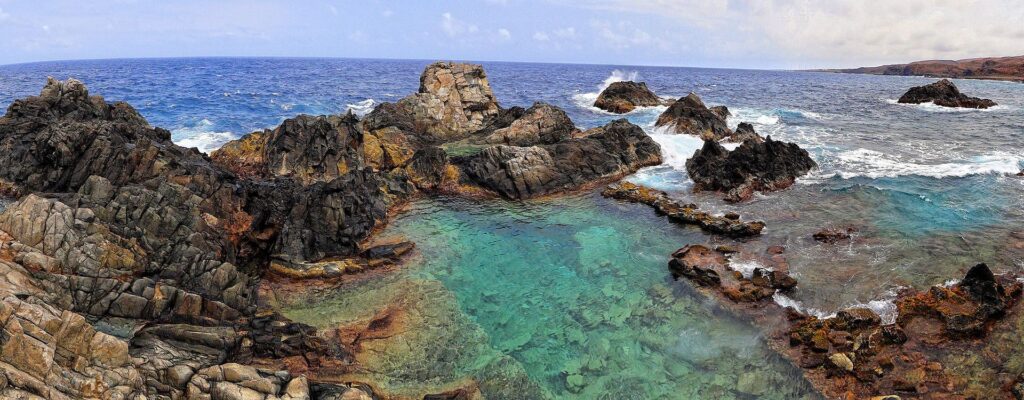
You still need the park pass. Swimming is safe only when the sea is calm, because waves can wash over the rocks, and rangers advise against swimming on rough days. Wear water shoes, since the rock is sharp and slick.
I would treat the swim as a bonus and the ride as the point. If the sea is up, the view from the rim is still worth the trip. Book the tour early in your stay, so one rough day does not use up your only chance.
Flamingo Beach
Flamingo Beach is on Renaissance Island, a private island owned by the Renaissance resort. It is one of the two exceptions to Aruba’s public-beach rule, so the way in is a day pass.
Day passes go to non-resort guests only when the resort is not too full, so a pass is never guaranteed. The price and booking rules sit on the resort’s own pass page and they change, so read the amount there for your date. Skip any seller that is not the resort itself.
The flamingos are the draw. I would book the earliest slot available and treat it as a half-day extra, not the center of the trip.
Things to Do in Oranjestad Aruba
Oranjestad is the capital, and one morning covers it. The candy-colored Dutch colonial buildings downtown are the sight, and the cruise terminal sits at the edge of town.
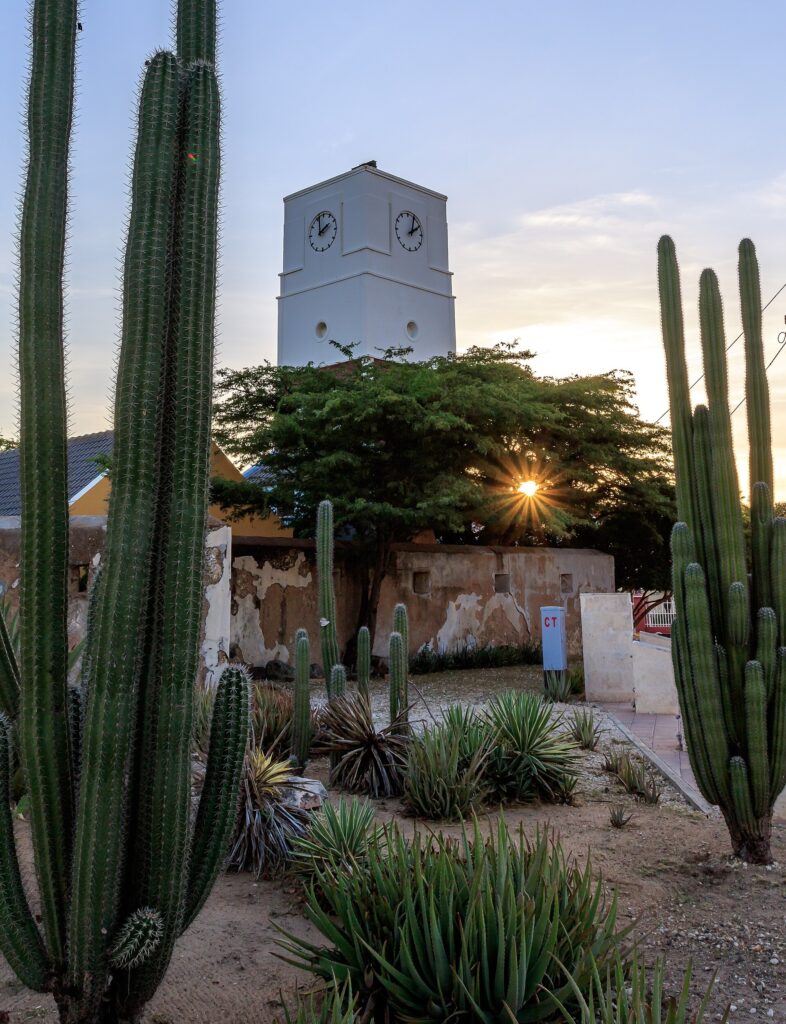
Fort Zoutman and the Willem III Tower anchor the old part of town. The tower is the photo. The National Archaeological Museum is a short stop for the island’s history.
Downtown also has jewelry, watch and designer shops. I would walk it in the morning before the heat, then spend the afternoon on a beach.
Is Aruba in the Hurricane Belt?
Aruba lies in the southern Caribbean, well south of where most Atlantic storms pass, but no island is hurricane-proof.
NOAA’s National Hurricane Center lists the Atlantic hurricane season as June 1 through November 30, with the peak on September 10.
Aruba’s weather service says considerable damage from a tropical cyclone passing just south of the island comes only about once every 100 years. Storms passing to the north can still cause beach erosion and coastal flooding. The same service puts the dry season at February through June and the rainy season at September through January.
Treat a hurricane-season trip as a lower-risk bet, not a safe one. Buy travel insurance before a named storm exists, and read your cruise line’s storm policy if you arrive by ship. Our guide to the best time to cruise the Caribbean covers the cruise side.
Aruba ED Card
Every traveler to Aruba, including infants, must complete the online ED card before arrival. You can file it up to seven days before you land, and the form itself is free.
On the date checked, Aruba’s tourism site lists a $20 sustainability fee for visitors arriving by air, paid through the same online form. Visa, Mastercard and Discover work, and cash does not. Residents, children under 8, same-day transit visitors, crew and repeat visitors in the same calendar year are exempt.
The State Department’s Aruba page says your passport must stay valid for your whole stay and have a blank page. You also need a return or onward ticket and proof of funds, and no visa is needed for 30 days or less. An incomplete ED card can delay or deny entry.
Aruba Sunscreen Rules
A steady easterly wind blows across the island and hides the sun. The sun is strong, the sand and water reflect it, and shade does not stop the burn.
Aruba bans sunscreen containing oxybenzone, so check the label before you pack. Use a mineral, reef-safe sunscreen at SPF 30 or higher, and reapply every couple of hours and after swimming.
Pack light on clothes. A beach island needs swimsuits, a cover-up and one nice dinner outfit, and the rest is over-packing. Our Caribbean packing list has the full version.
Aruba FAQ
Are Aruba Beaches Public?
Yes. Every beach in Aruba is public, except the private islands, Renaissance Island and De Palm Island. Resort chairs and palapas are for guests, but you can use any empty public palapa with your own chair.
Does Aruba Take US Dollars?
Yes. US dollars are widely accepted across the island, and you may get florins back as change. Some businesses refuse large US bills, so carry small ones.
Do You Need a Car in Aruba?
Not strictly, but a rental car is the easiest way to get around. Taxis charge a fixed price per cab, and you call ahead instead of hailing one on the street. If you skip the car, book a tour for Arikok and the Natural Pool.
Do You Need a Passport for Aruba?
Yes. US citizens need a valid passport that stays valid for the whole stay, plus a completed ED card. No visa is needed for visits of 30 days or less.
Prices are approximate, current as of publication, and change frequently — confirm the latest price with the retailer before buying.
Published October 19, 2026.
Photo credits: (1) featured, Eagle Beach on Aruba with white sand and… — Edprada, CC BY-SA 4.0, via Wikimedia Commons; (2) Wind-bent fofoti tree on Eagle Beach, Aruba — Jason Boldero from UK, CC BY 2.0, via Wikimedia Commons; (3) Palm Beach on Aruba with white sand and… — Bjørn Christian Tørrissen, CC BY-SA 3.0, via Wikimedia Commons; (4) The Conchi natural pool ringed by rock on… — Bjørn Christian Tørrissen, CC BY-SA 3.0, via Wikimedia Commons; (5) Willem III Tower at Fort Zoutman in… — Hubert de cuba, CC BY-SA 4.0, via Wikimedia Commons.