

Some links on our site may earn us a commission at no extra cost to you. Learn more.
Mosquito Bay on Vieques, Puerto Rico, is the brightest bioluminescent bay in the world. Guinness World Records has the title to prove it. Paddle a kayak across it on a dark, moonless night, and every stroke lights up blue-green in the water. The only way in is a guided kayak or boat tour, launching after dark from the town of Esperanza.
I’ve made the boat ride out to Vieques more than once. The bio bay is the reason every time. Going out on the water in the dark feels backwards for a vacation, right up until the water starts glowing around your paddle. It’s worth the ferry wait, the bug spray, and the person in your group swearing that was a fish and not just the water lighting up.
Mosquito Bay Vieques
Mosquito Bay sits on the south shore of Vieques. It’s a narrow lagoon, ringed by mangroves, with a single channel out to the open ocean. That narrow mouth is the whole trick. It traps a dense concentration of a bioluminescent plankton called Pyrodinium bahamense, and the mangroves feed it with nutrients from their own decaying leaves. Guinness World Records lists Mosquito Bay as the brightest bioluminescent bay on the planet, crediting it with counts as high as 700,000 of the organisms in a single gallon of water.
By day, the bay looks like any other quiet mangrove cove. Flat water, muddy banks, egrets picking through the shallows. The show only starts after sunset. Every disturbance triggers a flash of blue-green light: a paddle stroke, a fish, a hand trailing off the side of the kayak. On the darkest nights, the wake behind a moving kayak glows like a comet tail.

Vieques Bioluminescent Bay Kayak Tours
Every bio bay tour on Vieques runs the same basic way. A van picks you up in Esperanza after dark and drives you to the launch point. A guide leads a small fleet of kayaks out for roughly an hour of paddling. Two of the island’s longest-running operators, Abe’s Snorkeling & Biobay Tours and Black Beard Sports, both price the trip at $70 per adult.
Abe’s runs a roughly two-hour outing. Kids ages 4 to 11 pay $50, and infants ride free. Black Beard’s version takes closer to two and a half hours door to door. It uses tandem kayaks with clear plastic bottoms, so the glow shows up beneath you as well as around your paddle. Groups cap at 10 guests, with a minimum age of 5.
| Operator | Kayak Type | Total Time | Price (Adult) |
|---|---|---|---|
| Abe’s Snorkeling & Biobay Tours | Single/tandem | ~2 hours | $70 |
| Black Beard Sports | Tandem, clear-bottom | ~2.5 hours (about 1 hour on the water) | $70 + tax |
Book ahead in season. Tours sell out days in advance around holidays. Every operator closes shop around the full moon, too, since a bright sky washes out the glow anyway. Neither company lists snorkeling or swimming as part of the bio bay tour. You stay in the kayak the whole time.
Can you swim in a bioluminescent bay?
No, not at Mosquito Bay. Swimming has been off-limits for years. Every operator on Vieques enforces it, and you stay in the kayak from launch to landing. Sunscreen, bug spray, and even the oil on human skin can harm the dinoflagellates that make the bay glow. A lagoon this small can’t absorb much of that before the show dims for everyone.
Wash off sunscreen and repellent before your tour rather than skip them entirely. Mosquitoes in the mangroves are real, and so is the Caribbean sun during the daytime half of a Vieques trip. Open-water swims with bioluminescence exist elsewhere on the Puerto Rico coast. That’s a different tour, on a different bay, not this one.
Best Time to See Bioluminescence
Go on the darkest night you can book. The dinoflagellates glow at roughly the same intensity all year. Moonlight is what washes the effect out, so nights around the new moon look best. Abe’s Snorkeling & Biobay Tours pauses trips for about three nights each month around the full moon. The bay is simply too bright then for the glow to stand out.
Outside that window, timing matters less than most visitors assume. A clear, moonless sky helps, and so does a light breeze. A hard rain earlier that day can cloud the water and mute the glow for a night or two. The season barely matters, since the plankton aren’t migratory. Plan around the moon calendar first, and hurricane season second.
How to Get to Vieques
Vieques sits about eight miles off Puerto Rico’s east coast. There’s no bridge. You arrive by passenger ferry or small plane. Puerto Rico Ferry, the company that runs the route, lists the one-way adult fare from Ceiba at $2. One small carry-on bag is included, and coolers, folding chairs, and surfboards cost extra. The crossing itself takes about 25 minutes, though the terminal asks passengers to arrive a full hour before departure.
Flying costs more but saves the terminal wait. Cape Air and Vieques Air Link both fly short hops between San Juan’s airports and Vieques’ small Antonio Rivera Rodríguez Airport. Most flights land in well under 30 minutes. Either way, you’ll land or dock in or near Isabel Segunda or Esperanza, the island’s two towns. Most bio bay tours pick guests up from Esperanza.
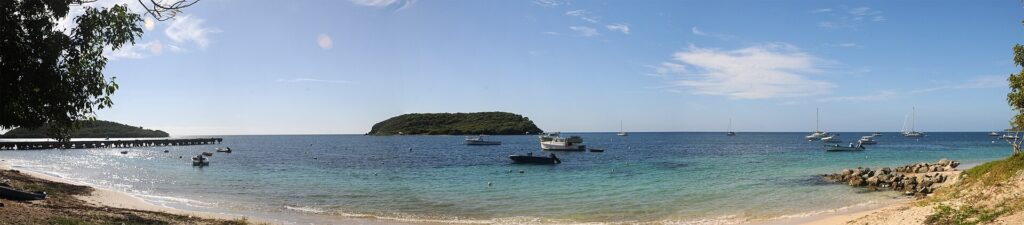
Wild Horses in Puerto Rico
Vieques is one of the only places nearby where you’ll see horses just standing in the road. They aren’t a park attraction. They belong to island residents, and grazing land is scarce, so owners let them roam rather than fence them in. You’ll spot them cropping grass along the main road. Some stand chest-deep in the surf at beaches like Playa Negra, unbothered by anyone driving past.

Treat them like the livestock they are, not like park wildlife. Don’t feed them. Don’t approach one with a foal close by. Give them the right of way on the road, the way you would a slow-moving truck. A horse on the pavement at dusk is a real hazard. Driving Vieques after dark means watching for them as much as for potholes.
Vieques National Wildlife Refuge
More than half of Vieques belongs to the U.S. Fish and Wildlife Service as the Vieques National Wildlife Refuge. The Navy used the land for bombing practice and training for decades. It transferred the land in 2001 and 2003, and the refuge now runs just over 18,000 acres, by the agency’s own count. That history is why so much of the coastline is still undeveloped. There’s no entrance fee, no gate hours posted, just sand and scrub past the boundary.
Red Beach (Caracas), Blue Beach (La Chiva), and Playa Grande are the best-known refuge beaches. Unpaved roads off the island’s east end lead to all three. The refuge keeps visitors on marked roads and beaches for a real reason. Decades of ordnance testing left unexploded material in parts of the interior. The areas still being cleared stay closed to the public, by land or by sea.
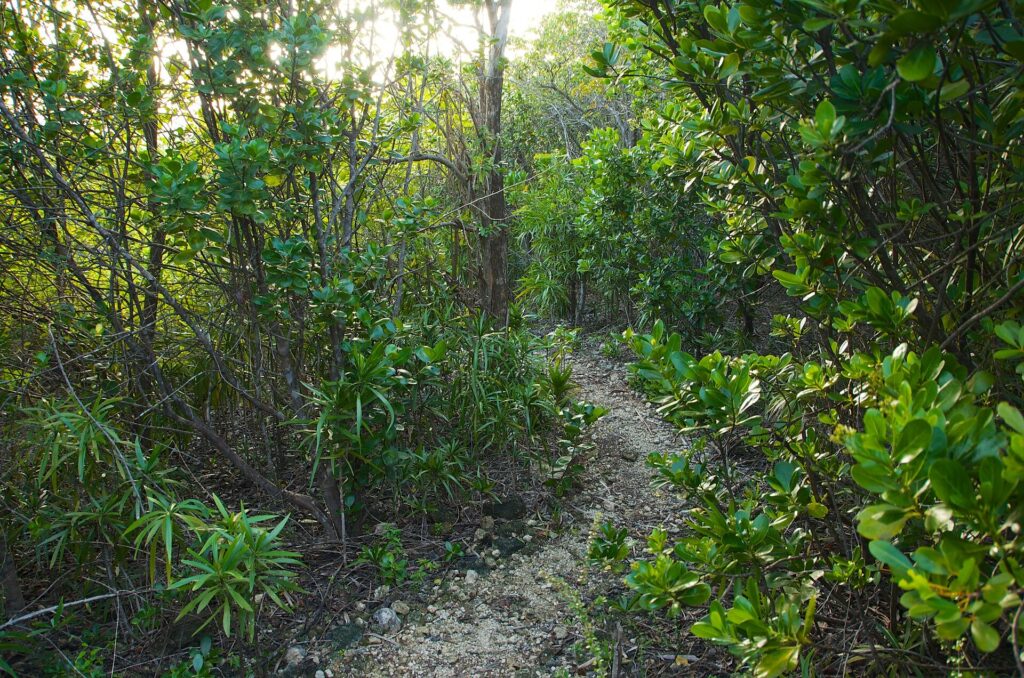
Bring your own shade, water, and a full tank of gas. There’s nothing to buy once you’re inside the refuge gates. Cell service gets spotty toward the east end, too. A rental Jeep earns its keep here. The roads out to the far beaches are unpaved and pitted, and a low sedan will bottom out on them.
Is Vieques worth visiting?
Yes. Even setting the bio bay aside, I’d go back for the beaches and the quiet alone. Add a night on the water that genuinely looks like something out of a nature documentary, and it’s an easy add-on to a longer Puerto Rico trip. It isn’t a place to rush, though. Leave a full day for beaches and the horses. Don’t book your only bio bay tour for your last night, in case weather or a full moon pushes it back.
Do you need a passport to visit Puerto Rico?
No. Puerto Rico is U.S. territory. A valid government-issued photo ID is all a U.S. citizen needs to fly there and back, the same as flying to Miami or Orlando. Vieques needs no separate documentation beyond that. The ferry and the small commuter flights both treat it as domestic travel.
How long does the Vieques ferry take?
About 25 minutes each way on the passenger ferry from Ceiba. Add the check-in window on top of that. The terminal asks passengers to arrive an hour before departure, so budget closer to 90 minutes door to dock, longer if the line is out to the parking lot.
Can you drive to Vieques?
No. There’s no bridge or tunnel, and you can’t drive your own car over from mainland Puerto Rico. The passenger ferry carries people only. A separate, smaller cargo ferry carries vehicles, and it runs far less often. Most visitors just rent a car, ideally something with clearance, once they’re already on the island.
How many days do you need in Vieques?
Two full days covers the highlights. Spend one on beaches and the wildlife refuge, and build the other around a night bio bay tour. Three or four days gives you a buffer if the tour gets pushed back for weather or the full moon. That extra time also leaves room to actually relax, instead of running from spot to spot.
What to Pack for Vieques
Pack the way you would for a Florida Keys beach trip, plus real bug spray for the mangroves. Bring reef-safe sunscreen, water shoes for rocky patches of shoreline, and a dry bag for the ferry ride. Our Caribbean packing list covers most of it. The layering advice in our beach vacation packing list holds up just as well on a Puerto Rico island. Flying carry-on only to fit on a small commuter plane? Check our carry-on only packing list before you pack the bag.
Prices are approximate, current as of publication, and change frequently — confirm the latest price with the retailer before buying.
Published October 4, 2026.
Photo credits: (1) featured, A quiet, undeveloped beach inside Vieques… — U.S. Fish and Wildlife Service, U.S. Government work, public domain, via Wikimedia Commons; (2) A beach on the north side of Vieques… — Haakon S. Krohn, CC BY-SA 3.0, via Wikimedia Commons; (3) The waterfront malecon in Esperanza, the… — David Broad, CC BY 3.0, via Wikimedia Commons; (4) Free-roaming horses grazing on a beach on… — Rar285, CC BY-SA 3.0, via Wikimedia Commons; (5) A trail through the coastal forest on… — Edgar Torres, CC BY 3.0, via Wikimedia Commons.