

Some links on our site may earn us a commission at no extra cost to you. Learn more.
Flamenco Beach sits on the north shore of Culebra, a small island off Puerto Rico’s east coast. You can only reach it by ferry or small plane. The beach itself is a mile of white sand curling around a turquoise bay, with two rusted Army tanks sitting right on the sand. Most people see it in a single long day. Camping on the sand turns it into something else entirely. The land around it belongs to the Culebra National Wildlife Refuge, which the U.S. Fish and Wildlife Service dates to 1909, making it one of the oldest refuges in the country.
I’ve made this same trade more times than I can count around the Caribbean. Burn half a travel day on a slow ferry or a nine-seat plane, and land on a beach nobody off a cruise pier ever bothers with. Culebra runs on that math. Bring cash. Check the ferry schedule twice. And don’t book anything for the same afternoon you land — island time isn’t a cliché here, it’s the ferry’s actual timetable.
How to Get to Flamenco Beach
Culebra has no bridge and no airport built for a real jet. Getting to Flamenco Beach starts with getting to the island itself. Almost everyone comes through Ceiba, on the mainland’s east coast, either on the passenger ferry or a short flight. Puerto Rico is a U.S. territory, so U.S. citizens don’t need a passport to make the trip.
| Option | Cost | Time |
|---|---|---|
| Passenger ferry, Ceiba to Culebra | $2.25 adult one-way; $1 ages 4–12 and 60–74; free 75+ | About 1 hour 30 minutes |
| Cape Air flight, San Juan to Culebra | From about $89 one-way | Under 30 minutes in the air |
| Shared van, dock to Flamenco Beach | About $5 cash, each way | 10–15 minutes |
| Golf cart rental, per day | Roughly $50–$90 plus deposit | All day |
Puerto Rico Ferry runs the route and lists the one-way adult fare at $2.25 on its own rates page. Kids and seniors pay less. The ride takes about an hour and a half. Coolers, beach chairs, and surfboards each need their own ticket. Cape Air flies the San Juan-to-Culebra hop several times a day in small nine-seat planes. Fares start around $89 one-way on the airline’s own booking page and climb on busier dates.
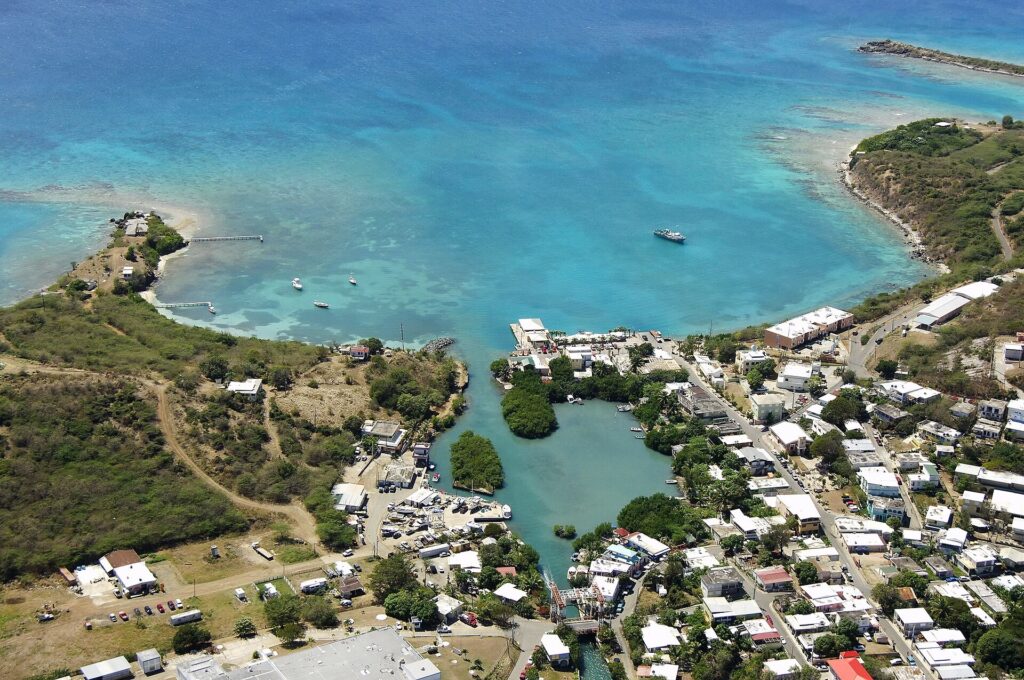
Neither the ferry dock nor the airport sits at Flamenco Beach. Both land in Dewey, the island’s only real town, a couple of miles short of the sand. A shared van waits outside the ferry terminal for exactly this run. It charges around five dollars in cash, each way. Renting a golf cart at the dock solves the same problem, and lets you reach Culebra’s other beaches too.
The Tanks of Flamenco Beach
Two rusted tanks sit on the sand near the north end of the beach. Decades of graffiti cover them, repainted almost as often as the tide comes in. They look wrong on a beach this pretty. That’s the point — they’re the clearest sign of what Culebra used to be.
The U.S. Navy used Culebra for bombing and shelling practice for decades, and Flamenco Beach was part of the range. Islanders pushed back hard. After years of organized protest, the Navy agreed to leave, and by 1976 the military was gone for good, according to the Fish and Wildlife Service’s own account of the refuge. The equipment left behind was too heavy and too expensive to haul off the beach. So it stayed — a training tool the island turned into a landmark instead.
Walk up and climb on them; that’s what everyone does. Just watch your footing on the rusted edges. And keep an eye on kids climbing barefoot — the metal gets hot fast in direct sun. Locals repaint the hulls for holidays and events, so whatever artwork you see this visit will likely be gone by the next one. Nobody treats it as something to preserve exactly as-is.

Camping at Flamenco Beach
A public campground runs right on the sand at the beach’s east end, under the Culebra municipal campground office. Puerto Rico’s Department of Natural and Environmental Resources lists the Municipio de Culebra as the beach’s owner in its own coastal boundary records, which is who ultimately sets the rules here. Camping is the reason people who’d otherwise treat this as a day trip end up staying two or three nights instead.
The campground office prices a site at $35 per tent per night, up to six people. Campers with disabilities get a reduced rate. On top of that there’s a small per-person beach admission and a $5 parking charge if you’re driving in. Reservations go through the campground office directly by phone, not an online system, and they fill up well ahead of Semana Santa, July, and summer weekends. Call ahead rather than show up and hope.
Facilities are basic on purpose: cold showers, no electricity, and a strict pack-in-pack-out rule for trash. Open campfires aren’t allowed. Glass bottles aren’t allowed anywhere on the beach. Quiet hours start at 11 p.m. Bring your own tent, stakes that can handle sandy ground, and more drinking water than you think you need. There’s nowhere on-site to buy it. A private operator on the island also runs platform tents with real beds nearby, for a lot more money, if the cold showers and bare ground aren’t for you.
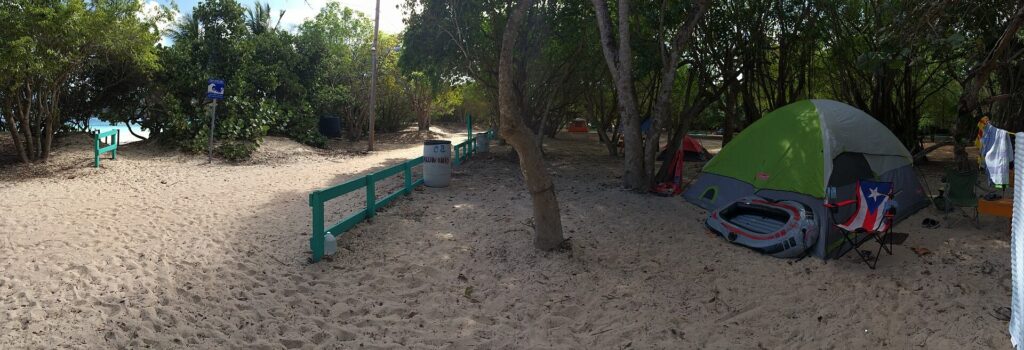
Waking up at Flamenco with nobody around but the other campers is worth the cold shower. If a packed camping checklist already travels with you, this trip barely changes it. Swap the bear canister for extra sunscreen and you’re set.
Carlos Rosario Snorkeling
Flamenco itself isn’t a snorkeling beach — the sand is the draw there, not the reef. For that, walk to Carlos Rosario. A trail leaves from the back left corner of the Flamenco parking lot, marked by a chain-link gate. It climbs over a hot, exposed hill, then drops down to a smaller horseshoe cove on the other side. Figure just under a mile and about thirty minutes each way, with real shade only near the end.
A barrier reef wraps most of the cove. The water inside it stays calm enough for weak swimmers. The outer edge, out toward the buoys, is where the better coral and bigger fish show up. Expect fan corals in purple and yellow, schools of small reef fish, and a decent shot at a sea turtle if you’re patient. Culebra’s whole coastline sits inside a marine reserve, so nothing gets touched, fed, or taken.
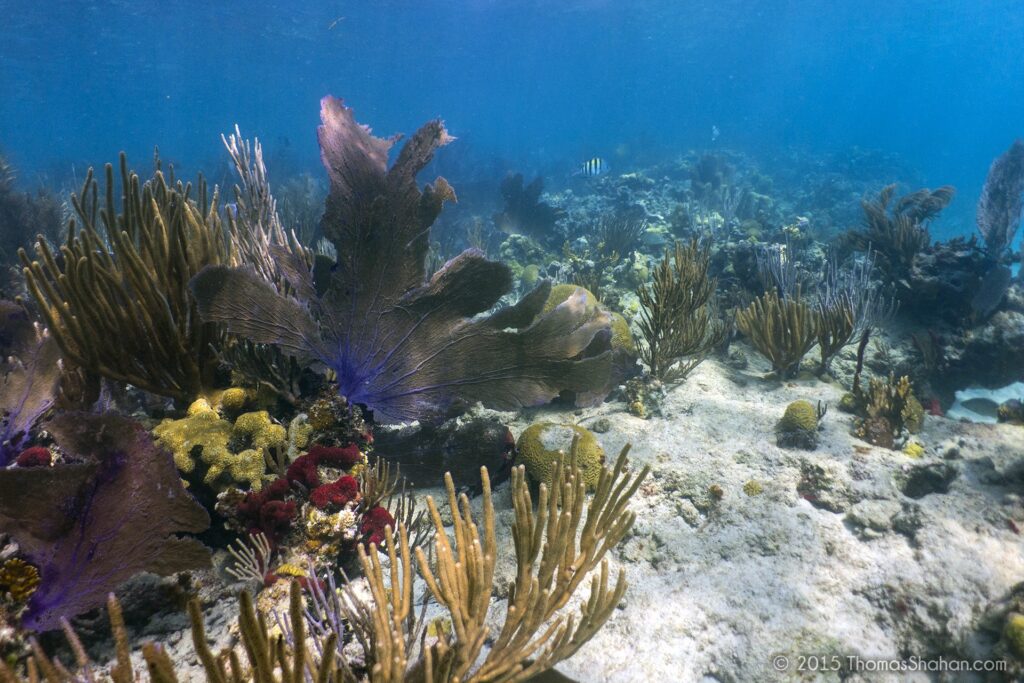
Bring your own mask and fins; there’s no rental shack out there. Reef-safe sunscreen matters more here than almost anywhere else I’ve snorkeled. This reef sees far less boat traffic and sunscreen runoff than the big Caribbean cruise stops, and it shows in how healthy the coral looks. The trail has old ordnance-warning signs left from the Navy years. Stay on the marked path and you’re fine. Just don’t go wandering into the brush on either side.
How Much Is a Golf Cart on Culebra?
Culebra is small enough to see most of in a day, and a golf cart is how almost everyone not on foot gets around it. Rental companies cluster near the ferry dock and airport, Carlos Jeep Rental among the most established. Rates run roughly $50 to $90 a day, depending on the company and how many seats the cart has. Plan on a refundable security deposit too, usually a few hundred dollars. You’ll want a valid driver’s license and need to be at least eighteen. Book ahead in high season — carts sell out on the same summer and holiday weekends the campground does.
Carts handle paved roads fine but bog down fast in soft sand, so a few beaches on the far side of the island don’t allow them at all. For a Flamenco day trip that’s not an issue. The road in is paved the whole way, and the lot at the beach has plenty of cart parking. Pack a beach bag the way you would for any Caribbean day — the cart handles the rest.
Is Flamenco Beach worth it?
Yes, and it’s not close. I’ve been to a lot of beaches people call the best in the Caribbean. Flamenco earns the label more honestly than most. The sand is fine and bright white. The water goes from clear to deep turquoise with no rocky drop-off in between. And there’s nothing built up around it to get in the way of the view.
A day trip covers the beach well: a few hours in the water, lunch from one of the food trucks near the entrance, a look at the tanks, then the ferry or flight back before dinner. Overnighting is the better version if you can make the timing work. Crowds thin out fast after the last afternoon ferry departs. The beach at sunrise, before the day-trippers arrive, is a different place entirely.
Skip it if you’re short on time in San Juan or Fajardo and can’t spare most of a day on transit alone. Flamenco rewards people willing to build a slow travel day around it, not people trying to squeeze it between other stops.
Prices are approximate, current as of publication, and change frequently — confirm the latest price with the retailer before buying.
Flamenco Beach Facts
A few questions come up before almost every first trip out here.
How to get to Flamenco Beach Culebra?
Take the passenger ferry from Ceiba, or a Cape Air flight from San Juan, to Culebra’s airport. From there it’s a shared van, taxi, or golf cart the rest of the way from Dewey. There’s no direct ferry or flight straight to the beach itself.
Is Flamenco Beach good for snorkeling?
Not really, on its own. The sandy bottom offshore doesn’t have much reef. Carlos Rosario, a roughly thirty-minute walk from the Flamenco parking lot, is where the real snorkeling is.
How much is the ferry to Culebra?
Puerto Rico Ferry charges $2.25 one-way for an adult on the Ceiba-to-Culebra route. Kids and seniors pay less.
Is Culebra worth visiting?
Yes. It’s a quieter, less developed alternative to the bigger Caribbean islands. The whole place is built around Flamenco and a handful of other beaches, with none of the resort strip you find elsewhere.
Do you need a car on Culebra?
Not for a single day at Flamenco — a shared van or taxi covers it. For more than a day, or for reaching quieter beaches spread across the island, a rented golf cart is worth it.
Published October 4, 2026.
Photo credits: (1) featured, Aerial view of the horseshoe-shaped… — TikiVerdiales, CC BY-SA 3.0, via Wikimedia Commons; (2) Aerial view of Dewey, Culebra, showing the… — Steven595, CC BY-SA 4.0, via Wikimedia Commons; (3) One of the rusted, graffiti-covered… — JohnnyPicture, CC BY-SA 3.0, via Wikimedia Commons; (4) Tents set up in the camping area at… — Efeliciano ms, CC BY-SA 4.0, via Wikimedia Commons; (5) Colorful coral reef underwater off the… — Thomas Shahan, CC BY 2.0, via Wikimedia Commons.