

Some links on our site may earn us a commission at no extra cost to you. Learn more.
The Oahu North Shore is two different places depending on the month. Summer water is calm enough for swimming and snorkeling, while winter swells turn the same beaches into places to watch from the sand. This guide covers the seasons, the surf-advisory numbers, the snorkeling rules, the turtles, Haleiwa, Waimea Valley and how to do the whole stretch as a day trip from Waikiki.
We have travelled Hawaii and plenty of other surf coasts with nieces and nephews along, and one rule holds up everywhere: the ocean sets the plan. Reading the day’s conditions before you pick a beach matters more here than anywhere else on the island. That is why the seasons come first. For the rest of the island, our Oahu itinerary covers the southern and eastern stops.
Best time to visit Oahu North Shore
Summer is the time for swimming and snorkeling, and winter is the time for watching big surf. The Hawaii Tourism Authority’s Waimea Bay page, checked on October 3, 2026, says the bay is famous for 30-foot waves in winter, and that in summer the water calms considerably and suits swimming, snorkeling and diving.
The same agency’s regional page frames winter as November through February and the calmer season as May through September. March, April and October sit between those two windows. Any of them can go either way, so I would check the forecast the night before and again at breakfast.
A calm morning does not promise a calm afternoon, and a flat bay does not mean the next beach over is flat too. Pack for sun and for a wet car seat; our Hawaii packing list and beach vacation packing list cover the basics.
Oahu North Shore beaches
The famous beaches run in a line along Kamehameha Highway, and each one behaves differently by season. The table below sorts the main stops by what they are, when they suit you and what the official pages say about access. Treat it as a starting order, not a fixed route.

| Stop | What it is | Season it suits | Access, as the page states |
|---|---|---|---|
| Waimea Bay | Crescent beach and bay | Summer for swimming and snorkeling; winter to watch | gohawaii.com lists parking, restrooms, showers and a lifeguard |
| Ehukai Beach Park (Banzai Pipeline) | Shallow-reef surf break | Winter to watch from the sand; summer water is calmer | Check in with the lifeguard before going in, per gohawaii.com |
| Sunset Beach | Long beach on the surf coast | Winter to watch; ask a lifeguard in summer | Follow the beach signs and ask the lifeguard, per Honolulu Ocean Safety |
| Pupukea (Shark’s Cove) | Rocky shoreline inside a marine reserve | Calm summer days for snorkeling | Reserve rules from the state Division of Aquatic Resources |
| Haleiwa town | Surf shops, galleries and shave ice | Year-round | Town streets; check parking below |
| Waimea Valley | Botanical valley with a waterfall | Dry days; swim status set daily | Seasonal hours; closed Mondays in fall, per its site |
| Polynesian Cultural Center, Laie | Cultural park near the north end | Year-round | Open 12 to 9 p.m.; closed Sundays and most Wednesdays, per its site |
A pattern shows up once you read the pages side by side. The beaches that are fine in July are the ones that demand the most respect in January. If a stop is a swimming beach in summer, assume it is watch-only in winter until a lifeguard tells you otherwise.
Oahu North Shore in winter
I would not get in the water on a winter day the advisory is up. The water is stronger than it looks from the sand, and the big breaks sit over shallow reef. The tourism authority’s Ehukai page says winter swells there break on shallow reef, making it dangerous for all but the best and bravest surfers.
Winter is still a fine time to visit if you come to watch. Pro surf contests are held at Ehukai in the winter months, according to that same page. Stand well back from the waterline, keep an eye on the set of waves behind the one you are watching, and never turn your back on the water.
What does a high surf advisory mean?
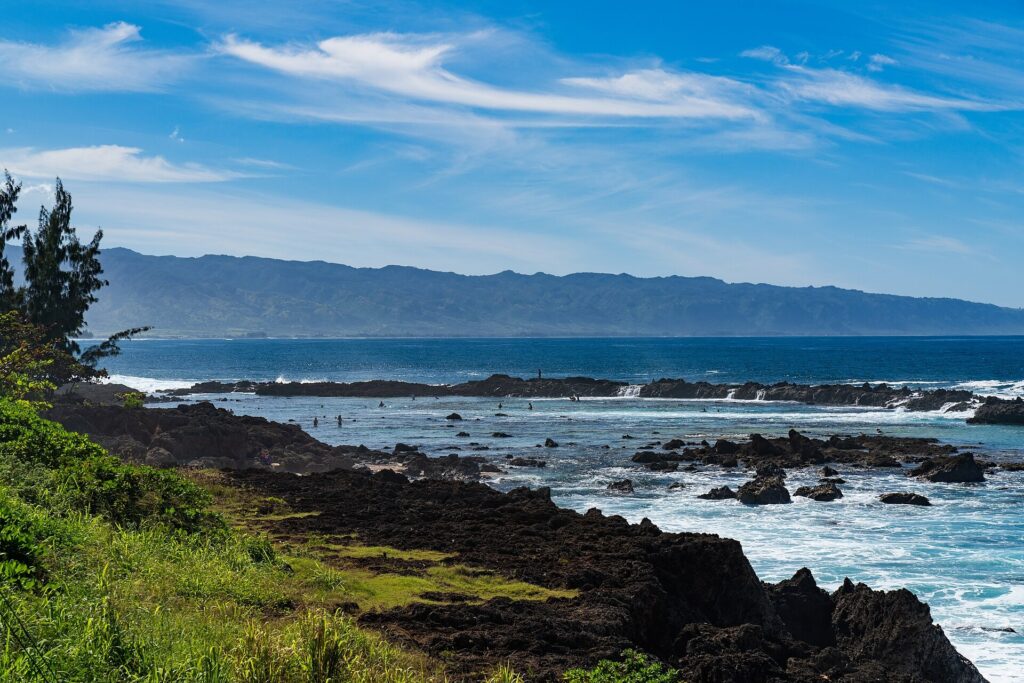
A high surf advisory is the National Weather Service’s alert for dangerous surf. On NWS Honolulu’s criteria page, north-facing shores reach advisory level at 15 feet and warning level at 25 feet. Those figures are full-face heights, measured from the trough to the crest of the wave.
The page lists thresholds rather than a definition, so read the text of the advisory in the forecast. I would treat any advisory as a no-swim day on this coast. A warning is a reason to enjoy the view from the parking lot, or to change the plan.
Hawaii beach signs
Honolulu Ocean Safety describes 14 different warning signs on its beach sign page. The ones you will meet most are high surf, dangerous shorebreak, rip currents and no swimming. For the no-swimming sign the page is blunt: do not enter the water when it is posted.
Rip currents are narrow channels of fast water that pull away from shore. The page advises swimming parallel to the beach to get out of one. The department says it staffs 44 towers around Oahu, and it suggests the city’s HNL Alert app for lifeguard-tower closures and unusual ocean conditions.
Oahu North Shore snorkeling
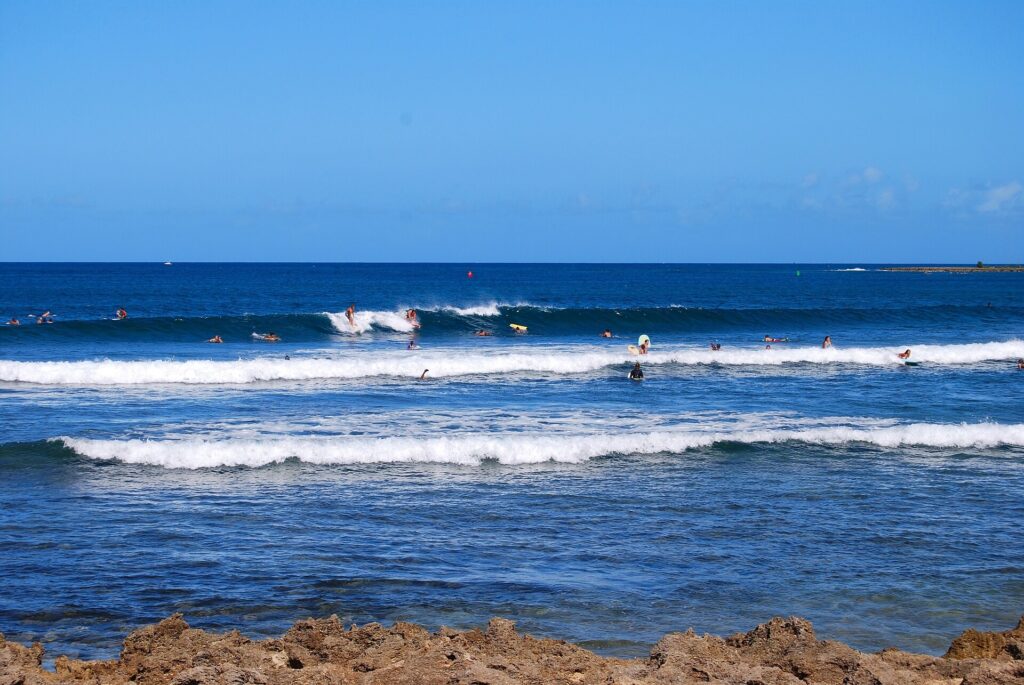
Snorkeling here is a calm-day, summer-season activity, centered on the Pupukea marine reserve. The Division of Aquatic Resources runs the Pupukea Marine Life Conservation District, and its rules page spans the northern coast from the high-water mark seaward. Signs at each district describe its boundaries and regulations.
The rules are short. You may not fish for, take, injure or remove marine life, or take or alter any geological feature. You may not carry a device that could take marine life into the water, and you may not put food or other substances in the water to attract fish. The page makes narrow exceptions for hand-gathering two kinds of seaweed and for shore fishing inside Waimea Bay.
I would snorkel only on a flat day and leave the water if the swell builds. Rocky entries get slick when waves surge over them. A mask, a snorkel and patience do more here than any gear list, though our beach packing list covers reef-safe basics.
Sea turtles Hawaii
Stay at least 10 feet (3 meters) from a sea turtle, on land and in the water. That is the distance in NOAA Fisheries’ Hawaii wildlife viewing guidance, last updated on February 23, 2026. The page adds that you should never touch, chase or feed them.
Turtles also rest on beaches, and the page asks you not to disturb turtles or monk seals that are sleeping on the sand. Monk seals get a bigger buffer, at least 50 feet (15 meters). Both are protected by state and federal law.
Oahu North Shore Haleiwa
Haleiwa is the town on the coast road, and it is the natural base for the day. The tourism authority’s Haleiwa page puts it about one hour from Waikiki by car. It lists surf shops, boutiques, art galleries, food trucks and shaved ice, plus the nearby beaches of Waimea Bay, Ehukai and Sunset Beach.
The shave-ice habit here is half the point of the stop. I would pick whichever stand has the shorter wait, order after your beach time and eat it in the shade. No ranking beats a cold treat at the end of a salty morning.
Waimea Valley
Waimea Valley is a walk to a waterfall, and the swim is not guaranteed. Waimea Valley’s admission page, checked on October 3, 2026, lists adult admission at $26, senior and student at $20, and children ages 4 to 12 at $18. The Hawaii-resident (kamaʻāina) and military adult rate is $10.
Hours change by season. The same page lists Tuesday to Sunday, 9 a.m. to 4 p.m., closed Mondays, for October and November, while December and March run daily and summer runs daily to 5 p.m. Confirm the current schedule before you drive out.
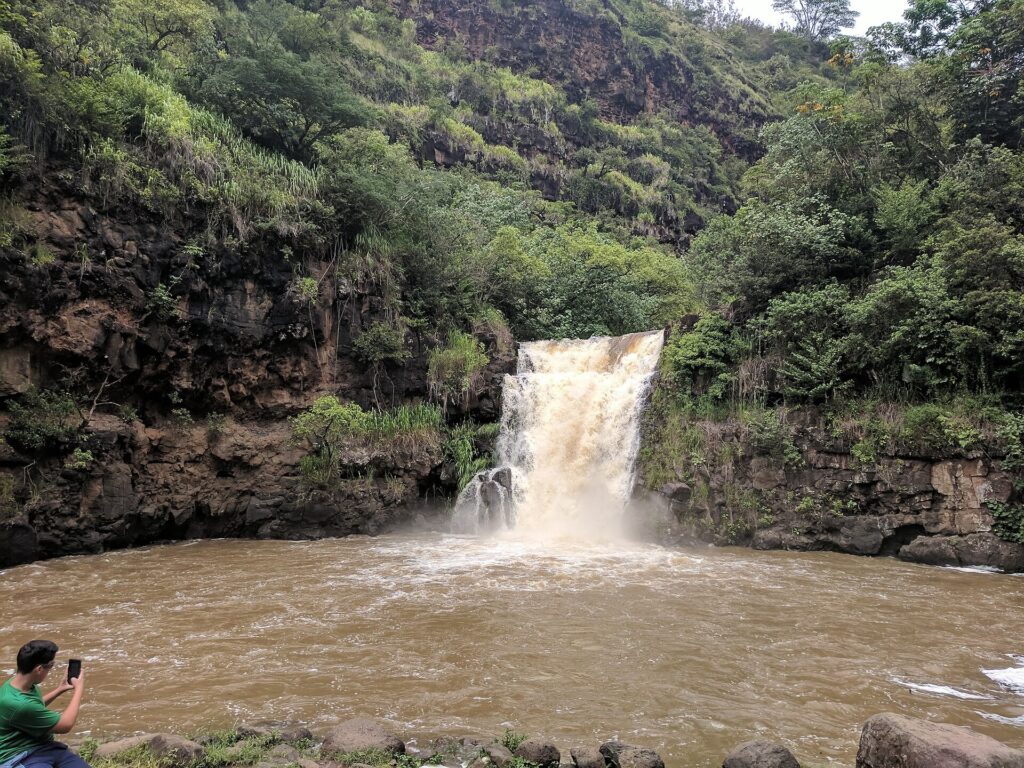
The valley’s waterfall page says swimming is decided daily by lifeguards at 9 a.m. and can close for heavy rain, strong currents, water quality, drought, lightning or severe weather. Life jackets are required for all swimmers and are provided free. Children must be supervised at all times.
Oahu North Shore from Waikiki
Plan the North Shore as a one-way loop, not an out-and-back. Kamehameha Highway is the single road along the coast, so the fewer times you drive it, the fewer chances you have to sit in traffic. Drive up to Haleiwa, work east along the coast and come home down the windward side.
That windward return matches the route of TheBus Route 60, whose timetable (effective March 1, 2026) runs from Honolulu through Kaneohe to Haleiwa, passing Laie and Kahuku. The bus has bike racks, but I would check the timetable for weekend frequency before building a day around it.
The Polynesian Cultural Center in Laie lists hours of 12 to 9 p.m., closed on most Wednesdays and on Sundays, Thanksgiving, Christmas and New Year’s Day, with experiences from $49.95 on its site. It works as a late stop on the way back.
In 2026 the state transportation department ran rockfall work on Kamehameha Highway at Waimea Bay, with a single-lane contraflow and a daytime full closure in late June. Its spring updates expected the work to finish by the end of July. Road work moves, so check the department’s site before you drive up.
Oahu North Shore parking
Waimea Valley charges $2 for one hour or a $5 flat rate for up to four hours, and parking is free after 5 p.m. Its page says beach parking is not permitted in the valley lots, and violators are towed at their own expense. Bay visitors have to use the separate beach lot instead.
Theft from cars is the other parking problem. The Honolulu Police Department’s visitor advice says to lock the doors and keep bags out of sight. It also advises against leaving belongings on the beach and recommends keeping valuables in the hotel room safe. The tourism authority adds that anything you must leave in the trunk should go in before you arrive.
Is the North Shore of Oahu worth visiting?
Yes, if you match the day to the season. Summer gives you calm bays, a snorkeling reserve and a waterfall swim when the lifeguards allow it. Winter gives you world-class surf to watch from the sand, and a reason to skip the water completely.
How far is the North Shore from Waikiki?
About a one-hour drive, per the Hawaii Tourism Authority’s Haleiwa page. Add time for parking and for slow stretches of Kamehameha Highway.
Can you swim at Waimea Bay?
In summer, yes. The tourism authority says the water calms considerably and suits swimming. In winter the same page cites 30-foot waves, so I would watch from the beach and follow the lifeguards and signs.
Is Waimea Valley open on Mondays?
Not in October and November. The valley’s 2026 schedule lists Tuesday to Sunday, 9 a.m. to 4 p.m., for those months, while December, March and summer run daily. Confirm before you go.
Can you touch sea turtles in Hawaii?
No. NOAA Fisheries says never to touch, chase or feed a turtle, and to stay at least 10 feet (3 meters) away on land and in the water.
Can you snorkel at Shark’s Cove?
Yes, on a calm day. The marine reserve rules restrict taking marine life and feeding fish rather than snorkeling, but a swell can make the rocky shoreline dangerous. I would ask a lifeguard first.
Prices are approximate, current as of publication, and change frequently — confirm the latest price with the retailer before buying.
Published October 25, 2026.
Photo credits: (1) featured, Calm summer water and sand at Waimea Bay on… — Travisthurston, CC BY-SA 3.0, via Wikimedia Commons; (2) North Shore coastline of Oahu with trees… — Diego Delso, CC BY-SA 3.0, via Wikimedia Commons; (3) Lava rock shoreline at Pupukea Beach Park… — Tony Webster, CC BY 2.0, via Wikimedia Commons; (4) Blue ocean with breaking waves over a reef… — Janine from Mililani, Hawaii, United States, CC BY 2.0, via Wikimedia Commons; (5) Waterfall and pool in Waimea Valley on… — shanstap, CC BY-SA 4.0, via Wikimedia Commons.