

Some links on our site may earn us a commission at no extra cost to you. Learn more.
Mount Rainier National Park works best as a two-to-three-day trip split by area. Paradise is the anchor, and the rest depends on which roads are open. A private vehicle pays $30 at the gate, good for seven consecutive days. The park’s fee page said on October 3, 2026 that timed entry is not required anywhere in the park. Sunrise was closed to vehicles on that date, so check road status before you leave.
We have done big national park days with nieces and nephews along. The lesson is that the drive is the plan. Rainier is a mountain with roads around it, not through it. In a normal season I would plan Paradise for early morning and Sunrise for the afternoon. The park warns of full lots and long entrance waits on busy summer weekends.
Mount Rainier National Park entrance fee
The park’s fee page lists $30 per private vehicle, $25 per motorcycle and $15 per person on foot or bike. Each is good for seven consecutive days, and children under 16 do not need a pass. The Mount Rainier annual pass is $55.
Entrances and campgrounds take cards only, so leave the cash in the car. The same page said on October 3, 2026 that timed entry reservations are not required anywhere in the park. It added that the park will not run timed entry in 2026. Our national park road trip cost guide covers the rest of a longer trip’s budget.
Mount Rainier National Park road status
Read the park’s alerts page and its road status page the morning you drive, because roads decide this trip. On October 3, 2026 the road status page was last updated September 28. It listed the Nisqually to Paradise road, Stevens Canyon Road, SR 123 and SR 410 as open. It listed Sunrise Road as closed to vehicles because of the Grand Park 2 and Wonderland Complex fires.
The alerts page, last updated September 24, said Sunrise stays closed to private vehicles for the rest of the 2026 season. It stays open to people on foot and bicycles. White River Road reopened on September 5 after the fires. Both White River Road and Stevens Canyon Road were listed as scheduled to close for the winter on October 26, date subject to change. If your trip falls after that, plan on the Nisqually side only.
Carbon River and Mowich Lake have no public access from SR 165 because the bridge is permanently closed. Grand Park area trails and sections of the Wonderland Trail were also closed on the date checked. Fire closures move fast. Treat every status here as a snapshot from that date.
Mount Rainier National Park itinerary
The table runs south side first, with the east side as the add-on. Statuses are what the park pages said on October 3, 2026.
| Area | What to do | Distance or time | Road or season note |
|---|---|---|---|
| Longmire | Museum and the Trail of the Shadows nature path | Trail is 0.7 mile | Museum hours listed as 9 am to 4:30 pm daily, May 31 through October |
| Paradise | Skyline Trail loop, Myrtle Falls, Nisqually Vista | Loop is 5.5 miles; Nisqually Vista 1.2 miles | Road may close at any time for weather; snow can linger into June or July |
| Reflection Lakes | Lakes Trail around the water | About a 3-mile loop | Stevens Canyon Road closes for winter in late October; check road status |
| Ohanapecosh | Silver Falls Trail from alternate access points | Grove of the Patriarchs closed | Visitor center and campground closed in 2026 |
| Sunrise | Emmons Vista Overlooks, Sunrise Rim Trail | 13 miles and 45 minutes from the White River Entrance | Closed to vehicles for the rest of the 2026 season |
| Tipsoo Lake | Lake and mountain view stop on SR 410 | Short stop | SR 410 listed as open on September 28; check Washington State DOT for Chinook Pass |
Day one is Longmire, Paradise and Reflection Lakes. On day two, while Stevens Canyon Road is open, follow it east to Ohanapecosh. Day three belongs to Sunrise when the road is open and to the SR 410 side when it is not.
Paradise Mount Rainier
Paradise sits at 5,400 feet and is where most people spend their first morning. The Skyline Trail loop is 5.5 miles and rated moderate to strenuous. It climbs through subalpine meadows with views of the mountain, its glaciers and the Tatoosh Range. The short version is the 1-mile route to Myrtle Falls, which the park says is wheelchair accessible with assistance.
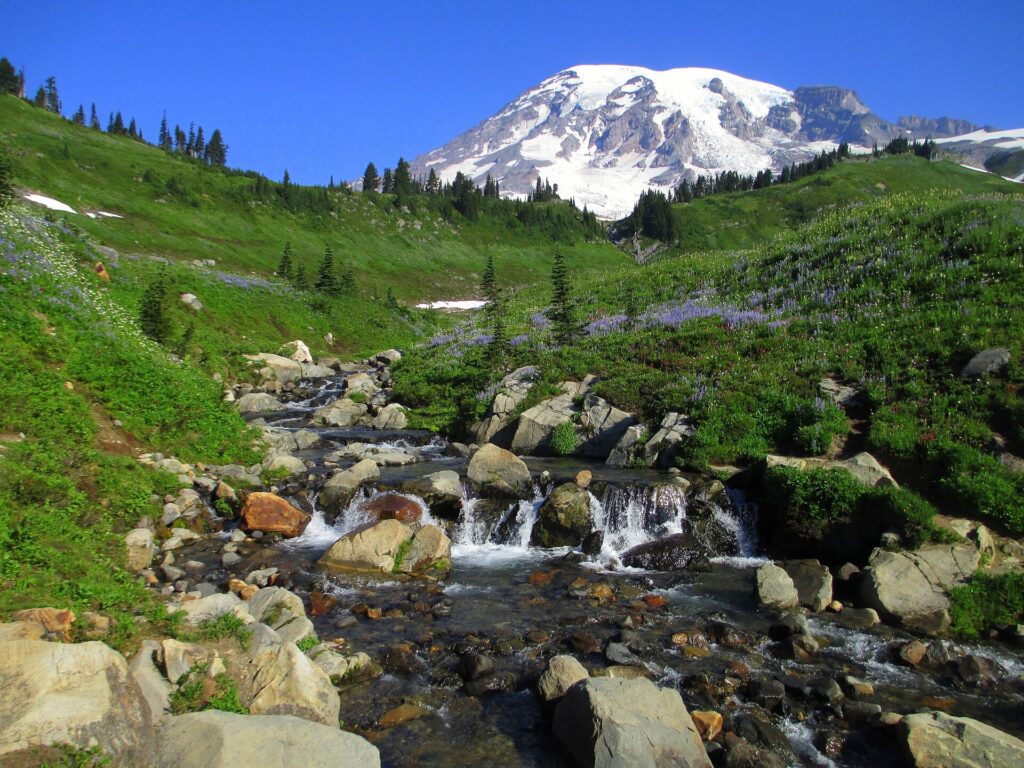
The Nisqually Vista Trail covers 1.2 miles and works with strollers. At the Henry M. Jackson Memorial Visitor Center you will find exhibits, ranger programs and a cafeteria. From mid-October its hours page lists 10 am to 3:30 pm, Friday through Monday only, until nightly winter gate closures begin, typically in late October or early November. Check the hours page before you count on it.
Reflection Lakes Mount Rainier
Reflection Lakes sit about 1.3 miles east of the Paradise Road wye on Stevens Canyon Road. Parking is beside the water. The Lakes Trail is a loop of about 3 miles. The mountain only doubles in the water when the surface is still, and that means going early.
Tipsoo Lake is the east-side equivalent, right beside SR 410 below Chinook Pass. It is a short walk for a big view. The park’s road page listed SR 410 as open on September 28. Chinook Pass closes each winter, so the Washington State DOT pass report is the page to check.

Sunrise Mount Rainier
At 6,400 feet Sunrise is the highest point you can reach by vehicle in the park. The park says the road usually opens in late June or early July. It closes in late September to early October. The visitor center runs from early July to early September. The Emmons Vista Overlooks hike is 1 mile and starts on the south side of the parking area.
This season is the exception. On October 3, 2026 the road status page said Sunrise Road was closed to vehicles until further notice because of the fires. The alerts page said it stays closed to private vehicles for the rest of 2026. If that holds, Sunrise is a plan for another year. The drive from the White River Entrance to Sunrise is 13 miles and about 45 minutes in a normal season.
Ohanapecosh Mount Rainier
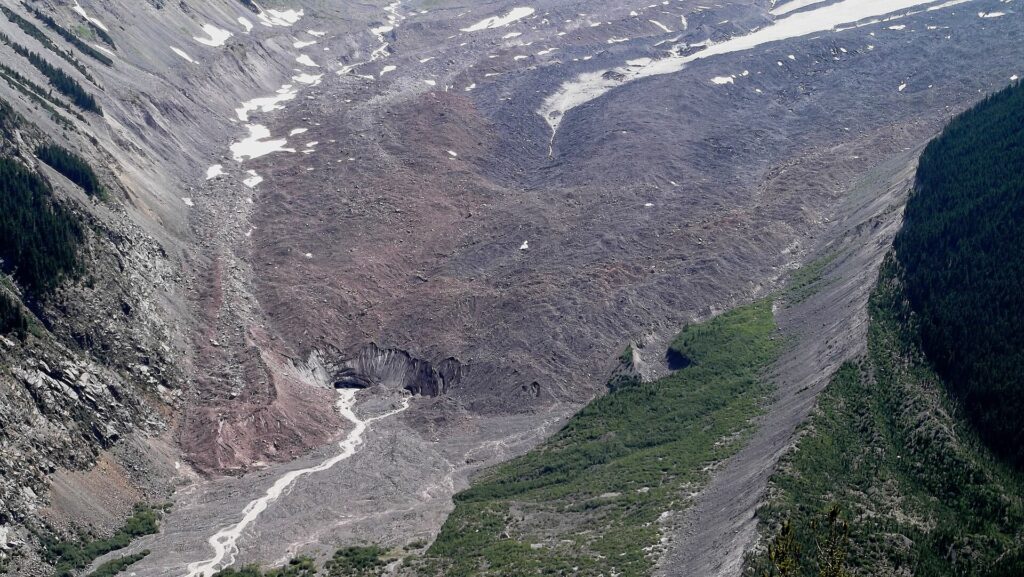
The Ohanapecosh page, last updated April 9, 2026, said the Grove of the Patriarchs was closed. Flooding in November 2021 damaged its suspension bridge. The alerts page repeated that the Grove is closed to all public entry. The Grove parking lot, restrooms and the Eastside and Silver Falls trails keep their normal seasonal access.
Both the Ohanapecosh visitor center and campground were listed as closed for 2026, with the campground rehabilitation continuing through November. Silver Falls Trail was partly accessible from alternate points on Stevens Canyon Road and SR 123. It cannot be hiked as a loop during the construction closure. Box Canyon had no potable water or flush toilets in 2026.
Mount Rainier National Park wildflowers
The park’s wildflower page says many flowers are blooming by mid-July. By the first of August, it says, the meadows should be very impressive. Frost can arrive by late August, though the meadows stay good afterward with fall color and seed pods. On the date checked, the page said wildflower reports had ended for 2026.
The same page asks you to stay on the trails. Off-trail walking damages the flowers, especially around Paradise and Sunrise. There are plenty of photo spots from the trail itself. Snow can linger on Paradise trails into June or July, so an early-summer trip means snow, not flowers.
Where to stay in Mount Rainier National Park
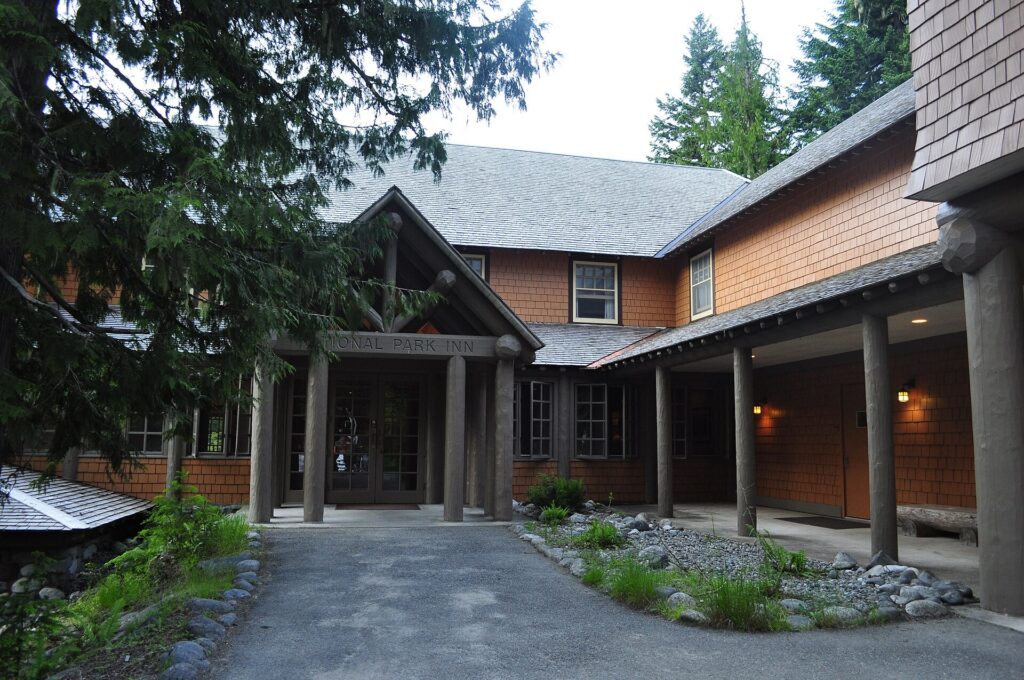
Two lodges sit inside the park, both run by Rainier Guest Services according to the park’s lodging page. The National Park Inn at Longmire has 25 rooms and is listed as open year round. The Paradise Inn has 121 rooms and is generally open mid-May through early October. It was listed as closed for the season in early October 2026.
Outside the park, Ashford is the town at the Nisqually Entrance. The park’s directions put it about 85 miles from Seattle. Packwood on the southeast side and Enumclaw on the SR 410 side are named there too. A night outside costs you a morning drive back in, so choose the town nearest the entrance you want first.
From Seattle the park’s route runs I-5 to SR 512, then SR 7 and SR 706 through Ashford. Tacoma shares the SR 512 stretch. Plan on a couple of hours of driving each way from either city, and more on a busy summer weekend.
Is Mount Rainier National Park worth visiting?
Yes, I would call Mount Rainier National Park worth it for anyone who can give it a clear day. On a low-cloud day I would skip it. The mountain hides easily, and the meadows at Paradise are the reward you came for. Give it two days if you can, three if you want the east side.
If the mountain keeps you in the volcano mood afterward, our Crater Lake guide is the next stop south. Pack for cold and wet even in summer, and our national park camping checklist covers the rest. Most of the park has no cell coverage, per the park’s hiking safety page.
Mount Rainier National Park facts
How much does it cost to enter Mount Rainier National Park?
A private vehicle pays $30, a motorcycle $25 and a person on foot or bike $15. Each is valid for seven consecutive days, per the park’s fee page on October 3, 2026. The annual pass is $55. Children under 16 do not need a pass.
Do you need a reservation for Mount Rainier National Park?
Not for entry. The fee page said on October 3, 2026 that timed entry reservations are not required anywhere in the park. It said none will be used in 2026. Overnight wilderness camping does need a permit.
Do you need chains for Mount Rainier?
Carry them from November 1 to May 1. The park’s winter travel page says every vehicle, 4WD and AWD included, must carry chains in the park between those dates. Autosocks are allowed for passenger vehicles under 10,000 pounds when chains are required.
How close can you get to bears at Mount Rainier?
The park’s wildlife page asks for at least 50 yards, or 150 feet, from any wildlife. For bears it recommends 300 feet, about 20 cars lined up end to end. It also asks you to secure food, trash and belongings so rodents cannot reach them.
Do you need a permit for the Wonderland Trail?
Yes, for overnight stays. The park’s wilderness page says overnight camping requires a permit. You can reserve one at Recreation.gov or collect it in person at a Wilderness Information Center. Day hikes need no permit. The 93-mile trail had closed sections on the date checked.
Prices are approximate, current as of publication, and change frequently — confirm the latest price with the retailer before buying.
Published October 11, 2026.
Photo credits: (1) featured, Mount Rainier mirrored in Reflection Lakes… — Cal Wolfe, CC BY-SA 3.0, via Wikimedia Commons; (2) Mount Rainier seen from above Myrtle Falls… — Samuel Kerr, CC BY-SA 3.0, via Wikimedia Commons; (3) Mount Rainier seen from Tipsoo Lake just… — Peter Stevens from Seattle, CC BY 2.0, via Wikimedia Commons; (4) Emmons Glacier and the White River valley… — brewbooks from near Seattle, USA, CC BY-SA 2.0, via Wikimedia Commons; (5) The National Park Inn in the Longmire… — Joe Mabel., CC BY-SA 3.0, via Wikimedia Commons.