

Some links on our site may earn us a commission at no extra cost to you. Learn more.
This article is for general information and is not medical advice. Talk to a doctor or other qualified professional about your own situation.
The Machu Picchu packing list rule that trips up first-time visitors most is the daypack limit. Bags cannot exceed 40 x 35 x 20 cm, per Cusco Peru’s visitor rules guide. A bigger bag gets stopped at the entrance gate, so plan the bag itself before you pack anything into it. The other number to plan around is the temperature swing: dry-season nights can drop to 37 to 45°F, while afternoons climb to 69 to 80°F, per Machu Travel Peru’s weather guide.
I have hiked in carrying a rules-compliant daypack, and the size limit makes sense the moment you are on narrow stone stairs in a crowd.
The numbers worth knowing first:
| Quick facts | Details |
|---|---|
| Daypack size limit | 40 x 35 x 20 cm, per Cusco Peru’s visitor rules guide |
| Banned items | Tripods, selfie sticks, walking poles, umbrellas, portable chairs, strollers, unauthorized drones, food beyond light snacks, per Cusco Peru’s rules page |
| Elevation | 7,972 feet, per Machu Travel Peru’s weather guide |
| Driest, warmest months | May through October, with August called the most pleasant, per Machu Travel Peru |
| Dry-season night temperature | 37 to 45°F, per Machu Travel Peru |
| Entry requirement | Valid ticket, an assigned time slot and ID, per Cusco Peru’s rules page |
| Daily visitor cap | Up to 5,600 in high season, 4,500 in low season, per Cusco Peru’s rules page |
| Toilets and re-entry | None inside the citadel; they are at the entrance, small fee. Leaving the main gate ends your visit, per the official code of conduct |
Packing List for Machu Picchu
A rules-compliant day bag has room for less than you think. The arithmetic below tracks only what needs to leave your hotel each morning. Everything else can stay in Cusco or Aguas Calientes until checkout. Weights are also approximate, rounded to the nearest tenth of a pound.
| Item | Bring or buy in Cusco | Approx. weight (lbs) |
|---|---|---|
| Rain shell | Bring | 0.9 |
| Fleece or wool mid-layer | Bring | 1.0 |
| Sun hat and sunglasses | Bring | 0.3 |
| Sunscreen, travel size | Buy in Cusco | 0.3 |
| Refillable 1-liter water bottle | Bring | 0.6 |
| Rules-compliant daypack itself | Bring | 1.2 |
| Passport and printed ticket | Bring | 0.1 |
| Basic first-aid and electrolyte tablets | Bring | 0.4 |
| Total day-bag weight | — | 4.8 |
Add those eight rows and you land at 4.8 pounds. That total stays well clear of the daypack rule, because the limit is about volume, not weight. Still, a lighter bag matters more once you start climbing the site’s stone terraces at elevation. Cutting even one heavy item, like a second water bottle, makes a real difference by midday.
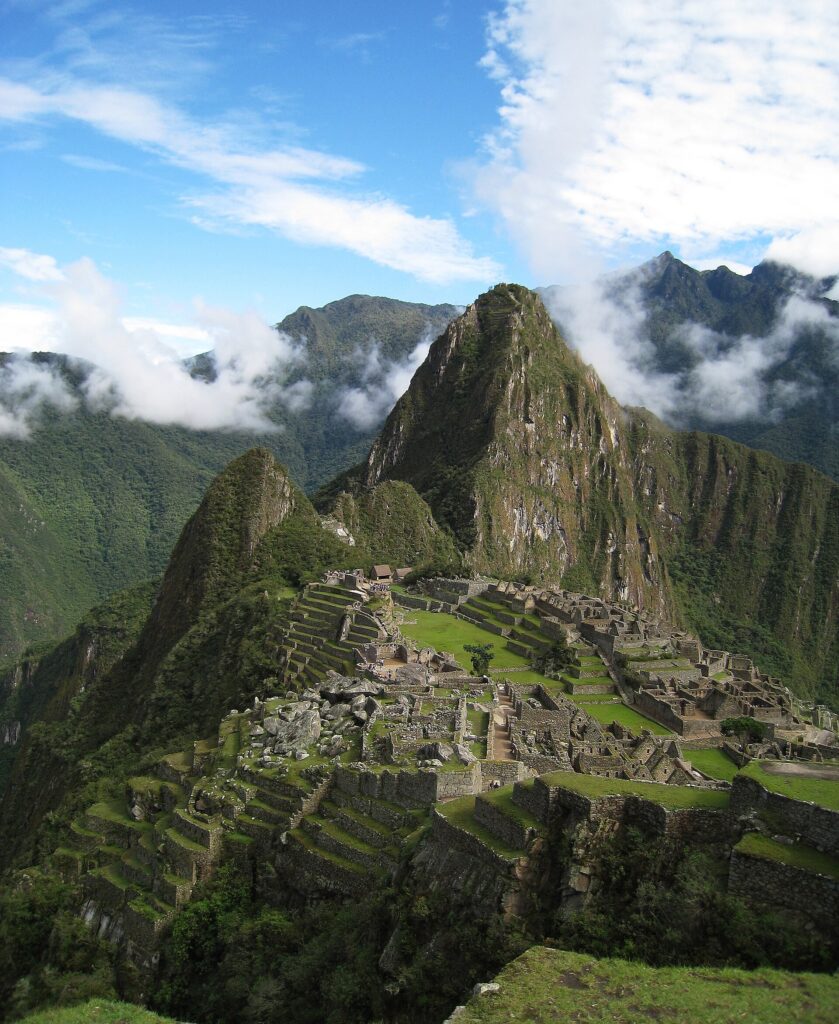
Machu Picchu Bag Rules
Peru’s culture ministry caps day bags at 40 x 35 x 20 cm inside the ruins, per Cusco Peru’s rules page. Anything larger has to stay at the entrance or back at your hotel. Walking sticks and trekking poles are not on the approved list at all. The written exception is a cane a doctor has certified as medically necessary, and that still needs a rubber tip. In practice, rubber-tipped poles often get waved through, and stands near the entrance rent them. The rule on paper is stricter than the rule at the turnstile, so do not build your day around the poles making it in.
Tripods, selfie sticks and camera stabilizers are also banned, along with drones flown without official authorization. You can carry light snacks and bottled water, but not a full meal or eating utensils. High heels and hard-soled shoes are off the list as well. The stone paths get slick after rain, and the rule exists for that reason.
The official list runs longer than most people expect. Umbrellas, portable chairs, strollers, musical instruments, megaphones, aerosol cans, and banners or signs of any kind are all turned away too, per the official Machu Picchu code of conduct. None of that is arbitrary. The paths are narrow, the drop-offs are real, and a folding chair or an open umbrella in a moving line of people is a genuine problem.
Machu Picchu Visitors Per Day
Peru caps daily entries at 5,600 visitors in high season and 4,500 in low season, per Cusco Peru’s rules page. Your ticket also locks in a specific circuit and entry window. Arrive late, and you can lose that window entirely. So build in extra time to reach the gate, especially if you are riding the bus up from Aguas Calientes during a busy morning.
Machu Picchu Luggage Storage
Anything over the size limit has to stay outside, and you have three reasonable places to leave it. If you are arriving by train, PeruRail and Inca Rail both hold luggage at their Aguas Calientes stations for ticketed passengers, which is the easy answer for a same-day visit. Most hotels in Aguas Calientes will also hold bags after checkout, and it is worth asking at the desk the night before rather than on your way out the door. There is paid bag storage at the entrance building itself as a third option, though pricing there moves around, so treat it as the backup and not the plan.
Whatever you use, your passport, ticket, phone, money and medication go with you, not into the stored bag. I keep those four things in one zippered pocket and the rest in whatever is being left behind. It takes ten seconds at the hotel and removes the whole category of problem where the thing you need is a bus ride down the mountain.
Machu Picchu Bathrooms
There are no toilets inside the citadel. The bathrooms are in the entrance building, outside the gate, and they cost a small fee in soles, per the official Machu Picchu code of conduct. Bring coins. That part is a minor annoyance, and it is not the part that catches people out.
The rule attached to it is the one that matters. Tickets are single entry, so once you walk back out through the main gate your visit is finished. You cannot step out for the bathroom and come back in on the same ticket. Go before you scan in, even if you do not think you need to, because a circuit takes a couple of hours and there is no second chance at it. The line at the entrance toilets is at its worst between roughly 6 and 9 a.m., when the early bus waves land together, so plan a few extra minutes into that window instead of assuming you will walk straight through.
What to wear to Machu Picchu?
Dry-season days run 69 to 80°F. Nights drop to 37 to 45°F, per Machu Travel Peru’s weather guide. July is the coldest month, with mornings near 33°F at times. The honest answer is layers, not one heavy jacket that gets too warm by midday.
Machu Picchu Layers
Start with a moisture-wicking base layer, since Cusco mornings start cold even in the dry season. Add a fleece or light wool mid-layer you can stuff into the daypack once the sun climbs. Skip cotton entirely. It holds moisture and dries slowly, which matters more at elevation than it does at sea level.
Machu Picchu Rain Jacket
Machu Picchu sits in a tropical cloud forest, so humidity stays high in any season, per Machu Travel Peru. A packable rain shell earns its weight even in the dry months, because afternoon showers still happen. Pair it with a wide-brim hat and sunglasses. The sun at elevation burns faster than it feels, even under clouds.
Best Shoes for Machu Picchu
Bring broken-in hiking shoes or boots with real tread, not shoes you are wearing for the first time. The site’s stone stairs are uneven, and some sections get slick with morning dew. Also pack moisture-wicking socks, plus a second pair for the trek back down. One backup pair of socks weighs almost nothing and saves a miserable afternoon if the first pair gets soaked.
Machu Picchu Hike Packing List
Keep your ticket, ID and passport in one zippered inner pocket, so you are not digging through snacks at the gate. Pack the rain shell on top, since a sudden cloud-forest shower does not wait for you to unpack. Put water and snacks at the bottom instead, because they weigh the most and settle the bag once the trail gets uneven.
Peru Machu Picchu Packing List
Bring your passport, plus a printed or downloaded copy of your entry ticket. Peru requires a valid ticket, an assigned time slot and a matching ID at the gate, per Cusco Peru’s rules page. A digital backup on your phone is smart too, in case a paper copy gets soaked or misplaced along the way.
Pack basic first-aid items. Include any over-the-counter pain reliever you already use, plus electrolyte tablets for the altitude change between Cusco and the ruins. Talk with a doctor before the trip if you have a heart or lung condition, since altitude affects everyone differently. Coca tea is sold locally in Cusco and is a common local remedy, but it is not a medical treatment.
Give yourself a day or two in Cusco before the ruins if your schedule allows it. That extra time lets your body adjust to the elevation gradually, instead of climbing stone terraces on day one. Drink more water than usual during that stretch, too, since dry mountain air pulls moisture out of you faster than you notice.

Packing List for Peru and Machu Picchu
Full-size sunscreen is easy to find in Cusco, so a travel-size bottle at home is enough to get you there. Rain ponchos and rubber-tipped walking sticks are also sold and rented near the entrance. That choice saves you from checking a bulky item on the flight down.
Snacks and bottled water are simple to buy in Aguas Calientes the morning of your visit. That keeps your day bag lighter for the climb. It also means less to carry through airport security on the way in.
Machu Picchu Inca Trail Packing List
Everything above assumes you are arriving for the day, by train and bus. Walking in on the Inca Trail is a different packing problem. You are out for four days, you sleep in a tent, and a porter carries a duffel for you with a weight allowance your operator sets in advance. That allowance is the number to confirm before you buy anything, because it usually has to cover your sleeping bag and air mattress as well as your clothes.
What changes most is the day pack you keep on your own back. It carries water, rain shell, sun protection, snacks and a headlamp, and you do not see the porter duffel again until camp. Pack the trail like four days of weather, not one, and remember that the last morning ends at the same gate with the same size rule waiting for you.
Machu Picchu Gear List
Pack a spare phone or camera battery, because the cloud-forest humidity and cold mornings both drain batteries faster than usual, per Machu Travel Peru’s weather guide. A small power bank also helps, since outlets are limited once you leave your hotel. Keep everything in a zip-top bag or a small dry sack, so a surprise shower does not end your day early.
Bring an extra memory card too, instead of relying on one. Photos add up fast at a site this size, and a dead card is a bad time to discover you packed only one. Also skip anything that needs a tripod mount for stability, since tripods are not allowed inside the ruins anyway.
What not to bring to Machu Picchu?
Skip the tripod and the selfie stick. Both are banned inside the site, per Cusco Peru’s rules page. Security will ask you to leave them at the gate. Leave the umbrella home too. An umbrella crowds narrow stone paths and is not on the approved list.
Also skip full-size toiletries and a second pair of shoes beyond your hiking boots and one casual pair. Skip a drone unless you have already secured official authorization, since an unauthorized one gets confiscated on the spot. Finally, skip a large suitcase for the day itself. It stays at your hotel in Cusco or Aguas Calientes while the daypack does the work.

Machu Picchu Packing List
I have planned plenty of big travel days, at home and abroad. A good day bag consistently beats hauling a full suitcase once you are on your feet for hours. At Machu Picchu, the rules-compliant daypack is the one item worth getting exactly right, since your layers, documents and snacks all have to fit inside it. Everything else on this list adjusts around that one bag.
Frequently asked questions about machu picchu packing list
Can you bring a tripod to Machu Picchu?
No. Tripods, selfie sticks and camera stabilizers are banned inside the site, per Cusco Peru’s rules page.
What size backpack can you bring to Machu Picchu?
Bags cannot exceed 40 x 35 x 20 cm, per Cusco Peru’s visitor rules guide. Anything larger stays at the entrance.
Is Machu Picchu cold?
Yes, especially in the dry season. Nights run 37 to 45°F from May through October, with July dropping near 33°F at times, per Machu Travel Peru.
Does it rain in Machu Picchu?
It rains in any season. The site sits in a cloud forest with constant humidity, per Machu Travel Peru. Afternoon showers happen even in the dry months.
A packable rain jacket is the more versatile pick, since it also blocks wind on cold mornings and layers over a fleece. Ponchos work too, and they are easy to buy in Cusco if you would rather not pack one from home. Either option beats getting caught in an afternoon shower with nothing waterproof at all.
Can you bring food into Machu Picchu?
Only light snacks and bottled water. A full meal or eating utensils are not allowed inside the site, per Cusco Peru’s rules page.
For a different climate’s packing rules, see our beach vacation packing list, or browse more packing list guides.
Updated September 23, 2026.
Photo credits: (1) Machu Picchu seen from the trail above the… — icelight from Boston, MA, US, CC BY 2.0, via Wikimedia Commons; (2) The Plaza de Armas in Cusco with the hills… — Rodrigo.Argenton, CC BY-SA 3.0, via Wikimedia Commons.