

Some links on our site may earn us a commission at no extra cost to you. Learn more.
Three days is enough for Dublin if you book the timed tickets first. Spend Day 1 around Trinity College and Dublin Castle. Day 2 goes to the Guinness Storehouse and Kilmainham Gaol, and Day 3 to the coast. The Book of Kells, the gaol and the Storehouse all want a reservation. US passport holders get up to 90 days in Ireland without a visa.
We have done big-city days across Europe with nieces and nephews along, and one rule holds up everywhere. Book the one or two things on timed entry, then let the rest of the day be walking. I would book the Book of Kells slot first and build the morning around it. Our Europe packing list covers the bag, and the carry-on-only packing list covers the over-packing.
3 days in Dublin
Prices and hours below come from each attraction’s own website, checked on October 2, 2026. They are the adult prices the sites list that day. The order of the days follows opening hours as much as the map.
| Day | Plan | Booking needed | Adult cost |
|---|---|---|---|
| 1 | Trinity College and the Book of Kells, Grafton Street, St Stephen’s Green, National Museum, Dublin Castle | Book of Kells timed ticket; Castle online booking opens 15 days ahead | From €25 plus €8.00; museum free |
| 2 | Guinness Storehouse, Kilmainham Gaol, EPIC or Phoenix Park | Gaol must be pre-booked; Guinness strongly recommended | From €14.00, €8 and €22.00 |
| 3 | Howth or Dalkey by DART, or the Cliffs of Moher | Cliffs: book online for the lower rate | €15.00 gate rate at the Cliffs |
Day 1 is the walking day, and every stop is close to the next. Day 2 is the ticketed day, with three bookings and a long afternoon. The last day gets you out of the city. It is the easiest part of a Dublin trip to drop, and the one most worth keeping.
Dublin can also be one stop on a longer trip. Our London itinerary and Paris itinerary use the same bookings-first approach.
Is the Book of Kells worth it?
Yes, if you book a timed slot and go early. The Book of Kells Experience at Trinity College is timed entry. Trinity’s site strongly recommends booking online. Adult tickets start at €25 for the self-guided version, and the page says to allow about 90 minutes.
Doors open at 8:30 am Monday through Saturday and at 9:00 am on Sunday. Closing is 6:30 pm, except Friday and Saturday at 7:00 pm. Tickets are non-refundable once bought, so check the arrival time before you pay.

The Long Room is the part that earns the money. Dark wooden shelves rise on both sides and marble busts line the aisle. The hall is built to be looked up at. I would take the first slot of the day, because that is when you can stand still in it.
Trinity’s front gate sits at the edge of the shopping streets. You finish the morning with lunch already in walking distance.
Dublin Castle
The afternoon runs south and west. Walk Grafton Street from Trinity, the pedestrian shopping street. Then cut into St Stephen’s Green, the big city park at the top of it. Both are free, and both are better at a slow pace.
The National Museum of Ireland – Archaeology on Kildare Street is free. The museum’s site lists free admission to all its museums. Hours are 10 am to 5 pm Tuesday through Saturday. On Sunday and Monday it opens at 1 pm and closes at 5 pm, so on a Monday swap the order and do the museum after lunch.

Dublin Castle ends the day. The castle’s ticket page lists a self-guided tour at €8.00 and a guided tour at €12.00. Doors are open 9:45 am to 5:45 pm, with last admission at 5:15 pm. Online booking opens 15 days ahead, and a limited number of same-day tickets go on sale at the desk.
Guided tours run between 10:00 am and 4:30 pm daily. If you want the guided version, aim for an early-afternoon start.
Is Temple Bar worth it?
Temple Bar is the best-known pub and live-music district in the city. It is touristy, in the way every famous strip is. Walk through in daylight and look at the lanes.
Then have dinner a few streets away from the main run of bars. That is a better use of an evening than a table on the busiest corner.
Guinness Storehouse tickets
Book online and pick your slot, because the Storehouse says the price depends on both. Adult tickets are listed from €14.00. Online discounts start at 30% and vary with the timeslot and the day.
Hours are 9:30 am to 5 pm Monday through Thursday and on Sunday, with last entry at 5 pm. Friday and Saturday run 9:30 am to 6 pm, with last entry at 6 pm. The building stays open until 7 pm or 8 pm, so you can linger at the top after your last entry.
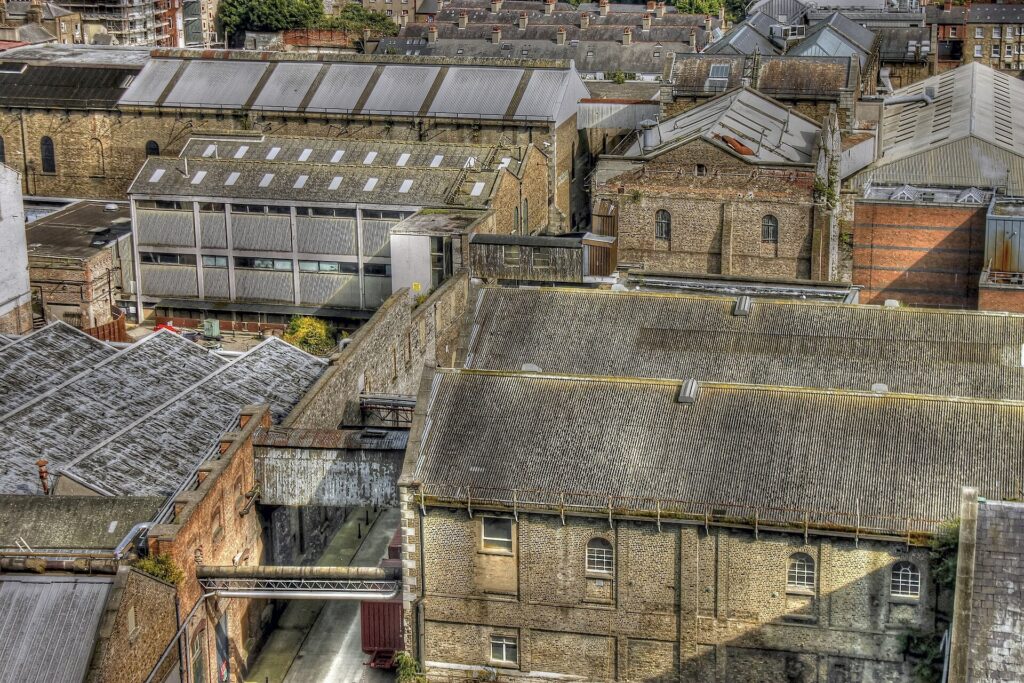
Admission covers the self-guided tour and the Gravity Bar, with one drink included. The site says that can be a pint of Guinness or another of its beers. Guinness 0.0 is for over-18s, and there is a non-alcoholic option. I would go in the morning, then walk it off at Kilmainham in the afternoon.
Kilmainham Gaol tickets
Kilmainham Gaol runs on pre-booked guided tours only, so book before you land. The Heritage Ireland page lists adults at €8, seniors at €6 and students at €4. Children under 12 are free with a ticket. The page says pre-booking online is essential, and tickets bought from other sites will not be valid.
The museum is open 10:30 am to 5:15 pm for most of the year. Expect it closed December 24 through 27, per the site. Allow about 90 minutes, as the page does. The gaol sits west of the city center, so plan a bus, a tram or a taxi.

EPIC Dublin
EPIC The Irish Emigration Museum is the indoor choice if the weather turns. Adult admission is €22.00 on EPIC’s ticket page. Book 30 days ahead and the page lists €17.60. The ticket also includes a free return visit within 10 days.
EPIC is open 10:00 am to 6:45 pm, with last entry at 5 pm. You will find it in the chq Building on Custom House Quay. The museum recommends 90 minutes. After the gaol, that is a lot of indoor time for one afternoon.
Dublin Phoenix Park
Phoenix Park is the outdoor choice. The park says it is open 24 hours a day, every day of the year. It gives its size as 1750 acres. Dublin Zoo and Áras an Uachtaráin both sit inside it.
A large herd of wild fallow deer lives there. The park asks visitors not to feed or approach them. Keep to that when someone in your group wants a photo.
Dublin day trips
Day 3 is the coast, and the easy version is on the train. The long version is the Cliffs of Moher, which takes the whole day. Pick one, and do not try to stack them.
Howth or Dalkey
The DART runs along the Irish Sea coast from Malahide or Howth south to Greystones. Irish Rail says it runs every 10 minutes all day. Howth is the northern end, with a harbor, a pier and a lighthouse. Dalkey is on the southern stretch, with a rocky shoreline and Dalkey Island offshore.

I would pick Howth for a first trip, because the harbor and pier give the day a shape. Dalkey suits a slower walk. Either way you are back in the city for dinner. The Leap Visitor Card below covers the DART in Zone 1.
Dublin to Cliffs of Moher
The Cliffs of Moher are on the west coast, and the drive is about three hours each way. That makes it a long guided day trip or a hard self-drive. It eats the whole of Day 3. With only three days, I would take the DART and keep the evening free.
If you go, book online. The Cliffs’ admission page lists a €15.00 adult gate rate. Online rates are lower outside the peak hours of 11 am to 4 pm. Admission includes parking and the visitor center.
Hours run 8 am to 7 pm in March, April, September and October. From May through August they run 8 am to 9 pm, and winter hours are shorter, so check the page for your date.
How to get around Dublin
Most of Day 1 is on foot, and the rest is a bus, the DART or the tram. Ireland uses the euro. Northern Ireland uses the pound. If you add a Belfast day, read the gov.uk ETA page first. It lists the USA among the nationalities that usually need an ETA, and gives the fee as £20.
Dublin airport to city center
Two coach companies serve the airport run. Aircoach says its coaches leave up to every 15 minutes, 24 hours a day. It also says they reach the city center in under 30 minutes. Dublin Express runs a rival coach with Wi-Fi on most services. Fares are set on each company’s booking page and differ by ticket type.
The Leap Visitor Card also covers the airport transfer at the start and end of your stay, per the Leap site. That is the simplest way to arrive if you plan to use the card anyway.
Dublin Leap Card
The Leap Visitor Card is the travel card for visitors. The Leap site lists a 1-day (24-hour) card at €8.00 and a 7-day (168-hour) card at €24.00. A 3-day (72-hour) version sits in between. The card covers Dublin City Bus, the Luas tram, the DART and commuter rail in Zone 1.
It is not valid on hop-on hop-off tours or on Bus Éireann services. A 3-day card matches this plan. It only pays off if you ride enough buses and trams to beat paying per trip. On a trip that is mostly walking, paying as you go may be cheaper.
Dublin FAQ
Is Dublin safe?
Yes, with normal city care. The State Department’s Ireland page carries a Level 1 advisory, “exercise normal precautions,” issued March 20, 2026. It says petty crime and theft occur, particularly in crowded areas and popular tourist destinations. Keep your bag zipped and your phone out of back pockets on busy streets.
Is Dublin expensive?
Dublin is not cheap, and the attractions add up fast. The adult prices above total from €77 per person for Days 1 and 2, before food and transport. The free National Museum, the parks and the DART coast days keep the total down.
Do I need a visa for Ireland?
No. Citizens Information, the Irish government’s information service, lists the United States on its visa-exempt table, with a stay of up to 90 days. The State Department page says your passport must be valid for the duration of your stay. It also asks for one blank page per stamp. The UK ETA is not for the Republic of Ireland.
Is 3 days enough in Dublin?
Yes. Three days covers Trinity, the Castle, the Guinness Storehouse, Kilmainham Gaol and one coastal day without rushing. A fourth day would go to the Cliffs of Moher or a slower Phoenix Park morning.
What is the weather like in Dublin?
Wet and mild. Met Éireann says the Atlantic is the dominant influence on Irish climate. Ireland avoids the temperature extremes of other countries at similar latitude. February through June is the driest stretch. October and November bring moderate to heavy frontal rain, so pack a rain jacket whatever the month.
Prices are approximate, current as of publication, and change frequently — confirm the latest price with the retailer before buying.
Published October 18, 2026.
Photo credits: (1) featured, Ha'penny Bridge over the River Liffey in… — Joadl, CC BY-SA 3.0 at, via Wikimedia Commons; (2) The Long Room of the Old Library at Trinity… — Nic McPhee from Morris, MN, USA, CC BY-SA 2.0, via Wikimedia Commons; (3) Dublin Castle courtyard with a stone tower… — Wknight94, CC BY-SA 3.0, via Wikimedia Commons; (4) View over Dublin rooftops from the Gravity… — psyberartist, CC BY 2.0, via Wikimedia Commons; (5) Main entrance of Kilmainham Gaol in Dublin… — Nol Aders, CC BY-SA 3.0, via Wikimedia Commons.