

Some links on our site may earn us a commission at no extra cost to you. Learn more.
The best Washington DC weekend itinerary stays on the National Mall. Do the memorials Friday night, the museums and a Capitol tour on Saturday, and the rest on Sunday. Most of it is free, but three stops need a pass or a ticket sorted out ahead of time. Every price and hour below comes from the operator’s own page, read on October 3, 2026.
Comfortable shoes and a water bottle beat every other packing decision here. We have done big-city days with nieces and nephews along, and the Mall is the kind of place where the walking adds up before you notice. I would build the weekend around two long walks and treat the museums as the rest.
Washington DC weekend itinerary
Friday night is for the memorials, because the National Park Service says the Mall’s memorial sites are open 24 hours a day. Saturday is the Capitol, the museums and one timed pass. Sunday is the rest of the memorials, the Tidal Basin and a slow afternoon.
| Day | Area | Plan | Getting around | Cost |
|---|---|---|---|---|
| Friday night | West end of the Mall | Lincoln Memorial, Reflecting Pool, Washington Monument grounds | Walk, one Metro ride in | Free |
| Saturday morning | Capitol Hill | Capitol tour, booked ahead | Metro, then walk | Free tour |
| Saturday afternoon | Museum side of the Mall | Natural History or American History, then one museum that needs a pass | Walk | Free, passes where required |
| Sunday morning | Memorials and Tidal Basin | WWII, Vietnam, Korean War, MLK and Jefferson memorials | Walk, Circulator if tired | Free |
| Sunday afternoon | Your choice | Washington Monument ticket, a second museum, or Mount Vernon | Metro or car | $1.00 per advance monument ticket; Mount Vernon $30 adult |
Rangers are on duty at the sites from 9:30 a.m. to 10:00 p.m. daily. That makes a Friday evening walk practical and gives you somewhere to ask questions after dark.
National Mall layout
The Mall is a long green rectangle. The Lincoln Memorial sits at the west end, the Capitol at the east end, and the Washington Monument stands between them with the Reflecting Pool running toward Lincoln. Roughly two miles separate the two ends.
Smithsonian museums line both long sides, mostly between the Capitol and the Monument. South of the Monument you find the Tidal Basin and the Jefferson Memorial. Near Lincoln, the WWII, Vietnam and Korean War memorials fill the western stretch.

Treat the Monument as your compass. If you can see it, you know which way is which. The park’s own wayfinding maps and pylons dot the paths, as the visit page notes.
Washington Monument tickets
You need a timed-entry ticket to go inside the Washington Monument. The park’s ticket page says advance tickets come through Recreation.gov, typically released 30 days ahead. It also says additional same-day tickets are handed out on site starting at 8:45 every morning.
The fees page lists no admission charge, only a non-refundable $1.00 service charge per advance ticket. Anyone age 2 or older needs a ticket. Arrive at the screening area at least 15 minutes before your entry time.
The monument’s alerts page showed no alerts and a last update from 2020 when we checked. I would call the park at 202-426-6841 or recheck the ticket page before building a morning around it. The grounds around it are part of the Mall, which the park keeps open 24 hours a day.

The Capitol is the other timed stop. The Capitol Visitor Center says all tours are free and are booked through its timed-entry system. Tours run Monday through Saturday from 8:30 a.m. to 4:30 p.m., and the building is closed Sunday.
Walk-ups are possible. The page says same-day passes may be available and asks unreserved visitors to arrive no later than 2:30 p.m. You enter through the underground visitor center on the east side. The tour covers the Crypt, the Rotunda and Statuary Hall, not the Senate and House galleries.
The White House is the stop people overplan. The National Park Service page says tour requests go through your Member of Congress or, for international visitors, your embassy. Requests can be submitted up to three months ahead and no less than 21 days ahead, so a last-minute weekend will not get one. The page also warns tours can be cancelled at the last minute.
Are Smithsonian museums free?
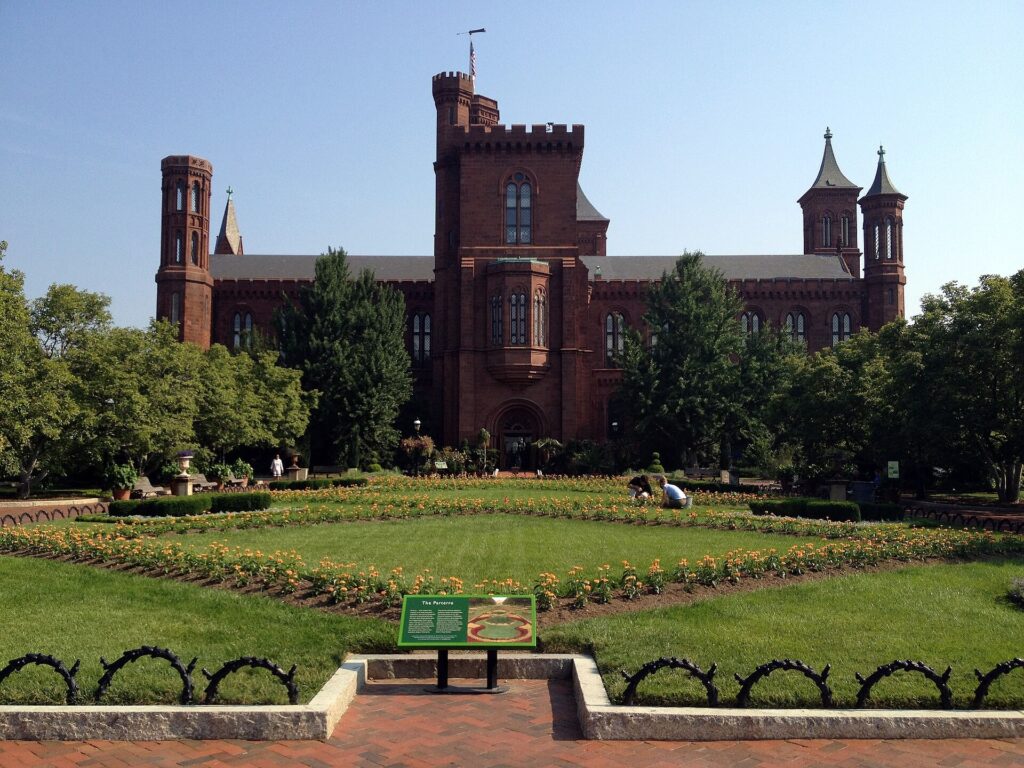
Yes. The Smithsonian visit page lists free admission at all locations except Cooper Hewitt in New York City. The same page said the Castle was closed for its first major renovation in more than 50 years on the date checked, so do not plan on going inside it.
Free does not mean walk-in everywhere. The Natural History museum is open daily, 10:00 a.m. to 5:30 p.m., and says no passes or tickets are needed. The American History museum lists the same hours and says no tickets are required. Both close only on December 25.
Two popular museums run on timed passes. The African American History and Culture museum says every visitor needs a free timed-entry pass, regardless of age. Advance passes release 30 days ahead on a rolling basis, and same-day passes are released online by 8:15 a.m. Eastern. Hours are 12:00 to 5:30 p.m. Monday and 10:00 a.m. to 5:30 p.m. Tuesday through Sunday, with last entry at 4:00 p.m.
The Air and Space Museum also requires free timed-entry passes for all visitors, with up to nine reserved at once. The museum is open 10 a.m. to 5:30 p.m. In fall 2026 part of the east end was closed for renovation and the planetarium was temporarily closed. Two more galleries were scheduled to open on October 30 and November 11, so check which are open the weekend you visit.
Bags get a hand check at every entrance. Nine museums, including those two, add metal detectors. The Smithsonian asks you to limit what you carry, and lockers exist at six sites, including African American History and American History. I would carry one small daypack and leave the rest at the hotel.
Washington DC weekend trip itinerary
Do Friday as a loop. Take the Metro to the Lincoln Memorial end, walk the Reflecting Pool toward the Monument, and add the WWII and Vietnam memorials if your legs allow. It is a mostly flat walk of a few miles.

Saturday starts at the Capitol, because the tour is the one fixed time of the weekend. Book the earliest slot that suits you. Then walk west along the museum side and pick one free museum with no pass, which keeps the afternoon flexible.
If you hold an African American History or Air and Space pass, plan around that time slot instead. Everything else bends. Eat lunch where you are rather than crossing the Mall.

Sunday is the memorial walk in daylight, ending at the Tidal Basin and the Jefferson Memorial. Add a Washington Monument ticket if you got one. Save the afternoon for whatever you missed, or for Mount Vernon.
How to get around Washington DC
Walking covers most of the Mall, and Metro covers the gaps. WMATA’s rider guide lists Metrorail fares from $2.25 to $6.75 depending on distance, and $2.50 or less on nights and weekends. You can tap a SmarTrip card, a phone wallet or any contactless credit or debit card at the faregate.
Hours matter on a Friday night. That guide lists Monday through Thursday 5:00 a.m. to 12:00 a.m., Friday 5:00 a.m. to 2:00 a.m., Saturday 6:00 a.m. to 2:00 a.m. and Sunday 6:00 a.m. to 12:00 a.m. A 1-day pass is $13.50 and a 7-day pass is $60.75, which rarely beats paying per ride on a short weekend.
Weekend track work is routine. WMATA’s weekend page lists single-tracking and other work by line, so check it the week you travel.
The DC Circulator is the cheap shortcut between museums. Its page lists a regular fare of $1.00 and a National Mall route. Flying in with a carry-on only? The carry-on only packing list keeps the bag small for security lines, and the TSA PreCheck, Global Entry and CLEAR comparison helps if the flight is the slow part.
Washington DC long weekend itinerary
A third day adds Monday, and Monday has one quirk. The African American History museum opens at noon that day instead of 10:00 a.m., so use the morning for the Mall and the afternoon for the museum.
Mount Vernon is the best add-on. Its visit page lists general admission at $30 for adults, $16 for ages 6 to 11 and free for ages 5 and under, with the grounds open 9 a.m. to 5 p.m. It sits about 15 miles south of the city, has free parking, and recommends reserving your mansion tour time online to avoid long waits. I would give it a half day.
Cherry blossoms are the one thing you cannot schedule. The National Park Service says peak bloom is most likely between the last week of March and the first week of April. It also says forecasting peak bloom is almost impossible more than 10 days ahead. Book the trip around the weather, not a date.
Weekend itinerary Washington DC
Going inside every museum is the first thing to cut. Two or three done well beat six in a blur, and free admission makes it easy to leave early. Do the memorials in daylight once and again at dusk if you have the energy.
Planning a White House tour is wasted effort inside 21 days of your trip, since requests close inside that window. Walk past it instead. The Castle is also off the list, because it was closed for renovation on the date checked.
Rain changes the order, not the plan. The museums are the rain list: Natural History, American History and any pass-holder museum go first. The memorials can wait for the clear half of Sunday.
How many days in Washington DC?
Two days covers the Mall, the Capitol and two or three museums. A third day adds Mount Vernon or a slower pace. Four days is for repeat museum-goers.
Is Washington DC walkable?
Yes, for the Mall and the museum blocks. The Mall is roughly two miles end to end, so wear shoes you trust and use the Metro or Circulator for the long gaps.
Do you need tickets for the Smithsonian museums?
Not for all of them. Natural History and American History say no tickets are needed. African American History and Air and Space require free timed-entry passes for every visitor.
Can you tour the White House?
Only by request. The National Park Service says requests go through your Member of Congress or embassy, no more than three months and no less than 21 days ahead. Tours can be cancelled at the last minute.
Prices are approximate, current as of publication, and change frequently — confirm the latest price with the retailer before buying.
Published October 16, 2026.
Photo credits: (1) Washington Monument obelisk rising over… — National Park Service, U.S. Government work, public domain, via Wikimedia Commons; (2) West front of the United States Capitol… — U.S. Government, U.S. Government work, public domain, via Wikimedia Commons; (3) Red sandstone Smithsonian Castle behind the… — Sarasays, CC BY-SA 3.0, via Wikimedia Commons.