

Some links on our site may earn us a commission at no extra cost to you. Learn more.
Homosassa Springs Wildlife State Park is a Citrus County state park built around a first-magnitude spring. It’s the one Florida manatee stop where you don’t need to time a migration to see one. The park keeps resident, non-releasable manatees year-round, and its underwater observatory puts you at eye level with them. Entrance runs $13 for adults and $5 for kids 6–12. The park opens 9 a.m. to 5:30 p.m. daily.
I grew up in South Florida, and a park like this one was a regular family day trip. You plan for an hour and end up staying three, because there’s always one more window to look through. Homosassa earns that reputation. It’s slower and smaller than Crystal River’s open-water tours. But it’s also the only spot on this list where a manatee sighting isn’t a maybe.
Homosassa Springs Wildlife State Park hours
The park is open 9 a.m. to 5:30 p.m., with the ticket counter closing at 4:45 p.m., according to the park’s own page. Adult admission (ages 13+) is $13. Kids 6–12 are $5, and children 5 and under get in free. The address is 4150 S. Suncoast Blvd. in Homosassa.
There’s a picnic pavilion near the entrance, and restrooms at both the visitor center and out along the trail. Budget closer to two hours than one if you plan to stop at every exhibit.
| Detail | Info |
|---|---|
| Hours | 9 a.m.–5:30 p.m. (ticket counter closes 4:45 p.m.) |
| Adult admission (13+) | $13 |
| Child admission (6–12) | $5 |
| Children 5 & under | Free |
| What you’ll see | Resident manatees, underwater observatory, panthers, bears, alligators, birds |
| Address | 4150 S. Suncoast Blvd., Homosassa, FL |
Homosassa Springs underwater observatory
The observatory is a floating structure out on the main spring pool. You walk down a ramp inside it to a chamber below the surface. From there you’re looking straight into the spring through glass: fish first, usually, then a manatee drifting past close enough to see the scars on its back. The main spring runs close to 40 feet deep at the vent, and it stays a constant 72°F.
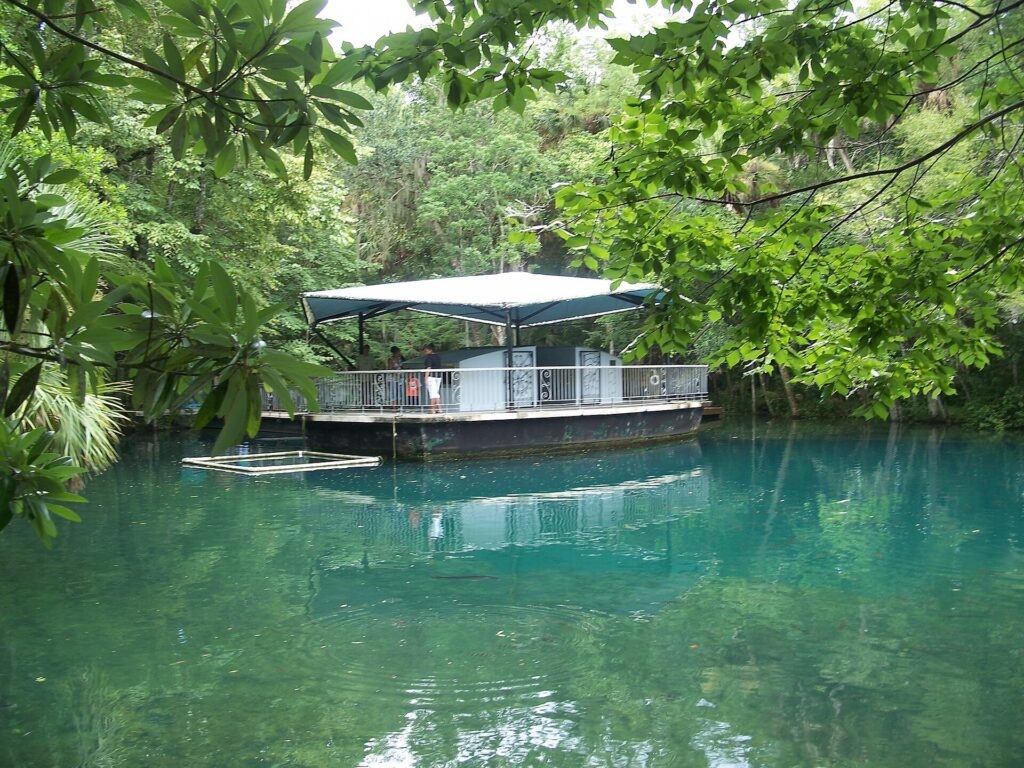
Homosassa Springs is actually a group of nearly 30 springs. Together they feed the Homosassa River, which runs about eight miles west to the Gulf. That’s far more flow than the single vent you see from the observatory suggests. It’s also why the water stays clear even on a busy day.
Mullet and other fish share the same water as the manatees, so the observatory rarely feels empty between sightings. Go slow through the chamber. It’s small, and it’s easy to walk past the best angle on the vent without noticing it.
Pepper Creek Trail Homosassa
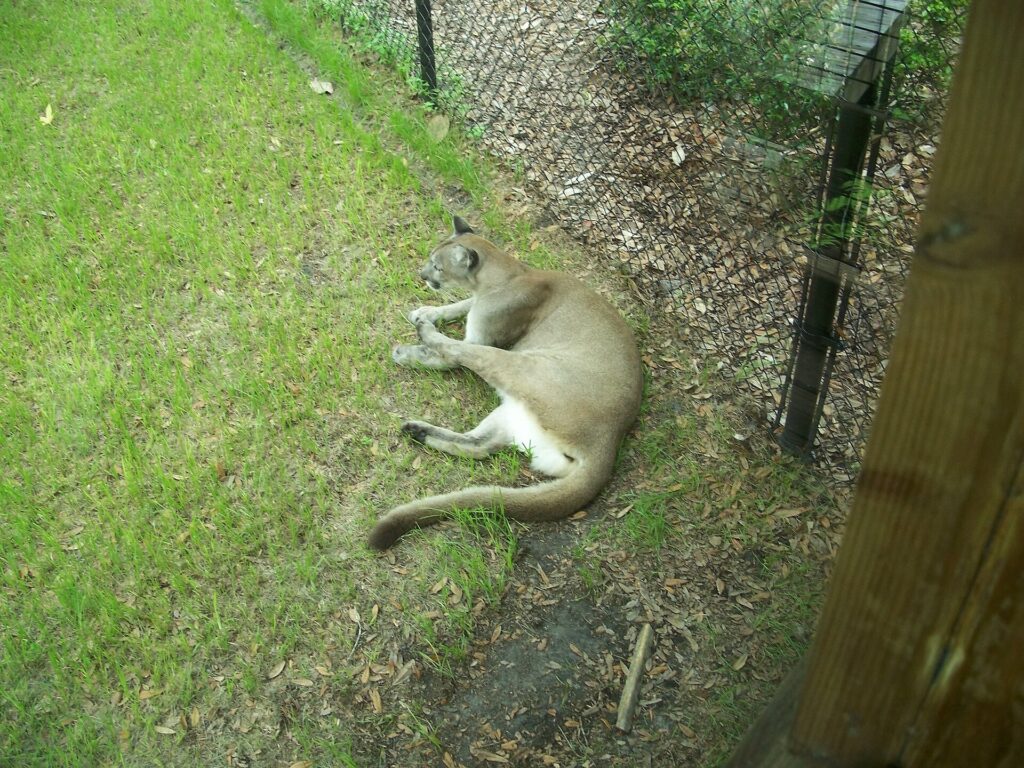
The main loop is a 1.1-mile paved and boardwalk trail that circles the spring, shaded most of the way. It’s where you’ll pass the panther, black bear, red wolf and alligator enclosures. You’ll usually hear the animals before you see them. A separate, three-quarter-mile paved path, Pepper Creek Trail, connects the visitor center to the park’s west entrance through hammock and flatwoods.
The park’s shuttle boat used to ferry visitors across Pepper Creek. It’s been out of service since early 2026 because of low water levels. Until it’s running again, the walk in on the paved Pepper Creek Trail is the way to reach the wildlife park. Plan for roughly 15 minutes each way at an easy pace.
For decades the park’s best-known resident wasn’t native at all. Lu, a hippo, arrived in 1964 and was granted honorary Florida citizenship in 1991 so he could stay when the park shifted toward native wildlife. Lu passed away in 2025 at 65, after more than 60 years at the park. He’s no longer there; the park now has a page remembering him rather than an exhibit.
Before Homosassa, Lu had a whole other career. He worked with an animal-actor troupe on 1960s television and film, a resume none of the park’s native residents share. His old enclosure near the east end of the boardwalk is still worth a look. It’s usually where you’ll spot wading birds, and great blue herons and white pelicans are the ones you’ll see most often.
Homosassa Springs manatee season
You can see manatees at Homosassa Springs any month of the year. The ones living at the park are permanent residents that can’t be released back into the wild. That’s different from Crystal River or Blue Spring, where sightings depend on wild manatees moving into warm water during the Nov. 15–Mar. 31 season.

Winter is still the better visit if manatees are the whole point. Wild manatees sometimes join the residents near the park’s warm-water outflow in the coldest weeks. The park also runs a manatee education program in season, which gets you closer to the science than the observatory glass does alone.
Here’s what that means in practice. Come in July for a guaranteed manatee and a quiet park. Or come in January for the same guaranteed manatee, plus a shot at wild ones in the same water. Neither trip requires booking ahead, which isn’t true of Crystal River in peak season.
Where to see manatees near Orlando
Homosassa is about the farthest of the Nature Coast manatee spots. It’s also the only one that guarantees a sighting regardless of season. That matters if your trip window doesn’t line up with winter. If you’re building this into a longer Orlando trip, it works best as its own day out to the coast rather than a quick add-on.
Other springs with wintering manatees, including Weeki Wachee to the south, sit closer to Orlando. They’re also far less reliable outside the Nov. 15–Mar. 31 season. Our Florida springs guide lays out the closer options if your timing is flexible.
If manatees are the priority regardless of season, Homosassa is the safer bet. If you’re already committed to a winter trip and want the closest option to Orlando, check the springs guide first. You may not need to drive as far as the coast.
Homosassa Springs vs Crystal River
Crystal River is where you swim with wild manatees in open water. Homosassa is where you watch them through glass without getting in. Crystal River tours run early mornings in season and put you in a wetsuit in Kings Bay. Homosassa is walk-up, open all day, every day of the year, and nobody gets wet but the manatees.
Pick Crystal River for the in-water experience during the Nov. 15–Mar. 31 season. Pick Homosassa if you’re visiting outside that window, or traveling with kids too young for a boat tour. The two towns sit less than 20 minutes apart, so plenty of visitors do both in the same trip.
If you’re traveling with a toddler, or with someone who isn’t comfortable in open water, that’s the deciding factor over price. Homosassa keeps everyone dry on a boardwalk the whole visit. Crystal River puts you in a wetsuit next to a 1,000-pound animal, however calm the guides keep it.
How far is Homosassa from Orlando?
Homosassa Springs is roughly 100 miles from downtown Orlando, about 1 hour 45 minutes by car via US-98 and the Suncoast Parkway. That makes it a full day trip rather than a quick side stop. Budget most of a day once you add the drive both ways.
Tampa is the closer major airport, at under an hour and a half. Gainesville is about the same distance, from the north. Either way, aim to arrive by early afternoon so you’re not rushing the observatory before closing.
Most of the drive from Orlando runs on US-98 and the Suncoast Parkway toll road. Both are easy stretches, with few stoplights once you clear the Orlando suburbs. There’s no reason to leave before mid-morning, unless you’re pairing the trip with Crystal River the same day.
Prices are approximate, current as of publication, and change frequently — confirm the latest price with the retailer before buying.
Is Homosassa Springs worth visiting?
Yes, especially if a guaranteed sighting matters more to you than swimming with one. The underwater observatory and the resident wildlife walk don’t depend on the calendar. That makes this one of the more reliable half-day stops on the Nature Coast.
Does Homosassa Springs have alligators?
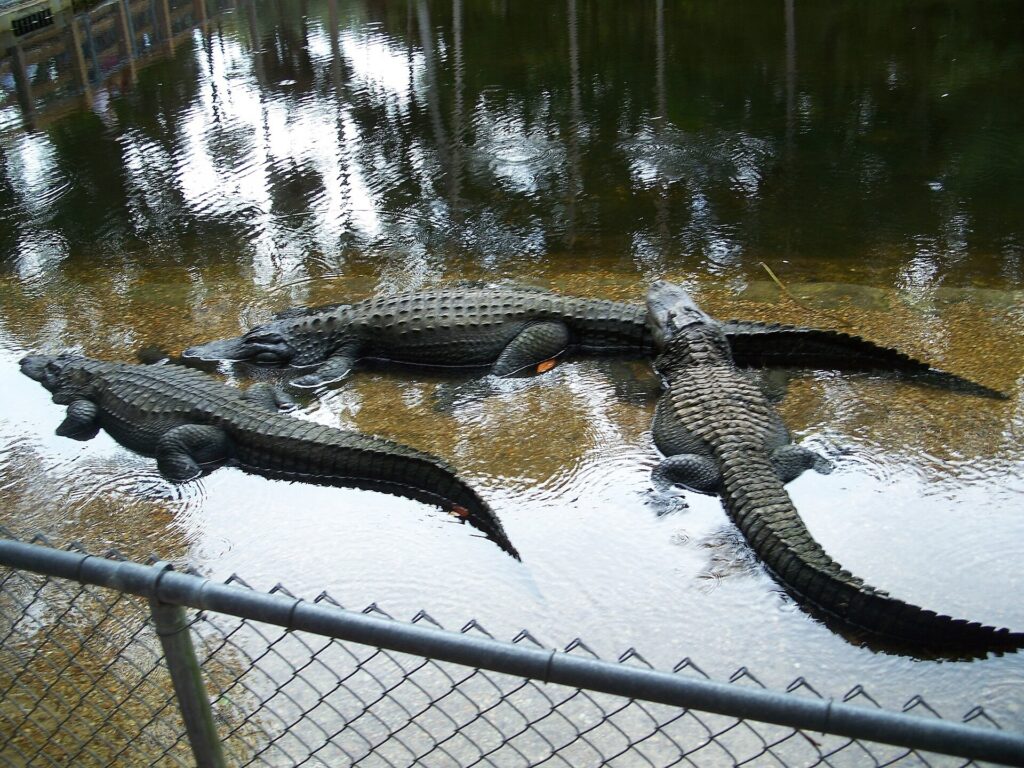
Yes. Resident alligators live in an enclosure along the main boardwalk trail, alongside panthers, black bears and red wolves. All of them are permanent park residents, not wild sightings, because none can survive on their own outside the park.
How much does it cost to get into Homosassa Springs?
Adult admission is $13, kids 6 to 12 are $5, and children 5 and under are free, per the park’s fee page. That’s a single park entry fee. There’s no separate charge for the underwater observatory or the boardwalk trail.
Can you see manatees at Homosassa Springs in the summer? Yes. The park’s manatees are year-round residents, not winter visitors, so summer sightings are just as reliable as a January visit, even though wild manatees aren’t in the area that time of year.
Is there still a boat ride at Homosassa Springs? Not currently. The shuttle boat across Pepper Creek has been suspended since early 2026 due to low water levels. Visitors walk in on the paved Pepper Creek Trail instead. Check the park’s alerts before you go, in case that changes.
Nearby, Crystal River manatee tours and Three Sisters Springs are the other manatee stops, and the manatee timing guide compares all six.
Published September 30, 2026.
Photo credits: (1) featured, A wooden boardwalk bridge over the clear… — Ebyabe, CC BY-SA 2.5, via Wikimedia Commons; (2) Inside the underwater observatory at… — Ebyabe, CC BY-SA 2.5, via Wikimedia Commons; (3) A Florida panther at Homosassa Springs… — Ebyabe, CC BY-SA 2.5, via Wikimedia Commons; (4) A manatee swimming near the surface of the… — Ebyabe, CC BY-SA 2.5, via Wikimedia Commons; (5) A resident alligator at Homosassa Springs… — Ebyabe, CC BY-SA 2.5, via Wikimedia Commons.